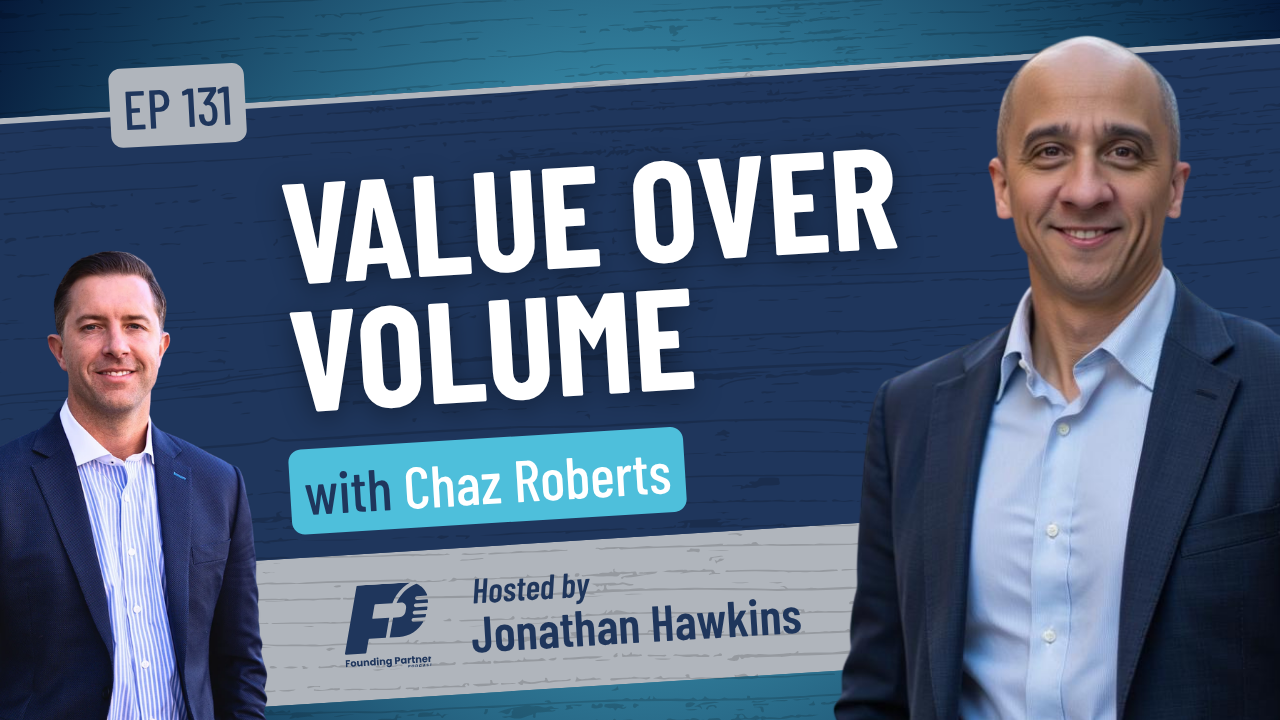
Value over Volume with Chaz Roberts
From a Small Town to Building Something His Own
Chaz Roberts did not come from a legal family. There was no built-in roadmap, no family firm waiting for him, and no shortcuts.
Raised by a single mother in a small Louisiana town, he worked his way through LSU, earned a business degree, then made his way into law school.
Like many young lawyers, he started in a defense firm and quickly realized something felt wrong.
He described spending his days tracking billable hours and handling work that felt disconnected from the people he wanted to serve.
Then something changed.
As he began volunteering through the local bar and representing real people in court, he realized he did not hate practicing law.
He simply hated practicing the wrong kind of law.
That realization became the spark.
Hanging a Shingle at Twenty-Six
Going out alone was not part of some perfectly designed strategy.
It happened earlier than expected.
Chaz originally thought he might own a law firm one day, maybe around age forty-five. Instead, he found himself opening a practice at twenty-six years old.
The early years looked like what many founders experience.
Family law.
Criminal work.
Transactional matters.
Public defender work.
Anything that came through the door.
He laughed about those years but also acknowledged how valuable they became.
Those difficult cases taught him how to fight, how to build trust, and how to become a stronger lawyer.
Sometimes growth starts with survival.
The Sniper Versus Machine Gun Mindset
One of the most powerful ideas from this conversation came from Chaz’s presentation at the Visionary Builders Summit.
His approach is simple.
Stop chasing volume. Start creating value.
He compared it to two very different approaches.
A machine gunner fires endlessly, carrying heavy loads and taking fire from every direction.
A sniper moves intentionally, waits patiently, and focuses on the highest-value opportunity.
Chaz explained that he began noticing something surprising in his own firm.
One great case could equal twenty average cases.
Sometimes one exceptional case could equal hundreds of smaller cases.
The work itself often looked remarkably similar.
Files still had to be opened.
Clients still needed help.
Processes still needed to happen.
The difference was the outcome.
He explained that becoming a “sniper” starts with becoming excellent.
Not louder.
Not bigger.
Better.
Grassroots Growth and Becoming the Lawyer People Already Know
One thing became obvious throughout this conversation.
Chaz does not separate his personal life from relationship building.
He coaches his kids’ sports teams.
He runs with local groups.
He attends football games.
He invests in his community.
Not because it is marketing.
Because it is who he is.
Then something naturally happens.
People begin associating him with trust.
They get to know him before they ever need him.
When they eventually need a lawyer, the relationship already exists.
Chaz talked about intentionality.
If you are already spending time doing things you love, why not create meaningful connections while doing them?
Authenticity matters.
People can tell the difference.
As Chaz put it, people can “smell fake.”
What Marathons Taught Him About Leadership
During COVID, Chaz replaced alcohol with running.
One marathon eventually became nine.
Soon he will be running his tenth marathon in Berlin.
But for him, the race is about far more than miles.
Marathons taught him discipline.
They taught him how to keep moving when his mind says stop.
They taught him how to endure discomfort and stay focused on the finish line.
That mindset now shows up in his practice.
Trials feel different when you’ve already spent hours pushing through exhaustion and mental resistance.
Business challenges feel different when you’ve already trained yourself to embrace discomfort.
As Chaz explained, adversity teaches lessons that comfort never can.
Redefining Success
Toward the end of the conversation, Jonathan asked where Chaz wants his firm to be in the future.
The answer felt different from what many founders might say.
There was no specific revenue target.
No giant growth plan.
No race toward some arbitrary number.
Instead, Chaz said he simply wants freedom.
Time with his children.
Being a good husband.
Building a place where his team can thrive.
Doing meaningful work.
Growing organically.
Doing his best.
Then letting the rest happen.
He talked about how tightly gripping outcomes can sometimes make them slip away.
For him, success is less about building the biggest firm possible and more about building a life that actually feels worth living.
Closing Reflection
Founders hear a lot of noise.
Scale faster.
Grow bigger.
Hire more people.
Push harder.
But this conversation was a reminder that growth does not always mean more.
Sometimes growth means getting clearer.
Clearer about who you are.
Clearer about what matters.
Clearer about what kind of life you’re trying to build.
Chaz Roberts built his firm through relationships, discipline, trust, and authenticity.
Not because it was trendy.
Because it was true to who he is.
And that may be the most sustainable strategy of all.
AND MORE TOPICS COVERED IN THE FULL INTERVIEW!!! You can check that out and subscribe to YouTube.
If you want to know more about Chaz Roberts, you may reach out to him at:
- Website: https://www.newbernlawfirm.com/
- TikTok: https://www.tiktok.com/@chazrobertslaw
- Instagram: https://www.instagram.com/chazrobertslaw
- Facebook: https://www.facebook.com/Chazrobertslaw
- YouTube: Chaz Roberts Law
Connect with Jonathan Hawkins:
- Website: https://www.lawfirmgc.com/
- LinkedIn: https://www.linkedin.com/in/jonathan-hawkins-135147/
- Podcast: https://www.lawfirmgc.com/podcast
Jonathan Hawkins: [00:00:00] And so that a good segue, the talk you gave at the Visionary Builders Summit the great talk, I think it was value versus volume. Maybe that, I don’t know if that was the sort of the theme. Maybe it was something else, but let’s go through that. We’re sort of on that topic already.
So I guess, what is your approach to getting clients and what you talked about in that talk?
Chaz Roberts: Yeah, so like the value versus volume, you wanna be a sniper versus a machine gunner. And a sniper, I said in the talk, is that you’re high and dry. No one sees you. You have foot warmers on, you have gloves on, you’re not taking bullets, and you see a high value target and you take that target out. That’s the sniper mentality. A machine gunner is in the jungle. He’s up to his knees in the swamp, and he’s taking on friendly fire and bullets and lugging ammunition. So that visual is the value versus volume model.
And so I came to this epiphany when I started looking at average [00:01:00] fee per month, and I realized that 1 case was equal to 20 cases. One right case is equal to 100 right of bad cases. One good case is equal to 300 bad cases. And the amount of work is not that different. It’s not 300 times more, it’s not 20 times more. You still have to go through the same processes of setting the file up, helping person with property damage, getting them treated, negotiating a settlement.
It’d be the same as if you were looking at investing in real estate and say, “Okay, well, is it gonna be this $100,000 house or this $10 million house?” Well, you still need a financial statement for this one. You still need a financial statement for this one. There’s more risk involved, but you still have to go to the closing table for this one. You still have to go to the closing table for this one. Wouldn’t you rather invest in a $10 million house for your long-term return?
Welcome to the Founding Partner [00:02:00] Podcast. Join your host, Jonathan Hawkins, as we explore the fascinating stories of successful law firm founders. We’ll uncover their beginnings, triumph over challenges, and practice growth. Whether you aspire to launch your own firm, have an entrepreneurial spirit, or are just curious about the legal business, you’re in the right place.
Let’s dive in.
Jonathan Hawkins: Welcome to Founding Partner Podcast. I’m your host, Jonathan Hawkins. This is a podcast where I get to interview founding attorneys and hear about their journeys and all the cool stuff they’re doing. And today’s guest I met recently at a conference. We were both speaking there, and he had a really good presentation.
We’re gonna talk about some of that stuff on this call. But he’s also a fellow Southerner and a fellow I guess I’ll call it Gulf Coast person. So anyway today’s guest is Chaz Roberts. He is the owner of Chaz Roberts [00:03:00] Law in Lafayette, Louisiana. Chaz, welcome to the show
Chaz Roberts: Thank you, man. I’m stoked to be here. I appreciate the introduction, and likewise, I enjoyed your presentation at the Visionary Builders conference out in Detroit. It’s my first time in Detroit, and it was an eye-opening experience. But I had a great time and I got to meet cool people like you, so what an honor to be on your podcast.
Thanks for having me
Jonathan Hawkins: Yeah. You know, that was a cool conference in Detroit. So many, many, many years ago, I was I did Michelin Tire defense work and this was back when Bridgestone, Firestone were, you know, all that stuff. So anytime a, a, a Ford or whatever rolled over because of a tire blowout, they’d sue the tire company and the, and the, and the car company.
So I was going to Detroit a bunch for, like, car depositions and I hadn’t been back for like 20-something years until, you know, a few weeks ago. And Detr- Detroit’s pretty cool, man. I, I liked it
Chaz Roberts: Yeah. Had– Did you notice a lot of differences? ‘Cause to me it seemed [00:04:00] like it’s on the up and up. I mean, a lot of cool buildings going up. The, the campus where we presented was awesome. I got to see some of the parks Comerica is down there. I mean, it’s, it’s really cool. A nice little neighborhood parks.
Some of the buildings had been rehabbed. I was, I was super impressed
Jonathan Hawkins: Downtown was cool, and it seems like everybody I talked to, every Uber I got into, they’re like, “Oh yeah, it’s way better now.” So, you know, so even the locals were like, “Yeah, it’s way better.” But I thought it was cool too, you know, Dounia Bouzi put on that conference. You know, big, big Muslim community there and, and that was really fun.
The, the, the party at her house and really sort of the food. You know, I, I don’t know if you tried the the raw meat
Chaz Roberts: I did.
Jonathan Hawkins: That was, that was cool.
Chaz Roberts: You know, we have– I believe I’m biased, but I believe I’m in, I have some of the best food in, in the country and maybe the world at my disposal living in Southwest Louisiana, proximity to New Orleans, but also Cajun food where I’m [00:05:00] at. But I have to say I was tremendously impressed with the food there.
I love Arabic food and I was introduced to new things like the raw meat and it was good. I enjoyed it
Jonathan Hawkins: And, you know, and Dunya, I don’t know if she’ll listen to this or not, but just a great, great family, man. So the funniest thing, I told her this, so I had done my presentation. It was the end of the day. We’re, you know, wrapping up at the end of the day, and one of her sons came up to me unprovoked.
He just came up to me and said, “That was a really good presentation.”
Chaz Roberts: They’re cool kids. They, they remind me, I, I have an 11 and a 9-year-old, and they’re into all the sports and all the events. And so her kids, she always said that we need to line them up together. Her kids actually it made me miss home ’cause they were, they were real cool. They were out there playing soccer and basketball and stuff.
Yeah, they’re, they’re good kids
Jonathan Hawkins: So, so are you… Where did you grow up? Are you from Louisiana,
Chaz Roberts: Yeah, I grew up here. I grew up here. I grew up in a small town. My [00:06:00] mother was a single parent, and somehow I got into LSU and I got a degree in business, and then I was lucky enough to get into LSU Law School. And I kinda schmoozed my way into my first job at a defense firm, and I lasted all of nine months.
I– When I tell my friends that I worked at a defense firm, they say, “No, no, no, dude, you didn’t work there. You had a cup of coffee there. Nine months does not qualify as working at a defense firm.” And so I I hung my shingle, and I did everything that I could possibly do to pay the bills, to keep the lights on.
And it inclu-included family law, transactional work. I was working part-time at the public defender’s office for about five years, just anything. And eventually, I got smart and got into personal injury, and I’ve been doing that for the last probably 12 years. So I’ve been practicing law for 16 years
Jonathan Hawkins: Okay, so let’s go back to the defense firm. What was it you didn’t like? Was it the, the billing, the hours, dealing with the insurance companies? Just all the above.
Chaz Roberts: Yeah, [00:07:00] all of the above. I mean, you know, being a young defense lawyer is not a very glamorous job. You know, you gotta bill hours and you don’t really know what you’re doing, and they give you it’s, I feel like it’s gaslighting in some ways. You know, they give you these novel tasks where you have to do document review and there’s no real light at the end of the tunnel, or these complex research projects with no no identity of how this fits into the bigger puzzle, and you just feel completely inadequate.
And you know, I didn’t feel like much of a lawyer. I was in this little shoebox office and it, it just wasn’t for me, and I had to account for every six minutes of the day for billable hours. And then, you know, literally it was like, “Hey, find a way that we can screw these people out of paying for the, the, the claim.”
And I was like, you know, my upbringing coming from a small town, single mom, I’m a man of the people. I can’t represent large corporations. [00:08:00] I need to be representing individuals. And luckily the firm did a lot of volunteer work and so I started going to court representing domestic disputes for the local bar.
And I got to court and I represent- started representing people, and I was like, “Oh, I don’t hate being a lawyer. I just hate doing the type of law that I’m currently doing.” And that was an eye-opening moment. And from that moment on, I saved every dollar I had and I said, “I gotta find my way out of here.”
Jonathan Hawkins: You know, that’s interesting. A, A lot of young lawyers, myself included early on it seems like they jump a bunch. And the question is it the place? Is it the type of work, or is it being a lawyer? And sometimes you gotta work at two or three places before you can answer those questions or you get lucky.
Some people get lucky and they just sort of land in the right place from the beginning. I mean, that happens, but I think it’s rare. So before you started your firm, I mean, that’s a big step, man. I mean, did you have entrepreneurial roots? Is it something [00:09:00] in you or is it just you’re just like, “Screw it. I think I can do it better. I just wanna be my own boss.” What was the thought process behind, “All right, I’m jumping”?
Chaz Roberts: Yeah, I distinctly remember thinking in law school, like maybe I’d like to own my own law firm one day when like when I’m 45 years old. I just had this arbitrary number of like 45 years old. Well, lo and behold, it became 26 years old. And so, you know, we’re in 2026. Things have changed a lot since 2009 when I graduated law school.
I don’t think that it was cool to be an entrepreneur back then. I don’t think we had the resources with social media and that kind of thing to go out on our own. So, you know, firms were much more robust and consolidated back then. Now there’s a lot more people going out on their own and seeing a viable path.
But to answer your question, I did go to school for business when I was at LSU, and so I did have that entrepreneurial spirit. I always sold things at school when [00:10:00] I was growing up, whether it was chips or candy or whatever. I mean, I loved making money, and I loved saving money. So yeah, I think I always had it in me.
I just didn’t realize it would be practicing law. That was my kind of my gateway to be an entrepreneur. And I guess it seemed so far-fetched that I would have my own law firm. I, until I was actually in it, I mean, it… To, if you go back and tell me at 22 years old, “Hey, dude, you’re gonna have your own law firm at 26 years old, and you’re gonna practice law for 16 years, and you’re gonna hire people, and you’re gonna make an impact in your community, and you’re gonna hire your sister and your cousin and your friends,” and I would say, “Man, there’s no freaking way.”
It just happened. It just happened, and it’s been, it’s been a very cool journey.
Jonathan Hawkins: You know, it’s
Chaz Roberts: I don’t know if I would go back and do it again
Jonathan Hawkins: Yeah
Chaz Roberts: ’cause it’s been a immense amount of work, but it all worked out
Jonathan Hawkins: Well, I do wanna d-dive into some of that. It’s funny, it, I sold candy growing up, too. It’s, it’s, it’s a common comment that… We didn’t have, I didn’t have the paper [00:11:00] route, but I sold the candy. So yeah, so you, you start your firm. It sounds like y- y- you know what some people call door law, anything that comes in the door.
And so how did you, you know, how did you go get your first clients? I mean, is, is it because you grew up in the community, maybe you knew people? What was sort of the early days like in trying to get work in the door?
Chaz Roberts: Yeah. So, it’s amazing. When I was working in a defense firm for, for that short period of time, people would call me for things and I was like, “I don’t know. I don’t know what to do. I don’t know h- who to send you to.” When I, when I went out on my own, I just figured it out. And yeah, I mean, I, I thought in law school, I said, “Okay, my dad’s not a judge, my uncles are…
I don’t know any lawyers. I’m at a tremendous disadvantage through law school.” And I felt sorry for myself because I, I, I didn’t have someone to show me the way of how to get good grades in law school. What I didn’t realize at the time is that being from a small community with no lawyers is a blessing because I have [00:12:00] an immense amount of potential clients, and I’ve always been a, a nice guy, and I’ve always treated people well.
And so when I just put the word out that I’m on my own and I’m doing certain things, word of mouth just spread. And unfortunately, I don’t know how many people can relate to this, when you’re doing family law and you start handling people’s divorces for $1,500 retainers, it doesn’t take long for that to spread. And what I learned is if you get a $1,500 retainer, you enroll in the case, and then you’re stuck, and there’s no way of ever getting more money or any way of getting out of the case. And so I had to learn those things. But taking on those very difficult cases and still giving 110%, learned how to be a better lawyer.
I built a heck of a reputation as a bulldog i- in, you know, in the courtroom and a guy that you could count on and a guy you could trust. So it all, it all kinda worked out. Not by [00:13:00] design, of course. I didn’t know any better. But it, it worked out, and word of mouth spread. And still to this day, 16 years later, the overwhelming majority of my cases are word of mouth referrals
Jonathan Hawkins: So how did you meander your way into the personal injury niche?
Chaz Roberts: I
Jonathan Hawkins: you’re doing a lot of stuff, and then you probably had some personal injury cases, and eventually you’re like, “That’s all I’m gonna do.” Take me, take me through how you got there
Chaz Roberts: My friend at the time his father was killed in a motorcycle wreck as part of a Harley Davidson demo ride, and he wanted to meet with me for a drink to ask me some questions about how the succession would go. And so I, I’m still fresh from the bar. I know a little bit about succession law. I’m 26, 27 at the time.
This is 2010. And next thing you know, I’m [00:14:00] handling the personal injury case. And it was a massive case, and it was involving the biggest corporations you could possibly imagine, and the best lawyers from Louisiana, New Orleans, Baton Rouge, Lafayette. And I was in depositions in the big suites, and I– And so it was– I was kind of thrown into the fire, and it made me aware of, you know, I could, I could do this personal injury.
There’s no magic to this. And that’s how I got started. And I was still taking on other things, but then s- I started taking on smaller cases, and then I was doing OWIs and criminal law at the same time. And then eventually, I just started taking on more and more personal injury cases. And then when I could sustain myself with enough business, I kind of got rid of everything else because it’s really hard, especially as a solo practitioner, which I was at the time, to do multiple areas of law.
You j- you can’t spend all your time in court and give the attention you [00:15:00] need to a personal injury case or any other type of law
Jonathan Hawkins: So true. And then the other thing about personal injury is it takes, you know, six to 18 months before it becomes money, so, and you gotta pay the bills. And
Chaz Roberts: It does. And, and then you have to, and then you have to be diversified within your cases. You, you have to shoot some rabbits and wait for the elephants to fall, and you have to fund those cases along the way, and you have to be patient, and you have to pay for the overhead of everyone else. I mean, people, I tell people all the time, it’s like, “Look, you look at the 33% fee or whatever people charge a fee, and you say, ‘Wow, that’s a lot of money.'”
It’s like, that’s the best deal in town. You sign a piece of paper and I’m gonna do everything and pay for everything and everyone, and I may not get paid. And if I do get paid, it’s gonna be in 18 months. So yeah, it, there are challenges with, with personal injury. And, and, and really at the time I was able to use those other areas of law to subsidize my practice, the criminal [00:16:00] cases where it was money up front or the, or family law cases.
But I tell people, “If I have to take another family law case, I’d rather go work offshore. I’d rather do something, I’d rather change careers ’cause I’m not gonna get bothered at 5:00 worrying about who’s picking up who at the McDonald’s parking lot.”
Jonathan Hawkins: That’s right. Christmas Day, your cell phone’s blowing up. Johnny’s not here. Johnny’s not here.
Chaz Roberts: you done family law? You sounded like you, you, you might have dabbled in it. I don’t
Jonathan Hawkins: I have represented a number of family lawyers over the years, so I know all about it. Now I do, you know, I’ve done like law firm breakup works, w- you know, kinda work, which is a business divorce of sorts, and it can get pretty crazy.
But it’s, it’s not on Christmas Day and Mother’s Day and Thanksgiving and all that, so, yeah
Chaz Roberts: I, I have a good friend who is a family lawyer, and I see him at the ballpark, and he’s always in a suit. And I was like, “Man, you have… You’re– The, the level [00:17:00] of patience you have is, should be studied.” I mean, it, it’s, it’s incredible these family lawyers, what they go through. And, and it’s really tough.
Another thing about personal injury is I, I learned in the practice of law, it’s hard to get money from a person. You really want a business to pay you or an insurance company to pay you, because to, to extract, to extract, to charge money from a person is very, very difficult ’cause most people don’t have money.
And when they’re dealing with a legal matter, it’s an unforeseen matter that they never budgeted for. And so, that was tough with the criminal side, and that’s tough with the family law side. So I was like, “Look, if you wanna make money as a lawyer, if you wanna run a successful business, you really need to charge businesses or sp-sp-specifically big businesses.”
Jonathan Hawkins: Yeah. It’s you know, lots of different models, lots of challenges out there. So l- let’s, let’s talk about sort of [00:18:00] within personal injury what your model is. You know, you, you have the, on one end of the spectrum, the, the, the TV mass advertisers that are super high volume, and then on the other end you’ve got the trial lawyers that maybe have a portfolio of 15 cases any given time that are gigantic. Where do you fall on that spectrum?
Chaz Roberts: So I am the, the boutique personal injury firm. I generate probably 98% of my cases. I do have some lawyers that send me cases that we, that we work on a referral fee deal, but I generate most of my cases, and we handle big cases and we handle small cases. I, I enjoy the small cases. I enjoy working those cases to win over a future client or future relationships.
So we don’t turn people away if it meets the criteria. But yeah. But we [00:19:00] don’t, we don’t advertise in traditional methods. I, I do post on social media. I got my podcast. I’m sure we’re gonna talk about that. But I don’t believe in the mass advertising. I don’t, I don’t wanna spend the money for it, and I don’t wanna deal with the headache that comes with it.
I respect the people that do. I can’t– It’s not for me
Jonathan Hawkins: And this, I mean, you gotta be real about it. It’s, if you’re gonna play in that game, it’s a, it’s a long game and it’s an expensive game, and you got, you gotta be willing to just put the money down for a long… You can’t dabble. You’re, you’re either in it or you’re, or you’re not. If you’re gonna dabble, you might as well just go create a bonfire and throw stacks of $100 bills on there and just burn it.
That’s, that’s my opinion
Chaz Roberts: That’s right. I, I’ve, and I’ve, I’ve been lucky enough to see Shannara and, and sign Morgan and hear those guys and, you know, if, if you have… If you don’t have a certain amount of billboards, you might as well, might as well not have one. If you don’t have a certain amount of commercials, you may as not have one.
And so, you [00:20:00] know, you see how much they pay in actual marketing for the actual billboard and commercials and that kind of stuff. What you don’t see is what they pay in the office to filter those and intake and, and processes to go through that. And you know, you gotta kiss a lot of frogs before you find a prince, you know?
So, it’s tough. And I find that,
Jonathan Hawkins: that, that you made is, is you, you spend all the money on advertising and then this, this river starts to flow towards you, and you gotta have the infrastructure set up to catch the river, sift through it, and pick out the, you know, the stuff that you want. And that, that’s, that’s a big expense too
Chaz Roberts: It’s a big, you have to have the office space, you have to have the personnel, you have to have the training for the intake team. You have to have what happens with the case once it’s accepted. You have to have the lawyers to work the case and give the type of quality that you’re proud of, or at least for me, that you’re proud of to then make [00:21:00] that client, convert that client to a long-term client.
it’s endless. I have seen you know, I’ve been doing this for 16 years. I have seen people in our market come and go. I’ve seen people hit big cases and have this pile of money, and they put it into advertising, traditional advertising, and they come out of nowhere and they’re a rising star, and then they just fizzle because they can’t sustain it.
And some of them don’t even practice law anymore. I don’t know if it’s ’cause they made so much money or they went broke. I can’t tell which one, but it, I’ve, I’ve seen, I’ve seen the, the cycles before. You may have a- as well, and you know, there’s a few that have been around forever and they’re still killing it, but I’ve, I’ve seen tho- that, that next level guy come out of nowhere, shoot to the moon, and then just fizzle out.
And I’m not really interested in that
Jonathan Hawkins: And so that a good segue, the talk you gave at the Visionary Builders Summit the great talk, I think it was value versus volume. Maybe that, I don’t know if that was the sort of the [00:22:00] theme. Maybe it was something else, but let’s go through that. We’re sort of on that topic already.
So I guess, what is your approach to getting clients and what you talked about in that talk?
Chaz Roberts: Yeah, so like the value versus volume, you wanna be a sniper versus a machine gunner. And a sniper, I said in the talk, is that you’re high and dry. No one sees you. You have foot warmers on, you have gloves on, you’re not taking bullets, and you see a high value target and you take that target out. That’s the sniper mentality. A machine gunner is in the jungle. He’s up to his knees in the swamp, and he’s taking on friendly fire and bullets and lugging ammunition. So that visual is the value versus volume model.
And so I came to this epiphany when I started looking at average fee per month, and I realized that 1 case was equal to 20 cases. [00:23:00] One right case is equal to 100 right of bad cases. One good case is equal to 300 bad cases. And the amount of work is not that different. It’s not 300 times more, it’s not 20 times more. You still have to go through the same processes of setting the file up, helping person with property damage, getting them treated, negotiating a settlement.
It’d be the same as if you were looking at investing in real estate and say, “Okay, well, is it gonna be this $100,000 house or this $10 million house?” Well, you still need a financial statement for this one. You still need a financial statement for this one. There’s more risk involved, but you still have to go to the closing table for this one. You still have to go to the closing table for this one. Wouldn’t you rather invest in a $10 million house for your long-term return?
And so, th- that’s the value versus volume, Movement, I call it, within our firm. And, you know, how do you get the value? O-okay, [00:24:00] and everybody’s thinking, “Well, no shit, Chaz.
I, I get it, but how do I get those cases?” And the boring answer I give is by being an excellent lawyer. Being an excellent lawyer and getting those five-star reviews and doing a tremendous job and giving the A++ treatment. Because when someone gets in a car wreck, they’re gonna talk to their coworker, their family, their friends.
You know, everybody assumes they’re gonna go on Google and/or watch a commercial and remember a jingle. And to some extent, that’s true, but the type of person that you want is the person that’s gonna question their peers and see who’s had a g-good experience, right? You don’t want someone that’s gonna be just as impulsive as calling a number.
Not to say that those guys don’t get good cases, but you want the person that’s gonna be more deliberate with this serious event, for this serious wreck, to get someone they trust. [00:25:00] And by delivering great services, you build all those relationships over time, and so you have all these raving fans all…
They, they’re mobile billboards. They’re mobile interactive billboards for you that are bringing you good cases. And you just gotta continue to touch those relationships. The way I touch them is non-scalable, a text, a phone call, checking in, seeing them at a, at an event. And the scalable is social media, pumping out videos to remind people, “Hey, I’m here.
Remember me?”
Jonathan Hawkins: So yeah, we’ll talk about both of those. I, you know, the only social media that I’ve… I mean, I have the podcast, but the only social media I’ve really ever been active on is LinkedIn. And the side effect that I found, so I’m here in Atlanta, and I’ll go out to a, a lawyer event, and there are people that never interacted with any of my posts, never did a thumbs up, never did a like, never did a comment, nothing.
They, they, they might have been, might as well have [00:26:00] been ghosts, but I see them out there and they’re like, “I love what you’re doing on LinkedIn.” So it’s, it, it magnifies. Now, definitely geographically it magnifies, but even locally it magnifies my reach, and it’s these extra touches. I don’t know, have you encountered that with your social media stuff?
Chaz Roberts: time. Never, never rate the impact by the number of likes and comments that you get. I meet people, I’ll go to a high school football game and everybody knows that I ran this marathon, my kids are playing in this game, and blah, blah, blah. You know, they, everybody knows everything about me from, from social media.
It’s crazy. It really is
Jonathan Hawkins: So what is your social media of choice?
Chaz Roberts: Ooh, I like Instagram. Facebook had, had got a little dated for a while for me. So I had switched my attention to Instagram. That’s kinda my favorite. I feel that it’s a good mix of organic and could reach potential new people with the algorithm the way it is set up now, and still touch your local [00:27:00] people that are friends of you or of, of your firm.
TikTok is, is crazy. I, I’m up to like 58,000 followers on TikTok, but it’s such a, it, it’s so algorithm driven that it may not touch the people that I need it to touch. And so I just post on everything. I take the same video, we put it in Loomly and they post everywhere at once
Jonathan Hawkins: And so are you in charge of that or do you have somebody that helps you do these things or a combination of?
Chaz Roberts: Combination. I, I like to post my own stories. I feel that that’s like, I don’t know, this sounds cheesy, but like if I post a story and you’re one of the 500 people on my Instagram that see my story, you’re in the little fan club, right? It’s, it’s something, it’s a personal moment that comes straight from me that you get to see.
But the hard posts I have help. I have an assistant that posts things. I’ve, I’ve experimented with different companies that have done it. I [00:28:00] have a marketing person that, that helps post those things. it is tru- it can truly be overwhelming to stay on top of
Jonathan Hawkins: There’s so many. Like, for this podcast, we chop it up and somebody posts it on Instagram and Facebook and some other places. I really don’t, I don’t know those platforms. I don’t understand them, so I don’t know, I really don’t know how, I don’t know how they work. So it, it’s sort of just another thing I would have to learn.
So I know LinkedIn, so that’s just where I stay.
Chaz Roberts: Is a great place for you ’cause you’re dealing with other businesses law firms or, or businesses. For me, I haven’t had much success with LinkedIn because I’m truly like business to consumer, B2C, not B2B. But I do hear great things about LinkedIn ’cause again, you have the, the hybrid that Instagram offers where you have your followers that it’ll feed to and also it’ll get into the algorithm and be intro- If it’s good content, it’ll be introduced to a whole new audience
Jonathan Hawkins: And so another thing on the value versus [00:29:00] volume that, that you’re really good at is, and I’ll just call it grassroots. And it’s really, I think, you, you describe it, but it’s you are just living your life and you’re gonna, you’re gonna live your life anyway, but you might as well live it to the fullest and bump into people, and you’re gonna meet people everywhere.
You know, you’re coaching your kids’ sports teams. Y- like you mentioned, you’re going to the football game, working the crowd, whatever it is you do. You know, so tell me about some of those grassroots I’ll call it things that you do
Chaz Roberts: Yeah, it’s just being intentional. And so, the way I set my firm up, I have more freedom ’cause I’m not s- staying at the office till 6:00, 7:00 o’clock at night. And so I have this extra time, so I go to the ballpark, coach my kids, ’cause that’s one of the things I love to do is spend time with my kids, and I love sports.
And so if I’m there and I’m coaching them, everyone there should know I’m a lawyer. And it, it’s not because I’m wearing a shirt that says I’m a lawyer, it just comes up in [00:30:00] conversation. And, you know, they may see me on social media and get to know, follow me on social media and get to know a little bit more about what I do, and so then I become their lawyer.
And I’ve already built the trust by coaching their kids or, or being consistent and disciplined in the way I approach their kids. I do the same thing in my running groups. I love to run. Love to run marathons. I’m out there in a running group. I may sponsor the running group, but I’m not just putting my logo on a shirt or a logo on a sign, I’m running the race with them.
And so just being more intentional with your touchpoints in the grassroots thing. And, and do it in a purely authentic way where you are where you want to be. I know some lawyers I think about Max, a MaxOut Lawyer, he loves racing his cars, so he sponsors the events. He does a great job of, of being where his passions are.
And now he has logos on all his race [00:31:00] cars and, and he sponsors the shirts and sponsors the events. And so do the things you love, just be more intentional about those touchpoints
Jonathan Hawkins: Yeah, I think that’s key. if you are trying to do something to be involved and you don’t, you’re not passionate about it or it’s not something you’re
Chaz Roberts: I can smell it
Jonathan Hawkins: it’s not, it’s not gonna be authentic. It’s not gonna be good. It’s gonna ha- probably have the opposite
Chaz Roberts: fake. That’s it. People– Just like a jury, right? They can smell fake, they can smell phony, they can smell BS. It has to be stuff you’re passionate about. I agree
Real quick, if you haven’t gotten a copy yet, please check out my book, the Law Firm Lifecycle. It’s written for law firm owners and those who plan to be owners. In the book, I discuss various issues that come up as a law firm progresses through the stages of its growth from just before starting a firm to when it comes to an end.
The law firm lifecycle is available on Amazon. Now, back to the show.
Jonathan Hawkins: So let’s talk about the marathon running. How did you get into that?
Chaz Roberts: During COVID I started running. I quit drinking [00:32:00] alcohol and I had to pick up another thing to fill my time. And I just started running with some buddies and one thing led to another. I was signed up for a half marathon, ended up running a full marathon and, you know, all these years later I’ve run 9 marathons, about to run 10th in Berlin in September.
It’s just a great efficient way to stay in shape and it’s taught me so much about so many areas of my life and discipline and doing hard things and pushing yourself beyond what you think you can do mentally. I get to court, I mean, I had a trial a few weeks ago and I’m sitting there and I’m like, “Look, they can’t do to me what I haven’t done to myself.”
I’m gonna be more in shape. I’m gonna be able to last longer. I’m not gonna get frazzled. I know that bad things are gonna happen. I know that this, you know, this is not a sprint. Losing an argument in the first 10 minutes doesn’t determine the finish line. Just so [00:33:00] many things that I’ve picked up from marathoning that I’ve used in my practice and taught my kids and I mean, I’ve gotten a attorney.
I’m looking at him through the window. Kevin, he’s started running and he’s learned all these things and incorporated with his life and it’s beautiful. Some type of endurance sport, doesn’t have to be running, biking, swimming, I highly recommend to keep that competitive edge and push yourself to do hard things.
Jonathan Hawkins: 100% agree. I don’t run as much anymore. I got a sort of a bum back. Never run a marathon, but I have run, for me at least, long distances, you know, 10, 12 mile type things. And there is something about that where mentally you wanna quit and then you’re like, “Man, I can’t go anywhere near.” Like, just one more corner or just pass that one more tree or whatever it is.
Chaz Roberts: For the sign.
Jonathan Hawkins: it and you just keep going and keep going and keep going.
And at the end of it, you’re like, “Man, I did it.” You know, you’re… And it’s a mind game, [00:34:00] and you’re just playing with your mind, and you just gotta get over it ’cause a lot of it, I think you could probably run two marathons physically. It’s your mind that, that gets in the way
Chaz Roberts: And trust me, your mind will tell you some things. You know, I’ve, I’ve, every run I’ve had, every race I’ve had, my mind tells me at mile 18 to 20, “You can’t go. Why, why did you sign up for this? I mean, you should be at home on the couch hanging out. Why are you doing this right now? This is stupid. Quit.” And you just shut it down, and you just keep on going.
And then you come out of it when you’re crossing the finish line, and your family’s around you taking pictures, and it’s like, “Wow, you know, if I can– I just did something unique that not a lot of people are willing to do. And if I can do that there, then I can do it in court, and I can do it on my cases, and I can do it in every other thing.”
And look, I got, I got a thing of medals right behind me, if you can see that. I keep it in my office to remind me of [00:35:00] those journeys, right? We don’t, we don’t have enough adversity in our lives. We have it in our professional lives, but we don’t really push ourselves hard enough physically, in my opinion.
And that’s a way of, of doing it. And keeping that edge. I don’t wanna get soft. I’m, I’m, I’m just, I’m turning 42 next month. I don’t wanna get too
Jonathan Hawkins: Yeah. Well, the other thing about it is, you know, law can be a stressful career. I mean, you’re, you’re, you’re taking people’s problems and putting them on your back. You got a business to run. You got all, you know, you’re up, you got payroll to make, all the things. And, you know, especially the endurance-type exercise, you just slough out all that stress.
You just get It, all out
Chaz Roberts: y- I couldn’t have said it better. We go on Sunday mornings and, it, it’s so great on Sundays. I don’t know why I like Sundays, but Sunday mornings we go early at like 6:00 AM and run for an hour or two hours, usually 10, 12, 14, 16 miles, depending on where we are on the training regimen.
And, you know, [00:36:00] come 8, 9, 10 o’clock, I’m, I’m refocused. I’m ready to take on the next week. All of that stress from the week is gone, and I’m ready to tackle Monday. But it is stressful. There, th- th- there’s very few jobs that are as stressful as practicing law particularly when you have a business. It, it’s just because I mean, you know this, Jonathan, you can work all day, every day on one case, all day, every day, ’cause there’s always another layer that you can add to it.
And then you have, I don’t know, however many cases. And so you’re always just spinning plates. And then as a business owner, to keep the marketing going or, or keep employees happy. I heard this quote the other day, it said, “As a business owner, you, you will not have two good days in a row.” And I said, “You know what?
That’s pretty accurate, actually. That’s pretty accurate.”
Jonathan Hawkins: You know, it’s, it’s funny, part of what I talked about and, and I’ve seen it and a lot of my friends have had it. Hopefully you have not had it yet, but if you haven’t, it’s gonna happen. It’s everything’s going [00:37:00] right. You’re like, “Man, I finally figured it out. We’ve- we’re doing the best we’ve ever done.
Can’t get any better,” blah, blah, blah. And then the next week something’s gonna happen that just knocks your knees out from under you and you’re like, “Crap.” So
Chaz Roberts: describing my life of the last 16 years.
Jonathan Hawkins: Yeah. Yeah. It’s always something, man
Chaz Roberts: it, it, that’s, that’s once a month. That’s once a month. But, you know, once you’ve seen the cycles before, you get used to it. You really have, as a, as a lawyer, you really have to get comfortable in chaos, especially as a business owner lawyer. You have to be comfortable in chaos.
There will be emails that are gonna come across. There, there will be calls. There will be missed calls. Your cl- you will have clients with unreasonable expectations. You will have clients with problems in their personal life that they try to put on you. You’re going to have those things, and all you can do is put your shirt on, put your big boy pants on, and, and do the best you can.
And I’ve learned, the older I get, I learn, like the best I can has to be [00:38:00] enough. I can’t fix every problem for everyone that I’ve ever met, but w- the best that I can do and the best that my team can do has to be good enough
Jonathan Hawkins: And, you know, back to your value versus volume, letting the clients know so they feel you are doing the best for them, even if you lose. I’m sure you’ve had some clients that the, the ball bounced the wrong way, but they probably still are very appreciative of you, and they probably still refer people to you, I imagine
Chaz Roberts: Yeah. And, and, and being transparent with that upfront and as often as possible is the key, right? And, and, and a lot of young lawyers will overpromise and under-deliver. I like to underpromise and over-deliver because we can’t control the facts and we can’t control the law. And so I’m not guaranteeing a result.
I’m guaranteeing you the best that I could possibly do. I, I guarantee that I’m gonna be diligent, I’m gonna work hard, and I’m gonna do the best I possibly can do. I cannot guarantee a result. Because you’re right, [00:39:00] there’s certain things that are just outside of our control, and it, it’s can’t, can’t do it all.
And I’m, and being at peace with that as I’ve matured in my career and, and being at peace with having those difficult conversations
Jonathan Hawkins: Yeah. So we’ve talked about some of your grassroots marketing. I wanna shift. So you mentioned it earlier, you’ve got a podcast. It’s Law Have Mercy.
Chaz Roberts: Lord have mercy.
Jonathan Hawkins: so tell me, tell me, you know, I like, I like the name. Tell me sort of the concept and how long you’ve been doing it
Chaz Roberts: Three and a half years. And it started with the idea that I wanted to bring all my cool friends in different areas of law onto the podcast and ask, ask, ask them questions like a normal person would. And so that in that hour, you’d know a lot about divorce law or, or trademark and patent law or whatever, and to give information to the common man for [00:40:00] free.
Asked by lawyers, answered by lawyers. And it’s evolved through the process and still, I mean, now I have some guests on and some are solo episodes, but I’m always trying to give value and do it in my own little approachable way. Make it digestible for people to access the law
Jonathan Hawkins: It’s funny, and we talked about this a little bit in Detroit and, and Justin Colby, who was on the panel with us, ha- has a very successful podcast. It’s, you know, it’s a hamster wheel that you just, you keep going and, and you feels like you have very little traction f- for a long time. And Justin told the story how I think he’d been doing it 13 years.
For the first 11, hardly anybody listened, and then boom, out of nowhere, he’s getting 10 million uploads a, a year. You know, I will never be anywhere close to that. Maybe you are, but, you know, we’ve got a smaller niche sort of audience, potential audience. But, you know, it’s the sort [00:41:00] of thing that you just, you gotta love it.
And I’m sure you do enjoy talking to folks, but you just gotta keep doing it and keep doing it and keep doing it.
Chaz Roberts: Keep doing. You have to commit to the process, and you have to have the discipline to continue to put it out. And regardless of what the numbers show, you just keep going. You keep going. Luckily for me, I, I learned early on to clip it up and use that to feed my social. And actually, John, you’d probably appreciate this.
When I first started, I was doing four episodes in a day. I would block off a Friday, and I would have everyone come in. And so I was switching gears from family law to successions to corporate to patent law all within a day, and by the end of the day, I was just spent, completely whooped. But I had
Jonathan Hawkins: day of recording. Four, four in a row. Woo
Chaz Roberts: That’s, that’s a brutal, brutal day and having to switch gears with a different guest and to, you know, not- Our guests are amateurs, right? And so they’re not as polished, and [00:42:00] some require more work than others. But that would feed my content for the next two months. I would, I would drop the episodes periodically, and then we would take the full episode, the video, and cut it, and that would be probably six, seven social media clips per episode.
And so I, I thought that it was a very worthwhile venture. And look, some of them hit 600,000 views, 2 million views, 1.4 million views on social media. And so I really never cared what the podcast numbers were like. I used it to generate content. And I stole that idea from Gary Vee. That wasn’t my idea.
Jonathan Hawkins: Yeah, I mean, that is the good thing. If you’re gonna do something, leverage the hell out of it and do as many different things you can with it. Have you… I know attribution in getting leads is, is not a science, I’ll say. Have you been able to, to ch- you know, directly trace any cases to your, your podcast?
Chaz Roberts: A handful. But it’s, [00:43:00] it’s, it’s really, really difficult. I think, I think people hear from me from their coworker, see the social media, see I have a podcast, listen to the podcast. The podcast earns trust and reputation, and it’s a, it’s a whole circular thing. think, I mean, you, you alluded to it, attribution is very tough.
I’ll tell you this much, it doesn’t hurt. You know? I, it, sometimes I feel like I’m having a cup of coffee with, with a friend. It takes an hour to, to record it. Look, I’m having a cup of coffee with you, and it could be seen by 100 people or 200 people, 300 people or four people. But it’s scale depending on, we don’t know how big the scale is, but it’s scaling.
And so what’s a better use of time? I enjoy it. I’m getting the social media clips and I have an opportunity for it to scale
Jonathan Hawkins: Yeah, it’s th- you know, the other piece of it, y- you never know. You never know who’s gonna listen to it. You know, I listen to a [00:44:00] lot of podcasts, and I feel like I know that person. And like last week I met one of them in person finally, and I was like, “Man, I feel like I already know you. I’ve, I’ve been listening to you for years.”
And I’m sure it works that way for you and for me as well. The other thing that I’ve heard from somebody that’s not in the law, it’s I can’t rem- can’t remember who it was, maybe the guys on My First Million podcast, but it’s one of the ideas is you, you build this binge bank. And so when you, when you’re doing the podcast, you’re, you’re building this binge bank, so when somebody finally stumbles on you or you send it to them and they want to get to know you more, they can just spend hours.
Psh. And so something you recorded two years ago that you thought was dead, all of a sudden somebody finds it and then boom, you know. And I’m sure you’ve had people come in and say, “I feel like I know you.”
Chaz Roberts: All the time. All the time. I, I, when I, when I meet, and it happened this morning, I had a, I had a intake this morning. Today was a, like a typical firm founder’s day. I mean, I, I did, I ran, I had an intake, [00:45:00] I went to a lunch meeting, I s- recorded some social media, and I’m doing this podcast. Like, it’s the perfect prototypical firm founder’s day.
But I, many times I’m in that conference room and they know me better than I, I know myself, it feels like, ’cause they’ve consumed all the content. And I’ve pre-sold myself without having to sell myself. We can just get down to business. I’ve had, this is gonna sound cheesy too, but I’ve had moments where it’s like almost like that quasi like meet a celebrity moment when they see me in person, because they’ve consumed so much of my content.
It’s, it’s no different than if they were watching somebody on TV. I’m not gonna tell anybody that. I’ll just tell you that, John. But it, it’s, it’s, it’s definitely happened. You probably can relate
Jonathan Hawkins: Yeah, it is, it is sort of funny ’cause I don’t feel any different. It’s just me, right? It’s just me. So, so back to your firm. You know, you’ve been doing it 16 years now. How has your role changed as your firm [00:46:00] has grown and evolved? You know, early on you’re doing everything, trying the case and doing everything.
What’s, what’s it like now?
Chaz Roberts: Well, it’s gone from a chas to a business, right? And so I used to do everything. I mean, I, I started by dropping off my mail and going to the bank and licking the envelopes. I mean, I’ve done everything. And I, and, and I feel like that slow growth has gotten me to where I am because I know how to fix e- every part of my firm, every part of it.
I know everything and where, where it needs to go. I have two attorneys that work for me now, and they’re both amazing, amazing lawyers. And so now I’m more of a supervisory role. Each of them has their own caseload, and I can bounce back and forth and assist where needed, whether it’s troubleshooting, whether it’s whether it’s trial, whether it’s mediation, negotiating.
I feel like I can add value at every step of the way, but I don’t have the 100% role throughout the process. I’ve gone [00:47:00] more to a designer of the firm and the systems than just working in the systems. Don’t get me wrong. I’d be lying to you if I said I’m, I sit back and I can just pull toggles. I get called in all the time deeper than I want to, but I spend a lot more time working on the business than in the business.
And that transition, I would say for the last five years, I’ve, I’ve, I’ve gotten better every year
Jonathan Hawkins: Yeah. So let’s talk about that. How hard was it for you? A- and there’s really probably two sides to that coin. One, finding people that you can delegate and take over the roles, and then the other piece is the mental piece of you being able to let go.
Chaz Roberts: Yeah.
Jonathan Hawkins: So how hard was that?
Chaz Roberts: I still struggle. It, it’s easy ’cause Bradley and I went to law school together, and he was the smartest guy that I went to law school with, so that was easy to trust him. And so I’ve been fortunate to spend my whole career with him. And Kevin, I’ve been a [00:48:00] mentor. I was a mentor to him, and he worked went off and had his own career path working for a lawyer like myself, a small firm, and then he worked for a big boy advertiser and had the trials and tribulations there.
So he came back a seasoned veteran, and we, we care about each other and respect each other. So it’s been cool that I found the perfect fit. That’s very lucky. I have found the perfect guys. Learning to let go, not having to be the Superman, the Superman complex that has actually been easier for me than I thought.
Ted Ted talked to me one day. We, we shared a consultant, Kelly Williford. And he, he said, “Chas, I, I feel so bad for you. The first time a client comes in and p- picks up a check and, and you go for that hug, and they don’t know who you are, I feel so bad for how you’re gonna feel.” I said, “Man, I’m over that shit like three years ago.
All right? I don’t need to be the guy. I want other people to win.” [00:49:00] They know, my clients know that I’m still supervising. It’s still my heart. It’s still my vision. It’s still my brand. It doesn’t need to be me doing everything. That’s unrealistic. If I delegate to very smart people, I can help more people. I don’t have to be the one that does everything
Jonathan Hawkins: All right. So, w- I’m gonna get off the law f-
Chaz Roberts: answer. Sorry about
Jonathan Hawkins: good. That, that’s a good answer. Good answer. I wanna shift from law firm talk for a minute. You mentioned sports earlier, and I’m always curious. We’re here in the South. College football is religion. You’re an LSU guy.
Chaz Roberts: I
Jonathan Hawkins: It’s been in the news you know, with, with your new coach.
What’s, what’s the talk down there? I mean, you guys are probably gonna be you know, favorites. I don’t know
Chaz Roberts: I don’t know where they get all this money from.
Jonathan Hawkins: Yeah. Are, are you, are you one of the,
Chaz Roberts: and Raising Cane’s, I-
Jonathan Hawkins: you’re one of the guys they’re asking for?
Chaz Roberts: Oh man, no, I, I, I’m not on that level. We had [00:50:00] so much money, I mean, to go and pluck Lane Kiffin in the middle of the playoffs. I mean, what a power move. What a power move. And Lane Kiffin, he’s arrogant, he’s brash, but he’s like…
He could be the perfect guy for LSU. I mean, Brian Kelly was just not a good fit here. Too Midwestern, too… I don’t know. We got, we got too much culture and flavor here. We need somebody with some swag, some swagger. And I think Lane could be that guy, and I think he’s also a, an offensive genius, and obviously came from a football family.
So that marrying the, the, the swag with the, with the brains, and just the personnel, man. He can just recruit Louisiana and, and kill it. So many, so many athletes in high school football here, and then pluck a few from Houston and a few from Mississippi and Alabama and Florida. It’s and Georgia. It’s, it’s crazy.
Jonathan Hawkins: [00:51:00] Yeah,
Chaz Roberts: the, the money they were spending in NIL and, and, and getting pretty much any NIL transfer we want. The best left tackle, the best two, two of the best quarterbacks on the same roster. I don’t know where they’re getting the money. I really don’t, Jonathan
Jonathan Hawkins: A- and you had to pay Brian Kelly off. You gotta do that buyout. It’s insane. It’s insane.
Yeah
Chaz Roberts: we just, and we just got rid of the basketball coach too and got Will Wade back. It, it, the money is, it’s crazy. I, I mean, they’re, god, they’re spending, they’re spending millions of dollars on these, on these guys. Now look, have you been to Tiger Stadium before?
Jonathan Hawkins: I have not. So my wife went to LSU. My son is 15 and he had been an LSU fan, but he did not like Coach Kelly, and now he says, “All right, maybe I can be an LSU fan again.”
Chaz Roberts: Yeah.
Jonathan Hawkins: But we wanna go down there for a game. I, I’ve heard it’s just insane
Chaz Roberts: Yeah, nighttime in Tiger Stadium on Saturday night is, is tough to beat. I’ve been to some, some other SEC stadiums. It’s… And then, and [00:52:00] then they’ve upgraded the, the, the light shows and the sound and the fireworks. It’s really a, a special place
Jonathan Hawkins: And, and maybe it’s just the student section, but I hear that, you know, you’re not gonna walk away from there without being drenched in some sort of beer or something. So
Chaz Roberts: Well, you might be drenched in beer ’cause you did keg stands in the in the tailgate before you got in there. … No, they can be tough on, on away fans, but it’s all love. They’ll feed you before and after
Jonathan Hawkins: Yeah, the best tailgates, man. I bet you that food. Whoo. I bet you that’s some good
Chaz Roberts: It’s good. It’s good stuff. Are you a, you’re an Alabama fan, right?
Jonathan Hawkins: Well, so I’m– I went to Georgia Tech undergrad, so I’m a Georgia Tech fan first, which is, you know, it’s, it’s hard to be a Georgia Tech fan. I’m not a Georgia fan, which is where I went to law school. I’m from Alabama, so I’d probably say, you know, I’m an Alabama fan.
You know, I like LSU too. So,
Chaz Roberts: Well, we’ll try to convert you
Jonathan Hawkins: yeah, I liked it when you had oh gosh, what’s that guy? That quarterback a few years ago with Coach O [00:53:00] that had the best offense
Chaz Roberts: Oh, Burrow.
Jonathan Hawkins: Yeah, Joe Burrow. That was an incredible season. Yeah. Well, we’ll see you guys
Chaz Roberts: my, my son actually went viral. He was five years old and he was walking out… I don’t know if I showed you this video. He was walking out pulling this suitcase, and he had headphones on and a suit on, and he was going to his flag football game, and I just recorded it.
I posted it on TikTok. It went viral. It hit, like, 30 f- 30 million views. It was posted on ESPN, and then two years later it went viral again and it was on NFL Game Day, and it was like mini Burrow. And yeah, I, I gotta send you that video. So yeah, that was,
Jonathan Hawkins: and I’m gonna send you, I came across this tweet this morning. It’s a, it’s a classic Lane Kiffin funny Lane Kiffin. I’ll just leave it at that. I’ll send it to you. You’ll, you’ll get a good, good laugh out of it,
Chaz Roberts: Yeah
Jonathan Hawkins: All right, well back to the firm real quick. So all right, man, you’ve been doing this 16 years.
Looking out the next 16, where, where do you wanna take the firm? What are you looking, what are you looking to do with it?
Chaz Roberts: Call you and [00:54:00] have you sell it for $100 million. No, I’m kidding. I, I have I have no
Jonathan Hawkins: big, man. Dream big
Chaz Roberts: I have, I have no aspirations of making it anything other than the best it can be. You know, I’ve, I’ve, I’ve listened to the podcast. I’ve, I’ve heard the thought leaders on goals and planning. Man, my goal is just to live a good life, and that’s, that’s to have ultimate freedom, spend as much time with my kids as possible while they’re young be a good dad, be a good husband, be a good employer, do the best I can on my cases, do the best I can for my people, continue to grow organically, and whatever happens, happens.
I’m not focused. You know, the sometimes the tighter you grip things, the more it, it slips away. And so I’m not, I don’t need, I don’t need X amount of money. I don’t need X amount of cases. I’m just, I’m just gonna do me and focus on the process
Jonathan Hawkins: That I think is the way to be. No matter what it is, it’s gotta be what’s right for you. So that, that’s awesome. [00:55:00] So one last question here,
Chaz Roberts: I, I’ve been, I’ve been asked that many times. I’m sorry to interrupt. I’ve been asked that many times is, “Chaz, what do you want?” And I mean, even, even Mike Alder, I was sitting, sitting down with Mike Alder, and he says, I’m sitting on his couch, and he says, “Chaz, what, what do you wanna, what do you want?
What, do you want this? Do you want this?” I said, “Mike, I, I don’t know. I just wanna be me, man. I just wanna be me, and I just wanna do what I wanna do. And whatever happens from that is gonna happen. And I, and, and, and I’m not gonna commit my marketing budget to be a certain thing ’cause I need X amount.” Those people are miserable.
When I, when I talk about, when I talk to people who are consumed with results, especially in something like personal injury where it’s a fortuitous event, you don’t know if 10 people are gonna get in wrecks, zero people are gonna wreck. I hope no one gets in a wreck. I hope I’m put out of business, and I’ll figure something else out to do.
And those people are, are, are miserable, and they, they become bean counters, and you get so far away from the practice of law and doing the thing that you went to school for and the thing you love, it’s [00:56:00] miserable. So why waste my time thinking about that? I’m just gonna be the best I can be
Jonathan Hawkins: And that’s, that’s a great point. There are, there are lots of voices out there telling scale, “Do this, do this, grow this, do this,” blah, blah, blah, blah, blah. And so you feel like that’s what I gotta do when a lot of people don’t just take a step back, say, “Do I even wanna do that?” Because the other thing about going down that path, once you step on it, it’s hard to step off it.
And like you said, you may, you may end up in a place you didn’t wanna be
Chaz Roberts: I dabbled, I stuck my toe in the water down that path ’cause I had a lot of people telling me how great I was and how I should be bigger than I am. And I, I, I stuck my toe in the water and I didn’t like the way it felt. And so I immediately reverted back to what I do best, and that’s being me
Jonathan Hawkins: All right, so last question. For other law firm owners out there or aspiring law firm owners, any words of wisdom, any pieces of advice as they are starting their journey trying to grow their firm or, [00:57:00] or start a firm?
Chaz Roberts: Spend less money than you make. Grow organically. Make sure that you have a solid foundation and you know your stuff. Be the best lawyer you can be, because if you’re the best lawyer you can be, you’ll always have business. And, and know what you’re talking about, and people will come back to you, and they will refer their friends and family to you if you are a good lawyer.
If you’re so focused on getting cases, you’re too focused on marketing and don’t keep the main thing the main thing, y- you’re, you’re gonna have a shaky foundation, and it’s not gonna end up well for you. You’re gonna lose a case, you’re gonna lose a client, you’re gonna get bar complaints, you’re gonna end up in financial issues.
Make the main thing the main thing. Practice well. Be a damn good lawyer and practitioner, and something that AI can’t replace in, in, in a year. And then it’ll all work out from that point
Jonathan Hawkins: Amen, brother. Amen. Well, Chaz, this has been fun. Thanks for coming on. For [00:58:00] people out there that wanna get in touch with you, maybe they, maybe they got a case down your way that they need somebody to help them with what’s the best way to find you?
Chaz Roberts: Yeah, send it. It would be an honor. Look me up on ChazRobertsLaw at Instagram on Instagram, ChazRobertsLaw or Facebook, ChazRobertsLaw or TikTok, Chaz Roberts Law. Or you can shoot me an email, cr@chazrobertslaw.com. I’m I’m always available, guys. I mean, look me up. Google me. Google me.
You’ll find me. Call me. I’d love to have coffee with you, have lunch with you, and I’ll share anything I’ve learned over the last 16 years. I think sharing all boats rise with the tide and I, I truly believe that
Jonathan Hawkins: And if you’re looking for speakers look, look for Chaz. He’s, he’s, he, he’s good. So Chaz, again, man, thanks for coming on. This has been fun
Chaz Roberts: I appreciate it, man. Thanks for having me. I’ll catch you around
OutroUpdatedWebsite-1: Thanks for listening to this episode of the founding partner podcast. Be sure to subscribe on Apple podcasts, Spotify, or wherever you [00:59:00] get your podcasts to stay up to date on the latest episodes. You can also connect with Jonathan on LinkedIn and check out the show notes. With links to resources mentioned throughout our discussion by visiting www.lawfirmgc.com. We’ll see you next time for more origin stories and insights from successful law firm founders.