The Truth About Law Firm Growth with David Vicknair
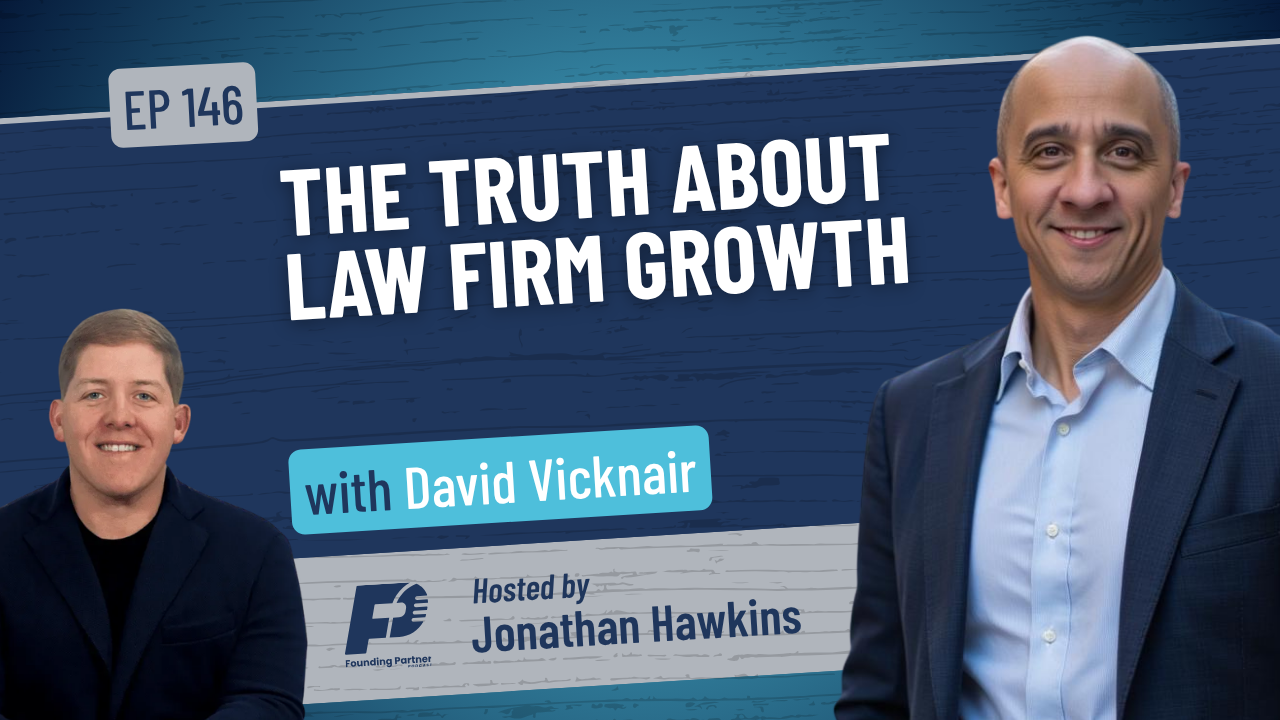
There is no shortage of advice telling law firm owners to grow faster, hire more people, spend more on marketing, and scale.
David Vicknair has a different perspective.
As a personal injury attorney and partner at Scott Vicknair, David has built a growing practice in one of the most competitive personal injury markets in the country. But his approach is not growth for growth’s sake. It is about creating a firm that serves clients well, gives talented people room to grow, and allows its leaders to spend more time doing the work they do best.
That philosophy has shaped everything from how the firm markets itself to how it welcomes clients, hires employees, communicates internally, and decides when growth is actually worth pursuing.
Building a Brand People Remember
Personal injury advertising in New Orleans is competitive, and David knew that simply showing up would not be enough.
His first attempt at a commercial in 2022 did not work the way he hoped. David described the experience as taking $50,000 and essentially burning it. But that failure introduced him to people in media and advertising who helped him better understand the landscape.
By 2024, the firm was ready to make a more strategic commitment.
David had spent years saving and setting aside capital because he did not want to rely on debt to fund the push. When the time came, he told his team he was putting his chips in the middle of the table.
That commitment also came with a clear creative philosophy. David wanted advertising that stood out without diminishing the legal profession.
The result was humor, self-deprecation, family, and personality. His mother became a recurring part of the firm’s commercials, and the ads began attracting attention from potential clients, other attorneys, and even strangers who recognized David in public.
For David, that recognition means something bigger than visibility. It means the marketing is creating relationships.
As he explained, “What we do for a living, both internally and externally in our firm, is simply all about relationships.”
Turning Hospitality Into a System
That focus on relationships does not end when someone becomes a client.
David believes hospitality should be intentional.
Clients and visitors arriving at the office are offered a menu of refreshments. Planned guests may find fresh cookies baking in the lobby. Those cookies are wrapped with a review reminder and QR code. Visitors may even see their names displayed on a welcome screen.
The firm also created a Client Appreciation Center with comfortable furniture, refreshments, client reviews, merchandise, and a more relaxed atmosphere than a traditional law firm conference room.
David did not pretend every idea originated with him. In fact, he openly talked about learning from other law firm owners and adapting their ideas.
What matters is the principle behind them.
“It’s about doing intentional things that show to others that we have taken some time to think about them.”
That same principle extends throughout the life of a case.
Case managers are expected to make outbound calls to clients every month, and the firm tracks and audits that communication. Team members also receive an annual budget they can use to send clients thoughtful, non-branded gifts without waiting for David to approve every decision.
The system is structured, but the goal is deeply human. Clients should know someone is thinking about them.
Creating an Employee Experience Too
David applies the same intentionality to his team.
One seemingly small example is when new employees begin work.
They do not start on Mondays.
David realized Mondays were already filled with the pressure of beginning a new week. Starting someone new on Wednesday gives the existing team time to get into rhythm and gives the administrative staff more time to make sure everything is ready.
When a new hire arrives, their technology and accounts are set up. They receive a welcome card, branded items, and a poster signed by the team. Their first morning includes breakfast with the people they will work with, followed by scheduled introductions across the firm.
It is another example of hospitality, only this time the experience is designed for the people serving the clients.
That investment matters because David believes the firm cannot deliver an exceptional client experience without first building a team capable of providing it.
When a Crisis Changes Everything
David’s leadership journey has not been without painful moments.
In 2020, he woke up one Saturday morning to discover that two partners had left and taken files with them.
At the time, the experience felt like betrayal. Years later, David sees it differently.
“In some ways it’s one of the best things that ever happened to me.”
The experience pushed him deeper into operations, management, and marketing. It strengthened his working relationship with Brad Scott and forced him to think differently about what kind of organization they were building.
It also changed how he views loyalty and conflict.
David does not believe difficult professional relationships have to end with hostility. His preference is for lawyers to sit down, have the uncomfortable conversation, work through the details, and move forward professionally.
The experience was painful, but it ultimately helped create clarity about what the firm needed to become.
Growth Is Not the Goal
Perhaps the clearest theme of the conversation was David’s frustration with one word: scale.
He believes law firm owners are too often told that bigger is automatically better.
David disagrees.
“You have to make your law firm what you want to make your law firm.”
For one attorney, that may mean a three-person practice. For another, it could mean hundreds of employees. Neither is inherently better.
David chose growth because the way he was practicing was no longer sustainable. He was working weekends and spending too much time on administrative work that did not fit his strengths.
As the firm grew, he was able to move closer to his own sweet spot while watching other team members do the same.
Growth also gave the firm resources to invest in employees through increased compensation, retirement benefits, training, and additional opportunities.
But David is clear that growth comes with pressure.
He described the previous year as one of the hardest of his professional life because of cash flow challenges and the cost of investing ahead of anticipated growth.
There is no magical point where everything suddenly becomes easy.
If you want to grow, David’s message is simple: “Buckle up. It ain’t easy.”
Becoming the Leader Growth Requires
As the firm changed, David had to change too.
He says he has become a better listener, developed more empathy, and learned to think more carefully about decisions instead of reacting immediately.
Communication has become particularly important.
Rather than simply saying no to an employee’s idea or request, David tries to understand the feedback, make the decision, and explain why.
He is also thinking further into the future.
The firm has people David believes could become long-term leaders, and he is already considering how to prepare them for those responsibilities. Leadership development cannot begin the day someone receives a title. It needs to happen years earlier.
For David, that development is about more than helping someone perform better professionally. He has experienced how changing the way you think at work can improve the way you approach the rest of your life too.
Closing Reflection
David’s story is not really about scaling a law firm.
It is about intentionality.
Know what kind of firm you want. Decide what experience you want clients to have. Build systems that reinforce it. Invest in people who can carry the mission forward. And when something does not work, learn from it instead of allowing it to define you.
Growth can create opportunity, but growth itself is not the destination.
The better question is whether the firm you are building is creating a better experience for your clients, your team, and yourself.
That is what makes David’s perspective so valuable for founders. You do not have to build someone else’s version of success.
You have to build the firm you want.
AND MORE TOPICS COVERED IN THE FULL INTERVIEW!!! You can check that out and subscribe to YouTube.
If you want to know more about David Vicknair, you may reach out to him at:
- Website: www.scottvicknair.com
- LinkedIn: https://www.linkedin.com/in/david-vicknair-b7454321/
- Podcast: Overruled Podcast
Connect with Jonathan Hawkins:
- Website: https://www.lawfirmgc.com/
- LinkedIn: https://www.linkedin.com/in/jonathan-hawkins-135147/
- Podcast: https://www.lawfirmgc.com/podcast
Jonathan Hawkins: [00:00:00] So another post that you made, I think, was the topic was the decision to grow your firm. And it wasn’t clear in your mind that you wanted to do it or that you should do it. And so it was sort of a debate you went through. And that’s something that a lot of people, a lot of founders and firm owners go through.
David Vicknair: Yeah, I mean, I was talking to, I have a friend up in Pennsylvania, Rich Godshall, I was talking to yesterday. I think the introduction of this word scale in the law firm world is the most frustrating thing in my existence right now. It’s just a buzzword and a fad, and it’s just very frustrating to me that the industry is trying to tell everybody that they have to scale, right?
Like, it’s stupid. And the biggest lesson that I learned from Ben Glass, and I think is the best lesson, is you have to make your law firm what you want to make your law firm.
Welcome to the Founding Partner Podcast. Join your host, Jonathan Hawkins, as we explore the fascinating stories of successful law firm [00:01:00] founders. We’ll uncover their beginnings, triumph over challenges, and practice growth. Whether you aspire to launch your own firm, have an entrepreneurial spirit, or are just curious about the legal business, you’re in the right place.
Let’s dive in.
Jonathan Hawkins: Welcome to Founding Partner Podcast. I’m your host, Jonathan Hawkins. Today, I’m interviewing David Vicknair. He is a personal injury lawyer out of New Orleans, and his firm is Scott Vicknair, and we’ll talk about that because he’s got some good commercials about that. But I guess you do personal injury, David, and your, your partner does, I think, some probate litigation, so we’ll get into that too.
But welcome to the show, and why don’t you tell us a little bit about your firm, the, you know, sort of the stats you know, what kind of practice there is, how many attorneys, that kind of thing
David Vicknair: Sure. Yeah. Thanks so much for having me, Jonathan. Really happy to be here and chat with you today. As you mentioned, my [00:02:00] law partner, Brad Scott, does estate work. His practice has around 12 to 15 full-time team members in the estate litigation and estate planning group. On the injury side of the firm, we have somewhere around 36 to 37, I think now, full-time team members.
About seven to eight of those team members are remote in Mexico but they’re full-time with us. And a couple of those team… One of those team members in Mexico she’s been with us a little bit over two years. She’s just incredibly talented and an amazing person, was our first, one of our first hires down there in Monterrey in Mexico.
And so, my practice has, I have about eight attorneys working with me in the injury group plus me, that’d be nine of us. One of those attorneys Jordan, is a full-time new client specialist, so she works with a, with the, we are thought of and talked to as like the intake team. She- we have an attorney in that team.
And the other the other seven lawyers and I are both, [00:03:00] are working in active file management, both in the pre-litigation and in the litigation pod teams that we have structured across the firm
Jonathan Hawkins: Very nice. So, so the, I guess, estate litigation side, is that an hourly or a contingency practice or a mix?
David Vicknair: It’s a mix. So, you know, someti- a lot of it is hourly. In certain situations, Brad will agree to do certain things on a contingency, but it just depends. You know, the, it can be a bit risky depending upon which side of the estate he’s representing. Are they claiming they’re an heir but they have their affiliation issues going on, things of that nature.
So there have been some really big estates that he’s done on a contingency through administration in the past, and he, I think he’s got a few right now, but it’s mostly hourly
Jonathan Hawkins: So let’s dive into that a little bit. I’m curious about the challenges of operating a firm that has hourly and contingency. [00:04:00] And I know firms that do it, and I know others that it, it can become a challenge because, you know, the business models sometimes don’t work together. I’m curious what you guys have experienced and how, how you guys make it work
David Vicknair: From an operational standpoint, I think it’s very easy because Brad and I used to have that challenge, and we were very focused on, or at least our mindset was we have to be in the c- same case management program. And I think that’s where most firms have the challenge, candidly, is just accepting that, like, it’s gonna be fine if you break out your case management programs and be in separate case management programs.
‘Cause as you know, some case management programs are built out very good for hourly practices and support them very well, and some are built out very well for contingency practices, but they’re very poor at hourly hourly SOPs, hourly billing technology, the stuff in there for the billing software. So I wanna say it was maybe trying to think, maybe [00:05:00] four years ago, Brad and I were at a conference, and we met a really big firm that has two practice groups that are very separated and seemingly not contiguous and working together.
And we were like, “What practice management systems are y’all in?” And they told us the two, I forgot what they were. And we said, I remember asking like, “Well, what are the challenges with that?” Expecting them to like rattle off like 10 things, and they were like, “None.” And then we both kind of looked at each other, and we were like, “We’ve really made this much bigger of a deal in our heads than it actually is.”
And so operationally, once you get out of the same case management program, I find that the challenges are much smaller, is my two cents on that.
Jonathan Hawkins: Nice. Okay, that, that makes sense. All right, so let’s go back. So before you started this firm, what were you doing?
David Vicknair: I was working for a local attorney here in New Orleans. He was of the generation before there was mediation, which meant that he tried a hell of a lot of civil trial [00:06:00] jury trials. I think Rhett had, I think he’s tried, which is unfathomable in today’s world of the civil litigation arena, tried 200 civil jury trials.
And so he was a really good trial lawyer, and he was, when I started working for him back in 2011, he was over being a trial lawyer from the standpoint of like, you know, w- litigation is hard on you, the deadlines, the pressure, the, the system is inherently built up to be adversarial. And so, you know, a lot of people who are like 20, 25, 30 years in litigation, they’re like, “I’d like to phase into a different type of thing in law that doesn’t mean I’m always the one in the active conflict zone.”
And so when I started working for Rhett, that’s kinda where he was, is like, “I wanna figure out how I do way more transactional work,” ’cause he was doing a lot of that too. And for me, that was like, looking back, the best thing that ever happened to me, and finding my place working [00:07:00] for him because he just had all of his files and was like, “Go.”
And so that afforded me the opportunity to very early on take a lot of depositions, go to court on interlocutory motion hearings all the time get to do a lot of things that normally the, a first, a new attorney four years out doesn’t always get afforded the opportunity to do. And that really helped me build up a deep skill set only four years out that I don’t think I would’ve been nearly… I c- I shouldn’t even say don’t think. I know I wouldn’t have had the confidence to, to even take the leap to go out and build my own practice had I not felt like I had some skills developed to the point that I did four years out, if that makes sense.
Jonathan Hawkins: Yeah. And so you went out with your partner, right? W- was it, or was it just you?
David Vicknair: So Brad had, Brad was working at a different firm, and he had left that firm to go out on his own and start an estate practice. And he [00:08:00] was… I ended up going and leased space from him. Essentially what he said is like, “Hey, I have an office manager. I have this great office,” which was a very nice office.
He’s like, “This is what your overhead would be.” I still have the Excel sheet in my drawer because it was like I looked at it last year, and it’s like a mix of emotions. Should I cry both because of the emotional aspect of seeing it, but also cry about how much more my overhead is now?
Jonathan Hawkins: I know, man. I can’t even imagine. I can’t even imagine.
You probably chuckled and it probably brought you so much stress back then. You’re like, “How am I gonna make this?” And now
you’re like,
David Vicknair: it’s a great… You’re 100% right. It’s a great, all these cliches in life, the older I get, the more true they are. It’s a great lesson and like, yeah, it, it, I had the same feelings back then as I have now and the pressures of, of meeting payroll, of meeting the expectations of my team. You know, back then it was stressing, can I meet this every month?
I think it was like 15 or 1,800 bucks a month. And so, he just, he- Brad was just an [00:09:00] amazing mentor for me for like, hey, it was almost like I wasn’t completely jumping out of the tree and falling. It was like, I’m gonna have my little wing around you and be there for you. You have somebody to collaborate with.
You can rent some office space from me, and that’s kinda how I got my start.
Jonathan Hawkins: So you had the trial experience, you had all of that, you had a place to go, but what, what pushed you? You know, there’s always a spark, a reason, something. Were you always an entrepreneur? Is this something you always knew you were gonna do, and then eventually you said, “All right, now’s the time,” or, you know, what, what led to it?
David Vicknair: No. I think what led to it was I am very much a logical person, and so I just want logic to control all things in my life, if that makes sense. I don’t like over-complicating things. I don’t like doing things that don’t make any logical sense. And logically, there were just things happening in Rhett’s practice that were fine.
He’s got an amazing practice. He still practices. He’s an amazing lawyer. But [00:10:00] logically, with all the technology that was coming into law at that time, we talked a little bit about case management with Clio, My Case, and I forget the other one, were the big things back then in 2011, 2012, 2013. We had never had this cloud-based case management software, and paperless was like…
Now people just understand a lot of firms are paperless, but back then that was, like, a big thing, right? And so, you know, as somebody who’s just been doing it a certain way for a long time, Rhett was resisting all that, and I was wanting to do all that. And so I- I just knew, I think in intuition-wise, that there was a much we- better way to practice law than the way Rhett’s setup was, and I think that is inherently what pushed me
Jonathan Hawkins: So back to the spreadsheet from long ago that had barely any overhead on there to today where I know you’re, you’re, you… That’s completely different. So I know you’re doing y- you know, you’re doing some NIL stuff from what I can tell which [00:11:00] is a lot more than 1,800 a month, I’m sure. Which… But it’s also pretty cool.
So, you know, how did you get into that? You know, what led you to say, “Hey, let’s try it,” and how’s it going so far?
David Vicknair: Yeah, so I think what led me into that was thinking from the standpoint of I’m in a very, probably one of the, if not the most, one of the top five competitive personal injury markets in the country in New Orleans, and so I am committed to building our brand as an organization. And that funnel, that channel NIL association with local athletes, promoting them, infiltrating their local communities and friends and families to, for them to be aware of our brand, what we do, partnering them, was from a marketing standpoint very appealing to me.
I’m a football player, I love sports. I have a lot of people on my team who love sports, including our marketing coordinator, who really kind of has run with that program, who’s sitting behind the computer here, Miles. And, and so it’s just a [00:12:00] fun, amazing way to meet new people, promote them, and promote our brand.
And really, I think it’s a lesson in recruiting, retaining, and elevating really amazing team members, ’cause I was just talking about Miles and he’s sitting here. And this was my idea, this was my vision. I was very involved with it at the beginning. We kind of kicked it around one year and we maybe did a couple, two or three of them, and we did okay, but it was, like, not really what I wanted it to be, right?
And every year it’s gotten more towards my vision with Miles. I mean, Miles kind of just runs with it now. I, I give him the general framework to him and Whitney, and Whitney kind of has just let Miles run with it, and he selects the players, he knows the parameters of what we’re looking for. And then Mariana, who is this amazing, our, I mentioned her earlier, our amazing marketing assistant who does all of our graphic design and editing.
Like, every year the editing and the graphics just get more professional and amazing. And for me, it’s one of my favorite things that we do [00:13:00] because it’s a, it’s this amazing finished product that we are promoting these local athletes and building a relationship with them, their family and friends. And at the end of the day, it feels good.
It’s, you know, it’s not breaking our budget like TV does. And ultimately, it’s about the relationship with those athletes, promoting them and marketing. And what we do for a, a, a living, both internally and externally in our firm, is simply all about relationships.
Jonathan Hawkins: So how do you decide which athletes, which sports, et cetera? I’m curious, what, what’s your thought process behind that?
David Vicknair: great question. So it’s, it’s not precise because we can’t granularly look at the follower count and dissect it at a precise level, right? So we have some basic rules that they know now. One, we want the athlete generally to be from here, because we believe if the athlete’s from our market, that there’s a better likelihood that a big percentage of their follower base who engages with them will be in our market.[00:14:00]
You know, we’re not selling Coca-Cola, we’re not selling a product that is nationwide. It’s a product that is limited to Louisiana, so we have to be in front of Louisiana people as much as we can. So that’s one framework. The second thing is we want them to have an engaged following base. So we’ve kind of batted this around, and I’ll be like, “Myles, he only has so many followers.”
And Myles’s like, “Yeah, but you idiot, you didn’t look. Look how many people are commenting and liking.” So, like, sometimes we’ve found that the follower count alone is not a good indicator of what the value of that particular athlete is, because a lot of it could be spam and a lot of it could not be really engaged.
So sometimes we will go and sign an athlete that probably other brands or people have no interest in because maybe they have 3,000 or 4,000 or 5,000 followers, and they’re like, “That’s not that many followers.” Sometimes those are our best athletes that we sign from engagement, from sharing, and things of that nature.
So it isn’t an exact science. It’s a little bit of intuition, a little [00:15:00] bit of feel, a little bit of, like, digging around and looking. But luckily, in the world that we live in, AI has made that a little easier and can help Myles, for example, cumulate out a list. And so this year, Myles cumulated out a list, and I was like, “I’m challenging your entire list,” ’cause I went and cumulated my own list in AI, and boom, boom, boom.
And Myles’s like, “Well, let me tell you about that, because you didn’t think of this, this,” and he was right and all that. He’s like, “However, you did find two or three athletes I hadn’t sourced, and I’m gonna reach out to them. They fit our criteria.” So it’s, it’s a fun process, to be honest with you. I love football.
I love all sports. We sign volleyball players, basketball players, baseball players. We signed a che- we’re hoping to sign a cheerleader this fall. So i- it’s really been a fun process, and we’ve expanded it beyond just football, which is where we started
Jonathan Hawkins: So I don’t wanna make any assumptions. So I… Are you, are you an LSU fan or
David Vicknair: I, I am a, I’m a Nicholls State University fan first. I’m an LSU fan second. So thank you for not making that assumption. But I am an [00:16:00] LSU fan.
Jonathan Hawkins: Yeah, so yeah we’ll, we’ll timestamp this. You know, the, the big controversy here over the last week is you know, trying to sign the former NFL players,
David Vicknair: Yes. Yes.
Jonathan Hawkins: down. Getting shut
David Vicknair: And the SEC just came out and stopped it, and my- I will comment on that because I do have an opinion, and you’ve raised it, which is I don’t blame Lane Kiffin and LSU for playing the cards that they were dealt and doing it, and I don’t blame the SEC from stopping it because I… Personally, I don’t like the idea of an NFL player going up to the NFL and then coming back to college.
That’s just me. But I don’t blame LSU or Lane Kiffin from doing it, right? Like, they, that was the system. That was the rules. They played the game between the lines. Now the lines have changed, so they can’t do it. Yeah
Jonathan Hawkins: Amen. Amen, brother. All right, so let’s, you mentioned advertising, and I know, I know New Orleans is, you know, I guess you’ve got, is it Morris Bart? I mean, I don’t know who the big players are down there, but you know, Atlanta is very similar. It’s, it’s very competitive. [00:17:00] So tell me about when you got into the TV, radio, whatever it is you do, the mass media, and the thought process as you were going into it, because I’ve got a lot of clients that are in that space, and it’s not the kind of thing that you can just dabble.
If you’re going in, you gotta go all in for a long period of time. So it’s not a, you know, the people that dabble are just, you might as well just burn your money. And so I’m sure you had, you knew that going in. So take me through, all right, we’re gonna do it and we’re gonna commit. Take me through the process
David Vicknair: It’s a great question. So we shot this crappy commercial back in 2022, which was, I mean, worse than vegetable lasagna. It was like, I mean, maybe fish lasagna. It was terrible. And, and I don’t know why we did it. We ran it on OTT. It was like I took $50,000 and put it in a trash can and burned it, it was so bad.
However, like most things in life, I look back on that, and spending that money led me to go to a TV trip [00:18:00] with WVUE, the Fox station here in New Orleans, because I had run that through them, and they do these client incentive trips. And so that trip gave me an opportunity to really be around media buyers, other advertisers, things like that, and just pick their brain and ask them a lot of questions, and it really got a lot of creative juices going in my brain, got me thinking.
And so really in 2023, I got more serious about thinking about, like, I think I’m– we’re gonna potentially do this and, and go into the TV landscape. And we looked into it, we researched it, and then in 2024 we started. But it was a, in a very strategic way, in a very limited way, in a way that we thought best gave us the most reach for the amount of money we were gonna spend that first year, which in comparison to our competitors is like pennies.
And I think the strategy that we went with in that year was a good one, and we just have expanded it since. But yeah, I, I remember telling the firm, the team back at our… We [00:19:00] have like a state of the firm every January and every quarter, and the, the January one’s more of an annual. And I remember telling them, like, “This is what we’re doing this year.
This is how much money we’re spending on marketing. This is the plan.” Like, I’m taking all my chips and I’m putting them all in the middle of the table. And for me, I, I didn’t wanna do it. I, I’m not like, you know, you get in this space, you get all these people who reach out to you all the time, like, they all wanna loan you money, and they want the, their, you to take their loans and pay high interest debt, and there are some firms that do that.
I’m not, like, commenting negatively. I’m just saying for me, I never wanted to have to do debt to do any of this stuff. And so for me, it was about over the years investing, saving, stowing away capital, almost like I think about like a bear hibernating for the winter, and ensuring that I had enough capital allocated to the side, available as emergency funds for a lo- a lot of money to be able to ensure the stability of the firm if we went ahead and took this risk and put all our chips in the middle of the [00:20:00] table.
And we decided to do that in the middle of beginning of 2024, and we have never stopped because I am 100% in agreement with you. If you’re gonna go into a brand funnel, you go in it, you commit to it, you invest in it, and you don’t, you don’t retract, you just put more. And so, you know, we have strategically not gone into boards and billboards.
We have strategically not gone into radio yet, but we’re probably going into radio next year. Spoiler alert, Miles. And I’m just one of those people who I’m like, if we’re going into a brand funnel, we’re gonna commit the resources to be able to, like, actually be in that funnel and make an impact
Jonathan Hawkins: Well, I watched some of your commercials and they’re very good. I li- I really like them. So, so a couple things, you know, the, I mentioned this in the, teased it at the early, at the beginning, you know, Scott McNair is the name of the firm, and you sort of play on that, and the people are calling, I think they’re calling you Scott McNair, and you’re like, “No, I’m David McNair.”
So, so I, I like that. So you got that one, and the other one was ambulances chase [00:21:00] you instead of…
David Vicknair: We have a lot of different- we, we have some constant themes in our TV creative, and that was the, the Scott Vignere theme is, is the baseline theme of a lot of everything that we do. So every creative, we try to fold that into it in some sense. And my mom is in a lot of our commercials. We have all those ambulance spots.
So the, the point of a lot of it is just, is simply not only to stand out, but I also didn’t… I’m a big believer in the, in the profession and, you know, we’re a business, but we’re also a profession. And so to me, it’s very important in our brand messaging and the things that we do, that we do it in a different way that doesn’t shed what I believe could be considered a negative connotation on the profession.
Now, that being said, I’m sure people call me all kind of nasty names behind my back. I couldn’t care less. Like, if y- I was gonna do this, you have to accept, like, if you’re in the public eye a bit, that you’re gonna, you know, take the arrows, take the shit people say about you. It is what it is. But I, I, I at least feel some level of obligation to the [00:22:00] profession to put creative out there that is memorable, funny, and positive, if that makes sense.
Jonathan Hawkins: Well, it’s good. I mean, definitely you need to be different. I mean, that’s just a given. It, it’s a little light, lighthearted a- and humorous and, you know, it’s pro- I don’t know what the others in, in New Orleans are doing, but it definitely stands out. So, so good job. I’m curious what reception has been when you hear from people in the community, the ones that will not, that aren’t talking bad behind your back, you know? What do people say?
David Vicknair: Well, I, I, we have, I mean, we get a ton of positive feedback on our commercials, and probably, you know, pr- Miles, for example, was at a party with a, a insurance defense lawyer who, like, brought it up to him. I get insurance defense lawyers all the time saying amazing things about our commercials, which is probably the cleanest set of indica that they’re positive and, and, and having a good reception.
I think, you know, for me, I, there’s two things I think about [00:23:00] when create- making creative. I am not like, … I am who I am. We’re all different, right? I’m not bringing the hammer down on anybody or, like, doing the, the Texas Law Hawk, even though I laugh at those commercials, you know what I mean? Like, that’s not me.
And so being a little self-deprecating and making fun of yourself, highlighting my mom, I am very close to my mom, doing things in a dry humor type way, that is who I am. And so I think it makes me feel on camera a bit who I am, number one. But number two, I think pe- it just, people like it. Like, they like a joke.
They like a lawyer who can make fun of themselves. I think they like, I get the, the biggest thing we get now is everybody likes my mom, and my mom more than me. And so guess who keeps coming in our ads more? My mom. So, like, it’s one of those things. Like, I think people, there is an element to that where people wanna see your family, they wanna see that you’re a normal person, that you’re in the community, and you’re not something, you know, stuff that we, we see all these terrible lawyer ads where people put these ridiculous [00:24:00] things out there and people can’t relate to it.
And, you know, you’re not gonna be for everybody, but from my perspective, your, your marketing and your brand should be additive, not reductive, and a lot of the personal injury marketing I see is, is somewhat reductive in trying to micro-target specific populations. And I’m like, you know, in my business, everybody who’s 18 plus and gets in a car, or 16 plus and gets in a car accident with, who’s driving, or anybody who’s in a car accident as a passenger is a potential client, so I wanna appeal to as many of that public that I can
Jonathan Hawkins: You know, I was, I was at dinner, I don’t know, a year or so ago with a client that, that does TV and, and it was interesting. W- we’re at the restaurant and then of course we had our waiter, and then all the other waitstaff would come by and, “Are you so and so?” And I’m like, “Yeah.” And they’re wanting pictures.
David Vicknair: It, it, it
Jonathan Hawkins: you– I’m sure that happens to you, right?
David Vicknair: it happens a lot. I just had my first one out of state when I landed in Salt Lake City a month ago. They wanted to meet me and talk to me. And you [00:25:00] know, I’m just a nice person, I think. Like, I like talking to other people, so I don’t mind that at all. What it has made me do, to be honest, is be more aware and self-aware of my surroundings.
And so, you know, when I’m at the grocery store and I’m in an aggravated mood and I’m not in the mood for somebody to be like, “Scott Bicknell,” like, wants to talk to me, it’s like I just don’t have the choice anymore. You know, you have to be self-aware and just be in a good mood as much as you can whenever those situations arise.
Because, you know, I just think about my team back at the firm when that happens. It’s like I don’t have the luxury of being in a bad mood and being like, brushing past this person because you know, if they had that interaction and it’s bad, then they go and tell 20 people about it and it hurts the organization.
So that happens a lot, and I take it as a compliment that our marketing’s working. And most of the time, if not all, those conversations are just really nice. When I was leaving to go to a conference a week and a half ago, a guy walked up to me in the airport and was like, “Scott Bicknell.” He’s like, “I’m kidding.
I know your name’s David from the commercials.” And so I introduced myself. We talked for five or six minutes, [00:26:00] and he’s a very nice guy, New Orleanian, and he was walking away and he said, “Well, I can’t… Glad to meet you. If I ever need you or anybody in my family does, they coming to y’all.” So, you know, that’s been a fun part of the process as well.
Jonathan Hawkins: That’s cool. That’s cool. Good point too. Y- y- you’re to the point, I mean, you’re a, you’re a public figure. You cannot have a bad day publicly, y- y- ’cause you never know who’s gonna have the cellphone recording. You gotta, you gotta be on
David Vicknair: And I can’t wear the junkety stuff I’m wearing in my house to the grocery store anymore. I used to get away with that. It’s just like brim a cap down.
Jonathan Hawkins: Big sunglasses, huge hat, right?
David Vicknair: Dornieax is probably the worst place that it happens, by the way, Miles. Dornieax is a hotspot in Metairie for Scott Vignere sightings, so. Right. All right.
Jonathan Hawkins: Nice. All right, so I wanna shift a little bit. So another thing that you’re really big in with your firm is client experience. You really, I think, I get the sense that you guys really put a lot of focus on that and a lot of thought. Uh, It’s not, it’s [00:27:00] really well thought out. So I wanna go through some of those things and let you comment on them.
One of the things I thought was really interesting, so when anybody comes to your office, you have this, you said you have a snack menu that’s on a leather menu. So, who came up with that? And I assume it’s a hit, man. I’ve never heard of anybody else doing that, so.
David Vicknair: That’s an idea I stole from Craig Goldenfarb, and I learned about that from him in the Loews Hotel in Nashville in 2022 at the Great Legal Marketing Conference. Brad and I were just having a drink with him, and he told me about this whole. I kind of feel like a lot of lawyers have, like, associated me with all this stuff, and I just stole the lobby stuff from Craig, at least the menu and the cookie.
‘Cause Craig was baking cookies in his lobby, and he’s like, “I had a menu. I have a menu on a silver platter.” And I just loved it immediately because, you know, Craig’s rationale for it, Craig’s a great guy and an awesome lawyer, and down there in Palm Beach, Florida. And his rationale is like, “Look, not all of our clients go out to dinner every weekend. Like, so if you could give them a little bit of that experience of [00:28:00] being at a restaurant when they come into your firm, it’s gonna mean something to them and stand out.”
And so originally it was on a silver platter, but then my friend Zach Pritchard over there in Cartersville, north of Atlanta, Georgia, he took our menu and then put it on a branded leather backing, and I was like, “That looks better than a silver platter, so I’m stealing that from you even though you stole the menu from me that I stole from Craig.”
So, that has been a huge hit. We’ve tinkered around with the menu here and there. We had a lawyer here, one of my longest tenure lawyers was like, “I think we should offer sparkling and still water,” so we do that now. When we have planned guests, we have a cookie baking, cookies baking, so it smells like cookie in the lobby.
We hand out cookies. They’re wrapped. They have a sticker on them that says, “We love reviews,” with a QR code for reviews, and that is a huge hit. We just had a big deposition in a tragic case this week with tons of lawyers and people in the office, and all these lawyers are like, “This is unbelievable.”
They’re eating their cookies. They love it. They’re like, “I can’t believe our name was on the [00:29:00] TV,” ’cause we have a TV in the lobby for planned visitors. We put their names on the TV. And i- it’s really not rocket science. It’s about doing intentional things that show to others that we have taken some time to think about them, and that’s what it all boils down to.
If you really think about what hospitality is, is figuring out how do you systemize a way to make a unique experience for the people that you interact with in your business, whether you’re in the restaurant, law, whatever business it is.
Jonathan Hawkins: And you make it memorable so they, so they will think of you again. And it sounds like everybody wants to have their depositions at your office, even, even the defense folks, right?
David Vicknair: look, they’re, they’re a part of the process in, in allocating money for our clients. So, you know, I, I’m a huge believer in you get more bees with honey. So, we will shovel cookies out to the defense folks all day long.
Jonathan Hawkins: You need to have your mediations there too. Just get them fat and happy. Just do it all, man. Just…
Real quick, if you haven’t gotten a copy yet, please check out my book, the Law Firm [00:30:00] Lifecycle. It’s written for law firm owners and those who plan to be owners. In the book, I discuss various issues that come up as a law firm progresses through the stages of its growth from just before starting a firm to when it comes to an end.
The law firm lifecycle is available on Amazon. Now, back to the show.
Jonathan Hawkins: all right. So another thing you do which I thought was cool, was the, the Client Appreciation Center. So tell, tell me what, what is that, and where’d you get that idea, and how, how do you make that work?
David Vicknair: So, Mike Morris and John DiChaslo out of Michigan was who I saw this from, and they, I just loved it. Like it was — If you think about all of our law firms, the conference rooms are a bit stuffy, right? It’s, like, stuffy, and i-it’s a conference room. It’s like, it’s not too welcoming, it’s not incredibly inviting.
And so for me, it’s just another way to evidence to our clients, like, “Hey, we put real money, time, and effort, and intentional process into building out this center for you.” And so that was a [00:31:00] project of mine at the beginning of the year, was to design it, build it out. Miles and our marketing team, Mariana and Whitney, helped me with it.
Mandy, who’s an administrative assistant in our administrative department, our office administrator, helped me with it a lot too. And so we have a screen print wall design in it. We have some nice furniture in it that’s a little, like, leather chairs, a table, a little less like rolling chair type structure set up.
And we really put a… We put a TV in there, so it also is displaying, like, the welcome message and all the stuff that we have run on the TV. We have a custom, like, coffee and espresso machine. We have some candy in there, and we have a bunch of walls of client reviews on the wall, along with merchandise racks, which have a bunch of different cubbies of different merchandise, and they can get a custom Scott Vignere tote and just go in there and pick out the merchandise they wanna take with them and take them home when they’re doing their closings if the case is resolved either at settlement or after verdict.
And then, you know, sometimes we have client meetings in there. It’s just a much [00:32:00] more welcoming and inviting space to the clients and evidencing again to them that our mantra, one of our primary core values of hospitality, is putting that client experience first.
Jonathan Hawkins: I like it. So, we talked about a couple things. Are there any other things that you think, “Hey, I’m really proud of this as part of this experience”? And, and you know, it starts with intake and all the way till you, you hand them their check, but even it goes beyond that. So, you know, any part of that process that we haven’t talked about
David Vicknair: Yeah, I mean, as a lawyer, the, you know, no matter how many conferences you go to and other lawyers you talk to, the hardest thing to do consistently well over and over again, day in, day out, is communication with the client. And I think about this from the standpoint of if I was coaching a football team, how do I convince my offensive lineman to consistently get off the ball fast and move their feet well to be in the best position to block?
How do I position my defensive lineman to get a quick start [00:33:00] on the snap, to be agile, to get sideways and get around the tackle, et cetera. It’s the same thing. It’s about constantly messaging to the organization the importance of client communication, returning phone calls in 24 hours, and, and auditing and watching it.
And so our outbound call program with our case managers is one of my most proud things that we do. We track it, we audit it. We don’t just take… You know, we have reports that come out and show what percentage of their clients that our case managers make an outbound call to every single month. They’re supposed to make one.
And then we publish it firm-wide once a month, which I think is important to show the people who did really well that month, and for the ones who slipped up a little bit, like give them a little motivation. “Hey, you gotta come back next month. You gotta pick this up.” And, and sometimes if they’re a little bit lower, it’s like they had a vacation or they were sick or something like that most of the time because one of our big things is communication, so we will not tolerate somebody who doesn’t communicate with the clients, number one.
I’m really proud of that. I’m also really proud of our client appreciation gifting program, where we have each team member has their own budget, 600 or [00:34:00] 700 bucks a year to just give gifts to clients for any reason whatsoever, and they don’t have anybody telling them the guidelines or anything like that.
If they wanna… I tell them not to do it, but if they blow all 600 bucks on one client, it’d be pretty stupid, but they could. And so they order non-branded gifts and send it to clients because, you know, I’m not on the phone with all of our clients every day. I’m not the one who knows who needs a gift and who doesn’t, or who maybe needs a little bit of a pickup, or maybe, you know, they think a client’s just nice and wanna send them a Starbucks gift card, a $20 Starbucks gift card to get some coffee on us.
So to me, that’s m- those are two of the things that I’m most proud of throughout the process is the ongoing communication outbound every month and checking in with the clients, talking about their injuries, figuring out do they need other treatment, and then the gifting thing because it’s not pushing a branded gift and it’s also thinking about somebody else and making them see that we were thinking about them.
Jonathan Hawkins: I like that. So let’s shift from client experience. I wanna talk about sort of your staff, attorneys, [00:35:00] employees. And so something I came across that you said your new hires do not start on Mondays, they start on Wednesdays, which I thought was really interesting. You know, most people think of new hires starting on a Monday, and you said, “No, we’re not doing it.”
So tell me about that.
David Vicknair: Well, I can’t think of anything worse than a Monday. And so why would we s- why would we start somebody on a Monday? If you think about it logically, my logical brain, it was like an AHA moment when I read the, there’s a wonderful book called “The Power of Moments,” and I read about this John Deere’s onboarding in that book, and it hit me like a 18-wheeler, and it’s like, this is stupid.
We need to stop being stupid. So, you know, when you think about our offices on Monday, yeah, maybe everybody’s been out of town on the weekend. We had a big Saints game on Sunday, so you had a couple too many beers. You’re a little groggy. It’s like, are we really gonna put a new person in that environment when everybody’s, you’re just getting your week started out on a Monday, if we’re gonna be honest. That’s why Mondays are just kinda, from my perspective, why Mondays are a little [00:36:00] groggy. Tuesdays, you’re kinda like getting in the flow of things. Wednesdays, you’re like, “All right. This week’s moving. Like, I’m going.” And everybody’s just happier on Wednesdays.
I can’t explain it. Like, you know it. We have a joke at Volunteers of America that I volunteer with. We always ask people for money on Fridays ’cause people are happier on Fridays than any day of the week. And so it’s just to put them in an environment where the, everybody around them is gonna be in a little bit of a better mood.
You’re gonna get a bit of a better vibe of the week. And, you know, for the teams who are doing, like, onboarding done well takes a lot of work. Like, I think a lot of people at our firm take for granted, ’cause they don’t see it now, you know, Mandy, Shannon, and a lot of people in our administrative department, all the work that they do to ensure everything is ready day one when somebody shows up.
‘Cause when they get here, all their logins, all their accounts are set up, their desk is set up, all their computer and all their screens are ready. They have a welcome card from me. They have a welcome bag of Scott Vicknair stuff. There’s a big welcome poster where everybody on the team signs welcoming them.
They have an onboarding breakfast that Wednesday morning where [00:37:00] everybody who they’re gonna directly work with is gonna be at that breakfast at quarter to 9:00 to introduce themselves, talk to them, make it a little less overwhelming to them. And they have, like, a schedule for the first day and a half of different people around the firm they’re gonna meet with for 15 to 30 minutes, get to know about what they do, understand the firm a little bit at the outset.
And all that takes a lot of work, and they do a really good job in it. And so I think about them, like the administrative people who set it up. Like, how much pressure is it on them to have to worry about all this stuff over a weekend as opposed to like, “Oh, there’s a couple loose ends on this onboarding that I need to tighten up on Monday or Tuesday”?
It’s gonna make their job a little bit more enjoyable, a little less stressful too. So there’s just no reason, in my opinion, not to do it that way, and I think it’s been well received by everybody who’s started here.
Jonathan Hawkins: 100% agree, man. You know, I, I f- I, I just think of myself coming in on a Monday, just I have a, I’m like, “I gotta get my week started right. There’s a ton I wanna get done.” Last thing I wanna do is have to worry about [00:38:00] somebody new coming in when I wanna get some stuff done. So yeah, I, I… The logic, man, I hear it
David Vicknair: Yeah, think about it. Like, I mean, I think I have crazy ideas over the weekend and I put them in Slack to the marketing team or somebody else. I’m like, “You don’t have to respond to this right now.” It’s just I’m putting it here so I don’t forget. And then you make a list. You’re like, I w- and then you kind of like, “I’m ready to go.”
I’m like overwhelmed on Monday. So yeah.
Jonathan Hawkins: All right. So you can talk as much about this or as little as you want, but I came across a post that you did on LinkedIn. Friday night in 2020, you went to bed after dinner, and then you woke up, and you had two partners that cleared out a bunch of files and, and took off in the middle of the night.
The, the classic midnight run.
David Vicknair: The midnight heist.
Jonathan Hawkins: yeah, exactly. So this, this actually happened to you. So, this does happen, happens, still happens, so
David Vicknair: I can’t believe it still happens or that it happens at all, but it did happen to me, yeah.
Jonathan Hawkins: S- so what
David Vicknair: What would you like to know about it?
Jonathan Hawkins: like? What was that like going through that?
David Vicknair: Weird.
Jonathan Hawkins: Did [00:39:00] you how did you, Maybe I can set the table a little bit. I, I don’t know the, the details, but, you know, many times people out there are building firms and then the rug sort of gets yanked out from under ’em at some point in some way.
I imagine this is one of those times where it sort of felt like, like that a little bit. But obviously you’ve recovered and, and excelled since then. So I’m just curious now, six years later, looking back, you know, any, any thoughts on that experience?
David Vicknair: Sure. Lots of ’em. I mean, it, in some ways it’s one of the best things that ever happened to me, and I had some people in my life at the time telling me that, but it’s kinda hard to see the forest from the trees when you’re in the forest, you know? So it was a weird experience because it was like you wake up on a Saturday morning and these people you trusted and really had a good relationship with kinda…
Yeah, I never really felt betrayal before, if I’m gonna be honest with you, like of a significant way. And so in some ways, experiencing that level of what I [00:40:00] felt emotionally at the time, not mean, but emotionally betrayal, was a, a, a very good thing because it almost, like, opens your eyes and lets you appreciate and value the people in your life who are very loyal even more than maybe as humans we tend to take for granted, you know?
And so that was a positive result in it. You know, I think there’s so many positives from it. It really kicked, put a little kickstarter in me to be more involved in operations and management and, and marketing and not so focused just on practicing, which is kind of where I was at the time. It probably aligned me and Brad Scott way more because there was just more issues and we had other partners that we didn’t always agree with on certain things.
And, you know, it, it is what it is. I think it was the best thing that ever happened to me and Brad in, in, in our practice together from the standpoint of at least at that point in time. And it was probably the best for everybody. You know, it… In some ways I thought it was crazy the [00:41:00] way it played out like that, but maybe it made it just happen quicker.
Maybe everybody would’ve been more reticent looking back to just, like, agree we needed to go different directions because nobody wanted to deal with it at that point in time. I don’t know. But I know Brad’s practice is doing great. We’re doing great, and, you know, I hold no ill feelings or ill will against them for leaving at this stage in my life.
I don’t, you know, wish them well. I don’t want them anywhere near me , but I wish them well, you know? And that’s the thing about life I’ve learned is, like, you don’t have to associate with people you don’t wanna associate with, but you don’t have to wi- wish poorly on ’em, you know? I don’t, I don’t want anything bad to happen to them.
I hope they’re great. But like Charlie Munger says, when you identify toxic people, the first rule of life is get ’em out of your life as quickly as you can. And so in some ways I think it was a good thing that it happened that way.
Jonathan Hawkins: And I’ll say, you know, I’ve seen it over and over in my own life and, and, and with others. Something like this happens [00:42:00] and it, like you said, it really sort of refocused you, and it’s almost like the catapult that you needed to get where you are today. And if, if, if that hadn’t happened, you may not be as far along.
David Vicknair: There very likely wouldn’t be, and I’d have wasted more time being involved in a firm of that structure, which really wasn’t benefiting anybody the way we were structured at that time and our groups were work- were together probably wasn’t benefiting our clients as much as it could have either. So, it wasn’t a good match and, and they, you know, I wouldn’t
I, I think it, you know, in hindsight, if there’s anything I would say about the, the law firms that do that or the lawyers who do that, it’s like, look, like if you’re dealing with rational people, like come in a conference room, have the difficult discussions, figure out how you piece things out together and move apart.
I don’t … Like that would be my preferred modus operandi. And in fact, you know, when I went out on my own, it was a relatively seamless process because some clients came with me, with the lawyer I was working for, right, as we just [00:43:00] kinda like talked through like, “Let’s navigate through this.” Like, “This client’s gonna go with you.
This clien- you know, these clients I feel like I’m ODA part of this contingency.” “Okay, how will we split that up?” Like, and there was just an agreement we entered into. We signed it. It was, it was fine. So, you know, I don’t e- that’s the only thing I would say negatively in hindsight is like, I don’t think it’s good for the profession.
We’re lawyers. Like act like professionals. Get in a room and talk through like, “Hey, we wanna leave. How do we split this up?” I just think that we all, you know, we personally take our own crap to the law firm. We c- you know, you can’t dissociate yourself from who you are as a person and how you hand- and by that I mean how you handle conflict or difficult conversations, which by the way are healthy in a part of law firm life and business life.
And so not everybody is really equipped to handle it. Maybe at that time I wouldn’t have been as equipped to handle it as I am now six years later. So, you know, it all worked out for the best. I hope it works out for them too, but me and Brad are, have done great since then.
Jonathan Hawkins: So another post [00:44:00] that you made, I think, was the topic was the decision to grow your firm. And it wasn’t clear in your mind that you wanted to do it or that you should do it. And so it was sort of a debate you went through. And that’s something that a lot of people, a lot of founders and firm owners go through.
You know, you have all these people out there now that are like, “Grow, grow, grow. You want more clients. Do this, do this, do that.” And you feel like you have to do it, but it’s, that’s not for everybody. So I’m curious sort of what was the decision process for you and how you decided which way you were gonna go?
David Vicknair: Yeah, I mean, I was talking to, I have a friend up in Pennsylvania, Rich Godshall, I was talking to yesterday. I think the introduction of this word scale in the law firm world is the most frustrating thing in my existence right now. It’s just a buzzword and a fad, and it’s just very frustrating to me that the industry is trying to tell everybody that they have to scale, right?
Like, it’s stupid. [00:45:00] And the biggest lesson that I learned from Ben Glass, and I think is the best lesson, is you have to make your law firm what you want to make your law firm. And what I want my law firm to be and what you want your law firm to be and what 10 other lawyers want their law firm to be are all different.
And guess what? That’s okay. Okay? So if you wanna have three people in your practice, that’s okay. If you wanna have 10, that’s okay. If you wanna have 300, that’s great. Like, that’s a good goal to shoot for. Like, do it. Go for it. Build the firm you want. For me, I wanted to grow because I just inherently knew the way I was practicing was not sustainable.
It was me and a lawyer and a legal assistant, and I was working every weekend, and it… I was doing a lot of stuff that I’m not good at, administrative stuff tedious stuff that isn’t the practice of law tedious stuff. Like, I like the practice of law tedious stuff, but I don’t like the tedious administrative stuff.
And so for me, the decision was really about getting me out of the crap that I didn’t want to do anymore. And [00:46:00] what I find every year is not only, like for me, not being selfish, ’cause I’ll get to my team in a second, but for me, every year the more we grow and the, and the bigger we get in different areas, not just size and revenue, which is also a frustration of mine that everybody focuses on that from a growth perspective.
I mean like systems and processes, and the way we practice, and the way we handle a case, and how much do we elevate the case values, and the result because of the training getting better, all the things getting better, bringing in better talent to do each pieces of it. My life gets better ’cause I get more and more in my sweet spot every year.
But I’m watching as my life gets better ’cause I’m more and more in my sweet spot, the bigger and bigger we get, I get to watch more of my team grow and delegate and elevate themselves as well, and get more in their, their sweet spots. And that at a macro level has such an impact across the organization, not just on the firm making more revenue and hopefully more profit, because as you know, cash flow, flow is like the blood of any [00:47:00] organization, any business.
Like if you don’t have blood, you die. If you don’t have cash flow, you die. And so we have to worry about those things. But more importantly, like if you take care of the people in your team, if you take care of the clients, like I do believe inherently the business is gonna succeed. And for me, the growth has allowed me to do different things for the organization as a whole.
You know, we are in a position every year to increase pay to our team members. We are in a position to match their 401s. We are in a position to do different things for them. We’re kicking around some other benefit programs that we’re hoping to roll out next year. And so, you know, we’re — I’m very big believer in, and the organization and leadership is, in investing in the people, because without the people, the clients don’t get this experience.
We don’t grow. We don’t have an organization. And so for me, the growth really enables you to do those things, and it’s enabled us to become a better law firm and practice law better, even though I’m not managing every case.
Jonathan Hawkins: I love that. And again, that’s what was right for [00:48:00] you and may not be right for other people. And the other thing I’ll just say is a lot of people out there selling the scale and the growth, it’s like, if you get here, everything will be great. Well, back to your spreadsheet. It just changes, right? It just gets bigger and a little different, but it
David Vicknair: I’m gonna be honest with you, I think last year was probably, I told my CO yesterday evening, we were talking about something else. Yeah, I think la- last year was one of the hardest years of me professionally because of the cash flow issues we went through, the, the pressure on me a- at that stage of our growth.
And so, like, i- i- if you wanna, like, gr- scale, just be flippant about it, if you wanna grow, buckle up. It ain’t easy, and it ain’t cookie cutter, and there’s no magic place that you get to where everything’s amazing in the land of honeydew drops and, and, and candy. It’s just, it’s not like… There are challenges at each stage of the process, and it is difficult.
Like, and so when I say that, like last year we had, you know, thir- I [00:49:00] think 29 to 30 team members, so we were a, a mature, I would say midsize plaintiff firm, and it was a lo- very challenging year because of the amount of money that we in- reinvested in capital-wise into, into labor, into in advance of i- la- hiring ahead of p- of cases coming in, investing into marketing, and not meeting some of our budget projections.
Like, you’re in a cash flow fight. So it’s not, that ain’t for everybody, and it probably ain’t for me all the time. And so there’s a lot of challenges with growth, and if you’re not good at it, if you’re not… And by good at it, I mean you’re not watching it, you’re not tracking it, you’re not budgeting, you’re not in it, y- you’re gonna have some problems
Jonathan Hawkins: And, and you hit it. It’s, it’s this constant pendulum swing of, all right, we, we’ve got this flow of cases coming or, or in the pipeline, and we gotta hire people to work it, but it’s gonna take a while for those to monetize. And then all of a sudden you, you hire over here and you’re like, “Oh crap, we got too many people over here.
We gotta get more [00:50:00] cases.” And it swings back over here. And
David Vicknair: I’ma go, I’ma go back to foot- I’ma go back to football, Jonathan. It’s marketing punts to operations, operations punts to marketing. Marketing punts to operations, operations punts to marketing. Like, it’s just, it is what it is
Jonathan Hawkins: Yeah. But, you know, let’s, let’s go back. So, from, you know, however many years ago you started the firm to now, how have you grown as a person, as a leader, and, and how has the growth really forced this on you probably?
David Vicknair: I’m a better listener, I think. I think I have more empathy. I think I make better decisions. I think through decisions. I, I have… I think more critically about the pressure points of, like, what is important to the people here instead of, like, sometimes as an owner of a business, I think you can sometimes feel attacked whenever…
I don’t want- maybe attacked’s not the right word. It’s like you have everything on your shoulders. You’re taking the [00:51:00] arrows all the time, right? Like every day. It never ends. And maybe an employee will ask for this or this one will ask for this, and whether they’re asking for or proposing, it’s like when you’re really bad at doing this, you just don’t even consider it and you say no outright.
When you’re good at it, you’re like, “Okay, let’s listen to what this feedback item is,” whether it’s they wanna change this task flow and this process or they wanna do this, and then you analyze it. You figure out, like, we can do that or we can’t do that, but you come back and explain the why of it, which I think is the most important of it all, and I think everybody’s probably sick of me here being like, “Give them the why.
Give them the why. Give them the why.” Like, people need to know the why and they need to have good communication, and so I think I’m a better communicator internally than I’ve ever been right now, and I’m really in the zone about that and I think we probably over-communicate is what I’m being told by some people on my leadership team is…
And then, like, there are some situations where we over-communicate and we kinda gotta pull that back a little bit because maybe it gives [00:52:00] people a little bit too much stress on these certain things. And so the communication thing I think I’m really in a good zone about is, is h- and, and now shifting into this weird mode of, like, thinking five years from now we have this, I wanna call it cadre, a group of five or six people here which we think could be long-term leaders in different types of supervisory roles in the organization.
And so it’s like how do you begin to get them ready to be a leader? And it- You gotta… You know, John DeChazal is the person who really imprinted that on me is like you better start now. You better start now really focusing on how do you introduce some training concepts every week or two week to some of those people who you think have the ability to manage people now so that can, they can try to develop those skills over time.
Jonathan Hawkins: I’m curious your thoughts. As you look back do you feel like you had to grow as a person first before the firm could grow, or do you think the [00:53:00] firm grew and then forced it into you?
David Vicknair: Yeah. So I’m gonna go back to another Benism. Ben taught me to think of myself as a, if you spent $25,000 on a racehorse, would you feed it pork and beans, right? Or would you feed it really good food and train it and take care of it? And so, yeah, it’s forced me to think critically. I spend critical thinking time at home, a lot of times with a bourbon neat in the corner of my living room.
And I just think about things that have come up that are important enough for me to intentionally be thinking about. With the advent of AI, I am very big in using AI as a strategic partner right now and allowing AI to give me some suggestions and talk me through different processes that we’re thinking about rolling out or systems we’re thinking about rolling out.
Because, you know, the worst thing you can do is roll something out in a cockamamie way and not think it through and it be thorough. And so I think it’s taught me to think really well. I think it’s definitely taught me to become a very decisive person in a prudent way for the [00:54:00] things that I can decide quickly and recognize the things that need to take a little bit more time to consider.
I’ve kind of stole that from Jeff Bezos. It’s kind of like a one-door or two-door decision. Like a one-door decision is like you can’t come back out that door. A two-door decision is, hey, you can come back in. His theory is make the two-door decision quick like that, because what’s the worst thing that happens?
You come back in. And so I think I’ve become really good at identifying the one-door versus the two-door decisions, slowing people down on the one-door decision and be like, “Hey, hey, calm it on down there, Nelly.” Like, let’s get back and talk about this a little bit. And yeah, I think I’ve seen it candidly extend to my personal life.
And so I’m really thinking more lately about like I am not just training people in the firm about like how to be better at their jobs, but I’m also training them to change their mindsets because I want them to experience, as I’ve experienced the last three, four, five years, the benefits in their personal lives a- as their professional lives grow and become more fulfilling.
Jonathan Hawkins: That’s great. [00:55:00] I love that. So, we’re, we’re running out of time here, so I wanna be respectful of your time. But before I let you go for anybody out there who’s thinking about starting a firm, maybe they’re early stages, any advice?
David Vicknair: Whew. The easy one for me to think carefully. The easiest one for me to give away that I ma- I think it was a critical mistake on at the outset was thinking really critically about where do you store people’s names in a database that you can market to via, ’cause we’re in the profession, right? That you have to have people opt in, that you can send them birthday cards, you can send them holiday cards, you can send them print newsletters.
That’s a very inexpensive way of being top of mind and connecting with people that anybody can do, but everybody in the law firm space seems to ignore for some reason. I can’t figure it out. I think it’s ’cause it’s not, like, a shiny object, and lawyers are prone to, like, chase shiny objects. And so that was a big mistake I think I made early on is not f- sooner identifying the importance of that.
Thankfully, we- I [00:56:00] did six or seven years ago ’cause of my law partner, Brad, and, and different groups that he was in that taught him that principle. And so we, we keep that now and organize that really well now, and it’s important to us and our, and our growth and maintaining those lists and, and contacting those lists weekly and/or monthly.
The second thing is just spend a lot of time reading and thinking critically because you can’t… Your firm is only gonna go as far as your mind allows it to go, and I don’t just mean in size. It’s like, what are you gonna do with it? And, and so I’m, I’m big on, like, being intentional about what you’re doing and thinking it through.
And, you know, i- i- if you’re gonna jump out, jump, but it’s not… You know, I see a lot of lawyers who do it, and it’s not for… if I’m gonna be honest, knowing some of them that have, I’m like, “You probably shouldn’t have done this.” Like, it, it’s not… It, it’s the, it’s the classic E myth, the entrepreneurial myth that, like, people think I’m good at this specific thing, so I can just go run this business that does this specific thing, and it is a [00:57:00] myth because they’re…
I’m not saying that people who wanna do it shouldn’t do it. They should. Take the shot. Go for it. But I think you need to really critically think through who you are as a person and where you are right now, what your capabilities are and aren’t, because it, it looks alluring, but it’s just like going to the gym on New Year’s Eve or New Year’s Day.
Like, are you gonna consistently execute or not? And it’s hard. It’s a hard thing, you know?
Jonathan Hawkins: Well, David, this, this has been fun. Really good wisdom that you’ve been dropping, so, thanks for coming on and sharing that. For anybody out there that wants to find you, get in touch with you, maybe refer you a case, what’s the best way to find you?
David Vicknair: Yeah, so I’d lo- anybody who wants to reach out and chat, I’m very big on sharing, so anything that I have that you’d like to know, I’m happy to, to share and give to you. And if you wanna work on a case with us in Louisiana, we practice across the whole state, we’d love to do that with you, too. But scottvigneron.com is the website.
We’re on all the socials that exist, and we have a podcast, Overruled [00:58:00] podcast, that we’d love for people to follow along with. We just dropped one with a Saints player. We have done a couple Saints players in the last month that have been great episodes, and we spend a lot of time working on it. Miles and Mariana and Whitney do a great freaking job with our podcast, and we’re really growing that.
And you can also find me on LinkedIn. We write two articles a week. I write two articles a week on LinkedIn. Miles writes some on LinkedIn, and we’re trying to get some more team members sharing and writing on LinkedIn. And so you can pretty much find me anywheres
Jonathan Hawkins: Awesome, David. Thanks again, man
David Vicknair: Thanks, Jonathan. Appreciate it
OutroUpdatedWebsite-1: Thanks for listening to this episode of the founding partner podcast. Be sure to subscribe on Apple podcasts, Spotify, or wherever you get your podcasts to stay up to date on the latest episodes. You can also connect with Jonathan on LinkedIn and check out the show notes. With links to resources mentioned throughout our discussion by visiting www.lawfirmgc.com. We’ll see you next time for more origin stories and [00:59:00] insights from successful law firm founders.