The Partnership Mistakes Nobody Sees Coming with David Gage
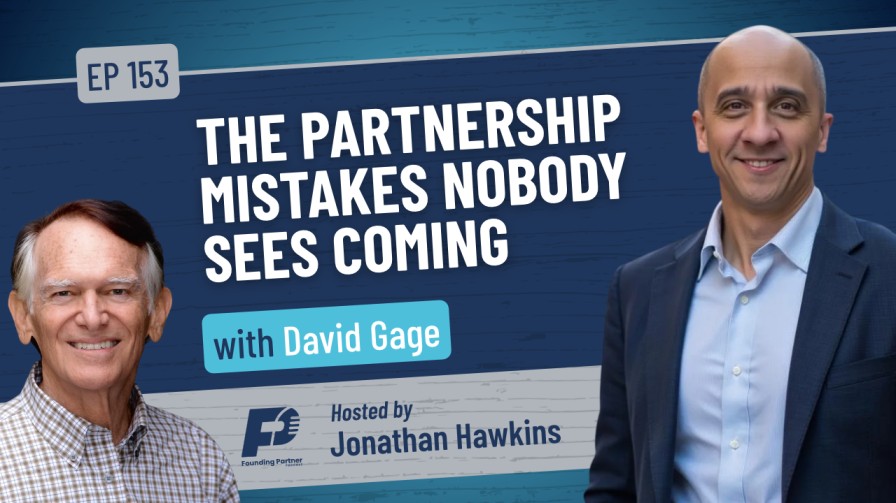
Most lawyers know that partnerships can be complicated. Some have built successful firms with partners they’ve trusted for decades. Others have watched those same relationships unravel over disagreements about money, decision-making, or the future of the business.
I’ve spent a good part of my career helping lawyers navigate partnership disputes and drafting agreements designed to prevent those problems. But what if the real work needs to happen before anyone signs a legal document?
That’s what made my conversation with David Gage so interesting.
David is a clinical psychologist, mediator, and author of The Partnership Charter. He’s spent decades studying why business partnerships succeed, why they fail, and what partners can do to avoid conflicts before they become lawsuits.
What struck me most was how many partnership problems come down to something surprisingly simple: people think they’ve agreed on things they’ve never actually discussed.
When Business Becomes Personal
David’s interest in business partnerships began long before he became a psychologist.
He grew up surrounded by family businesses. His grandparents, uncles, and father all owned businesses, but one family company’s transition between generations left a particularly lasting impression.
As the business passed from the second generation to the third, disagreements grew so serious that one uncle’s photograph was removed from the wall of his grandparents’ summer home.
Eventually, those conflicts turned into lawsuits and countersuits.
One detail from that experience stayed with David. When the dispute reached court, the judge had to rely on handwritten notes from a restaurant napkin to understand what the family members had agreed to during earlier discussions.
Imagine building a family business across generations, only to have its future depend on something scribbled on a napkin.
That experience helped shape David’s career.
He became a psychologist specializing in families and couples, then founded a mediation firm in 1990 to help business partners resolve disputes.
But after years of working with partners who were already fighting, he began asking a different question.
What if those conflicts could have been prevented in the first place?
The Conversations Partners Never Have
One of the biggest mistakes business partners make is assuming they understand each other.
Maybe they’ve worked together for years. Maybe they’re close friends. Maybe they’re siblings who grew up together.
Whatever the relationship, there’s often an underlying belief that because they get along personally, they’ll naturally work well together professionally.
David explained why that assumption can be dangerous.
“You don’t wanna make that assumption that because we get along well socially, we golf well together, we drink well together, we do whatever sports.”
Making decisions about compensation, ownership, and the direction of a company requires a different kind of relationship.
That’s especially true in law firms, where partners may have very different expectations about their roles.
One partner might want to grow aggressively, hire more attorneys, and expand into new markets. Another might be approaching retirement and looking to reduce their workload.
Neither perspective is necessarily wrong.
But when those expectations aren’t discussed, resentment can build.
David shared an example involving three architects who had operated a successful business together for years.
Despite their financial success, they weren’t functioning as a unified partnership. Each was essentially running a separate part of the company.
When they finally worked through a partnership charter, they discovered something even more surprising.
The two older partners assumed the younger partner would eventually buy them out and continue the business.
The younger partner had entirely different plans. He intended to retire around the same time they did.
That misunderstanding could have created enormous problems.
Instead, having the conversation allowed them to rethink their plans, improve collaboration, and ultimately become more profitable.
It was a reminder that a successful business doesn’t automatically mean a successful partnership.
The Danger of Small Misunderstandings
David introduced a concept that I think every law firm owner should understand.
He calls them “slivers of ambiguity.”
These are the small assumptions, unclear agreements, and unanswered questions that partners carry into their business relationships.
They might seem insignificant at first.
But over time, those little uncertainties can turn into major disputes.
David described working with the founder of a technology business who planned to bring a younger colleague into ownership.
The two had worked together for years and believed they were aligned.
But when they began discussing how ownership percentages would change over time, they discovered their expectations were dramatically different.
They had been operating under entirely different assumptions about the same future partnership.
David also shared a story about a medical technology startup with several sophisticated founders.
The partners had legal documents establishing their ownership percentages. But some believed they had also agreed to revisit those percentages after the first year.
When that first year passed, the disagreement surfaced.
Despite having formal agreements in place, the partners ended up needing mediation.
That’s what makes these misunderstandings so dangerous.
A partnership can operate successfully for years without anyone realizing there’s a problem.
Then something changes.
A partner wants to retire. Someone begins contributing less time. The business becomes significantly more valuable.
Suddenly, an issue nobody thought was important becomes the center of a dispute.
David’s advice is to address those uncertainties before they become problems.
That means having detailed conversations about ownership, compensation, authority, expectations, and the decisions each partner can make independently.
Because what you leave unclear today may become the argument you have tomorrow.
Why Legal Agreements Aren’t Enough
As an attorney, this part of our conversation really resonated with me.
I’ve worked on plenty of partnership disputes where the partners either had no written agreement or had documents that didn’t adequately address the issues they were fighting about.
David encountered something similar in his mediation work.
Even sophisticated business owners sometimes signed partnership agreements without fully understanding what those documents said.
That’s one reason he developed The Partnership Charter.
Rather than beginning with legal language, the process begins with conversations.
Each partner independently answers questions covering 13 major areas of the partnership, including ownership, money, governance, personality styles, expectations, and long-term goals.
They then come together to compare their answers and work through their differences.
The process typically involves several days of facilitated discussions.
David emphasized the importance of having someone guide those conversations because partners working alone often skip uncomfortable subjects.
Money can be difficult to discuss.
So can personality differences, unequal workloads, and decision-making authority.
But those are often the exact issues that cause problems later.
The result is a written partnership charter, typically around 70 to 90 pages, documenting the partners’ understandings, agreements, and commitments.
That document can then help an attorney draft or revise the formal legal agreements.
David described the sequence as putting the horse before the cart.
Instead of signing documents and hoping everyone understands them, partners first determine what they actually want their relationship to look like.
Then the legal documents can reflect those decisions.
For lawyers considering partnerships, that distinction is important.
A well-drafted operating agreement matters.
But it works best when the people signing it have already done the difficult work of understanding one another.
Sometimes Walking Away Is Success
One of the most interesting things David shared was how often the partnership charter process leads people to decide not to become partners at all.
According to David, approximately 20% of people who go through the process ultimately decide the partnership isn’t right for them.
At first, that might sound like a disappointing outcome.
But think about the alternative.
Would you rather discover a fundamental disagreement before starting a business or after investing years of your career into it?
David shared a story about a brother and sister who had worked together successfully in their mother’s business for more than a decade.
When it came time to plan the company’s future ownership, they began working through a partnership charter.
About halfway through, they realized they didn’t want to own the business together.
Instead of forcing the arrangement, the family worked through a separation.
Their mother divided the business, allowing each sibling to operate independently.
Years later, both had successful businesses and maintained a good family relationship.
That outcome says a lot about what partnership planning is really supposed to accomplish.
The goal isn’t necessarily to convince people to become partners.
It’s to help them make an informed decision.
Sometimes that means building a stronger partnership.
Other times, it means recognizing that two people can respect each other, work well together, and still be better off owning separate businesses.
And discovering that before things go wrong can save everyone a tremendous amount of money and frustration.
Trust Is Built Through Conversation
Toward the end of our conversation, I asked David whether he’d noticed any common characteristics among partnerships that succeed.
His answer came down to one word.
Trust.
David explained that trust makes an enormous difference in how partners navigate challenges.
But trust isn’t simply something people have because they’ve known each other for a long time.
It’s something they develop through honest conversations, collaboration, and understanding how the other person approaches conflict.
He described working with two brothers in a family business whose conflict styles leaned heavily toward competing and avoiding.
That’s a difficult combination when important decisions need to be made together.
Understanding those differences gave them a clearer picture of the challenges in their relationship.
David also emphasized that collaboration isn’t the same as compromise.
Partners need to understand one another’s perspectives and work toward solutions that make sense for the business and the people involved.
And that work shouldn’t stop once the partnership begins.
For existing partners, David recommends setting aside time annually or every couple of years to revisit their agreements and expectations.
Think about how much can change in a law firm over five or ten years.
Partners get older. Families grow. Financial priorities shift. New opportunities emerge.
The partnership that made sense when everyone was 35 may need to look very different when they’re 55.
Regular conversations give partners an opportunity to adjust before those differences become serious problems.
Building Partnerships That Last
One comparison that came up during our conversation was the idea of partnership planning as premarital counseling.
I think that’s a useful way to look at it.
When two people enter a business partnership, they’re making a commitment that can affect their finances, careers, families, and futures.
Yet many spend more time discussing the name of their new firm than how they’ll handle disagreements when things get difficult.
David’s work challenges that approach.
Whether you’re considering starting a firm with a friend, bringing an associate into ownership, merging practices, or preparing for succession, the important conversations need to happen.
And they need to go beyond the financial details.
You have to understand how your partner thinks, what they value, how they handle conflict, and what they want their future to look like.
One of the things I appreciated most about David’s perspective is that he isn’t against partnerships.
He’s seen how damaging they can become, but he’s also seen how valuable they can be when people approach them thoughtfully.
For me, that’s the biggest takeaway from this conversation.
A strong partnership isn’t built on the assumption that you’ll always agree. It’s built on knowing how you’ll work together when you don’t.
And the sooner you start having those conversations, the better.
AND MORE TOPICS COVERED IN THE FULL INTERVIEW!!! You can check that out and subscribe to YouTube.
If you want to know more about David Gage, you may reach out to him at:
- Website: https://www.partnershipcharter.com/
- Email: DGage@partnershipcharter.com
- Book: The Partnership Charter: How to Start Out Right With Your New Business Partnership or Fix the One You’re In
- Book: The Partnership Charter Workbook
Connect with Jonathan Hawkins:
- Website: https://www.lawfirmgc.com/
- LinkedIn: https://www.linkedin.com/in/jonathan-hawkins-135147/
- Podcast: https://www.lawfirmgc.com/podcast
Jonathan Hawkins: Any cautionary tales or any advice to folks out there that are really good friends going into a partnership?
David Gage: Yeah. I think it’s wise for friends to have an understanding that you can have a relationship, a social relationship and having a business relationship is not the same thing. You don’t wanna make that assumption that because we get along well socially, we golf well together, we drink well together, we do whatever sports. So we’ll get along in the office making decisions about important matters that affect our finances, our future. You should just look at those as very different.
Welcome [00:01:00] to the Founding Partner podcast. Join your host, Jonathan Hawkins. As we explore the fascinating stories of successful law firm founders, we’ll uncover their beginnings, triumph over challenges, and practice growth. Whether you aspire to launch your own firm, have an entrepreneurial spirit, or are just curious about the legal business, you’re in the right place.
Let’s dive in.
Jonathan Hawkins: So many lawyers operate in partnerships. They’re either in a partnership, they were in a partnership, maybe they’re thinking about a partnership. it’s a central piece to a lot of law firms. And so, I was recently introduced to David Gage, today’s guest. And I had heard of David before we got introduced ’cause I have his book right here.
It’s called The Partnership Charter: How to Start Out Right With Your New Business Partnership or Fix the One You’re In. [00:02:00] And so I was excited to meet David, and I’m excited to have him on the show. David, welcome
David Gage: Thank you, Jonathan. I’m happy to be here
Jonathan Hawkins: So in addition to being the author of this book, you’ve also founded some companies. You’ve, you’ve done other things in your past. Why don’t you sort of give us a little bit about your background and sort of how you– what led you up to writing this book?
David Gage: I’d be happy to explain that. It probably goes back, like for many of us, to childhood. I grew up in a family that had a number of businesses, Jonathan. Both of my grandparents had businesses. My uncles had businesses, my dad had businesses. And but o-one was probably a key to forming my career path, really.
And as you get older, you can s- you have a career path to look at. So this goes back to early on when my mother’s father’s company [00:03:00] was transitioning from, first it went to the second generation, my grandfather’s sons and my father, who was a son-in-law, and then it transferred to my generation, and it was in that generation, going from two to three, that it really went through some bumps. So, for example, at my grandparents’ summer home, they had pictures of my mother and her brothers. Well, during that bumpy period in the family business, one of my uncles came off the wall. His photo came, literally came off the wall, and there was just this empty spot. And I mean, that’s how bad it can get.
But i-if, if you know family businesses, there are quite a few stories like that. So that evolved or devolved into lawsuits and counter-suits, and that was during my early [00:04:00] years. And I’ll never forget a story about the two generations, the second and the third generation, working with a consultant who was an industry consultant, but he was…
He retired from the industry, and he consulted to family businesses in that construction industry. And he tried to help them with that transfer from the second to the third generation when a new set of partners were coming into the business And it got to the point where they were in court and the judge decided the only real evidence he had to go on to base his opinion on was an uncle’s scribblings on a napkin about those conversations that they were having at a restaurant with this consultant. And so that caused me to probably two things. One, not to wanna be in the family business at all, and two, it probably i- [00:05:00] influenced me toward becoming a psychologist. And I became a psychologist. I specialized in working with families and couples, and started a practice in downtown Washington, DC.
But it wasn’t… It was only a year or two later that I realized, that it really hit me, something else happened, and it hit me how difficult it is to be partners either in a family business or in a non-family business. It doesn’t really matter. But at that time, in the late 80s and 90s, there were no people around to really help family business partners or non-family partners sit down and try to collaborate and work through their difficulties.
So I talked to some people at the ABA about mediation and started a firm in 1990 that was just focused on resolving disputes among business partners, business and professional partners. [00:06:00] And when I thought about starting that company, I thought, “Whoa, do I need…” I, I mean, a psychology degree is great, and I know a lot about helping people resolve conflicts, but these are partners in business.
And do I need to go back and get a law degree or an MBA? And my little stroke of genius was, “No, I don’t have to do that. I don’t have to do either of those.” But I probably have to have a multidisciplinary team with psychologists, lawyers, businesspeople, and that’s the mediation company that I started.
So that was the first company, just focused on business partner disputes. We did it all over the country. We learned a heck of a lot, Jonathan, in the first 10 years. And a- and around that point, around the year 2000, I started thinking, “This is a lovely business. I… It’s fascinating. It’s incredible. It’s so helpful to people, partners [00:07:00] resolving their conflicts, but really, I need to think about conflict prevention for partners.” And that culminated in the book, “The Partnership Charter,” where I talked about all the different ways that partners can get into trouble with one another. And it really, it turns out there are a limited number of ways, and I put those in the book, and that was the beginning of the shift to include conflict prevention as well as conflict resolution
Jonathan Hawkins: You know, it’s– your path is interesting. It’s similar to mine. Very different, but similar to mine. So I started out doing a lot of partnership dispute work in the law, breakups. And what I found, at least with lawyers a lot of them did not have any written agreements at all. And those that did, a lot of times they weren’t really built for all the fights we were having.
So that led me to then say, “All right, I’ll start drafting the [00:08:00] legal documents that help at least minimize or eliminate the, the legal disputes we’re having.” So that led me to drafting partnership agreements. But what you did is you mediated disputes, but then you’ve went even before the drafting of the legal documents to the partnership charter.
So maybe explain what the partnership charter is and, and sort of that process
David Gage: Well, it’s obvious to all of us that it really helps when you’re going into any kind of a partnership to have some basis, some basic understandings and agreements. And what I found, though, that many of the partners we were mediating had partnership agreements, shareholders agreements, those kind of documents.
But oftentimes, I noticed that even quite sophisticated business people didn’t really know what was in those documents, or they didn’t [00:09:00] understand them very well. So I began thinking about, well, what is a methodology to help partners get greater understanding and confidence in what they’re doing? And so the methodology that I developed was that we ask each partner separately to answer a whole host of questions that covers all of the business business and interpersonal aspects of being partners.
And we get them to do that separately on their own, and then come in to a joint meeting and begin sharing their thoughts about it. So it’s a very powerful technique when you sit down with them and everybody has something to say about every topic. That’s, yeah
Jonathan Hawkins: and, and in it, I think in this process, you have all the questions, but there’s sort [00:10:00] of 13 major categories. We, we don’t have to go through all of them, but maybe hit on some of the, the categories that you found are helpful for partners to have discussions about
David Gage: Yeah. Exactly. So people ask, you know, “Well, what, what do, what do partners need to cover?” You know, where, where do they get into trouble? Is it with money and greed, or is it with are they having turf battles and who gets to decide, make what decisions? Or is it what sometimes happens is people think partners feel like their partners didn’t live up to their expectations? Or are there, their differences really around their personality styles or their personal values? Or is it governance matters? And I like to say yes, yes, and yes. It, it is all of those, but I think [00:11:00] at the heart of it, there are a couple things going on, Jonathan. One is that they never had thorough conversations to begin with.
And second, if they did have conversations, many of their agreements that they may have reached were never written down. And you know, one of the things that’s problematic, of course, is that you nev- n-not even the partners themselves can know ahead of time, well, what’s going to stop us in our tracks?
What’s going to cause us to go sideways? Until you talk about all those different issues, you don’t really know because you haven’t dug down and started looking closely at them. So we maintain that you’ve got to touch on all those different topics, the money, the equity, the decision-making, as well as just the expectations and the personalities and [00:12:00] the values and all of that, and do we have the same idea for the direction of the business? And it’s only in having those conversations do you discover, whoa, we are not in alignment
Jonathan Hawkins: You know, it’s some of the things I’ve seen from my work and maybe in the beginning, this is another thing I’d be, I’d be curious your, your view on, but maybe at least they feel like in the beginning they’re on the same page, but then as time goes on, they veer off. For example maybe one partner is a little bit older, so they’re, they’re like, “I’m ready to, to dial back and not work as hard.”
And the other one’s like, “No, I wanna keep working hard.” And then you get this misalignment of their approach to the business, and then resentment’s built up. But whatever, whatever happens what are some of the tricky areas that you’ve seen that they really need to think about on the front end, but maybe even revisit along the way?
David Gage: Yeah. it actually fascinating. It– there [00:13:00] are so many partners out there who, who got going years ago, and so they’re they’re– they can be enormously successful with their business and yet be not so successful just in their partnership. For example, some years ago, we worked with three architects who had been…
It was the second generation really of the company, and they were going along pretty well and doing well as a business. But in terms of being partners, they were a little silo-like and they knew they weren’t really getting full value out of, out of being partners. And so they did a charter and really worked through how they made decisions together, and they really hadn’t been making decisions.
They realized that they were [00:14:00] operating like three separate businesses in a way. And so by looking at their styles and their level of collaboration and also talking about their eventual exit, because in a charter process, you talk about both how you’re gonna work together day to day as well as long term and what the transition’s gonna look like.
In that case, there were two older partners and one, the younger one. The younger one was actually the son of the founder in the first generation. So the two older ones had been going along assuming that they were going to sell eventually to the younger one. He would buy them out and continue the business.
But in the process of talking and working on their charter, the two older guys learned that he had every intention of quitting the same time they did, retiring the same [00:15:00] time they did. So, so they were able to make a lot of adjustments then in terms of how they operated and how they thought about their partnership.
And as a result, they just started doing much better and became much more profitable
Jonathan Hawkins: So it sounds like a, a partnership charter is sort of like a tree in the sense that when’s the best time to plant it? 20 years ago. When’s the second-best time? Today. And I mean– what I mean by that is ideally you would have this process before you get into the partnership, but obviously there are partnerships out there that, and maybe it makes sense to go through the process after they’ve been in it for a while.
From your perspective is it more effective to do it before or, or is it, does it matter?
David Gage: I think it’s actually it’s always better to do it earlier. Once you know, that you’re going to become partners or who is going to become partners it’s better to do it [00:16:00] before you actually become partners. So as you can, as you probably know, that gets really tricky in family businesses. So, one fellow who uses a partnership charter out in Hawaii he has a, a family business where the mother and the father started it, very successful business.
There is a son and a daughter in the business now, and the father is going to retire. The mother’s gonna stay in the business for a while. And in that case, in that situation, like who would do a charter? Because the father’s leaving quite soon. The mother’s going to be working with the two children for a few years, probably just a couple.
But as, as you know too, Jonathan, there’s a lot that can go wrong in a partnership in a couple of years, and [00:17:00] especially one where you’re having such a transition and you have two generations trying to run the business together. So he let them know that his feeling was that the three of them, the mother and the daughter and the son, needed to sit down and work on how they were going to co-own and how that ownership, how the equity would transfer into the second generation, and how they would, how they would make decisions together really work together
Jonathan Hawkins: So what are some of the common problems you see partners making?
David Gage: Well, I think that one of the most common, I mean, when you’re starting up, is thinking that we know each other really well, we really get along, and so do we really need to sit down and hash all this stuff out? That’s one, and that extends to situations [00:18:00] like with in family businesses that are so common, where parents look at the, the adult children working with them in the business and they say, “Hey, look, my kids all get along beautifully.”
Well, there’s a heck of a difference between your kids getting along beautifully in the business with you there and with you not there. So that’s a mistake that people can make, assuming that because we’re siblings, because we get along, we will get along even when the parents leave. That changes the dynamic radically among siblings then I think really one of the biggest problems across the board, Jonathan, is what, what we call slivers of ambiguity.
There are just various agreements and understandings that partners form and assumptions that they form, and they haven’t really checked them out thoroughly. So, for [00:19:00] example we were working very recently with a founder of a lawyer. He’s a lawyer, and he’s a, a founder in a, a high-tech business.
And he’s, his succession plan is to transfer it down to junior people in the business. And so the two, the f- the founder and this next generation potential partner sat down, and they had been working together for two years and were really on the same page about things. Their styles were quite similar.
But they– when it came to the ownership unit of the partnership charter, and they talked about what their expectations were for their– how it would change, the equity would change over time, the younger fellow had ideas about what that would look like, the percentage it would look like, [00:20:00] and the founder had very different ideas about what those percentages would look like.
That was, You know, you would think that that would be kind of a basic understanding, but their assumptions were just so far off that it led to some very, very difficult conversations. But they actually were able to work through those
Jonathan Hawkins: So I have seen, I’m sure you’ve seen this too, this is adjacent to family businesses. I’ll just call them best friends, really good friends, and they say, “We’re great friends. We hang out all the time. Let’s do this business together. Let’s form a law firm,” whatever it is.
Any cautionary tales or any advice to folks out there that are really good friends going into a partnership?
David Gage: Yeah. I think it’s wise for friends to have an understanding that you can have a [00:21:00] relationship, a social relationship and having a business relationship is not the same thing. You don’t wanna make that assumption that because we get along well socially, we golf well together, we drink well together, we do whatever sports. So we’ll get along in the office making decisions about important matters that affect You should just look at those as very different.
So yeah, I’ve many friends have learned the hard way not to go in business with their friends. What I say, there are, there are many advisors out there really, Jonathan, who advise people against partnerships. There’s a, a well-known business consultant, Dame- Dave Ramsey, who makes no bones about it.
“You know, partnerships,” he says, “are the only ships [00:22:00] that don’t sail.” But I, I have a different view of that. I think that it is because there hasn’t been a structured tool to facilitate the kind of discussions that partners need to have. So as you know, as you said earlier, you don’t need any legal documents.
You don’t have to sign anything. As you know, all you have to do is start talking like you’re partners, and in the eyes of the law, you basically are partners. So being very careful to explore both the business and the interpersonal aspects with a facilitator, because we’ve tried to help people to be able to do it without a facilitator because it is less money doing that.
Because we usually talk, Jonathan, about th- needing three days of facilitated discussions and negotiations. [00:23:00] So, so there’s like a cost for the platform, but the biggest cost is really having a facilitator whether it’s a lawyer or a psychologist or a business consultant, sit down and have those discussions with you.
And sometimes there’ll be two co-guides, co- facilitators with the partners. So that does run up the cost very much. But what we noticed is when we When people try to do it on their own and have these discussions, it is so easy to glide over differences. A- as well as it’s so easy just to skip sensitive conversations, whether it’s about money and exactly how we’re going to do money and pay each other and what we’re gonna get paid for, or whether it’s our personality styles, [00:24:00] and you are very dominant and I’m very dominant.
Well, heck, I’m just sure we’ll get along swell because we’ve gotten along so far. Well, that’s that’s not necessarily the case, especially if we’re both dominant personalities
Jonathan Hawkins: So you mentioned a minute ago slivers of ambiguity. Can you expand on that a little bit? And maybe that’s part of that you mentioned also that people just sort of glide past and they skip over, and maybe those two things are linked.
David Gage: They are linked. It’s exactly that. What you want to watch, we say that slivers of ambiguity in partnerships are whatever they are, whether they have to do with money or even ownership. I’ll tell you about a case of some founders. There were five or six founders in, the medical industry technology, medical technology, and they formed pretty sophisticated business people, by the way, including one attorney, one former CEO [00:25:00] of a company.
They founded their business, and a year later, some of them believed that they had agreed that after a year of working together and with this startup, that they would know better about who really deserved what kind of equity split. And I mean, they did.
Jonathan Hawkins: Dangerous.
David Gage: Yeah, very dangerous. And they had legal documents, and they had percentages stipulated, but they also had this little ambiguous piece about in the background that we agreed we’d sit down and look at it again in 12 months.
So that was a mediation case some few years ago, and we were able to help them agree, but it was a very bumpy process. So it a small sliver or a big sliver? I don’t know, but it’s a dangerous sliver. But I would say that all slivers [00:26:00] of ambiguity, depending on the circumstances, you can glide along for years.
You can make a lot of money. The partnership can even go well until something happens that related to whatever that sliver of ambiguity is. And oftentimes, Jonathan, it has to do with decision-making and how decisions are made. So it behooves partners to really look carefully at all different areas of the business, whether it’s strategy or operations or finance, and which partner is really going to take more responsibility or have more authority.
And then what exactly, what kind, what level of authority does that mean? That’s really so important to work that out and resolve any ambiguity in that area
Real quick, if you haven’t gotten a copy yet, please check out my book, the Law Firm Lifecycle. It’s written for law firm owners and those who plan to [00:27:00] be owners. In the book, I discuss various issues that come up as a law firm progresses through the stages of its growth from just before starting a firm to when it comes to an end.
The law firm lifecycle is available on Amazon. Now, back to the show.
Jonathan Hawkins: And so you’ve talked about this process. It could be a three-day process with a facilitator. There may be some people that, that get your book and, and say, “Hey, we’ll try to do some of this on our own.” Whatever the process, at the end, you should there’s… Is there a document or a, is the charter an actual document that is sort of produced at the end of this process?
And, and what is that, and how is that used?
David Gage: Yeah, it is an actual document. And so as the partners are going through the process, they, they go and they discuss all of these different topics, as you said before, like 13 different topics from, you know, the governance to the money, to the personalities, and they create understandings, [00:28:00] agreements, and even commitments to one another in all those different areas. Those… That gets drafted with the online platform, it gets drafted right during their n- their negotiations and discussions. So then though, after the meeting’s over, the guides usually clean it up a little bit and send it to the partners. Again, now they each independently review it and then make comments and decide whether they accept or reject the draft as it is. So once they’ve gone through and approved all the drafts for those different issues, then they review it all one last time, because let’s face it, it all has to hang together in the end. As you’re going through it, you may approve something, but in the end it may not work with the other pieces ’cause all of these different topics are fairly [00:29:00] interrelated.
So they go through, they approve it, each unit a second time, and that becomes their document. A charter is usually about a 70, 90-page document, on how, how many partners there are. And what typically happens is they will give that document or parts, relevant parts of that document, Jonathan, to a neutral attorney who will either draft new documents or revise existing documents.
But then the attorney is in a really good place to be able to s- to read quite clearly what the partners are intending and create pretty customized legal documents for them
Jonathan Hawkins: Yeah, that was gonna be my next question. What is the relationship between the 70 to 90-page charter document and then an actual partnership or operating agreement?
David Gage: Right. And I refer to it as the horse before [00:30:00] the cart. Once the partners have gone through and touched on all these different issues, money and how they’re gonna get paid, equity and how it’s gonna change over time, what happens if one of the partners starts working half-time but still wants every bit of their profit interest?
You know, when you, when you deal with it from that granular level and you reach agreements about it, then when it’s translated into shareholders’ agreement, partnership agreement, whatever that legal document is, there’s– you’re so much more likely to understand what’s in that document.
Jonathan Hawkins: So from your experience, the people that go through this process on the front end, not partnerships that are already set and maybe go through the process, but people that are thinking about going into partnership and they go through this process, how often do they say, “Yeah, never mind. I don’t wanna be partners”?
David Gage: Great question. With interestingly sometimes [00:31:00] that choice to drop out is comes even before they sit down to do the charter. So, for example, the guy I told you about before, the lawyer who started that company and had the junior guy he was going to bring in as a equity partner, there were two younger guys actually, and they had been talking for really two years about becoming partners.
But when they agreed that they were gonna sit down and work on a charter, one of the younger guys said, “You know what? You guys go ahead and do this. I don’t think it’s really what I wanna do at this time.” And he, you know, he was s- not married, he was, you know, enjoying life, and he knew that becoming a partner was going to be, it was gonna be a shift in his work, maybe a shift in how he was paid.
[00:32:00] So that shook out right there. But when w- we once had a, a brother and a sister i- in a business that was started by their mother, and they had been working together for it was about 10, 15 years, pretty successfully in the mother’s company. But the mother went to her estate planning attorney, and the estate planning attorney said to her, “Well, wait a minute.
You have to, you have to figure out which of your kids is gonna own the business,” ’cause there were those two and then one other daughter who wasn’t in the business. And so the– they were referred to us f- to do a partnership charter, and the son and daughter, who had been working together well for over 10 years, got about halfway through and they really looked at one another and they said, “This isn’t gonna work.” So at [00:33:00] that point they did some mediation and the mother split the business into two, and the son got one part, the daughter got the other part. And now probably 10, 15 years later, they are pretty good family members together, and they both have successful businesses. And I think they both love it that they’re not having to make decisions with their sibling. So I would say Jonathan, to answer your question specifically, probably around 20% of people do a charter and wind up saying, “You know what? We shouldn’t go forward with this.” And at that point, you know, they actually go, “Phew. We we’re so pleased we figured it out now as opposed to after, after hitching up.”
Jonathan Hawkins: All right. That’s my next question. What about the people that are [00:34:00] already in a partnership and they say, “Let’s go do this partnership charter exercise”? I guess maybe If they need to separate, maybe it shifts to your mediation practice and you figure out a way to let them separate or I don’t know.
Tell me about your experience of the folks that do it later in the process.
David Gage: You know, I think at that point that doesn’t happen that often, but I think it probably has. And what occurs then is that it uncovers some dissatisfaction with being partners that partners have lived with for a while, but then it’s like, “Well, wait a minute, what are we doing? Let’s sit down and really look a little more closely at this.”
And then it’s a matter, I think, typically of mediating an exit for one or both or all partners.
Jonathan Hawkins: So how did you figure out what issues partners or potential partners need to work through in this [00:35:00] charter process?
David Gage: You know, that was probably in a way the easiest part because I take a lot of notes. And so during the 90s when we were mediating companies large and small, everything from a family that owned a cemetery not far from here to, to one of the first data mining companies in the world actually a while ago.
We, we, we were mediating so many different types of, of companies, everything from startups with no money to $2 billion revenue companies It was sort of easy, you know? It just began to– The list began to grow, and then the repetition began– became more obvious. it’s not an, you know, everybody’s different, but the conflicts they were having weren’t that different.
They were either, you know, [00:36:00] like interpersonal and sometimes those were very intense or they were money or, or decision-making, or, you know, people who thought they were starting the same business together were actually thinking about slightly different businesses. Fine in the beginning, but when it started growing and some big decisions had to be made, it became, you know, obvious. So yeah, so that list was easy, but then it became a question of, well, what do you do with the list? It, People have for years actually picked up my book and said, “Well, I see all these, all these things we should ask, all these questions,” but it’s, it’s more complicated. So then I would say between around the 20 thou- 2000, I began really working not so much on the list of questions, but on the methodology for making sure they were used well and they were, you know, [00:37:00] partners really dealt with the issues and didn’t skim over things.
That became the next phase of the development. And, and then Jonathan, I have to tell you about five, six years ago, working with UI/UX people and a developer out in Portland and putting that process online, that was pretty eye-opening and transformative because it gets complicated when you’re asking all, you know, five, six different partners to answer all these questions, and then you wanna sit down and you need to see each person’s answer to this question and then that question, and then you start drafting. Well, having it online was just like night and day different from having it be done with Word documents that I had been using before that.
Jonathan Hawkins: You know, I’ll tell you, I have designed automations and processes before, and when you actually have to fit it into the [00:38:00] computer system, it changes the way you… You know, it really makes you say, “All right, if this, then that.” I mean, you really have– It dials you in and you’re like, “I don’t need that,” or, “I need to do this first.”
It really forces you to hone in on that process for sure
David Gage: So, so a lawyer in New Orleans Andrew LeGrand came to me years ago when it was sort of paper and pencil, you know, it was Word documents. And he’s– he got– found the book and he said, “I wanna do this. I, I have somebody I think I wanna be a partner with.” And I said, “Sure, Andrew, y- y- you can use it, but it’s, you know, it’s hard.
It’s, it’s a difficult process.” He said, “Okay, okay, I wanna use it.” And he figured out that it wasn’t a partnership that was gonna work for him, so he, he said, “No, I’m, I’m not doing that partnership.” But the process was so good, he said, “Can I use that with my… I have a, a practice and I work with a lot of business people.
Can I use it?” I said, “Great, sure.” [00:39:00] So he’s actually been using it for probably a decade or more, and he’s seen the transition from Word document to online. And and now he’s working with some lawyers who are thinking about merging their solo practices into a firm and doing a charter with them. So it’s gotten a lot easier with the technology, that’s for sure
Jonathan Hawkins: So we’ve, we’ve been talking about partnerships. You’ve mentioned a couple of, I’ll call it transition scenarios, but it seems like this would be a good exercise for a business that is about to embark on transition or succession planning to figure out, because I, I see that a lot in my practice. You know, I have a, and I’m on both sides of this depending on the client, but you might have an older attorney that wants to transition to the next generation, and sometimes they don’t want it or they, you know, the offer that’s on the table and they’re like, “I don’t want this.” And so part of it is like a, an education therapy session [00:40:00] to get them on board and say, “Hey, this is actually a pretty exciting opportunity.” I don’t know. Do you, do you ever– Do people use it in that for- in that way?
David Gage: You know, in, in a law firm situation like that, you may have, and tell me if this is true, you may have the deal established, pretty established for a younger associate who wants to w- wants to or doesn’t wanna w- step into that. Is that right?
Jonathan Hawkins: Sometimes yes, many times no. It’s, we are making it up on the spot is
David Gage: That I– That’s what I love about this work. It is, it is so complex, and it has to be creative. And, and that’s really what the partnership charter, we call it design your partnership. It needs to be collaborative and creative because as you know, you have a– you’ve got a lot of flexibility built into any kind of co-owner [00:41:00] arrangement.
But if you don’t take advantage of it, then you don’t have a lot of flexibility. So where I think it re- I mean, you can compare this to, to law firm transfers, but in family businesses, you know, you think about an owner, start as a business, and now he’s got two or three kids coming into the business, or they’re, they’re working in the b- typically, they’re working in the business.
They’re not owning yet, but they’re, they could be doing everything from president on down. And the trick is to allow the next generation to design their partnership. That is a trick. I mean, you can look at, you can look at the Lakers and the Buss family. They, they’ve been in the news unfortunately for them, but the, the father, the patriarch, set it up and had to work, had to spend hundreds and hundreds of thousands of dollars with attorneys to figure [00:42:00] out how he could make the next generation partnership, his kids, get along and work together.
Well, unfortunately, I ha- I have serious doubts, Jonathan, that he ever said to them, his adult children, we’re talking about kids in their 30s, 40s, 50s, I think, you know? They’re very adult kids. I don’t think he ever sat them down and said, ” You know, you guys are gonna be partners after I’m dead, so why don’t you sit down and see what you can hash out?”
You know? Like, here are the parameters, here’s what I’m– here’s what we’re talking about transferring. You figure out instead of me trying to dictate that this daughter is really gonna be the general manager, and she’s always gonna be the one. You know, all that kind of stuff is so tempting for a parent to do because, A, they’ve known all the kids since birth, and B, [00:43:00] the kids are their employees.
So who knows them better? And if they don’t, they can always call in consultants, which is common, to assess the kids and try to determine what their partnership should look like. But Jonathan, think about it. That’s not just determining these kids and their partnership. It’s probably determining the following generation as well.
‘Cause if you do different classes of stock or different equity share splits, you’re setting up a multi-generational deal. Now, do you– When your kids are little, hey, you know, you get in there and tell them how they’re gonna relate to one another. But when they’re in their 30s, 40s, 50s, and sometimes 60s, do you really wanna dictate their relationship?
Jonathan Hawkins: it’s like that show Succession. I don’t know if you’ve watched it, but yeah. It’s it’s bringing that into my mind
David Gage: such a great show
Jonathan Hawkins: So, you know, in your vast [00:44:00] experience doing these and talking to partners, mediating partnerships do you find any common elements in partnerships that work versus those that don’t?
David Gage: I know you can guess this, but when I’ve asked partners over the years, you know, “Is there one thing that really figures largely into whether you’re successful or not?” Everybody make a guess now. What they typically say is, “Wow, if there’s trust, it makes all the difference in the world.” And that’s one of the things about having these kind of conversations.
It’s they’re trust building. You know? If you’re gonna get through them, you’re gonna have to collaborate, and collaboration is different than compromise, and you even learn that in this process when you look at your conflict handling styles. There’s a beautiful assessment tool out there that has to do with conflict handling styles.
And what greater thing for partners to learn [00:45:00] than the difference between a competing style and an accommodating style? I once worked with some, a family business out in California. Two brothers really ran it, and their styles were, one of them was highest on competing and avoiding, and the other was highest on avoiding and competing.
Now, Jonathan, you tell me. There are five styles, you know, you mix those two at the top ones for each brother, and you’ve got trouble. You’ve got trouble.
Jonathan Hawkins: So, any advice out there, really two groups. One would be existing partners that are already partners. Any advice to, to help, you know, solidify and strengthen their partnership so it can last a long time? And then the other group would be those who are thinking about going into a partnership
David Gage: Yeah. You know, when I think about the people who are existing and they’ve been partners for [00:46:00] 10, 20 years, I think about lawyers and how they tend to have, like, annual partner retreats, and I don’t think people in business tend to do that so often. You know, just the partners and taking some time to just talk about the partnership. when people do the charter, they, they usually say, “Let’s sit down with this annually or every two years maybe, and look at our commitments, look at our understandings, and see how we’re doing.” So that’s, that’s big for existing partners. And then for s- for startups, you know, the, the people will call folks who do the charter, and if they have had bad experiences in partnerships, it’s like the easiest sales job ever.
You know, because many of them will [00:47:00] hear about the partnership charter and they’ll say, “Whoa, I was never gonna do another partnership. But you know what? If there’s a process I could go through and help me figure out whether this was a good partner or not and really work through everything, you know, maybe I would, I would be tempted to try it again.”
But as you know, when, when you’re burned in a partnership, it’s, that’s tough sledding and, people are not really very eager to jump back in one
Jonathan Hawkins: Yeah. And I, I know plenty of people that is in that boat. And it’s interesting, you know, on some level the partnership charter process is like premarital counseling, and a partnership is like a marriage. And there are people that get divorced and say, “I’m never getting married again.” And then there’s others that say, “No, I’ll do it again, and maybe I’ll do it again and again and again.”
David Gage: Right.
Jonathan Hawkins: yeah, different, different people do have– take different things from it. Well, David, th- this has been great. [00:48:00] Thanks for coming on. And again, you know, I was excited to meet you ’cause I had read your book before we met. And for people on the screen, I’m, I’m holding it up. But you know, anybody that, that is interested in this process or thinking about a partnership go get it.
It’s called “The Partnership Charter,” David Gage. And for people out there that may wanna get in touch with you or explore “The Partnership Charter,” what’s the best way for them to find you?
David Gage: Probably the easiest way is just to go to the website partnershipcharter.com Yeah. And, and my, and my email is just DGage, DGage, D for David, Gage, G-A-G-E, @partnershipcharter.com. But yeah, happy to talk if people have partners or if they are interested in doing this work with partners
Jonathan Hawkins: Well, David, again, this is great. Thanks for coming on. I appreciate it
David Gage: I’ve enjoyed it, Jonathan. Great conversation.
OutroUpdatedWebsite-1: [00:49:00] Thanks for listening to this episode of the founding partner podcast. Be sure to subscribe on Apple podcasts, Spotify, or wherever you get your podcasts to stay up to date on the latest episodes. You can also connect with Jonathan on LinkedIn and check out the show notes. With links to resources mentioned throughout our discussion by visiting www.lawfirmgc.com. We’ll see you next time for more origin stories and insights from successful law firm founders.