The Introvert Nobody Saw Coming with Jimmy Lai
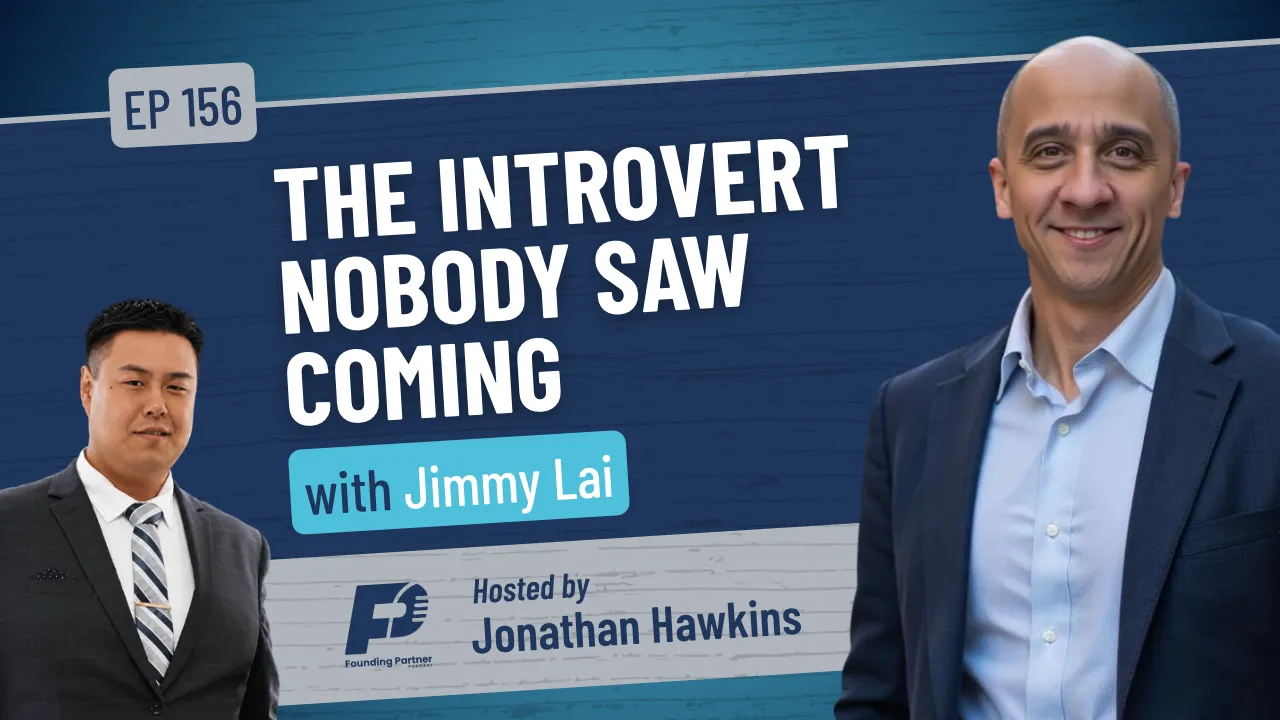
One of the things I enjoy most about hosting The Founding Partner Podcast is meeting attorneys who challenge the traditional idea of what a successful lawyer should look like.
Jimmy Lai is certainly one of those people.
Jimmy is the co-founder of Lai & Turner Law Firm, an Oklahoma City-based practice with locations in Oklahoma City, Tulsa, Lawton, and Seattle. He’s also an immigration attorney, a law firm CEO, an author, and someone who has built an impressive following on LinkedIn.
I’ve watched Jimmy’s presence on LinkedIn grow over the past couple of years, and I wanted to understand how he did it.
What I found interesting about our conversation wasn’t simply his follower count or the millions of impressions his posts have generated. It was how someone who openly identifies as an introvert learned to turn his experiences, including some difficult failures, into opportunities to build relationships and grow his business.
And as Jimmy explained, the benefits of building a personal brand aren’t always what you’d expect.
An Unconventional Journey Into Law
Jimmy’s journey to becoming an attorney started long before law school.
Growing up, he lived and studied in Taiwan, the United States, Japan, Germany, and England. He speaks English, Japanese, Mandarin Chinese, German, and Taiwanese.
His international upbringing taught him how to adapt to unfamiliar situations, even when that meant learning a completely new language.
When Jimmy moved to Germany, he didn’t speak German. For the first three months, he spent much of his time watching television to learn the language. Eventually, he found himself laughing along with his classmates when a teacher told a joke.
That was when he realized he was beginning to understand German.
But his interest in law began even earlier.
When Jimmy was five years old, his mother operated a private language school. He watched parents threaten legal action when they disagreed with her educational approach.
Seeing those situations made him want to become a lawyer so he could protect his mother.
That dream eventually led him to the University of Oklahoma, where he earned his JD/MBA in 2021.
But his path wasn’t straightforward.
Before law school, Jimmy earned his undergraduate degree in marketing and spent a year selling cars. He saw sales as an opportunity to develop a skill he believed would be useful in any profession.
He also hoped the experience would help him become more comfortable interacting with people.
I couldn’t agree more with the importance of that skill. During our conversation, I shared three abilities I believe can help someone succeed in almost any industry: selling, public speaking, and building relationships.
Those skills have become increasingly important in a world where technology continues to change how we work.
Three Bar Exam Failures and a New Beginning
One of the most memorable parts of our conversation was Jimmy’s willingness to discuss something many attorneys would rather keep private.
He failed the bar exam three times.
For a long time, that was something he felt ashamed of. He worried about how people would react if they discovered his failures.
But eventually, he decided to approach the experience differently.
Rather than waiting for someone else to tell that story, Jimmy shared it himself.
He explained that he passed the bar on his fourth attempt and went on to build a seven-figure law firm.
That experience became an important part of his personal brand because it showed people something beyond his professional accomplishments.
It showed them the person behind those accomplishments.
Jimmy offered a simple piece of advice for professionals who want to share their successes without appearing boastful:
“A quick tip is share a vulnerability that you’re okay with sharing, share the human side of you, and then share success so that people won’t think that you’re bragging all the time.”
I thought that was a great perspective.
As lawyers, we’re trained to present ourselves as competent and confident. We’re not always comfortable admitting mistakes or sharing experiences that might make us look less successful.
But Jimmy has found that being open about those experiences can create stronger connections.
His decision to establish Lai & Turner Law Firm with his friend and fellow law student Braden Turner was also shaped by his unconventional career path.
As an international student, Jimmy understood how difficult it could be to find professional opportunities in the United States.
Instead of following the traditional path of joining an established firm, he chose to create an opportunity of his own.
How an Introvert Built a LinkedIn Following
When Jimmy began taking LinkedIn seriously in September 2024, he had approximately 800 followers.
Within roughly two years, that number had grown to nearly 70,000.
During our conversation, he shared that his LinkedIn activity had generated approximately 17 million impressions over the previous 365 days.
Those are impressive numbers, especially for someone who describes himself as an introvert.
So naturally, I wanted to know his secret.
Jimmy’s answer was surprisingly simple. He was willing to experiment.
He tried different types of content, including personal stories, professional insights, photographs, videos, and even memes.
He also invested time and resources into learning from LinkedIn coaches and participating in communities of people trying to improve their presence on the platform.
What stood out to me was his willingness to try something even when he wasn’t sure it would work.
That’s something I think many attorneys struggle with.
We’re trained to avoid mistakes and consider risks. But when it comes to building an online presence, that mindset can prevent us from getting started.
Jimmy believes lawyers need to become more comfortable showing their personalities and trying different approaches.
He doesn’t limit himself to serious legal content. Sometimes he’ll share a humorous observation or a picture that has little connection to his work.
And those posts can perform surprisingly well.
He mentioned that a simple cat meme had generated approximately 20,000 impressions and nearly 800 likes.
His approach isn’t about making every post perfect. It’s about learning what resonates with people and continuing to experiment.
Consistency Matters More Than Posting Rules
One question I’ve heard repeatedly over the years is how often someone should post on LinkedIn.
Some people recommend posting once a day. Others warn that posting too frequently can hurt engagement.
Jimmy doesn’t believe there’s one universal answer.
“Do what’s sustainable and workable for you that you can be consistent with.”
For him, that means writing content in batches and scheduling approximately two weeks of posts in advance.
He generally aims for at least one post each day, but he’ll publish additional content when inspiration strikes.
Sometimes that means multiple posts in a single day.
He even shared that one of his most successful posts, which generated approximately 300,000 impressions, was the fifth post he published that day.
That experience challenged the idea that posting multiple times automatically prevents content from performing well.
Jimmy also encouraged experimenting with different formats.
He explained that adding an image to a text post can help capture attention as people scroll through their feeds.
Video can also be effective. One of his AI-assisted videos had generated approximately 1.7 million impressions at the time of our conversation.
But he doesn’t believe every lawyer needs to follow the same strategy.
The important thing is finding a rhythm that works and being willing to adjust as the platform changes.
I appreciated that advice because it’s easy to become distracted by the latest algorithm updates or recommendations from social media experts.
Jimmy’s approach is to keep learning rather than become frustrated when things change.
Turning Everyday Experiences Into Content
Another challenge attorneys face is figuring out what to write about.
Jimmy has developed a system that helps him find ideas in everyday life.
One of the most important lessons he learned from LinkedIn coach Matt Barker was to write from lived experience.
Jimmy initially believed his life wasn’t interesting enough to share.
But he eventually realized that his experiences were unique, even when other people had gone through similar situations.
His international upbringing, struggles with the bar exam, experiences as an international student, and journey into law firm ownership all became potential stories.
He also discussed using four content pillars to organize his ideas.
These include personal interests and opinions, everyday professional experiences, origin stories, and collaborations with others.
That might mean sharing something he learned while running his firm, highlighting a team member, discussing a personal challenge, or recognizing someone in his professional network.
He emphasized that lawyers can share lessons from client interactions while still protecting confidentiality.
I thought this was particularly useful for attorneys who believe they don’t have anything worth posting.
You don’t need an extraordinary event every week to create meaningful content.
Sometimes the most interesting stories come from the experiences you’re already having.
The Real Return on Building a Personal Brand
With nearly 70,000 followers and millions of impressions, I assumed Jimmy’s LinkedIn presence must be generating a substantial number of new clients.
But his answer surprised me.
He estimated that approximately 12 clients had come directly from LinkedIn over two years.
Compared with his firm’s other marketing efforts, which he said generate approximately 25 to 50 new clients per month, LinkedIn wasn’t his largest source of client acquisition.
Yet he still considers the platform an important investment.
Why?
Because the benefits extend far beyond new cases.
Jimmy has received invitations to appear on podcasts, speak at events, and connect with successful attorneys he might never have met otherwise.
Those relationships have expanded his professional network and created opportunities for collaboration.
But one of the biggest benefits has been recruiting.
Jimmy explained that people who follow his content often develop an understanding of his leadership style, business philosophy, and firm culture before applying for a position.
That familiarity can make it easier to find people who fit the organization.
He shared the story of Wendy, an attorney who reached out after seeing his post about needing someone who could communicate with Chinese-speaking clients.
She spoke Mandarin and Cantonese, making her a valuable addition to the team.
Another attorney, Ayushi, connected with Jimmy after recognizing similarities between her experience as an international student and his own journey.
She eventually joined the firm and helped make its Seattle office possible.
These stories made me think differently about how we measure the value of visibility.
A personal brand doesn’t necessarily need to generate hundreds of direct clients to make a meaningful difference.
Sometimes the greatest return comes from attracting the right people and building relationships that support the business over time.
From Practicing Attorney to Law Firm CEO
As our conversation continued, I wanted to understand how Jimmy balances running a law firm with writing a book, building a large online presence, and exploring other opportunities.
He explained that he now spends less than five percent of his time practicing law directly.
Instead, most of his attention goes toward leading the business.
He described three primary responsibilities as CEO.
The first is allocating resources so his team has what it needs to serve clients effectively.
The second is making sure the firm continues attracting new business.
The third is keeping employees engaged.
I particularly liked how Jimmy described that last responsibility.
He used to think his job was to keep everyone happy. But he realized happiness means different things to different people.
Some employees value compensation. Others prioritize flexibility, time off, or professional opportunities.
Rather than trying to define happiness for everyone, he now focuses on creating an environment where people remain engaged in their work.
That’s an important distinction for any law firm owner.
Jimmy also discussed his interest in developing additional opportunities through his personal brand, including a potential podcast and a community where lawyers could learn from one another.
His current E-2 visa status requires his business activities to remain tied to his law firm, so he’s considering how these projects could support the practice.
He hasn’t finalized those plans, but his larger goal is clear.
He wants to use what he’s learned to help others build opportunities of their own.
Looking Ahead: Building Something Bigger
Jimmy’s story is a reminder that success doesn’t always follow the path we expect.
He grew up across several countries, struggled to find opportunities as an international student, failed the bar exam three times, and eventually helped build a successful law firm.
Now he’s using those experiences to connect with thousands of people who might be facing challenges of their own.
What I appreciated most about our conversation was Jimmy’s willingness to acknowledge that he’s still learning.
Despite his impressive LinkedIn growth, he admitted that he sometimes struggles with imposter syndrome when considering whether he’s qualified to coach others.
But he continues experimenting, building relationships, and looking for ways to help other attorneys.
And I think there’s a lesson in that for all of us.
You don’t have to wait until everything is perfect to start sharing your story.
You don’t need to be the loudest person in the room to make an impact.
Sometimes being willing to show up, share your experiences, and connect with others is enough to create opportunities you never expected.
Jimmy’s journey shows how far that approach can take you.
And I’m looking forward to seeing what he builds next.
AND MORE TOPICS COVERED IN THE FULL INTERVIEW!!! You can check that out and subscribe to YouTube.
If you want to know more about Jimmy Lai, you may reach out to him at:
- Website: https://www.laiturnerlaw.com/
- Consultation: https://consult.laiturnerlaw.com/
- LinkedIn: https://www.linkedin.com/in/jimmylai-jdmba
Connect with Jonathan Hawkins:
- Website: https://www.lawfirmgc.com/
- LinkedIn: https://www.linkedin.com/in/jonathan-hawkins-135147/
- Podcast: https://www.lawfirmgc.com/podcast
Jimmy Lai: [00:00:00] And there’s a lesson here where if you don’t wanna come off as braggy all the time and those humble brags, a quick tip is share a vulnerability that you’re okay with sharing, share the human side of you, and then share success so that people won’t think that you’re bragging all the time.
So that’s a quick tip that I use often, is that I try to share something. So I’ll be open about my weakness, but also celebrate a success at the same time.
Jonathan Hawkins: Great tip. I wanna ask some more tips or tactics. So if you’ve been on LinkedIn for a while, I mean, it changes, it goes in waves, and all of a sudden they’re like, video is the thing, and then that sort of dies down. They’re like, oh, all of a sudden the AI images, you know, a number of years ago, and everybody’s like sick of the AI images.
And then it’s this and it’s that. So you see these different sort of waves of things. But one thing that I’ve heard many, many, many times over the years is post no more than once a day because you’re gonna cannibalize your post and it’s just too much. Where I think you do something a little [00:01:00] different.
Welcome to the Founding Partner podcast. Join your host, Jonathan Hawkins. As we explore the fascinating stories of successful law firm founders, we’ll uncover their beginnings, triumph over challenges, and practice growth. Whether you aspire to launch your own firm, have an entrepreneurial spirit, or are just curious about the legal business, you’re in the right place.
Let’s dive in.
Jonathan Hawkins: All right, Jimmy Ly, welcome to the show. Let me, let me do a quick intro and then now we’ll hand it over. I, I’m excited about today. Jimmy, I think we first met maybe in person at least over a year ago, but obviously I’ve seen you sort of take LinkedIn by storm. Came out of nowhere, and man, you’re killing it.
So I want definitely gonna talk about that today. But Jimmy, it’s Lai & Turner Law Firm based in Oklahoma City. You guys do a variety of things I think, but immigration is sort of, I think what you’re known [00:02:00] for. So Jimmy, man, welcome to the show
Jimmy Lai: Yeah. Thank you, Jonathan. Thanks for having me. I’m excited to be here. And before we started the recording, I told you some of the podcasts that I wanna be on was my, on my bucket list, and yours was on my bucket list. And so I’m really excited to be here, and thank you so much for having me
Jonathan Hawkins: Well, this is gonna be fun, man. We’re gonna talk about your journey becoming a lawyer, coming over here, all that stuff. Definitely gonna talk LinkedIn ’cause I need some advice. I wanna hear, I wanna hear from one of the masters. But let’s go back. So, well, first, let’s talk about your firm. So you’re based in Oklahoma City.
How many people? What kind of stuff do you guys do?
Jimmy Lai: Yeah, so, we’re based in Oklahoma City, like you said. We have three locations in Oklahoma Oklahoma City, Tulsa, and a small town called Lawton. And we also opened up a branch office actually in Seattle that only, we only do immigration out there. So the practice areas I practice immigration myself.
We have other attorneys doing family law, criminal defense, estate planning, and personal injury in just those [00:03:00] limited to Oklahoma
Jonathan Hawkins: That’s cool. I’m about to open a Seattle office too, man.
Jimmy Lai: That’s awesome.
Jonathan Hawkins: I guess the two of us should meet there, you know, when we go, go visit the offices.
So
Jimmy Lai: yeah. Yeah, but I think we should talk more about that
Jonathan Hawkins: Yeah. So, I’m always fascinated by folks that have multi-office firms. I’ve never done it yet. I’m curious, what’s that like from a management perspective, managing the different offices and the different locations?
Jimmy Lai: Well, I’m still, I’m still learning it. Th- those locations, only Seattle is staffed. Tulsa is a physical loc- location. Lawton is also a physical location. It’s just a small office space where whenever we have court there, our attorneys can go there to prep beforehand. But yeah, it’s not staffed there.
But the phone numbers are routed all to the headquarters right now. So for virtually if we have to do virtual consults it’s all routed to Oklahoma City. But for map purposes, for SEO, it’s definitely a, a great strategy for you know, getting more visibility and [00:04:00] showing up on different, different areas.
Jonathan Hawkins: Yeah, I think any listener who owns a, I’ll call small to medium firm that has any digital element to it, they all understand that the more offices, the better for the Google juice
Jimmy Lai: Yeah, certainly is. But also, yeah, like, I can’t imagine… Yeah, it’s definitely gonna be more a headache solving some logistics issues and and kind of managing the offices when, when they’re fully staffed
Jonathan Hawkins: You know, the, the out-of-state office, which I’m about to learn firsthand, you know, you gotta deal with a different regulatory body. You’ve got different tax issues, all, just all the stuff with just being in a different state across a different jurisdiction. I don’t know how long your Seattle office has been open, but have you had any issues there?
Is it pretty
Jimmy Lai: O- only, only, only six months, but then with like the payroll, we were already… That person lived in Seattle already, so with payroll, we already have it set up where, [00:05:00] you know, it’s according to Seattle according to Washington you know, regulatory stuff. And then the matter of opening up the office is registering a foreign corporation and just having an office space there
Jonathan Hawkins: All right, man, we’re gonna go back. So, you immigrated to the US from Taiwan. So tell me about that. How old were you? When was this? Where did you, where did you land? You know, did you co- land Oklahoma City or somewhere else?
Jimmy Lai: Sure. A quick correction, though. Technically, I’m still a non-immigrant, so I didn’t really immigrate here yet. So just a quick technicality in case audiences are listening and in case the government’s listening, that I didn’t immigrate to the US yet. I’m a non-immigrant on the E-2 visa. But to answer your question, I first came to the US on a dependent student dependent visa on my student my mom’s student visa.
She pursued her doctorate degree in, in South Dakota, and I lived there for five years with her. After that I couldn’t really go back to the education system in Taiwan. So for high [00:06:00] school my sophomore year I was in Japan, my junior year I was in Germany, and my senior year I was in England. Then I went to Taiwan for two years, then back in Oklahoma when I was twenty in twenty twenty in 2012, and have been there since
Jonathan Hawkins: So when you went to these var- Japan, Germany, England, I mean, England obviously is an English-speaking, but were you going to English-speaking schools or were you, how, how, or were you German school and Japanese school? How, how, what was
Jimmy Lai: Yeah, so for Japan I actually grew up speaking Japanese to my mom. She isn’t Japanese, but she was a Japanese teacher. So ever since I was born, that was my mother language, was speaking to my mom in Japanese. But yeah, when I went to Japan, it was like the regular Japanese schools like quite rigorous.
And then Germany was the same thing, just going to regular German schools. And I, for German, for Germany though, I didn’t speak [00:07:00] any German before going there. So the television was my best friend for the first three months. I was just watching TV after school, and then one day you know, three months later in class when the teacher started telling a joke and I started laughing with everyone, that’s when I realized and the teacher realized, oh, you speak German now.
Now you have to do homework. But yeah, that’s like the three months first three months my best friend was the television, getting really fully immersed to the language. And obviously England is English. But my challenge there was trying to get their A level, which was like a two-year high school program kind of, and I had to do all that in one year.
So like I was you know, under a rigorous program to try to finish everything in one year
Jonathan Hawkins: So how many languages can you speak now?
Jimmy Lai: Technically it will be four languages and one dialect. So English, Japanese Mandarin Chinese, German, and then Taiwanese is a dialect, but it’s totally different language still. Yeah
Jonathan Hawkins: That’s amazing. I mean, I [00:08:00] know the sort of the, the Asian languages are s- are very different than some of the Germanic and, and, you know, whatever languages. But I’ve always been told, I don’t know if it ’cause I don’t know but that once you hit, and maybe some of it’s a, a function of how young you are when you start, but once you hit like three or four, it’s easy to pick up new languages.
If you needed to go now and learn Spanish or something else, do you think it would come pretty easily because your brain is wired that way or, or not?
Jimmy Lai: I think the, the older you get, the, the, the harder it gets. So even though I can speak a lot of languages now, I think if I had to go through Spanish, it would still be a little bit of a challenge. But I think I can pick it up a little bit faster, but I’ll still need to put a lot of effort into learning the language
Jonathan Hawkins: That’s cool. So, all right. So coming back when you came to the US initially I mean it’s really, I mean, you had so many culture shocks, I imagine. You were in the US for a while, which is probably very different. In South Dakota, I’ve never been, but it’s, it’s probably its own animal. And then all, then you go to Japan, then to Germany.
I mean, [00:09:00] it’s just constant new scenario, new culture shock. I would imagine that I don’t know, maybe it… Is it easier for you to deal with new situations or harder?
Jimmy Lai: Right. So yeah, definitely going from country to country and the culture shock that you just mentioned definitely built my character where I’m, you know, learned to be highly adaptable in different situations. So I forgot what you just asked just now, but I was gonna tie into, into the adapting to situations, so sorry about that.
Jonathan Hawkins: No, no, that’s… Yeah, it’s just
Jimmy Lai: my… I was trying to tie into something and I lost my train of thought
Jonathan Hawkins: Well, and we’ll get into this too, but you know, you, you are very public on LinkedIn and, and publicly that you’re an introvert, right? And then I’m an… I mean, a lot of lawyers are introverts, but I am too. And, but going to all these new countries, new s- situations, not knowing anybody probably and then being an introvert by default, you know, how do you maneuver through that [00:10:00] stuff?
Jimmy Lai: Yeah, I think yeah, it was really tough. Yeah, as an introvert, I don’t really like talking to people, but the only way to learn a language is really using the language and talking to people. So, I would say that for me, you know, other than the television being my best friend in the beginning parts, I started putting myself out there and, and just told myself, if I wanna learn a language, I really have to talk to people.
So like I just kinda just force myself to go say hi to my classmates and start having conversations with them. And some of them were, are nice too. They’ll, they’ll come up to me by themselves and, and start having a conversation. So they made it easy as well to start a conversation as an introvert
Jonathan Hawkins: Okay. So you, you end up back in the US and at some point you decide you wanna go to law school. So what in the world made you wanna go to law school?
Jimmy Lai: So, my, my origin story of like why I wanna go to law school started when when I was five years old. My mom actually ran her own started her own preschool kindergarten type language school. [00:11:00] And you know, it was a private school, so you can imagine the clienteles. The parents are usually a little bit more affluent.
They have… They are lawyers, doctors, business owners, politicians. And on the other hand, my mom is more of a no-nonsense type of businessperson or an educator, where if you do not conform or will cooperate with her educational philosophies and, and, and methods she’ll happily re-refund you your tuition and tell you to send your kid elsewhere.
And you can imagine if you’re like a affluent type person usually they have a little bit higher ego, they would be offended that their kid isn’t good enough for the school. And so they would threaten my mom and say, you know, “We’re gonna sue you. We’re gonna go to the media. We’re gonna get other politicians involved to give you pressure.”
And as a five-year-old seeing all that and witnessing that it made me just, you know, tell my mom that, “Hey, I wanna be a lawyer someday to protect her.” So that’s my origin story of like, why I [00:12:00] really wanted to be a lawyer in the first place. And then throughout school, I realized and I asked myself like, “What if I went through law school, like four years of undergrad and three years of law school?
What if I failed the bar? Then my life’s over.” Like, and I didn’t know that you can retake the bar. I thought that was like a one-shot thing. You fail the bar, then it’s done. So I told myself, “Yeah, I’m gonna give it up.” Like, I’m not even considering it. And I– it didn’t really pick back up until my first job out of college.
My undergrad was in marketing, and as an international student, I struggled looking for jobs as well, and I ended up actually selling cars for one year. And it was on the first day of the job when I said to myself, “Yeah, I think I should go to law school.” But I actually enjoyed selling cars and one of the reason, and this is a side topic, my mom questioned me like, “You went through undergrad, you have a college degree.
Why are you selling cars?” And my answer to her was, one, I wanted to learn how to sell. Like, I think selling is an important skill no matter what. Like us as lawyers right now, we’re always [00:13:00] selling. On LinkedIn, I’m always selling. I’m selling my post for you to read. And then second thing is like, you know, I’m an introvert, and I figured that maybe going into car sales would make me a little bit more extroverted, which it did.
I was able to turn on the switch whenever I’m at work. But then going to law school turned me back into an introvert again. Like the environment of law school where everyone– I feel like I can only, I can only count on my o-one hand the amount of friends I made from law school. You know, people were friendly, but it just felt like it was surface level friendly.
Everyone was, was competing against each other to have a better grade so then they can get a better internship, better job. And my approach was more of a collaborative type approach for law school where I’ll be sharing my notes. I’ll be, “Hey, here’s my outline for the exam, and here, here’s what I prepared,” and then we’ll exchange notes.
But there are people where they’re more surface level and they won’t share with you, and all they care about is thriving in law school and, and getting, you know, being on [00:14:00] the law review or competition teams, and that wasn’t me. So I ended up being a lot more introverted because of law school
Jonathan Hawkins: I was a competitive– those law school days, very competitive. But yeah, 100% great point on the selling piece. I was talking to somebody yesterday and we have kids, and the, and the kids today, my kids are teenagers and, and they’re worried about AI, about not having a job and all these things. And I, I’ve told them, they don’t necessarily like to hear this, but I tell them there’s, there’s three essential skills I think if you have you can excel anywhere in any industry doing anything.
One of them’s selling, learn how to sell. The other one I think is public speaking. Be able to stand in front of a crowd and public speak. And then the third one is learn how to, you know, establish and build and grow relationships. You can do those three things, man, I think you can excel in any industry.
Jimmy Lai: I like it. Yeah, you’re right. Yeah, I think I agree [00:15:00] with that completely because, I mean, there are AI sales agents now, but I think people still wanna deal with humans when they’re being sold something. And if you can crack how you, you know, selling skills and then being able to public speak, I don’t think people wanna go into a room and, and listen to an AI robot give a presentation on something, right?
So that’s a really great skill. And then the third thing, like being able to connect with others and building those relationships. I think in the age of AI, like the more authentic you are, the, the higher trust it builds. Like I, I feel like we’re in a, a low trust society now and being able to have that connection.
So I think those three points are really great, and your kids should be listening to you
Jonathan Hawkins: You know, the hard part– Yeah, they should be, but I don’t know if they are. But you know, and we met in person at, at a conference, and I’ve seen you at some other conferences, and it’s But we first started interacting on LinkedIn, so it’s not AI, but it is digital, and it’s just way different when you’re in person and you get to actually meet people.
And I know you have e- you have experienced this [00:16:00] probably more, more than I have, but you have a lot of people that follow you on LinkedIn, and then when you go places, you meet a lot of people in person that are probably like, “Ah, JB.” I’m sure you get that a lot,
Jimmy Lai: Yeah. I, I am starting to get that more. Last year when we met it wasn’t that much yet, but this year definitely more and more. However, I always caveat and tell people that whatever you see online, you know, don’t be excited about meeting me because I’m actually a really boring person. It’s just like maybe the inner Jimmy that comes out on LinkedIn, the, the humorous side.
But when I’m IRL, like in real life, I am not as exciting. I don’t have things to talk about, and I’m actually more of a listener. I, you know, I’ll say… I’ll be in a conversation in a group of people, and I’ll actually be perfectly fine not voicing my opinion and just sitting there and listening to others sharing what’s going on and talking about their life or business and that’s kind of where, you know, I’m most comfortable in those scenarios.
And I think going back to like being recognized, that’s one of the reasons what sparked writing [00:17:00] my book was when you know, I put in my book the story of just a really random LinkedIn connection. He didn’t know I was in New York. I also forgot that he was in New York. We never really talked a lot on LinkedIn but then in the middle of Times Square in a sea of people, he somehow saw me and recognized me, and I, I thought I was about to be mobbed in New York you know, the Times Square.
But it turns out to be a friendly face. So that was what sparked this. I was like, “Wow, LinkedIn is really life-changing.” And, you know, that’s why my message is for not just lawyers, but introverts, extroverts, everyone should get on LinkedIn because of another reason as well. When people wanna work with you, they’ll Google your name, and if you don’t have a lot of website, you don’t have a lot of blogs or newsletters or any online presence yet, most of the time your LinkedIn profile shows up as one of the top few results.
And then people will click on your LinkedIn and, and look at, you know, if you’re a real person or not. So that’s why I think everyone should [00:18:00] always have a LinkedIn profile.
Jonathan Hawkins: I can’t agree more. So let, let’s talk about your book. So Quietly Influential I’ve got it. Great book. Really good book. Good, good advice. Yeah. For anybody out there who’s not gotten it yet or read it, they should. But tell me about it. So is it, it’s… Is it specific to LinkedIn or is it social media?
What– Tell me about the book and what’s in it for the listeners.
Jimmy Lai: Yeah. The book is more specific to LinkedIn and documenting and sharing my journeys going from, you know, 800 followers and at that time when I wrote the book, it was about 50,000 followers. Now I’m at, you know, a little bit more. But it’s basically all the kind of the basic steps, and it’s a great… Kind of view it as a toolkit where you can go along each chapter.
There’s to-do list on there on what to do and how to get started. Basically it’s a combination of all the, the experts and coaches I learned from on LinkedIn and some of the things that worked [00:19:00] for me, and I put it down into the book. Things like, you know, optimizing and working on fixing your profile.
A lot of people I see on, when I go to people’s LinkedIn pages, they don’t have a banner. That’s such a valuable real estate that you can put stuff there. Also, like your profile picture, how, how to make your profile picture better, your headline as well, making it clear on what you’re trying to achieve and, you know, what, what you do and what you, who you kinda, kinda solve the problems for.
Those are some things that you can do on your headline, and also in the feature section where, you know, I think you have a really great feature section, Jonathan, with like what, how people can reach out to you or what, what they can do, and next steps. And so that’s some of the things that I tell people, just like simply by fixing your profile, even if you don’t intend to be active on LinkedIn, treat it like a website landing page where when, when they see you, when they find you, they’ll learn more about you, and they know what’s the next step to take to, you know, get in touch with you or to work with you or something like that.
Jonathan Hawkins: So let’s [00:20:00] dive into your LinkedIn journey ’cause it is really impressive. I mean, I’ve been on there for a while. I was on there maybe before you really got active, and you’ve blown past me for sure. So you started, I think about a couple years ago, maybe with 800 followers or connections or whatever, and I think you’re up to almost 70 if you’re not there already.
So in a couple years. How’d you do it, man? Give us the tips, man. Give me. I’m here to learn, so.
Jimmy Lai: It’s really just my obsessive addiction to LinkedIn. That’s the number one thing that drove this LinkedIn growth was really trying to learn. Yeah, and I just started on my LinkedIn journey September 2024. That’s when I first really took LinkedIn more seriously and started posting.
And I would say like, yeah, the growth is fueled by being addicted to LinkedIn and trying all the format, the willingness to try everything, just like when running a business. I think what separated my business from, you know, [00:21:00] solo firms was just the fact that I was willing to try many things. And that’s the same mentality I took it over to LinkedIn is I was willing to try anything.
No post is beneath me and I’ll try, like, okay, maybe a meme post will do well, so let me try some meme posts. Let me try some serious posts. Let me see how I can be different. So the main thing for me is like figuring out how to be different. When everyone’s zigging, I zag, and when everyone zags, I zig.
So I’m figuring out like what everyone’s doing and how I can stand out. That’s basically what I do on LinkedIn and I definitely spent a lot of resources and time on learning LinkedIn as well. I joined a lot of LinkedIn communities, learning from various coaches and, you know, within the cohorts, the programs.
And they aren’t quote-unquote, people will say like engagement pods, which is something that LinkedIn dislikes and they don’t want you to be like in a group chat saying, “Hey, this is my post. Go like and comment.” But my strategy was also like joining those cohorts. We don’t engage in that type of behavior, [00:22:00] but naturally, because you’re in the same cohort and you all have the same goal of trying to grow your LinkedIn, there’s gonna be some affinity there, so you’re gonna pay a little bit more attention to what they post and engage with them.
So that was part of my strategy was connecting with other like-minded people who are trying to grow their LinkedIn and that, that boosted my, my growth a little bit by being in those environments. I’ve joined way too many programs and you know, my, my wife looks at the credit card statement and is like, you know, “Why are you doing this?”
But she understands that there might be worse things that I could be addicted to, and being addicted to LinkedIn is not as bad as, you know, what I could be addicted to else, you know, something else.
Jonathan Hawkins: Great point. I like your point. You know, you’re willing to try lots of different things. That’s, that seems to be an impediment for a lot of lawyers, maybe a lot of people, but a lot of lawyers on social media. It’s we’re all scared to look stupid or put ourselves out there or be wrong, say something and it’s, like, wrong because every day we say stuff and people are attacking.
That’s part of the job. They’re [00:23:00] attacking us at all times, and you gotta just be willing to do it. And I remember the first time I hit post, man, I I felt, I felt uneasy. I, I felt scared and nervous, and I was like, “I’m just doing it.” And after, after a little while, you just don’t care. You’re just like, “Psht, post, post, post, post.”
I don’t know
Jimmy Lai: Yeah, even last night I just posted a cat meme and it was, it had 20,000 impressions and a hu- almost 800 likes. It’s like just a cat meme with one sentence. And so I think yeah, we need to, we really need to s- stop, you know, get… We need to learn how to get over the fear of posting, right? Like, we, we can be wrong, that’s fine, and I think traditionally lawyers are also risk-averse.
We’re afraid of making a mistake. And I think we just need to get over that fear that yeah, we’re lawyers, we… It’s amazing that we accomplished this, passed the bar, and became lawyers. But it’s really not that interesting to most people. Like, they’re like, “So what? You’re a lawyer.” So I think that bringing some of the pers- [00:24:00] personality and figuring out, you know, what’s, what’s, what’s your purpose?
Like, what are you trying to do on LinkedIn? Is it attracting more talent to come join your team, or is it trying to get more clients, or is it to just share your, your inner thoughts and, and, you know, have, have conversations? So those are some different things that you have to keep in mind. And for me, it was, you know, being an introvert, I don’t, I naturally don’t hang out with friends that much in real life.
My only friend right now is, is my wife that I talk to. So, like, I kind of treat LinkedIn as my public diary, where I’m sharing my inner thoughts and, And then when going back to what you just said about, you know, the fear of posting and just doing it you know, I had some initial frustrations too, and, and the fear of like, what if I share this?
And the s- the switch for me was whatever I’m afraid of, if I get in front of it first, I control the narrative. So, like, I was shameful of me, you know, I failed the bar exam three times, and I was shameful and I was afraid [00:25:00] that other people would find out about it. But what if I posted about it first and own the narrative and say, “Yeah, I failed it three times.
I passed it on the fourth try. But despite that, I kept going and built a seven-figure law firm.” So that, like, and I control the narrative and showcase my vulnerability. And there’s a lesson here where if you don’t wanna come off as braggy all the time and those humble brags, a quick tip is share a vulnerability that you’re okay with sharing, share the human side of you, and then share success so that people won’t think that you’re bragging all the time.
So that’s a quick tip that I use often, is that I try to share something. So I’ll be open about my weakness, but also celebrate a success at the same time.
Jonathan Hawkins: Great tip. I wanna ask some more tips or tactics.
Real quick, if you haven’t gotten a copy yet, please check out my book, the Law Firm Lifecycle. It’s written for law firm owners and those who plan to be owners. In the book, I discuss various issues that come up as a law firm progresses through the stages of its growth [00:26:00] from just before starting a firm to when it comes to an end.
The law firm lifecycle is available on Amazon. Now, back to the show.
Jonathan Hawkins: So if you’ve been on LinkedIn for a while, I mean, it, it changes, it goes in waves, and all of a sudden they’re like, video is the thing, and then that sort of dies down. They’re like, oh, all of a sudden the AI images, you know, a number of years ago, and everybody’s like sick of the AI images.
And then it’s this and it’s that. So you see these different sort of waves of things. But one thing that I’ve heard many, many, many times over the years is post no more than once a day because you’re gonna cannibalize your post and it’s just too much. Where I think you do something a little different.
I came across one of your posts and you’re like, “I posted five times in the last 40 minutes,” blah, blah, blah, blah, blah. So what is your take on how many, how many times to post or not? Does it matter?
Jimmy Lai: I, I think it does matter in some, like if For a post to, like, have some breathing room and travel, I think it does matter. [00:27:00] But my answer to everyone is always this: Do what’s sustainable and workable for you that you can be consistent with. If that’s one post a day or if that’s three posts a week, whatever, whatever you can sustain.
For me, the answer is that I batch write each week and try to have two weeks worth of content, one post a day scheduled for the next fourteen days. And then that’s what I can sustain so that I don’t feel pressured, like, “Okay, I don’t have a post this day or not.” I batch write, batch schedule, and I at least have one post a day.
And then throughout the day if I get inspired, and we’ll go into this later too, like how do I come up with all these content ideas. Throughout the day I get inspired and I might have a post at midday and I might have a post in the afternoon. But generally, I try to space them about three to four hours apart to kinda really let the, let, let the post breathe a little bit to travel more.
But what I’ve also found was one of my most viral posts that had [00:28:00] about three hundred thousand impressions back then last year, it was my sixth post out of the six post day. So on that day, I posted six times. It– Sorry, it was the fifth post, not the sixth post. So it was the fifth post that went the most viral.
Everything else still did okay, performing about my median average. But that fifth post just went viral, and it kept on, it kept traveling for the next few days. So I think it doesn’t matter. If a post is good, it will still keep traveling. People will keep sharing or engaging it and signaling to the algorithm, “Hey, this should still show up on the LinkedIn timeline anyways.”
And I think generally, LinkedIn post usually lives for about up to maybe two, three weeks. You know, you get a burst of sometimes you see a two-week old content or a three-week old content. I think usually that’s how much a post will live on the timeline. And there was something I was gonna say. Oh, yes.
And regarding the cadence, yeah, like, so that’s the answer, is like do what works for you. For me, that’s one post a day, get inspired, [00:29:00] and then sometimes I will go crazy and post twenty-four times in twenty-four hours. And I’m not live at all the time. It’s, you know, it’s scheduled and I’ll, I’ll check in and check the comments and try to reply to the comments.
But yeah, like, for me, I really don’t like the advice about like, “You should post this many times.” It’s what you can reasonably do and sustain. And every platform would have its optimal position. But like for LinkedIn, I would say yes, generally three posts a week will be enough. But for me, it’s like I just really enjoy LinkedIn.
I wanna put something out there. And I think me posting a lot is– gives me more reps, more opportunities, more chances at going viral. And so I see all the reports and everyone complaining about, oh, LinkedIn engagement, LinkedIn impressions are down. There’s even a prominent report By like a LinkedIn expert that published and said, “Overall this year, LinkedIn ex- impressions are down 15%.”
But my data shows a different story because [00:30:00] my 2025 year, I only had 3.5 million impressions. My 2026, the last 365 days, it’s showing me 17 million impressions. So I don’t know where the, where the negative 15% went, right? Like, it’s like, yeah, maybe each post didn’t do well, but because I was willing to try so many different method formats, keep posting, not giving up, and even jumping into the meme bandwagon, but I was, “Okay, I’ll at least have a serious post and then one, one funny in the evening when people are off work and using LinkedIn for fun.”
So I just experiment and keep trying and so like that’s what I tell people is like, “Do what works for you and just keep experimenting, keep trying. It comes and goes.” Whenever LinkedIn changes the algorithm and I see everyone complaining, it’s like, “Oh, actually it’s opportunity for me.” It means that LinkedIn is trying to optimize things.
It’s opportunity for me to figure out the next thing or how do I adjust my post so that it can perform better. And while everyone’s complaining, I’ll be like, “Okay, this [00:31:00] is what I’m doing.” So actually, I actually welcome algorithm changes ’cause it, it keeps my mind and my strategy fresh, so I can keep updating
Jonathan Hawkins: Well, 17 million impressions is no joke. That’s, that’s impressive. Congrats on that. Another, another tactic question. So when I started, I don’t know, four years ago, whenever it was really posting regularly, it was mostly text posts that everybody did. And so it was– And, and there were fewer people on there.
It was a, a not as crowded timeline or feed. And so it was a little bit easier to, to get some traction. And I still pretty much mainly do text posts. What, what is your view on video or photos or, or a graphic? Is it better to put a, a photo or a graphic, or is it video? I mean, is– What’s your opinion on that?
Jimmy Lai: Yeah. So, text posts is usually you know, some of the most viral ones are still text posts. But the reason why you wanna pair it with the image is because in your timeline, when it’s text only, for now, [00:32:00] right now, it only shows the first three lines and maybe one comment. So the real estate that you take up on the home feed is only this much.
But if you pair it with an image, it will still show the three lines, but at least there’s an image. So when people are scrolling, it takes longer to scroll past your, your post and gives you a little bit more opportunity and chance for them to actually stop the scroll. And I think people are picking up on I use my wife to stop the scroll as I use my wife as a lead magnet ’cause she’s a– she’s pretty, and I, I’m, I’m an okay, average person.
And so I sometimes I’ll use picture with her, and people be, “Oh, this is a pretty person.” So it kind of stops the scroll, and they’ll be talking about my wife, and then when it stops, it signals to LinkedIn, “Oh you’re… This person’s dwelling on this post. Maybe it’s good. We should po- We should share this and sh- show this more on the timeline.”
So that’s why you want a, a image. And, and then people ask me, “What image?” There is, there is a group of camp where it’s like you need to post relevant images, and there’s another group of camp which is, I’m in this camp, which is doesn’t matter what image. [00:33:00] Most of my posts is just sometimes it’s, like, from four years ago.
I was, “Oh, I look good in this picture. I’m just gonna post this picture.” Th- there’s, like, absolutely no connection to what I just wrote about, but I say, “Oh, I look good,” or, “I feel like I look okay,” or, “I like this picture, so I’m gonna share this picture.” So it’s it’s just, you know, really that. And then, sorry, to an- to answer your video question.
Videos, I think LinkedIn’s always trying to get the videos up and going, and I’ve heard from various sources that, you know, they’re trying to make video a thing again on LinkedIn. And so I, I’ll still say, like, if you can put short form and long form, mix a long… short form and long form, and don’t really you know, be worried about the low impressions at first because I think some videos will perform well and some won’t.
And just to give you an example, my most viral video is a short form video that’s actually AI. The, the first few seconds of the video is in, is a real video, and then an AI Jimmy explaining about what went wrong or what, what went on in that [00:34:00] video and explaining some legal concept in that video. And that one had about 1.7 million impressions right now, just that one video.
So I’m, you know, they just… And that’s been… It’s been four months, and every month, I’m getting anywhere between 20 to I would say on the upper end, 100,000 impressions still, that video, just that one video alone. So if a video’s good it will live on LinkedIn a little bit longer.
Jonathan Hawkins: That’s great advice. That’s great advice. Okay, I, I need to start adding some images and photos. I’m gonna start exper– You’ve inspired me. I’m gonna start doing
Jimmy Lai: Yeah. Yeah, just experiment. What’s the worst that can happen? It’s like, and that’s the, that’s the mentality, and that’s what I’m trying to tell myself now with video. Right now I’m too busy not… I won’t say too busy, but I c- I come up with too many excuses not to be on video, like recording, because that’s one of the reasons why I like LinkedIn over other platforms, is that I can be on my bed in my pajamas writing a LinkedIn post and no one will know.
It’s all text-based and the picture, I just upload a picture. But I can’t just be on my bed and, and film a Instagram Reel [00:35:00] and say, “Hi, this is Jimmy. I’m gonna talk about this law.” I can’t do that. But with LinkedIn I can, so that’s why I like it. I love
Jonathan Hawkins: You could try, man. You could try.
Jimmy Lai: I could try but it might be weird and some people would be like, “Why is this lawyer on the bed all the time or on the sofa?”
So, and then like sometimes I’ll be, “Oh, I haven’t shaved yet. My hair is messy. I don’t wanna go on camera.” But LinkedIn, it doesn’t matter. I can have a long beard or I can be n- you know, not shaved and anything, and I can be, I can just post. So I think it just goes back to just that’s why I like LinkedIn so much is experimenting and, and one more thing is people on LinkedIn’s generally a little bit nicer because your name is attached to what you do. On Instagram, YouTube, TikTok, you can hide behind anonymity and, you know, people tend to be- become keyboard warriors. On LinkedIn, not as much. The only kinda negativity that I get mostly from are retired folks on LinkedIn.
They don’t care anymore, so they, they’re, you know, they’re already retired so they’re, they tend to be a little bit more opinionated [00:36:00] and they can be a little bit mean sometimes, but I just think it’s, you know, maybe a little bit more opinionated
Jonathan Hawkins: It’s, it’s that old Simpsons meme, old man yells at sky. They’re just gonna, they’re just gonna do it. So, okay. We talked about a lot of lawyers out there that, for whatever reason, have trouble saying, “Hey, I need to get over just posting, period.” So another roadblock or, or hurdle that people have to get over is, what do I post about?
And again, you are a prolific poster. You’ve got all sorts, as we’ve already talked about. So how do you, how do you get your ideas, and what advice do you have for others out there on how to get ideas to start posting?
Jimmy Lai: That’s a really great question. I’m glad you asked that because I do get asked that a lot, like, “Jamie, how are you coming up with all these content ideas?” Or, “Why are you, you know, saying cheese is overrated?” Things like that. So some of the, I say, like, I learned this method from one of the LinkedIn [00:37:00] coaches I learned from, his name’s Matt Barker, and he shared that, you know, one of the things is to write from lived experience.
Before LinkedIn, you know, as an introvert, I thought my life is boring, despite, you know, having traveled to various countries. I thought I was a boring person. I thought I had no opinions, I had no thoughts no perspective. But the kind of like, what he taught us using lived experience was really eye-opening for me, that whatever I lived is unique to me and no one else has lived my life.
No one else has ever gone through you know, maybe they might have similar journeys like failing the bar exam or not scoring high on the LSAT, but you know, your life is unique to me unique to yourself. And so that’s one of the things of how I get inspired and get my content ideas. And I also learned from Darren McKee, he’s another great LinkedIn coach I learned from is that coming up with your four content pillars.
So the content pillars like, you know, [00:38:00] writing about things that has nothing to do with work. You know, your, your personal stuff, your lifestyle, you know, your opinions whatever you want, just as long as it’s not connected to work. And think of it as, you know, you’re, you’re sitting on the back porch with a friend and you’re not allowed to talk about work, so what would you share?
So that’s like the test for that. And then the other content pillar is, like, your everyday life, you know, having conversations with client. Obviously, you wanna protect client confidentiality, but there are some moments where you can share about, you know, what was going through your mind as you were listening to a particular client sharing about what they’re going through, or, you know, how, how they found your firm via intake or, you know, talking to your team members about you know, increasing their productivity.
Those are some of the behind-the-scenes of building your firm and growing your business and serving clients. And then the other content pillar is also where, Personal content and also origin story. So like, what, what made you you? That’s the… [00:39:00] And my origin story right now is, you know, failing the bar exam finally passing it, but still f- graduating jobless.
Need to figure out a way for me to continue my career in the US, and I found that’s what led to starting my own law firm. So that’s my origin story. So, and then, yeah, the fourth one is collaboration.
So like, you know, post like and I’m gonna take a screenshot real quick that while we’re on here, I’m gonna do a screenshot of me and Jonathan, and I’m gonna say that yeah, I’m gonna say that, you know, I’m gonna do a collaboration post and say, “Oh, I was just on, on a podcast recording with Jonathan, and you know, looking forward to the episode dropping.”
Or you could do a collaboration post of your a vendor doing a great job for you, and you’re highlighting them. So those are kinda like the content pillars that I, I was taught by Derek McKee
Jonathan Hawkins: Great advice. Okay, so let me ask this. In two years, you went from 800 to almost 70,000 connections/followers. What sort of benefits have [00:40:00] you gotten from all of this stuff? And you tell me all of them or none of them clients maybe potential people that wanna join your firm, so recruiting type things podcast invites, speaking invites, whatever it is.
What are some of the benefits or some of that sort of the side effects of all of this work on LinkedIn that you’ve experienced over the last couple years?
Jimmy Lai: Sure. Yeah, there’s a lot. And I’ve been open about that in my book. And at this point on the client acquisition side, I’ve only signed up that what I can attribute to is about 12 clients from LinkedIn. And so when you think about it, that’s only one every two months for you know, being on LinkedIn for the last two years.
So it’s not a lot of clients where, all my other efforts, my SEO, my paid ad strategy, they’re consistently signing up on the low end 25 clients, on the upper end to 50 clients a month. So just one every two months from LinkedIn is not great. But I’m grateful whenever they come, and so that’s something that I don’t spend money on.
So that’s an extra case here and there. That’s great for us. But the big [00:41:00] wins for me, I would say it’s like you mentioned, podcast invites being connected to you on LinkedIn, being connected to other lawyers who otherwise would never know I existed or I would never be on their radar.
For example, you know, I would come across a really successful firm owner and they would recognize me because they’re on LinkedIn and they’ll be, “Oh, you’re Jimmy from LinkedIn. Let’s get a selfie.” That would never happen if I’m just regular old Jimmy, a small law firm owner in Oklahoma City with no LinkedIn presence. That would.
Jonathan Hawkins: I’ll say this. So this podcast was on my calendar and somebody in my office was like, “Oh, you’re talking to Jimmy today.” So they knew who you were, man. So yeah. Sorry to interrupt.
Jimmy Lai: That’s exciting. No, that’s exciting to hear. I love hearing that. And so, yeah, that’s like some of the wins is just connecting to other lawyers and then, me connecting to you, and then we met for the first time at that conference, and then you know, we developed the connection and relationship there.
So those are… That’s a big win. You know, like I said, podcast invites and some speaking invites. Being [00:42:00] invited to speak at various functions. As an introvert, I don’t really put myself out there, but I’m an ambitious introvert, so I’m like, I wanna go do those stuff. I wanna be a speaker.
I wanna go on podcasts. And so, that’s a great win for me. And the third thing is what you just mentioned as well, is recruiting and, and attracting great talent. We still do LinkedIn ads, we still do Indeed ads, but most of the time, like we… And from the, for the last few years it felt like people that came through my LinkedIn from the comments or DMs, they tend to be really great hires for us.
They understood, they’ve been following my content. They understood how I do business. They understood the, the company’s vision. They also understood like how, you know, kind of my leadership style and how we lead the company and the culture that we’ve created. So, for the most part, because of that, I feel like they’ve been really great hires and coming to us and in some ways, you know, I’m saving on recruiting fees.
So even [00:43:00] though I didn’t sign up a lot of clients directly from LinkedIn, I am winning in that I save myself from having to pay a lot of money on recruiting fees. Sorry if there’s any recruiters out there listening to this. I still think the recruiters are necessary and good but I just found a way for me to be able to utilize my personal brand without having to go through recruiters, but maybe someday I will.
And then indirectly The hires, like all the staff and attorneys that came through from LinkedIn that we hired are making the firm money. So overall, I think it’s, it’s been a positive ROI for having spent so much time on LinkedIn. And one, you know, one really great hire that I like to talk about is our attorney one of our attorney who lives in Texas.
Her name is Wendy. She came to us she came to me and DM’d me, and then we figured out, you know, her skill set and how she would be a great fit. But prior to that, I actually posted on LinkedIn and said, “I [00:44:00] need to find someone who can speak Chinese,” because I was becoming the bottleneck. The intake team would ask me to drop everything and see if I can talk to a client real quick and translate.
And so like, I couldn’t be the bottleneck anymore, and I posted about that. And luckily, Wendy saw, and she spoke Mandarin, and she also spoke Cantonese, a language that I don’t speak. So that was like a perfect hire for us. I just posted about it, she saw it, and she re- reached out. Another great hire too is, and I’ve highlighted her in my book, is Ayushi.
She was in a similar boat as me. She was an international student about to graduate. No firm gave her an opportunity, no interview chances, and then she just reached out on me. She decided to, you know, just send me a DM on LinkedIn and say, “Hey, your post resonated with me about how you went from no opportunities to building your own door.”
And she said she’s in a similar situation. And then we got to talking and I figured, oh, she has some skill set that could actually be helpful for our [00:45:00] company. And she’s the one that’s living in Seattle right now, and that’s how we’ve been able to establish a Seattle office this year. And so those are some of the, the great hires and the, the, the teammates that we have because of LinkedIn.
Jonathan Hawkins: So I’ve got one more LinkedIn question, and then I’ve got s- a few other topics I wanna cover. But so you’ve clearly– you’re LinkedIn famous. You- you’ve demonstrated really your rise and your follower count and all that, and your, your success over two period, two-year period, you know, is you’ve demonstrated your success.
You’ve written the book, you speak on it, you’ve told us a lot of good stuff today. Are, are you like a LinkedIn coach? Do you do any of that? Like, if anybody wanted to hire you, is that something you’ve done or have ever thought about?
Jimmy Lai: I still struggle with imposter syndrome sometimes ’cause, you know, despite my you know, rapid LinkedIn growth the, most of my imposter syndrome stems from, you know, I’ve only signed up 12 clients that I can attribute to from LinkedIn. So I feel like I’m not successful enough to [00:46:00] coach others and teach others.
Where, you know, I’m seeing on, like, my LinkedIn feed, oh, like, I’m making 50 grand or 100 grand from LinkedIn every month. And I was like, “Oh,” like, there are so many people out there that’s doing that, and I’ve only I can only show 12 clients in two years.
Jonathan Hawkins: So they say. So they say. I don’t know. You don’t know
Jimmy Lai: you know, but like, I was like, how am I good enough to coach? But I do have some ambitions and thoughts about, like, I wanna, I wanna coach others, especially lawyers. You know, people like me who think that they can’t stand out. And there are some great ghostwriters out there, and I will actually refer them to ghostwriters if they’re in, like, the situation where they don’t have time to learn, they don’t have time to do it themselves, then ghostwriter is really a good solution to getting started on LinkedIn.
But if people are just you know, they have the time to learn, they’re, they’re willing to be committed to learn that’s something that I’m trying to build out right now is potentially have some sort of a cohort or a community of lawyers coming together and for me to share, you know, everything that we talked [00:47:00] about and, and helping everyone achieve their version of LinkedIn success and their, you know, maybe they’ll all be might even be big- bigger and better LinkedIn legal influencers than I am
Jonathan Hawkins: Well, I could spend another hour asking you a bunch of questions about LinkedIn ’cause I got a whole lot more. But, but I do wanna make sure we cover some other things. But anybody out there who’s listening that is LinkedIn interested I encourage you, get Jimmy’s book and reach out to Jimmy on– Well, connect with him.
You’re probably at your connection request limit, but follow Jimmy and reach out to him if you have questions for sure. All right. So I came across one of your posts, I don’t know how, I think it’s fairly recent, that says maybe you’re– Are you gonna start a podcast?
Jimmy Lai: Yeah. Yeah.
Jonathan Hawkins: talk about that. What, what, what is it?
Tell me about it
Jimmy Lai: Actually, I still don’t know. I’m asking, I ask everyone for podcast ideas and, and they, they’ve given me some really great podcast name ideas. But I think it’s, I’m still trying to figure out, like, I like the style of the [00:48:00] Diary of a CEO, as with Steven Bartlett, and then there’s like a podcast called Anatomy of a Dream.
I think what I wanna do is use, utilize my platform to also highlight others and give others a platform to share their journey. And I think the, the format would be you know, maybe 15 minutes long, just short and concise. And a thing that people, when they listen to, they can get inspired and motivated and take one thing away and implement right away for either their personal growth or their business.
But I’m still trying to figure out like what kind of podcast I want, but you’re definitely on the list of guests that I’m inviting, Jonathan. I hope you will accept the invitation whenever, whenever the podcast is ready
Jonathan Hawkins: Absolutely. Absolutely. So here’s another question. You may not know the answer, but I, I am curious as I, as I watch your development from afar. You are a lawyer and a law firm owner. You, you’ve built and are building a law firm, but you’re really building this social [00:49:00] media personality. If you start the, the podcast, which I, I’m sure will have a lot of suc- success as well, now all of a sudden you’re starting to build this media empire that maybe is different than the law firm business.
So as you’re looking into the future, do you see a fork in the road coming that you might have to choose which path you’re gonna sort of jump in a little bit more on? Or, or do you do both?
Jimmy Lai: potentially, like everything I’m doing right now, because of the visa I’m on, everything has to tie back to my law firm. Or like I technically I’m the CEO of the law firm, so everything I do is all ties back into the law firm, and that’s my basis and my legal status to be in the US is that I’m, I, I’m in the US as CEO of my law firm.
So anything I do right now, even publishing this book, it’s, the revenue all goes to the law firm. It all, is all tie, it all ties to the law firm because I can’t make money from other ventures that’s, you know, not related to my law firm. So anything that does is just goes to the law firm first, and [00:50:00] then maybe the law firm pays me a salary.
But that’s, that’s how it, it goes with this current visa situation I’m in. So I think that fork in the road won’t appear That soon. And but you’re right, like I’m trying to build all these things, but it all ties to the law firm. So like even if I’m building on a media you know, situation, I’m figuring out like how I can tie it to my business.
Maybe that’s developing a referral strategy. Maybe that even that’s you know, potentially like MSOs or a cooperative where people are together and I can help guide the next generation of law firm owners of like, “Hey you know, you can definitely learn from the other bigger successful law firms, but I’m only just like maybe one or two steps ahead of you.
I can share what, you know, what went on, and I can more closely connect with the situations you’re going through right now. Maybe I can help you, and we can figure out some sort of a model where it… You can cut through all the, the time [00:51:00] and the efforts to learn and then really build something and focus on being a lawyer.”
And so at this st- at this stage, I am more of a, a business owner instead of a a practicing lawyer. I think one of the questions you haven’t asked yet, but it’s like how often do I practice law now? And it’s really, I think it’s less than 5% of the time now. if I’m practicing, it’s meeting with the immigration team.
They, we have three attorneys in the team right now on the immigration side. I meet with them, talk about the cases, the strategy. Occasionally meet with the clients if they have questions and they wanna talk to me. But most of my time is spent on my three roles as a CEO right now, which is allocating resources to make sure the team is successful in, in delivering good service.
And the second role is making sure the pipeline keeps coming, their phones keep ringing, and maybe that’s a marketing function, but I still enjoy that aspect very much, making sure there’s a pipeline of business coming so we can keep growing. And the third role is I used to say, “How do I keep everyone happy?”
But [00:52:00] instead of saying hap- how to keep everyone happy, I’m changing that to how to keep everyone engaged. You know, being engaged, I think everyone has their own definition of happiness. It’s whether that’s making more money or having more days off or being able to be flexible with their time. So I s- changed that to how do I keep everyone engaged at work?
And then if they’re engaged, then maybe that leads to their own, you know, various happiness.
Jonathan Hawkins: I think that’s a good shift from happiness to engaged. I mean, my, my experience personal and otherwise, just being a human it’s hard enough for people to make themselves happy. It’s gonna be even harder for you to be able to get somebody else to be happy. So, but yeah, and you just, you know, maybe you do by accident, you know, clock strikes 12 twice a day.
But you know, back to sort of what you’re gonna do with this sort of brand, personal brand, media brand that you’re building. I mean, that’s the other thing for those out there that are thinking about these sorts of things. You don’t necessarily have to be as big as Jimmy has gotten, is, [00:53:00] is gonna get, but the building of that personal brand reputation will have a spillover beneficial effect on your business, on your practice, on getting business, all that.
Unless you’re famous for some really bad reason. You know, it’s good to sort of get out there. So,
Jimmy Lai: And so I, I guess I’m famous for the, the being known as the cheese-hating lawyer on LinkedIn, and that’s, that’s bad for most North Americans, right? The people in North America is shocked at that statement
Jonathan Hawkins: What is it? Wisconsin people? Wisconsin not gonna like you, man.
Jimmy Lai: So yeah. I’m, I’m banned from Wisconsin
Jonathan Hawkins: Yeah, exactly. Well, cool. Well, Jimmy, this has been real fun. I mean, seriously, we could talk another hour. And so we’ll save that for the next time you come on. But thanks for coming on. And, and for people that wanna get in touch with you, obviously come find you on LinkedIn, but what’s the best way to find you and, and reach out or connect or interact with you?
Jimmy Lai: Yeah. Thanks so much for having me again. Really enjoyed our conversation. I feel like we could [00:54:00] talk for, you know, way more. And so yeah, to answer your question people can find me on LinkedIn. I believe you type Jimmy Lai, you should be able to find me on LinkedIn. Feel free to send me a connection request, and if I don’t accept just, you know, don’t take it personally.
Comment on my post and let me know that, “Hey, you sent me a connection request,” and I’ll try to look over it. ‘Cause right now I have, like, thousands of connection requests, and I don’t really look at them. And then you know, plugging my book again, if you get a copy of my book, you’ll get my email address in the book.
So if you wanna reach out, you can also find my you know, email address in the book
Jonathan Hawkins: I like that technique. You gotta get the book to get my email. I’m gonna use that.
Jimmy Lai: Yeah
Jonathan Hawkins: Jimmy, man, this has been awesome, man. Love what you’re building. A- again really impressed with what you’ve done on LinkedIn, and I, I’m looking forward to seeing your podcast. So thanks again for coming on
Jimmy Lai: Thanks for having me. Thank you
OutroUpdatedWebsite-1: Thanks for listening to this episode of the founding partner podcast. Be sure to subscribe on Apple podcasts, [00:55:00] Spotify, or wherever you get your podcasts to stay up to date on the latest episodes. You can also connect with Jonathan on LinkedIn and check out the show notes. With links to resources mentioned throughout our discussion by visiting www.lawfirmgc.com. We’ll see you next time for more origin stories and insights from successful law firm founders.