Relentless Progress with Sara Shikhman
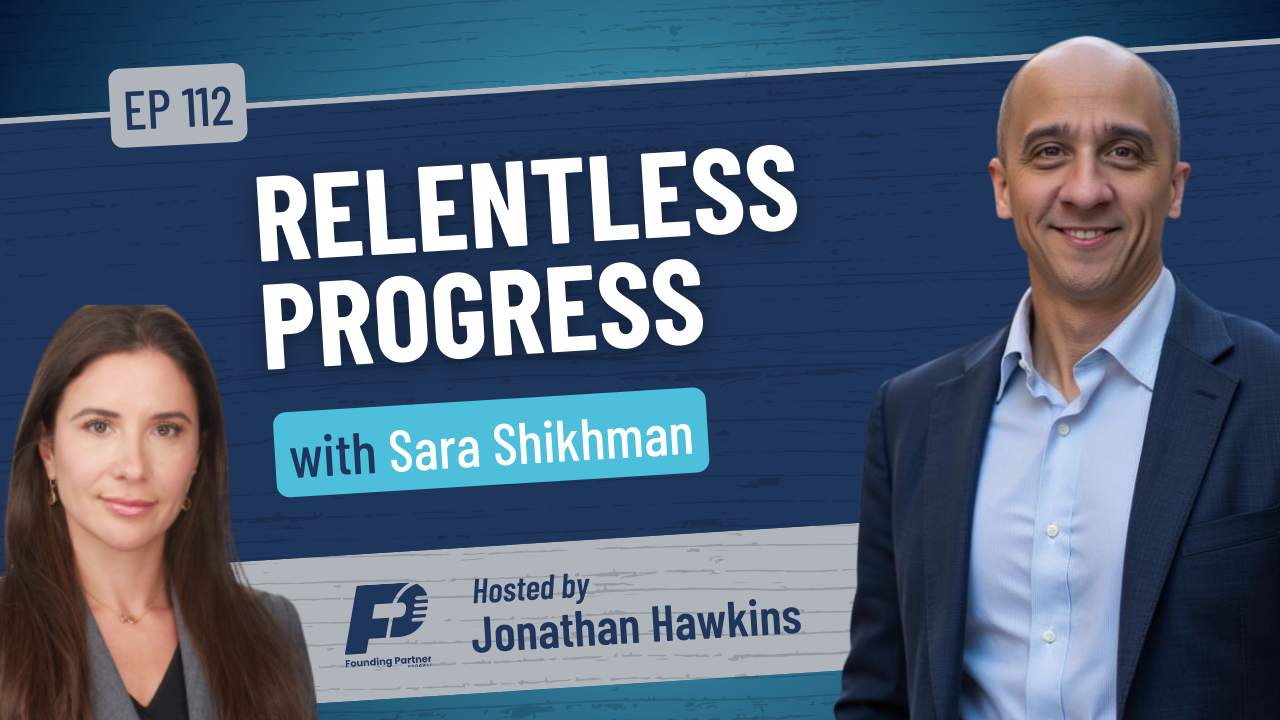
When I asked Sara Shikhman what she actually does inside her firm today, she did not hesitate. She thinks about where the firm is heading. She looks for ways to keep her team engaged and growing. She prepares for the future. She oversees marketing closely because she understands it, she handles some HR, and she shows up for conversations like ours. The operating principle underneath it all is simple. Relentless progress. Move forward a little every day.
From Ukraine to Brooklyn to Big Law
Sara came to the United States from Ukraine in 1992 with her parents and baby brother. English started in an ESL classroom where no one could speak to each other at first. She remembers practicing numbers while walking to school and learning the hard way that “celebration” does not start the way her Slavic instincts suggested. Her parents were clear about the plan. Work hard. Study. Do good things. Her brother now works in AI at Google. Sara chose law.
Medicine was out after a disastrous frog dissection. She pushed into a top school, then into big law in New York. As a 1L she over-prepared for an interview and landed an early firm job. The work was capital markets and complex derivatives. The life included Saturdays on standby for a senior partner. She told him she did not want to work seven days a week. Soon after, the firm told her to find another job. It was a clean transition, and a useful lesson.
The Startup Education
She moved in house to a major bank. The pay was stable. The system did not reward process improvements. Friends then asked her to run a furniture e-commerce startup during the financial crisis. The name was Bedroom Furniture Discounts. Not glamorous, perfect for the times. She took a pay cut, earned a Google Ads certification, learned SEO, hired a global team, and delivered missing nightstands from her trunk when necessary. They scaled from one room to a team of about 50 and roughly 14 million dollars in annual revenue. Years later the other partners bought out her stake.
Next came a med spa with her then husband. He handled the medical side. She handled the business, marketing, sales, HR, and operations. They started in one room in a former Larry Flynt building in Columbus, parts of it boarded up, rats in some areas, with a small Airbnb in the mix. They grew to 12 locations and roughly 15 million in revenue by translating consumer marketing into healthcare and learning by doing.
A Law Firm by Demand
The pivot back to law followed a divorce that split the med spa assets. Operators who knew she was a lawyer kept calling for help. In 2019 she took those early matters reluctantly. Revenue that year was around ten to twenty thousand. She kept expenses lean, ate free lunches from a neighborhood school, built routine at the gym, and created content. She taught herself trademarks, recorded a YouTube how-to, and watched it reach 20 to 30 thousand views. Those filings funded the early months while referrals gathered.
Sara never assumed legal marketing would behave like consumer marketing. The buying cycle is longer. She invested in channels that compound over time. Thought leadership on LinkedIn. Articles on the firm blog. An active newsletter. YouTube education. Conference speaking. Partnerships with industry organizations. Google Ads and SEO. Instagram and TikTok videos. The results followed. As I noted during our conversation, she has served over 1,800 clients, surpassed five million dollars in annual revenue, and posted triple digit growth more than once.
Thought Leadership that Actually Leads
Sara co-authored “Med Spa Confidential” with a physician from Columbus who had sold her practice and was racing a terminal diagnosis, which forced a strict timeline. They finished in six to nine months. The book began as a marketing tool for prospects who were not ready to engage. It went on to sell more than four thousand copies. It gives away the playbook because, in her view, the advantage is in execution.
What actually drives pipeline, and why it works for long sales cycles:
- LinkedIn thought leadership
- Blog content distributed through an active newsletter
- Speaking at conferences
- YouTube education
- Partnerships with industry organizations
- Google Ads and SEO
- Instagram and TikTok short-form video
Legal decisions take time. These channels build trust while prospects move through a longer consideration window.
The Team That Fits the Client
Scaling surfaced new lessons. Hiring fast often meant hiring poorly. Sara’s rule of thumb is blunt. The first hire for a brand-new seat often does not work out. She now hires slower, with clear expectations and job descriptions, and often runs a working interview where a candidate and she work side by side for a few hours. It surfaces red flags quickly. She avoids predictable traps like candidates trying to keep their own firm on the side or ultra-limited part-time availability in a busy practice.
One early teammate had worked with Sara at a big New York firm and later became her partner. The broader team is distributed across the United States with support staff overseas. They pair clients with attorneys by personality, pace, and appetite for detail, matching service style to the human on the other side.
Pricing that Matches Reality
Her pricing evolved through three models:
- Flat setup around 7,500 dollars to launch a medical business. It created scope creep and dissatisfaction.
- Straight retainers of 4,500 to 5,500 dollars. Clients still wanted vendor guidance and introductions outside the billed scope.
- Membership with three tiers. Most clients choose a plan around 6,500 dollars per year, typically enough to start a basic healthcare business in one state and one location. The plan bundles legal hours, templates, webinars, and a vetted vendor resource guide. Long-time members also received a holiday credit they can use in the coming year.
Recognition and What It Means
Sara applied for a Clio award after seeing the emails. Months later an unexpected note confirmed she had won a growth-story award. Clio sent a video crew, hosted a ceremony in Boston, and handed over a very heavy trophy. For her team it was external validation for the business-centered approach they were already living.
Execution Over Excuses
Her advice to founders is direct. Do the scary thing. Hire the first person. Post the imperfect video. Criticism still means people are watching. She is candid about her own missteps, like trying to act as her own divorce lawyer despite not being a litigator, or trusting hires who promised a side firm would not conflict. She learned, adjusted, and kept going.
She used to tell her med spa staff a line you do not forget. Even if only ten cockroaches survive the apocalypse, figure out how to sell them treatments. It is an absurd image with a point about execution under any conditions.
What Comes Next
The plan is to expand to more states and add verticals beyond aesthetics, regenerative medicine, peptides, IV hydration, and med spa into areas like telemedicine and dentistry. She wants to keep helping people build the businesses that will change their lives. She would be happy to do the same work for the next 15 to 20 years.
As of our conversation, she holds nine bar licenses and is preparing for another exam. Another small step forward, then another.
AND MORE TOPICS COVERED IN THE FULL INTERVIEW!!! You can check that out and subscribe to YouTube.
If you want to know more about Sara Shikhman, you may reach out to her at:
- Website: www.lengealaw.com
- LinkedIn: https://www.linkedin.com/in/sara-shikhman/
- Instagram: https://www.instagram.com/lengealaw/
- Facebook: https://he-il.facebook.com/LengeaLaw/
Connect with Jonathan Hawkins:
- Website: https://www.lawfirmgc.com/
- LinkedIn: https://www.linkedin.com/in/jonathan-hawkins-135147/
- Podcast: https://www.lawfirmgc.com/podcast
Jonathan Hawkins: [00:00:00] So that raises the next question. What’s your role currently in the firm in terms of what you do. So is it running the business, managing your employees, doing client work, doing the sales? What do you do?
Sara Shikhman: Great question. I do, big picture things mostly. So I do thinking about where the firm is heading. How do we prepare for the future? What type of opportunities do I need to give the team for everyone to be engaged? Like, where’s each team member going next in terms of their development? So I think about that a lot.
I oversee our marketing, so I don’t do the day-to-day marketing, but we have a team now that does it for us, but I oversee it very closely because I understand it. So I think it’s okay to outsource your marketing, but you gotta understand it first. I do some of the HR and I do stuff like this, which is fun.
Jonathan Hawkins: So let’s talk about marketing. I’m not gonna ask for you to tell me all your secrets, but big picture. You know, you mentioned a minute ago that that [00:01:00] marketing a law firm, it’s slow, it’s a, it’s a long life cycle or selling cycle. What sorts of things do you do or your firm your firm do that you found works?
Sara Shikhman: Yeah, and you know, I think that it’s okay to spill the secrets because the real key is in the execution. I could tell people the playbook. I actually wrote a book called “Med Spa Confidential” that tells people how to start a med spa. But people said to me, well, you’re giving it all away.
Like, well, what’s the thing? The thing is in the execution, I could tell you 1 million strategies. You gotta be able to execute them. So marketing a law firm for us is a combination of thought leadership.
Welcome to the Founding Partner Podcast. Join your host, Jonathan Hawkins, as we explore the fascinating stories of successful law firm founders. We’ll uncover their beginnings, triumph over challenges, and practice growth. Whether you aspire to launch your own firm, have an entrepreneurial spirit, or are just curious about the legal [00:02:00] business, you’re in the right place.
Let’s dive in.
Jonathan Hawkins: Welcome to Founding Partner podcast. I’m your host, Jonathan Hawkins. This is a podcast where I get to interview founding attorneys and hear about the lessons they’ve learned along the way and the cool things that they’re building. And today’s guest is building something pretty cool like some of the others, but really cool stuff.
So we’ve got Sara Shikhman. On today, she is the founder of Lengea Law. She’s based in New York, but she just keeps collecting bar licenses. She’s got a ton. We’ll talk about that. She got another one I guess this week maybe. So Sara, why don’t you introduce yourself. Tell us about your firm and what you do.
Sara Shikhman: Thank you so much. Happy to be here. And yes, I’m collecting bar licenses. So I’m Sara. I am the founder of Lengea Law. been an attorney for, I don’t know, almost 20 years now, and I’ve had a [00:03:00] complicated journey, like many people listening I’m sure. And practice healthcare law. And what we do is we help people start, grow, or sell their healthcare practice and our practices in many different states.
So that’s the different bar licenses.
Jonathan Hawkins: I feel you, I, I’ve collected a few myself. I don’t have quite as many as you do, but I’m, I’m trying to catch you. So let, let’s go back. You know, you’ve got an in interesting story. You’re the child of immigrants and I always find that very fascinating and very often the child of immigrants, they do really, really cool things and build a lot of things, and they seem to be entrepreneurial.
Maybe it’s just a coincidence, but why don’t you tell me about sort of your background and, and growing up how you did.
Sara Shikhman: Yeah, my family and I and my brother came to America in 1992. I was 10 and he was one. And my parents said to us, look, guys, we’re coming here for you [00:04:00] to pursue the American dream and in America you can be anything that you put your mind to. You just have to work hard and study and, you know, do good things.
We came from Ukraine where there was not a lot of opportunities even back then, and we really took it to heart. My brother and I ended up becoming a lawyer and really doing anything I could to rise and first get into a top 10 law school, then get a job at a big firm in New York and, you know, all the things.
And my brother does AI at Google. So we’re both like believers in the American dream, I would say. And now we get to help other people create companies and live their own American dream. So it’s. Really nice to be able to do that. Actually, I, I love what I do.
Jonathan Hawkins: So what was it like moving here at age 10? Did you know anybody? Did you know English? What was that like?
Sara Shikhman: It was, it was hard. I didn’t know English, I didn’t know anybody. But in my class in Brooklyn, New York in like sixth or seventh grade, [00:05:00] no one knew English actually. So it was interesting because it was like the English as a second language class, which I didn’t even know what that was.
I didn’t even know. What English as a second language meant, but it was me and a bunch of kids from Mexico and some kids from China, and some kids from Ecuador and all these other places, and we literally couldn’t even speak to each other. So I remember walking home from school and just thinking, oh boy, like I have nothing.
I don’t know, I don’t know what this person is saying, but they’re smiling. And I don’t know what happened today in class at all but hopefully, you know, I’ll figure it out.
Jonathan Hawkins: So how long did it take? I’m curious. You know, you come in, no English, you get thrown in. How long? How long did it take to really start picking it up?
Sara Shikhman: I think about a year to really like, to really know what’s going on and know the words. I remember somehow I was in the sex spelling bee and the word was celebration and I just could not understand why celebration did not start with an s because in, in the, in the Slavic language, like that [00:06:00] would be kind of.
Like that. And in English it was an a c and I was just shocked. And I remember coming home and thinking, oh no, like English is too hard. I’ll never be able to spell celebration. And my parents practicing with me like numbers one through 10 as they were walking me to school. So yeah, it was a lot of interesting experiences.
Jonathan Hawkins: So some people would say. You come here and you have all these disadvantages. You, you don’t know anybody, you don’t know the language, et cetera, et cetera. I can imagine maybe there’s some, maybe advantages as well growing up that way. I don’t know how, how do you look at it now that you’ve built, and we’ll talk about some of the things you did, but you’ve built a couple before you built this firm, you built some other businesses as well.
So how would you, you know, looking back on it, how do you feel that maybe that. Upbringing sort of shaped you into what you are now.
Sara Shikhman: Yeah, I mean, I felt like I came from a place that was much worse, and so coming to America and like seeing a supermarket and seeing like [00:07:00] strawberries in the winter, I was like, wow, I want those strawberries. They’re very expensive. My dad told me we can’t buy them unless they’re on sale, so. I think that, I don’t know, we didn’t have maybe some of the hangups that somebody would have sometimes if you grow up in a more privileged way.
Right? People, everyone has problems and things. So I think maybe in some way our problems were simpler ’cause they were just about you know, maybe not having enough money. But we had a lot of love and a lot of support and my parents were both around, right? So I think I was privileged in some way too, because my parents were really good to my brother and I. They were like very supportive and yeah, so I, I think I had a good childhood actually, even though we were very poor.
Jonathan Hawkins: So what, what led you to law? Why law? Not something else
Sara Shikhman: Well, my parents said in America, good professions are doctor, lawyer, maybe an engineer. So there were only three really good professions. So I thought about, okay, doctor’s gonna take a really long time, and I don’t really, [00:08:00] I had this class where I was dissecting like a frog and I could. I really wasn’t good at that.
I, I, I just like cut through the whole frog and they were like, no, that’s not how dissecting works. And so I think after that I said, maybe I should be a lawyer because I like reading and it seems like it’s a way to help people. But I really didn’t know. I, no one in my family was a lawyer. A lot of people in my family didn’t even go to college, so I didn’t even have, like, I didn’t have a role model or someone to look up to.
It was more about like, what is a good profession in America? My parents had lawyers. Good.
Jonathan Hawkins: And so you ended up going to a top law school and then ended up going to, I guess, big law. You know, that’s another, I, I guess the first law firm job is another thing that a lot of people don’t really know about unless maybe they’re. Parents or siblings, older siblings were lawyers. What was the process for you like in terms of choosing your first job outta school?
Sara Shikhman: Yeah, so I was at, I was at school at [00:09:00] Penn and everyone in school was talking about, okay, you have to work at a big law firm. And they were talking about all these different firms and they said, okay, after your one L year. One thing they, one thing some people can do is work for a firm even then if you’re really good, like the best in your class.
And I was like, okay, let me try for that. ’cause I heard they pay a lot of money and it’s gonna be amazing. And so a few firms came on campus and they interviewed even first years. And I went to one of these interviews and I said, well. I know I’m not probably the most qualified, I don’t know much about this, but what I can do, what’s in my control is I’m gonna research a lot about the firm and the person interviewing me.
And so this man walked in and he’s like, oh, nice to meet you. And I said, nice to meet you. And he said, okay, tell me about you. And I said, well, you know what? Let me tell you about you because all I’ve done is I’ve spent, you know, 20 hours researching you. And I could tell you like where you went to school and where you got married and what you do for fun and, and they.
In depth, like what practice areas you [00:10:00] focus on? Some cases I’ve read about. I think he, looking back, he probably thought it was a psycho, but then, then you know, so I wouldn’t recommend that approach, but. I came up with that totally on my own, just thinking like, what can I do that’s extra? And then one day, like a week later, I was walking I was walking into my dorm and I got this call and this guy was like, I wanted to offer you a job at CAD Wal.
And I thought it was a joke. And I was like, really? And he said, yeah, I’ve never met anyone who you know, prepared for their interview the way that you did. And so. From that point on, I was like, look, I’m going to school with all these kids who may be double a triple legacy whose parents, you know, went to our fourth generation lawyers, but it doesn’t matter.
I have, I have a, a drive that they can’t overcome. Right. So, yeah, so that’s how it all started. And I, you know, I worked in big law for a while and it was, it was good in some ways and not great in some ways too, as I’m sure you know.[00:11:00]
Jonathan Hawkins: Yeah, they’ll, they’ll work you. so, so, yeah. So you went there, you worked hard, I’m sure. What, what were you doing when you, when you were there?
Sara Shikhman: Yes, I was doing capital markets, I was doing fi, different financial transactions, like really complex derivatives transactions for big banks. But I was a very junior lawyer, so what was I really doing? Changing names, changing dates, proofreading documents listening in on lots of calls.
Jonathan Hawkins: So you did that for a while. How long did you last before you left?
Sara Shikhman: Not long. Not long. Two years. It was two years. And what happened was I worked for this partner and he would, he liked to have me come in every Saturday to just be around and available to do work for him in case he felt like it and chose to come in. Or, it was very strange because many, many Saturdays I would just be there and he wouldn’t come in or there wouldn’t be enough work or whatever.
And so I had a talk with him. Obviously I didn’t have, a good background or mentorship. Like if I knew today what I know now, I wouldn’t go into a senior partner’s office and be like, Hey, [00:12:00] listen Larry, I don’t wanna work seven days a week. Like, this is not what I set up for. I should have, there’s no way I should have said that.
But I did. And he, he was like, okay, thank you for letting me know. And soon after that they were like, look, we like you, you’re nice, you know, you seem like you have potential, but sounds like you’re not a good fit for this firm. You should probably look for another job. We’re gonna give you a few months to transition.
That was very nice of them
Jonathan Hawkins: Wow. Okay, so you left. What was next? What’d you do after that?
Sara Shikhman: I worked at a big bank. ‘Cause going in house seemed like something else that people said was a, was a good thing. And so I worked for Deutsche Bank for about three years and it was great. I liked it, but at the same time I felt like I was just a cog in this big machine and I couldn’t do anything new or different.
Actually, people were getting upset at me if I tried to try to like improve a process or streamline things. They were like, this is. You know, this is the wrong kind of thinking around here. You need to follow, follow how we do things. And so my friends were starting an [00:13:00] e-commerce company selling furniture.
This was back in 2000, around 2008, 2009. And they were like, we need a CEO. So even though you, Sarah, are not some furniture expert, you’ve never run an e-commerce company. We want you, we wanna hire you to run, to run our startup and. I really wanted to do something like that, and so I quit my job and I went to work for this for the startup.
Jonathan Hawkins: So that’s, that’s cool. So a few things about that. I guess first thing is were you getting paid for the startup or was it just sweat equity type thing?
Sara Shikhman: I was getting paid, but, but less than I was making at the bank. Like, I didn’t, I didn’t really negotiate hard, or I didn’t even, I didn’t really even know everything I was giving up once again. Like, I didn’t, I didn’t have good guidance, right? So I was like, well, you know, but I. Really felt energized by, by the possibility of starting a business and growing something from scratch.
So even though I took a pay cut, of course there was no 401k and [00:14:00] benefits and whatever all that was gone. But I felt really energized. I felt like I could do, I can do this. Let me try all the crazy things that I’ve been thinking about, all the online marketing things that I’ve read about, I could put them into action.
Jonathan Hawkins: So in the backdrop to 2008, 2009, I mean, that’s the great financial crisis. So was was that, did that play anything in, or did it affect, I mean, did it affect you when you started this, when you’re launching this startup?
Sara Shikhman: Yeah, so interestingly, so when I was at the bank it was crazy. I had a good deal. I had a guaranteed salary and a guaranteed bonus because that’s what I negotiated, starting the job. So I walked away from all that during the financial crisis, but I started a company selling furniture online, and the company was called Bedroom Furniture Discounts.
So, in a economy that wasn’t doing well. A name like Bedroom Furniture discounts, even though it was a mouthful, was actually something quite interesting to consumers. And so it definitely was not a good time to start any kind of company, [00:15:00] but starting a discount company was good. And we grew that company from literally like one room and just me to me and a few interns to me and 50 people.
And like about 14 million in revenue per year. So. I got to scale this business from like, from nothing to huge, you know, lots of transactions lots of different client situations, every kind of possible situation like I was. A client was missing a nightstand, I would put it into my trunk and deliver it in the Bronx, in the middle, in the middle of my weekend.
Or, you know, a client was upset, they wanted to charge back their credit card. Someone would call them and say, okay, what can we do for you? Can we send you a, you know, a certificate for whatever? So, I mean, all kinds of things.
Jonathan Hawkins: So how did you learn it? How did you figure this out?
Sara Shikhman: By, by doing, by reading and doing. I, I really, I mean, I didn’t know how to do Google AdWords or, you know, SEO or how to hire a global team, but I made lots of mistakes and I did it. So it [00:16:00] wasn’t, I didn’t hire any fancy companies to do it for us. We couldn’t afford them. I just really. I got my own Google AdWords certification.
I, I saw what other companies were doing and I just I’ve made a lot of mistakes, but I figured it out.
Jonathan Hawkins: Okay, so before you did this, had you ever started a business, did you have entrepreneurial streak in you, or is this something that you sort of discovered later?
Sara Shikhman: No, I’ve always thought about, I wanted to start a business but I never really started a formal business like I think in college. Well, when I was at the law firm, one small business that I did is I sold my bar review outlines on eBay. So somehow, even though I was working at the law firm and I, and I had very long hours, I thought, well, you know, digital products are very interesting.
Let me, I see people are selling their outlines on eBay. Let me sell my outline on eBay. You know, I’m an Ivy League, you know, lawyer, whatever. And so I did that. So that was a, my small, very small business. That business [00:17:00] probably had like 5,000, 10,000 in revenue. So I guess that was my first business.
Jonathan Hawkins: Okay, so you did the, you did the e-commerce business for a while now, did you guys sell that? What was the, what was your exit like?
Sara Shikhman: Oh yeah. So, the exit was actually just a, about a year ago. So the business is still operating. The business had four partners and the other three partners bought me out about a year ago. Just ’cause somebody, they have a CEO now and a hold. Management team or whatever, and I was just like a passive investor at this point.
So yeah, I got bought out, which is great, and get a check every month. Just pretty
Jonathan Hawkins: Nice. Yeah. Very nice. Okay, so, so you, so you, you helped build this BU business after going to law school. It’s somewhat unique or unusual for most lawyers to pivot that way. And then you ended up growing a second business. So tell me about that one, which sort of leads you into your law practice now, but let’s talk about that second business.
Sara Shikhman: Yeah, so, I met my ex-husband and [00:18:00] he was in residency and he was a at that time in plastic surgery residency switching to dermatology residency. And he said, you know, there’s this world of med spas and it would be interesting to open a med spa business. And, him and I basically opened a med spa together where he was doing the medical side and I was doing the business side more like the marketing and all the things I knew from before the HR and marketing and sales management and managing a team.
So, yeah, but it was the same thing, like taking all the online marketing that I knew from furniture translating into. A different market, but kind of similar because the consumer most of the time is, is a consumer. So if you think from the consumer’s mindset, you can really figure out lots of different businesses and yeah, we started a med spa in one room in Columbus, Ohio, in Larry Flint, a former building.
It was a little bit. Decrepit, I would say you know, was boarded up in some parts and some parts they were [00:19:00] rats and some parts we had a small, we were running a small Airbnb, so it, it was a multifaceted building. And yeah, we started in, in one room, hired an injector and started a med spa. And then three, four years later that med spa was doing like 15 million in revenue.
A familiar story to me had 12 locations. And. It was a, it was an experience for sure.
Jonathan Hawkins: So the first thing I’ll say is some of the younger listeners probably don’t know who Larry Flint is. But so, so I’ll just give
Sara Shikhman: know who he was either. Actually, I’m not that old.
Jonathan Hawkins: Well, you know, when,
when, I’m trying to think. When I was in high school, I don’t know. There’s a movie about him, so, you know. If you’re a certain age, you saw the movie probably, but yeah, he was all over the place and you can go look him up if you don’t know who he is, but okay, so you grew that business for a while and then eventually got outta that, uh, and, and then pivoted back into the law, sort of what happened there?
Sara Shikhman: Yeah. Yeah. So I was, I was in [00:20:00] that business and I noticed that regulation was really vague sometimes, and there were really not a lot of lawyers who specialized in that field, in like the cash-based healthcare, like the dermatology plastic surgery. Psychiatry, all the people who weren’t really based on insurance.
And so it was kind of always in the back of my mind. And competitors were always asking me, knowing that I’m a lawyer, saying, Hey Sarah, how did you guys figure this out? Or How do you, how did you grow from one location to 12? Or how do you do an a contract for a medical employee? Things like that. And in my divorce, the business got separated where my ex.
Kept the medical business. And I started this law firm where I didn’t even think I was gonna start a law firm. People called me and they said to me, Hey Sara, I remember you were running this med spa. Can you help me start a med spa? And I said, I guess I’m a little bit depressed. My husband, you know, left me, I’m sitting here in unemployment in my room alone.
I don’t know if I can [00:21:00] do this. And they were like. You can do it. Please help me. I know you can. And so the first few clients actually like begged me to help them. And soon enough, like that was 2019, I had. Probably what, I don’t know, 10,000 in revenue, maybe 20,000 in the whole year. And I was thinking, oh my gosh.
My parents are, my parents were like, at this point, my parents were concerned about, you know, the failure of the, of their daughter. And I was thinking maybe I should just go back to big law or something like that. And then clients kept preferring clients and the firm kept growing. And here we are.
Jonathan Hawkins: All right, we’re gonna dive into that. But to go back, so while you were building, well, lemme back. Even when you were running the e-commerce business, you were the CEO and then you were building the med spa, were you doing we legal work for these businesses or had you given up law altogether? Really? I mean obviously you can’t give it up
all but uh.
Sara Shikhman: I was doing it all. I was, I was doing legal work, I was doing marketing work, I was doing [00:22:00] sales work. I was doing HR work. I was doing lots of things in the med spa. When I did that, it was a lot more legal work than the furniture company. The furniture company didn’t really have much legal work.
It was more sales and marketing and maybe sometimes if there was an escalation, but very rarely. But in the med spa world, there was a lot more legal, like, who, who can we delegate procedures to? What happens if a medical board stops by? Which definitely happened.
Jonathan Hawkins: So you were, you were, you kept your chops up during this period, so it was a pretty seamless, other than, you know, not having clients, but going back into the law was not that big of a deal. ’cause you’d been doing it while you were running these med spas.
Sara Shikhman: Yeah. Yeah. It was, it was not a big deal, but it was kind of a big deal. I think I myself was thinking, okay, do I have what? I’ve never run a law firm before or like, so yeah, I know how to put together a contract. But not every kind of contract. And also, I don’t know, like how do, how do lawyers bill for time [00:23:00] or how to what’s an engagement agreement?
How to structure those. I had to learn those things from scratch.
Jonathan Hawkins: Okay, so you mentioned you had maybe 10, 20 grand in revenue that first year. What was it like? I mean, what were you doing? Like how, because let, let me give some context here, because today maybe more, but today I saw one of your LinkedIn posts, you have over 1800 clients. You’ve surpassed 5 million a year revenue. You’ve had triple digit growth for multiple years. You’re, you’re kicking ass. You’re kicking ass now. But that first year, man, it, it was rough. So how did you bridge the gap?
Sara Shikhman: Yeah, I, I just kept going. I think I kept my expenses really low, so, there was this school next to my house on the lower East side of New York that offered free lunch, and so I would literally go to the school and wait in line with all different types of people and get the free lunch on. I would walk, walk home, eat my lunch, and think about, okay, how am I [00:24:00] gonna get out of this free lunch situation?
And I decided I need to at least, okay, I don’t have, I don’t have a lot of clients right now, but I could focus on something else. So I started. Working out. So I would go to the, to the gym every day and I would eat my free lunch every day. And then I would think about, okay, maybe I should make some videos or some content.
And so I made a YouTube video and well, first I, I taught myself how to file trademarks ’cause I figured that’s something I could do and that’s something that maybe people will hire me for and I could quickly make some revenue. I made a video on how to file a trademark. Put it on YouTube and then it got like 20 or 30,000 views and people started hiring me to file trademarks.
And so that’s kind of how I filled my time in 2019.
Jonathan Hawkins: So you were pretty good at marketing. Why did you do YouTube? I’m curious.
Sara Shikhman: I think I did YouTube because I saw other people. Have YouTube videos on it. I saw other lawyers have YouTube, and it seemed like a long format video would [00:25:00] be something good for there. It wasn’t, it wasn’t an academic decision, meaning I didn’t like spend 30 hours thinking about it. I th and I think that’s part of my strategy a lot of times is let me try it.
If it doesn’t work, I could take it down with people, write a bunch of ne negative comments. You know, maybe, that’s okay.
Jonathan Hawkins: You’ve built a really solid firm in a short period of time, and it’s not been that long. As you look back, what are the things people wanna know? How do they do this?
Sara Shikhman: Well, it’s been six years. That’s not a short period of time. Relatively speaking, I guess some of my, like other businesses, the e-commerce ones were built even quicker. So scaling a law firm is hard. But what I’ve done is no matter what’s happening, no matter what’s happening in my life, the world just keep going a little bit every day.
So every day I’m trying to think, okay, is there a new piece of content I could do? Is there something I can read? Is there a new certification I can get? Is there a new borrow license I could apply for? [00:26:00] So I think, no matter what, my philosophy is really like relentless progress. So no matter what, no excuses.
And I used to say that when I had the Med Spa too. One of the things I would say to the staff is, look, even if there’s a an apocalypse or a nuclear bomb, and the only thing that’s surviving the world, that’s like 10 cockroaches, we have to figure out how we’re gonna sell our treatments to those cockroaches.
So that is kind of like the mentality we need to have. And so it doesn’t matter what’s happening in the world. And I think people thought I was like, you know, maybe very intense ’cause at this point, I was living in Ohio I’m from New York, and I think I brought my full New Yorkness to the Midwest.
And people were like, what? Like what did you just say? Like, I’m a cockroach, or, you know, so anyway yeah. So one thing is the relentless kind of not giving up, right? And just pursuing things. And the other thing is you don’t have to start this big thing, right? I am a big believer and you don’t need this big fancy office space, [00:27:00] or you don’t need to have like, really fancy tools.
You can be very scrappy. You could start very small in your living room. There’s no requirement that you have a office on Wall Street and there’s no requirement that you are spending, you know, $20,000 a month on marketing.
Jonathan Hawkins: So tell me about your firm now. You, you, obviously you started with just you, you’ve got a lot of people with you now. Tell me sort of the setup. How many, and are they, are you virtual? Are they nearshore out, out? You know, tell me about your setup.
Sara Shikhman: Yeah, so I have a really interesting team. One of my first hires was actually someone I used to work with at CAD Wallet at this big firm in New York. And it was kind of random. I mean, we kept in touch a little bit, but one day I saw that a familiar name applied to a job posting on Indeed, and it was someone I worked with who was very qualified at.
This firm in New York. And so, she started working with me very early on and eventually became my partner. So that, that was [00:28:00] just something almost random that happened. But the other team members, I mean, we get lots of, it’s interesting, we get. From our competitors. We have people who kind of reach out periodically and say, Hey, you know, I’ve been following your journey and I’d love to work for your firm.
I know I’m working for somewhere else now, but do you wanna meet me for meet me for coffee? And I think that’s a little, that’s a little weird. I don’t do that. But I get lots of requests. Like, I think that, maybe because people see like my posts online or, or I have a pretty open door policy, so people are often asking me like, let’s, let’s let’s talk.
And we have a team from all over the US and then some of our overseas staff that are like paralegals and support staff or people from the Philippines, from India, from other countries. So I really believe in, you know, the, a global workforce in my previous company, in, in the furniture company. I mean.
Probably more than 50% of our team is overseas. So, yeah, we leverage that a lot. And the people are great [00:29:00] and yeah, I, it’s, it’s cool. It’s cool working with such a interesting team too. Like we have people who are like very traditional, very conservative lawyers, and we have people who are very entrepreneurial and more like business-minded.
And then we have people who are big picture thinkers. We have people who are very detail oriented. And I don’t know, I, it’s, it’s nice because I feel like we all just wanna do a great job for our clients. And so that’s what unites us
Jonathan Hawkins: And so I’m curious, you know, a lot of lawyers have hangups with that first hire, I’ll say, and maybe it gets a little better, but really scaling up a team is, is not really. A skillset that most lawyers have particularly early on, and they’re little sort of risk, risk averse. Don’t wanna do it. So how was it for you?
Was it, you had these two previous experiences of scaling up two businesses. Was it fairly easy for you to scale up your firm? I mean, once you had the work.
Sara Shikhman: Yes and no. I think it was easy at times, but it was also [00:30:00] very hard at times. I’ve definitely made some big hiring mistakes. But, and I say this to clients now too, and I think when I say this to clients, they’re like, what? But you know. I mean, what I’m, when I say this, so what I, what I say is, your first hire for any new position, most likely is just not gonna work out.
So maybe don’t hire your best person as the first hire. Like save that for your, for after you fire the first person. So that’s just what happens. And I sometimes when I say that to clients, they’re like, what? What? No. Like I wanna hire this person and they’re great. And I’m like, okay, well it may not work out, but.
I think I fixed that more and more with having really clear expectations, having a really clear job description. Sometimes it’s just a misunderstanding. Your first hire, you, you, you may need them to be like your office manager, your associate, your marketing person, and you know, your someone you cry to.
And on Friday night if you need to, but. You know, it’s very hard. It’s very hard to find that in one [00:31:00] person, and if you expect to find that in one person, the perfect person, it just doesn’t happen. So yeah, I’ve hired some, some interesting, more specific hiring mistakes. I’ve hired people who have their own firm on the side. And I thought, you know, that can work. No, it doesn’t work. It’s the stupidest thing ever for us. You know, maybe some people have found a way to do it, but no, I’ve hired people who are only available like very, very limited part-time, but we are very busy practice. That does also doesn’t work. I’ve hired people that. Initially I just had a feeling like maybe, maybe, you know, something is off, but I don’t know. Let’s give ’em a chance. I love giving people a chance. No, no more chances. So yeah, I, I’ve made lots of funny and not so funny mistakes for sure, but I’m learning and we’re all learning now. We have a much slower.
Interview process. I’m a, I’m a very quick executioner. Like I can, if someone brings me a great idea, I can execute it in one day, [00:32:00] maybe one hour, maybe five minutes. You know, like there’s, if you said, Hey Sara, let’s make a video right now, and, you know, whatever. I’d be like, all right, great. Let me pull out my phone like we can, we can start right now.
So I would hire people very quickly and then. That was not good. So now we have a much slower hiring process. We even sometimes do a working interview where essentially the person comes, I meet them somewhere and we work together for a few hours just to see how, how things go. And there’s a lot that I could tell from that kind of interview, and I actually recommend that to my clients too, like a shadowing day.
In, in medicine that works quite well, where you have someone come in, you pay them for the time, but they’re, they’re basically in your office for a day and you see, are they on their phone? Are they late, are they weird? So all all things like that.
Jonathan Hawkins: You know, it’s something you said a minute ago that first hire, you know, part of it is sometimes you don’t really know what you’re hiring for. You just know you need somebody and you’re just. Just come on and then you find out later, [00:33:00] wait, it wasn’t fair to bring you here and all that. So, I get it. I get it.
It’s, it’s a learning process and it’s never a hundred percent ever. I’ve got a friend, I say this a lot, it’s ’cause it’s funny to me, but maybe it’s not funny, but she says, I always hire two people for a position. ’cause I know one of ’em not gonna work out.
Sara Shikhman: Yeah, and I think when you hire two people for a position, you can kind of see side by side very clearly who’s performing better. So yeah, I think that that’s a, that’s an interesting strategy too. It’s just, it’s hard ’cause then you hire two, the one of them sees the other person not working out. So that strategy also has its own pluses and minuses.
Jonathan Hawkins: Yeah, like it.
Real quick, if you haven’t gotten a copy yet, please check out my book, the Law Firm Lifecycle. It’s written for law firm owners and those who plan to be owners. In the book, I discuss various issues that come up as a law firm progresses through the stages of its growth from just before starting a firm to when it comes to an end.
The law firm lifecycle is available on Amazon. Now, back to the show.
Jonathan Hawkins: [00:34:00] So, so we talked about hiring. What other sorts of ups and downs and twists and turns have you encountered sort of in this journey, six year journey, building this firm? Any lessons that you can tell us you’ve learned?
Sara Shikhman: I think one, one thing is, I expected that maybe like all clients would be very similar or have similar needs or have similar like kind of understanding of like. What the state of affairs is and where they wanna be. But clients are kind of different and they, they need different different approaches.
And so what we try to do now is kind of pair the client to the right lawyer in the firm where we think about what’s the client’s personality and where are they from and like how quickly do they wanna move and do they love all the details or do they just wanna get things done? So I think. Early on it was more like one size fits all for everyone, which I think is, it doesn’t work as well.
And a lot of, I think early on I, I, I felt like [00:35:00] I. Marketing would work very quickly for law. Like it works in other industries, but actually it’s slow. And I think the re part of the reason is the life cycle of a legal client is much longer. So where somebody may decide to get Botox, you know, within a day or within a week, they’re usually not deciding to hire a lawyer or start a healthcare business in a week.
So how can I expect my marketing to work in a week? And I think that that part was hard because. For a while, we spent a lot of time and, and resources on marketing. And the, that first, like for the conversion from 10,000 to a hundred thousand was really hard because, okay, we had our first few clients, how do we get the next few?
We spent a lot of time, a lot of resources trying to market, and it, it really, it really took It that very insightful, and that’s another point. That I’ve learned. Any law firm owner learns you’re gonna spend money, you’re gonna waste money. You just don’t know. Or maybe waste is the wrong word. You’re gonna spend a [00:36:00] lot of money on things that don’t work. You’re just not, and some will work, you just don’t know till later it.
Yeah, you just know you don’t know what it’s gonna be like. Yeah, but you gotta spend it. You gotta spend it to make it. That’s the, and that’s what we tell our clients too. Sometimes clients come to me and they say, well, I wanna, I wanna have $1 million in revenue in year one. And I say, okay, well for that, are you prepared to spend 100,000 in marketing? They’re like, well, what? Like, no, I’m gonna buy a machine. It’s a hundred thousand, like some laser, some device. I’m like, well, okay, fine. You’re gonna buy the device. Is the device gonna bring the people in the door? How are people gonna know that you have this machine? So our firm is a little different because of like our business experience.
We’re able to kind of give people some business guidance in addition to the legal guidance. So clients like that, but. It’s all, it’s all very similar. All of our businesses. Like I have a friend who works in a manufacturing company. It’s the same issues, HR, [00:37:00] contracts, you know, marketing. So we as lawyers sometimes I think, get hung up that, okay, we’re lawyers.
It has to be completely different. No, it doesn’t. It’s a business. It’s the same thing, just with a little, a few little wrinkles.
Jonathan Hawkins: I agree. But one thing you touched on your business experience in Med Spa, it’s gotta be a huge. Advantage for you? Differentiator. I mean, you can speak their language, you can tell them this is what we did, it works. Or if this doesn’t work, is there an element of your services that you offer that’s more consulting versus legal and do you break that apart?
Sara Shikhman: Yeah, so we kind of put it all together. So whether it’s like business consulting or legal consulting, it’s still the same. And a lot of our advice is nuanced based on our business experience. So yeah, a lot of times people ask us like, should I introduce this service to my practice? Should I hire this person?
And it’s interesting because we’re in such a, like. [00:38:00] It’s a industry that has let’s, let’s say 30,000 practices of med spas in the us. Sometimes people call us and they say, should I hire this person? And we say, send us their resume. And then we see that somebody else like already had a big settlement agreement with that person or rejected ’em for some other reason or whatever, and we’re like, oh no, like don’t hire this person.
We can’t tell you why, but. Not a good idea. So Yeah. Or we know a lot about different vendors in the industry from being in the industry and yeah, so there’s a lot to be said in terms of being like really focused on one practice area for
Jonathan Hawkins: That is interesting. That is very interesting. You know, I’m, I’m, in my head I’m thinking, is there a subscription or service offering? That you could, you could make to clients that only you have, based on the data and the knowledge that you’ve acquired through representing a lot of these spas, both what vendors to stay away from, you know, employment [00:39:00] employee uh, due diligence, whatever, and it’d be a completely different subscription that they pay for, for that service that, that’s interesting.
Sara Shikhman: yeah. Yeah, definitely. I mean, we our firm does work on a subscription model now where people pay us and, and it’s like a subscription fee that where they get access to our team and they get a certain number of, like legal hours included. They get access to our templates. We do webinars and other things for our members.
So we do have a subscription already, and as part of that subscription, there’s a resource guide that we send, which has some vetted. Vendors and some business type of recommendations. But yeah, I think it’s interesting, you know, some, there could be more that we could be doing in terms of the subscription for sure.
But I mean, yeah, people, people are texting me 24 7 saying like, should I do this? Should I buy this? Should I hire this? Have you heard of this person? You know, are they bad? You know, yeah, I, I, I know a lot in my space.
Jonathan Hawkins: So that raises the next question. What’s your role currently in the firm in terms of what you do. So is [00:40:00] it running the business, managing your employees, doing client work, doing the sales? What do you do
Sara Shikhman: Great question. I do, big picture things mostly. So I do thinking about where the firm is heading. How do we prepare for the future? What type of opportunities do I need to give the team for everyone to be engaged? Like, where’s each team member going next in terms of their development? So I think about that a lot.
I oversee our marketing, so I don’t do the day-to-day marketing, but we have a team now that does it for us, but I oversee it very closely because I understand it. So I think it’s okay to outsource your marketing, but you gotta understand it first. I do some of the HR and I do stuff like this, which is fun.
Jonathan Hawkins: So let’s talk about marketing. I’m not gonna ask for you to tell me all your secrets, but big picture. You know, you mentioned a minute ago that that marketing a law firm, it’s slow, it’s a, it’s a long life [00:41:00] cycle or selling cycle. What sorts of things do you do or your firm your firm do that you found works?
Sara Shikhman: Yeah, and you know, I, I think that it’s okay to spill the secrets because the real key is in the execution. I could tell people the playbook. I actually wrote a book called “Med Spa Confidential” that tells people how to start a med spa. But people said to me, well, you’re giving it all away.
Like, well, what’s the thing? The thing is in the execution, I could tell you 1 million strategies. You gotta be able to execute them. So marketing a law firm for us is a combination of thought leadership. So for us, a lot of that happens on LinkedIn. So publishing content on LinkedIn and publishing content on our blog, and then making sure that gets disseminated.
So we have a very active newsletter that we send to people. We publish a lot of content on LinkedIn. As I said we speak at a lot of conferences. That’s one kind of pillar of marketing. The other is we do a ton of Google Advertising, SEO, Instagram [00:42:00] and TikTok. So we, a lot of our clients are on Instagram and TikTok, so I, I try to make videos as much as I can and post as much as I can.
I probably don’t post as much as I should, but probably more than most lawyers in my space for sure. And then in terms of more kind of traditional marketing, we have a lot of partnerships with different organizations that if their members need help, they send clients to us. But I would say most of our, most of our clients come from either reading my book or seeing something from our thought leadership online, on YouTube, on LinkedIn or on our blog.
So let’s talk about, about the book. I’m very interested in that because I just published my own book, I guess, two months ago.
Jonathan Hawkins: When did you publish it? What sort of a, response you see? And, did you see any, it’s hard to directly correlate, I’m sure, or or attribute clients the book, but did you see an effect?
And then I [00:43:00] guess the last question, I’m gonna throw a bunch of questions. How do you use it? How do you get it out there? What’s your method?
Sara Shikhman: Yeah. And I saw that you wrote a book and you know, I, I was gonna, I saw that you sent me a link to it, and I was like, oh, I wonder if he’s gonna give it to me for free. But then I saw that I have to buy it, and I was like, Hmm. Interesting. no, I’ll send you one. I’ll send you one.
okay.
you. Thank you. No, that you talking about my email signature. It’s, it’s just there all the time. Yeah. No, I’ll send you one. that. Oh, okay. Thank you. Thank you. Because I wanna read it. So yeah, in 2022 one, a woman that I knew from Columbus, Ohio, where we had the med spas told me that she was interested in writing a book and she was a physician and. Her and I got to talk and I was like, you know, it would be great to write a book together, you from the medical perspective, me from the legal perspective, and teach people how to start a med spa.
She had just sold hers for many millions of dollars and she was also, dying from ovarian cancer. So we had like a very strict deadline where we had to [00:44:00] finish the book, which I, which worked well. We, we really pushed hard in about six to nine months. We finished the whole book really working on it intensely.
And then we didn’t expect it to actually, sell, like it was gonna be a marketing tool where if, if people wanted to learn more about the firm, we’d send ’em the book. But the book so far has sold over I think 4,000 copies. So it’s kind of surprising. Yeah,
Jonathan Hawkins: a lot.
Sara Shikhman: mean, for like a little book for, you know, a little very specialty book.
So the book, the what we do is we send it a free copy of it to all of our members. We give it out sometimes when we go to conferences and when people do a consultation with us, sometimes people are not ready to sign up for a whole big membership. So we say, okay, well step one, we suggest you read the book.
It’s about, I think, $30 on Amazon. So we use it for that, where sometimes if a lead. Is not ready for whatever reason, we say, okay, well step one, maybe you maybe read the [00:45:00] book. So we use it as like a early thing in our sales funnel.
Jonathan Hawkins: And would you, if you had to point to anything, is that, is that one of the big, the big levers that has helped drive your firm?
Sara Shikhman: Yeah, I think the book and how we use the book. Yeah, for sure. And the fact that the book really is no secrets, right? It’s about really showing people how to build a med spot business. And so people like it ’cause it’s very practical and it’s, it’s written in my voice where it’s very direct. It’s like, do this, do this, do this.
It’s not like, well, one might consider and like, no, that’s, that’s not me. I’m gonna tell you what to do if you don’t wanna do it. That’s okay.
Jonathan Hawkins: I, I like it. I like So you mentioned a minute ago the, the, the membership or, or the subscription that you have. tell me, tell me about that. How did you come up with that? Did you, did you always have that, did you start out hourly or how has your, your sort of [00:46:00] pricing and your, your, you know, billing to clients maybe changed and evolved over time?
Sara Shikhman: Yeah, great question. It’s changed and evolved over time like the most, so when I first started out, I thought it would be interesting to offer a flat rate service, so I think it was like $7,500 for a complete setup of a medical business. But what happened was. It people would start asking all these tangentially related questions that were, it wasn’t really clear, was was that part of the setup or not?
They wanted to bring in a partner. They wanted to buy machine, they want, they had an inspection and so there was a lot of confusion and. Dissatisfaction, quite frankly, because people were like, wish that should have been included in my 7,500. So that was, that was model number one. Model number two was straight retainers.
We used to do 4,500 or 5,500, and we would say, okay, like you get this retainer and nothing else. But then people would call us and say, well, who do you recommend as a business broker? Who do you recommend as an accountant? And you know, we [00:47:00] would give ’em the recommendation, that’s it. And they were like, well, can I get a discount on my bill?
And I was like, well. Why, for what? For, for being a nice person. Like we told you what the rates are actually. So that was like, that didn’t work so well. So we decided how can we have something that creates more value and like, gives more value to our customers, right? Not just ours, but also like a lot of the business resources and a lot of the digital resources.
Free templates and webinars. And so we came up with our membership. We studied how much it actually costs for us to do the work to help someone open this kind of business. And we have a pretty large sample size, so that’s how we came up with the price of the membership. Right now, we have three levels, but the most common one is about 6,500 a year.
So that 6,500 a year is typically enough for most people to start like a basic healthcare business in one state. One location. And so we made the membership about that and then bundled in a bunch of [00:48:00] additional resources that we thought, okay, we could create more value here and people can get more value.
So that’s kind of how the membership came about. But it was a lot of, a lot of it iterations. We’re always thinking about how to make the value better and what else can we include. Can we include webinars with some partners? Can we include like, other, other things? We actually. Just this week we sent like our holiday gift to our clients this year was essentially based on the web, on the membership too.
So for our members, we’re giving them a free credit essentially. So if they’ve been a members for five years, they get a credit of about $500 to use next year. And no strings attached, meaning like, we’re just giving them this free thing and they can use it, and that’s it. So it’s evolved over time. It’s, it is definitely not perfect, but probably 90% of our clients are on one of
the memberships.
Jonathan Hawkins: I am curious, you have all these resources and things they can access. What’s your tech stack for delivering that? What do you use?
Sara Shikhman: [00:49:00] Yeah. So we have a, a, like a custom plugin on our WordPress website where people can log in and they can download the resources. So I think there is some plugin that powers that, but we had to modify it in a big way. But essentially it’s a, it’s a plugin for WordPress and it’s our own website. It’s not like a separate thing.
’cause I don’t wanna have 1 million things for people to log into. That seemed very
complex.
Jonathan Hawkins: Good point. Really good point too, too many things. I have to log in every day. So one thing I noticed, in your materials, that your firm won, the, the Cleo, I dunno if it Rice Men Award, I’d never heard of this thing. Congrats, but I, I, tell, tell me what it is and, and you know, how did you win it?
Sara Shikhman: Yeah, so one thing I would advise everyone to do is if you here of an opportunity. Just go for it. Apply. And Clio is a big software provider as we know in our, in the legal space. And we’ve been using ’em for several years and I’ve been getting emails from them saying, [00:50:00] oh, we have these awards. Apply for this award.
You know, tell us your story. you get to attend our conference for free and a bunch of other benefits. And I was like, okay, let’s apply for this award. And they have different categories. And this one was for best growth story. So it was. Kind of interesting. We, we submitted an application, didn’t hear anything for a long time.
I was traveling in a car with my family and I, again, got this weird email. I thought, Hmm, maybe it’s spam. I almost deleted it. It said, congratulations, like you won the Clio Award. We’re gonna fly you and your team to Boston. And we got the ceremony. And, the award was about really celebrating like the growth of the law firm, which has been amazing in the last few years and how we did it and our pretty unique approach to how we’re like a very business centered law firm.
So yeah, it was, it was cool. They sent this video crew to, to film a video about our firm. We got to participate in this big ceremony in Boston. Got a very heavy trophy. Very, very [00:51:00] heavy. Which think thankfully they shipped. I didn’t have to put it in my suitcase, but I think it was more like I keep telling our team that they’re awesome and we’re doing a great job, but getting this external validation from this company that has, I don’t know, 50,000 lawyers as their customers, really felt like a recognition of everything that we’ve accomplished.
So it was
Jonathan Hawkins: That is cool.
and congrats. That’s awesome.
Sara Shikhman: Thanks.
Jonathan Hawkins: So, couple more questions. I guess the, a big one is for other people out there starting a firm, very early stages that want to grow, they wanna have success. Like you’ve had any advice you’d give them.
Sara Shikhman: Do the scary thing, like hire that first person or start the marketing campaign, post the video. Even if your video is bad, it’s okay. Like you could delete it or you could edit it, but it’s, even if it’s bad, even if it gets a thousand bad comments, like that’s still okay. Publicity is good. So I think people are very scared, especially lawyers sometimes of like making mistakes or looking stupid. I’ve looked so stupid. [00:52:00] Like the stupidest, you know, but it’s okay. Like I’ve done some really silly things. For example, I’ll tell you one thing that I’ve done that was pretty stupid. In my divorce, I decided I should save some money and I should try to draft some of the documents myself or be my own divorce lawyer, even though, hey, I don’t do litigation and I don’t do divorce.
Hey, guess what? Not a good idea. But I want, and I like should have known better. But I didn’t, but I learned and it was a good experience in that like, I’m, I now I know I’m never gonna do that again. So, and in my law firm, like I said, I mentioned in the podcast, I would hire people who said, well, I have my own law firm, but you know, if things go really well with you, I’m gonna stop the law firm, don’t worry or I have my own law firm, but. You know, I’m really focused on your firm. Like I’m not, my firm is not gonna compete with your firm. And I believed those people when they said those things, but it doesn’t make sense at the end of the day for most people to do that.
So I should have [00:53:00] trusted my gut and, and, but still, look, I, I made those mistakes and I’m still here.
So back to my advice, like, it’s okay to make mistakes, just do the thing.
Jonathan Hawkins: Absolutely. So last question. You’ve done a lot, but there’s more to do. What’s, what’s the vision moving forward for, for you and the firm?
Sara Shikhman: Well, I’d love to expand to more states, and I’d love to cover additional verticals in healthcare. So right now we do so much in the aesthetics, regenerative peptides like. IV hydration, med spa space. But there’s a lot more to be done in telemedicine, in dentistry, in lots of other things. So I think just expanding the firm and expanding the states that we cover and just continuing to help people.
What I love is so fun and it’s, I don’t know, I come to work every day thinking like. I get the privilege to help people do something and create their own dreams and [00:54:00] really help them, and sometimes in their toughest moments. And so it’s, I wish that I get to do that for a while longer. That’s my only, that’s my only hope.
If I get to do the same thing every day for the next, you know, 15, 20 years, I’ll be very happy.
Jonathan Hawkins: That’s a good answer there. And I lied. I have one more question. How many bar licenses do you have as of today?
Sara Shikhman: Only nine.
Jonathan Hawkins: Only 9 41 to go. 41
to go.
Sara Shikhman: I have, I have a couple of doctor clients who are licensed in all 50 states, plus Guam and Puerto Rico. So like those are the people that I’m, that I’m looking up to. They, they. Are literally like working in every single state, and I think that, I think it’s definitely possible, and I know that there are lawyers who are licensed in more, more states than nine.
Jonathan Hawkins: Well, there are definitely, you’re gonna have to take some more bar exams to, to knock some of those down. So I don’t know if you wanna do that or not, but,
Sara Shikhman: Yeah, I have some plans to [00:55:00] take one very soon.
Jonathan Hawkins: Brave. Brave.
Sara Shikhman: Yeah, I have this big book. I have many big books, but I have quite a few big books that I, that I’m trying to read. It’s hard. I mean, been outta school for a long time, so it’s hard to study for a bar.
Jonathan Hawkins: Yeah. Well, well good luck on that. And Sara, thanks for coming on. If for anybody out there that wants to find you, what’s the best way to connect with you or, or find your firm?
Sara Shikhman: Yeah you could find me on LinkedIn Sara Shikhman, or my firm lengealaw.com and on Instagram, Sara Shikhman. And if you can’t find me, you know Jonathan can help you.
Jonathan Hawkins: Well, Sara again, has been great. Thanks for coming on and I’m gonna send you a book.
Sara Shikhman: Awesome. Okay. Thank you.
OutroUpdatedWebsite-1: Thanks for listening to this episode of the founding partner podcast. Be sure to subscribe on Apple podcasts, Spotify, or wherever you get your podcasts to stay up to date on the latest episodes. You can also connect with Jonathan on LinkedIn and [00:56:00] check out the show notes. With links to resources mentioned throughout our discussion by visiting www.lawfirmgc.com. We’ll see you next time for more origin stories and insights from successful law firm founders.