Niching Down in a Small Town with Chris Rodd
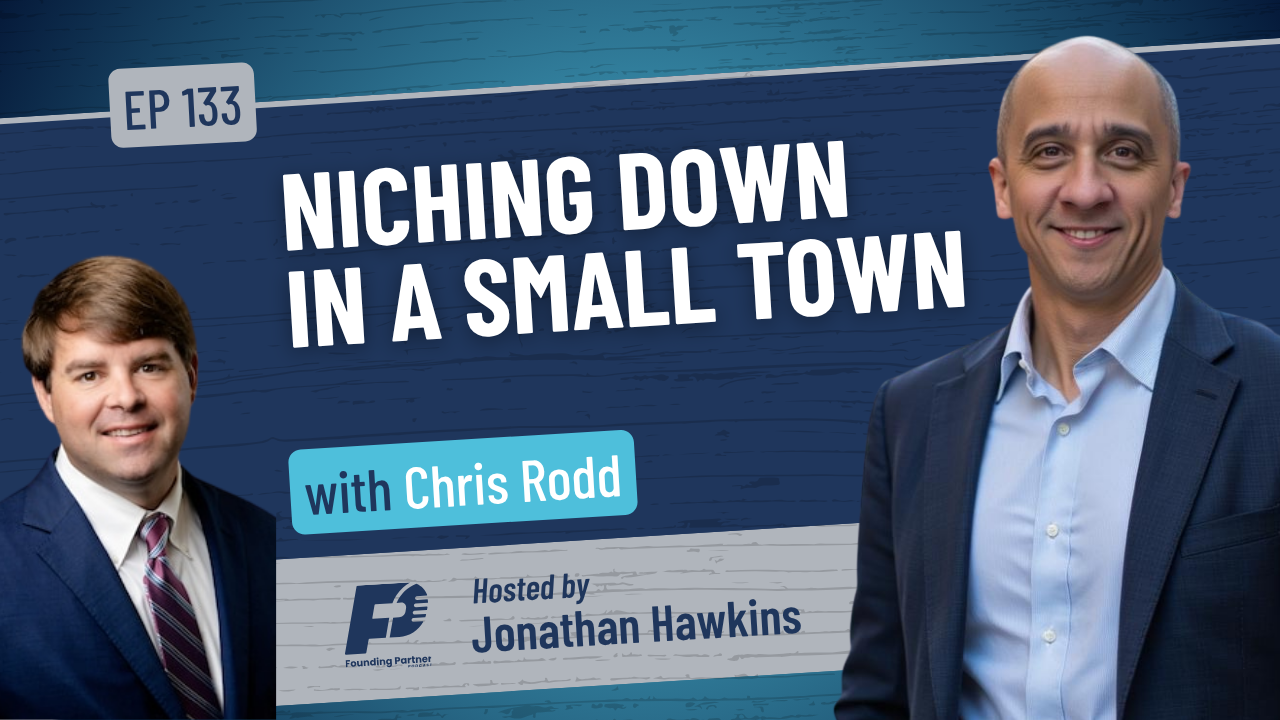
When people talk about building a law firm, the conversation often centers around big cities, massive advertising budgets, and rapid expansion.
Chris Rodd’s story proves there is another path.
As the founder of The Rodd Firm in Southwest Georgia, Chris has built a successful personal injury practice by focusing on relationships, community involvement, trial work, and a commitment to doing things differently.
Our conversation explored what it takes to leave a comfortable partnership, bet on yourself, and build a firm designed around the work you truly love.
Leaving the Comfortable Path
Before launching his own firm, Chris spent years at a respected general practice firm that had served the community for more than a century.
He handled everything from criminal defense and personal injury to real estate closings and bankruptcy matters. Like many lawyers in smaller markets, versatility was part of the job.
But over time, Chris began asking himself an important question:
What do I actually want to do every day?
The answer was clear.
He loved personal injury law. More specifically, he loved trying cases.
That realization ultimately led him to leave a successful partnership and launch The Rodd Firm in August 2019.
Looking back, Chris admits there were lessons learned during the transition, but he knew he needed to answer a question that many entrepreneurial lawyers eventually face:
Can I build something on my own?
Nearly seven years later, the answer appears to be yes.
Growing a Firm in Rural Georgia
One of the most common pieces of advice lawyers hear is that niche practices only work in large markets.
Chris has proven otherwise.
Starting with one paralegal, a part-time bookkeeper, and a part-time nurse consultant, The Rodd Firm has grown into a multi-office personal injury practice serving communities across Southwest Georgia.
Today, the firm includes multiple attorneys, litigation assistants, and support staff while continuing to focus exclusively on injury cases.
Chris believes narrowing his focus actually created more opportunities.
By no longer competing with other lawyers on real estate, probate, or business matters, he opened the door to stronger referral relationships. Attorneys who once viewed him as a competitor began viewing him as a trusted resource for injury cases.
The result was greater credibility, stronger positioning in the marketplace, and consistent relationship-driven growth.
Why Trial Work Still Matters
For Chris, the courtroom remains the heart of the practice.
He described feeling most alive when selecting a jury and presenting a case.
While many firms focus primarily on settlements, Chris intentionally built his firm to generate enough quality cases that he can regularly take the strongest ones to trial.
His philosophy is simple.
Strong verdicts raise the value of every case in the pipeline.
The willingness to try cases creates leverage. It also builds a reputation that benefits clients across the board.
As Chris explained, the goal is to keep enough fish in the pond so that the right cases make it all the way to a jury.
That commitment to trial work continues to shape every aspect of how the firm operates.
The Perspective That Changed Everything
One of the most powerful moments in our conversation centered on Chris’s own experience as an injury victim.
In 2012, while driving to court, he was involved in a serious collision that ultimately required back surgery.
What followed was something many attorneys never experience firsthand.
He became the client.
He sat through depositions. He waited for updates. He listened as defense lawyers attacked his credibility. He endured delays and uncertainty.
And ultimately, he took his own case to trial.
The experience fundamentally changed how he relates to clients.
Chris explained that lawyers often manage hundreds of cases at once, but for each client, their case is the only one that matters.
Living through that process himself gave him a deeper appreciation for communication, patience, and empathy.
It also gave him a unique perspective when helping clients decide whether to settle or proceed to trial.
Because he has personally sat in both chairs.
Community Before Marketing
While many firms rely heavily on billboards and television advertising, Chris has taken a different approach.
His firm invests heavily in community engagement.
One of the most memorable examples is the annual “Turkey Toss,” a Thanksgiving event where the firm smokes and gives away more than one hundred turkeys to local families.
What began as a neighborhood tradition has grown into a community-wide event involving hundreds of people every year.
For Chris, these efforts are about more than marketing.
They are about building genuine connections.
In smaller communities, trust matters. People want to know who you are long before they need a lawyer.
That commitment to service has helped strengthen the firm’s reputation throughout the region.
Lessons from the Cockpit
Outside of law, Chris is an avid pilot.
And surprisingly, some of his most valuable business lessons have come from flying.
One concept he shared was the idea of trusting your instruments.
Pilots rely on data and systems when visibility is limited. Even when their instincts tell them something different, the instruments provide objective information.
Chris believes law firm owners should operate the same way.
When emotions create uncertainty, leaders should rely on their numbers, metrics, and data.
If the data is solid, trust it.
That mindset helps eliminate unnecessary fear and allows leaders to make better decisions based on facts instead of feelings.
It is a lesson that applies equally well in business and in life.
Building Something That Lasts
Today, Chris is focused on more than growth.
He is focused on sustainability.
With children approaching adulthood, he wants to build a law firm that can endure for decades and provide opportunities for future generations if they choose to pursue law.
The vision is no longer simply about making payroll or surviving another year.
It is about creating a business that reflects the values he believes in.
A firm built around trial excellence.
A firm rooted in community.
A firm that allows talented people to thrive.
And perhaps most importantly, a firm that he and his family can be proud of.
Closing Reflection
Chris Rodd’s journey is a reminder that success does not require following someone else’s blueprint.
Sometimes growth comes from narrowing your focus.
Sometimes opportunity comes from taking a risk.
And sometimes the most important lesson is simply trusting yourself enough to build the future you want.
For Chris, that future began with a leap of faith, a commitment to trial work, and a belief that a small-town lawyer could build something extraordinary.
Thank you for joining us for this episode of The Founding Partner Podcast. Stay tuned for more conversations that inspire growth, leadership, and entrepreneurial success.
AND MORE TOPICS COVERED IN THE FULL INTERVIEW!!! You can check that out and subscribe to YouTube.
If you want to know more about Chris Rodd, you may reach out to him at:
- Website: https://www.roddfirm.com/
- LinkedIn: https://www.linkedin.com/in/christopher-rodd-30362b38/
- Facebook: https://www.facebook.com/theRoddFirm/
- Instagram: https://www.instagram.com/theroddfirm/
- Phone: (229) 421-7777
Connect with Jonathan Hawkins:
- Website: https://www.lawfirmgc.com/
- LinkedIn: https://www.linkedin.com/in/jonathan-hawkins-135147/
- Podcast: https://www.lawfirmgc.com/podcast
Jonathan Hawkins: [00:00:00] And so you know, we’ve talked prior to today, you really like doing the trial work. You really like doing it. You know, some people really like doing it, some people don’t. They wanna build an operation that does other things. But I think, and correct me if I’m wrong, that you sort of built your operation so that you can do trial work ’cause that’s what you like doing.
Chris Rodd: Yeah. I think part of what we wanna do is be able to have enough cases, you know, in reality, only a small percentage of cases actually make it to trial, like a jury trial. And I love, where I feel most alive practicing is when I’m sitting there picking a jury, speaking with it. And I think that really goes back to when I sold car radios or installed them, dealing with the public and our family.
Like, I feel like one of the gifts that I have is that I can speak to a lot of different people and identify with a lot. I may not be the smartest legal scholar out there, but I think I understand people. And our practice is around getting kind of enough fish in the pond, so to speak, that we can [00:01:00] find the good cases to try and try those cases, and then raise the bar from there.
So if you try a good case and get a good verdict, certainly you’re gonna be at a point where you’re even your cases who may not be what we would consider as lawyers great cases can certainly raise the number for those other clients as well. And that’s kind of our goal.
Welcome to the Founding Partner Podcast. Join your host, Jonathan Hawkins, as we explore the fascinating stories of successful law firm founders. We’ll uncover their beginnings, triumph over challenges, and practice growth. Whether you aspire to launch your own firm, have an entrepreneurial spirit, or are just curious about the legal business, you’re in the right place.
Let’s dive in.
Jonathan Hawkins: Welcome to Founding Partner Podcast. I’m your host, Jonathan Hawkins. This is a podcast where I get to interview law firm founders, find out about their journeys and the lessons and wisdom [00:02:00] they’ve learned along the way. Today’s guest is Chris Rodd. He is a personal injury lawyer from, I’ll say, Southwest Georgia.
He can fill in the geography better in terms of how far of a reach his firm sort of reaches down there. Chris, welcome to the show, man. Thanks for coming on
Chris Rodd: Awesome. Thank– I appreciate you having me. Excited to be here
Jonathan Hawkins: So tell us about your firm. What you do, where you are
Chris Rodd: Yeah. So we’re a personal injury firm in based out of Thomasville, Georgia, which is about as far south as you can get in Georgia. We’re eight miles from the Florida line. Geographically, if you’re thinking about it, it’s just right above Tallahassee, Florida. A lot of people know where that is, home of the Florida State Seminoles.
But so we’re in Thomasville. We’ve got an office in Valdosta, Georgia, which is also on the line furthest, almost the furthest city south on I-75. And then we’ve got an office that we’re moving forward with in Albany where I grew up, that area, Leesburg, Georgia. And so we’ll have the Southwest [00:03:00] Georgia cornered, I guess, here shortly
Jonathan Hawkins: Yeah. So if I’m looking to map Georgia is, are you basically covering in terms of offices and/or courthouses that you sort of run in that whole southeast, southwestern corner,
Chris Rodd: yeah. Yeah, yeah. I mean, I think that’s a good way to look at it. If you kinda look, we’re not as high as Columbus or Macon, but, you know, we kinda just south of there where Albany is and a little north, you know, those counties surrounding. But then if you look at 75, I-75, kind of west towards Alabama, we cover that.
You know, occasionally we’ll get some stuff over in the eastern side of the state that we’ll work on towards Brunswick, St. Simons, that area. But, you know, it’s a little less populated over that way, so we don’t quite, quite get as much. But so it’s kinda interesting. It’s nice to be in this area. Hot sometimes
Jonathan Hawkins: I lose track of time, man, but we, we met a number of years ago, I think right as you started your firm, and you’ve had a lot of growth since then. So why don’t you tell us [00:04:00] what you were like when you started and what the firm looks like now in terms of people and, and that sort of thing?
Chris Rodd: Yeah. And how we met, obviously you helped me through untangling a, a previous partnership I had, and we really appreciate that. You did a great job doing that. But when I started my firm we were just solely personal injury. I took one paralegal with me. I had a part-time bookkeeper who was remote, and I had a part-time nurse who was remote and that was it, and myself.
And now we have four attorneys working for the firm. We’ve got about eight eight different paralegals and litigation assistants and still growing. So e- every day is a new challenge getting there. And that was we started the firm back in August of 2019. And so we sit here in 2026. Went through COVID. It wasn’t six months after that and we were in COVID, you know, so.
Jonathan Hawkins: Well that’s a lot. That, that is tremendous growth, and I imagine, maybe fill in too, you know, y- we hear about or I read about the rural areas all across [00:05:00] America, there are not enough lawyers in the rural areas and, you know, there’s sort of the, the, the population is shrinking a little bit. You know, maybe speak to that, but then also, I mean, I imagine you’re seeing that and to have the growth on top of that how’s that affected it?
Chris Rodd: You know, it’s interesting a law is getting so much more specialized, and I, I think I’ve seen some of those comments about, hey, rural America is underserved. I mean, we have a lot of little small counties and towns in this area who just, you know, maybe they have two or three lawyers in the city, you know, like, and they can’t all do injury cases or they can’t all do real estate closings or that kind of thing.
So, we’ve been able to grow, I think, just because obviously geographically we’re hitting three different cities and pulling from those areas, but all the little cities in between. And then, you know, before I did just solely personal injury, I did a lot of criminal– I did some criminal work as well, traveled the circuit.
We operate in circuits down here, typically a five-county circuit. So you’re [00:06:00] hitting… If you’re in two circuits, you’re in ten counties easily. So you can get a name and you can get at least a reputation for yourself. So that’s helped a lot over the years, you know
Jonathan Hawkins: So I do wanna circle back and talk about niching down in in the rural areas. But before we go there, I wanna go back. You know, why, why’d you become a lawyer? What were you doing before going to law school?
Chris Rodd: Well, so what really happened was is I, I wasn’t a very good high school student and I barely got into college. And then when I got into college, I started doing well and making A’s A’s and B’s and, and actually got an associate’s in Spanish which is a odd thing ’cause I know I have a very thick Southern accent which is, but I spent a summer in Costa Rica and ended up at University of Georgia but got a teaching certificate which is really ironic because I probably wasn’t the best high school student. But when I got out of high– when I got out of teaching or got finished with my teaching degree, I went and taught drafting and architecture.
It used to be the old industrial arts. People think about shop class or metals class or stuff. [00:07:00] That’s kind of changed to what they call technology education. But so we learned drafting and, and I did that for a year and then went back in my family business low voltage contract. We’d install church sound systems or alarm systems or closed circuit TVs and did that.
And while I was doing that, I just felt like the need to go back and get a, an extra degree and I kinda had this I wanted to get a master’s or some type of post-graduate degree. And so my option was go to law school or either go into construction management and that, and I chose, ended up choosing law school, took the LSAT and I said, “Well, I can probably do this or do business afterwards.”
And anyway, just kind of fell in love with it. Love, love with trial work, got involved with mock trial and the, law review and all that kind of stuff
Jonathan Hawkins: So, you mentioned Costa Rica. I think we, we pieced together that we were down there at the same time. I was down there I think the same summer you were
Chris Rodd: Oh, really? Yeah, I didn’t realize it was the same summer. I remember us piecing together,
Jonathan Hawkins: I think it might’ve been, man. Which is funny. It’s [00:08:00] funny. I wonder who else was down there that,
Chris Rodd: 25, 26 years ago, so, it was a while. But it’s a cool place. I’ve been back a bunch of times, so
Jonathan Hawkins: Yeah, I love it.
Chris Rodd: good memories
Jonathan Hawkins: just, we just went couple months ago and I hadn’t, I hadn’t been back since, that was the first time back in, like, 26 years or whatever, so awesome, 27 years, something like that. But so yeah. So another thing you did, you, you mentioned I’d forgot about this we’ll get back to your law firm in a minute, but you served on the school board down there.
Chris Rodd: There’s nothing
Jonathan Hawkins: you do that, man?
Chris Rodd: Nothing like, nothing like local politics, huh? So there was a lawyer in town I litigated against, and he was kinda– His kids had gone through the system and he was kinda ready to get off the school board. He’d been there for 20-something years and, and asked me, he said, “Hey, I’m gonna get off.
Would you like to at least put your name in the hat about doing it?” And and I felt like it was a good opportunity. You know, you know, I’ve, I’ve considered politics before and those kind of things, but there’s nothing like a local politics. Especially when you’re ju- dealing with [00:09:00] people’s children.
Jonathan Hawkins: Oh men.
Chris Rodd: And then you know, everybody gets a little bit more excited and passionate and bold about it. But it was a fun experience. And what I tell people oftentimes, it’s really nice to have a seat at the table. You know, there’s a lot of things that go on in local politics that you can’t always… Y- you know, there’s some things that are protected by, you know, closed door sessions and that kind of stuff.
But, but so not everybody or not the general public knows everything that has to deal with personnel or something like that. But I think the people try to get it right. And the people there, you have to love doing it ’cause it’s an unpaid position. It’s, it takes a lot of times. And when I did come off my cell phone minutes went way down, you know? So it was always, always something, but it was always nice, you know? So
Jonathan Hawkins: I tell people there, there are two positions that are not just a no, but a hell no for me. One of them is, is school board and the oth- the other one is an HOA board member. It’s like
Chris Rodd: well, as [00:10:00] seats come up, I, I actually moved out of the district and then I, and then I moved back in the same district. The seat’s come up once or twice since I’ve been gone, and people have asked me if I was gonna put my name back in the hat, and I said, “Nah, I think I’ll let somebody else do it.”
Jonathan Hawkins: Now, I do think in Georgia, maybe the best political office would be like a state rep cause no one real- I mean, everybody locally knows you, but you can blame everybody else if something doesn’t get, doesn’t happen. It’s a small enough district, so, so you don’t have to meet too many constituents. You know
Chris Rodd: Yeah, we can, and we can just fuss about the people in Atlanta when we’re down here in the South. You know, like, it’s like, “What are those people up there doing? They don’t know what goes on down here.” And we’re, we’ve been working on them. But I guess in, in retrospect, it could be that you’re not getting anything done up in Atlanta for us either, so, you know.
Jonathan Hawkins: Now, I will say I worked, I worked at the General Assembly for a session, I don’t know, 15, 16 years ago, and there were some small town lawyers that were largely solos that were there, and you have to take, [00:11:00] you know, three, four months out of the year to go do that. And I remember we’d be in committee meetings, and I’d see them on their laptops, like, drafting pleadings, because when they were away, they weren’t making any money.
So that… You’ve built a team now, so I guess you could probably be okay, but it’s tough
Chris Rodd: Yeah. I still draft some stuff but, you know, fortunately we’ve, we’ve been able to get involved and I probably didn’t say this earlier, you know, get appellate, appellate lawyers involved who are pretty much on staff. Met with one this morning who really handle our motion practice. And I do a lot of premises work, so we’re all the time fighting summary judgment motions.
And I think since the law changed recently with tort reform that we’re getting a lot more motions to, to dismiss, you know, early on in case. So, it’s a, it can be a challenge, but I, I don’t, I don’t… I wouldn’t wanna be up in Atlanta, I don’t think for three months and not be here at my law firm for that amount of time.
That doesn’t sound like a, a good plan right at this moment in my
Jonathan Hawkins: Yeah, that’d be tough. All right, so let’s go back. So you went to [00:12:00] law school, you came out what, where did you start? What kind of firm did you start at? Did you come back to where you are now or did you go somewhere else?
Chris Rodd: So, so I clerked a couple years in Jacksonville in Florida Coastal Law and then I ca- had an offer from there and, but I came back to Thomasville where my wife is from and worked in a old kind of historic firm called Whitehurst, Blackburn, and Warren. Mr. Whitehurst he had passed away by the time I got there, but his uncles were from Thomasville, and Mr.
Whitehurst actually read into the law. So his uncles were the Hay brothers. They had a downtown law firm. They did a lot of stuff, and they took their nephew in during the Great Depression and, and he read into the law, apprenticed and, and they created this firm, and it had been there for like over 100 years, you know?
And so they had a l- pretty good clientele. We, we didn’t represent like insurance companies or anybody. We just represented kind of the people of, of Thomas County and, and the area. And but we were a general practice firm, so you got to do criminal stuff one morning, go sit in a closing in the afternoon, real estate close in the [00:13:00] afternoon, and then, then go handle a 341 hearing the next, for bankruptcy the next day.
You know, like it was kinda always something different. But so I, I always did the trial work with them. The two partners did some trial work as well, but I always did the criminal practice for, and then personal injury cases. and my clerking in, in Jacksonville was a personal injury firm as well, so I had a little experience
Jonathan Hawkins: So, doing all this practice areas in a small town, and I’ve heard others talk about it, it just raises my anxiety level. I mean, because, you know, it’s, it’s, at least me personally, I feel like it’s hard to, to know how, really learn how to do one thing well, and you’re constantly flipping between different types of things
Chris Rodd: Yeah. I think you you’re a jack of all trades and a master of none, you know? I mean, but, you know, fundamentally what we do for people is we work out people’s problems, you know? They come to… They have a, they have a problem and they want a solution, whether it’s a divorce or whether it’s a injury case, and, and a lot of it ends up being a [00:14:00] negotiation.
You have to get in the right posture procedurally to do that. But, you know, I, you know, there are areas, I guess, how we sectioned it off, everybody kind of had their areas. I was criminal and, and personal injury, and the other guys maybe workers’ comp and family law. And, and so we had some areas, and then we kind of crossed over with one another as we ne- as the firm needed to cover hearings and that kind of things. But, but you learn a little bit about a lot of stuff which helps you in your, in your practice today, you know? So people still come up with all kinds of different issues.
Even if you’re handling a personal injury matter, just like yesterday you know, somebody’s house was being foreclosed on, on, on an issue, and we’re able to at least answer some questions and point them in the right direction. So that’s helpful, you know. But it is a challenge.
Jonathan Hawkins: Yeah. So, so you start at this firm, you, you work up, you, you become a partner, but at some point you say, “All right, I, I think I wanna do this on my own.” Take me through the thought process of thinking, “Hey, I’d rather go out on my own than, than stay here at this general practice firm.”
Chris Rodd: Yeah, it could be [00:15:00] just my age. I was turning 40 that year that I that I, I decided to leave. And then it was a choice. You know, I was– had been there, had become a partner, knew the firm. I think my partners and I all got along. That wasn’t an issue. But then it became a choice for me is, did I really…
At some point, they were a little older. They’re actually both in their 80s now, so we’re talking they were late 70s and, and did I really wanna hire lawyers to do everything that they were doing or we were doing or, or would we just niche down? And I, at some point I came to a realization, why don’t you just niche down yourself and go do exactly what you wanna do?
You’ve been doing you know, working for everybody else and doing these other things all these different practice areas, and you just need to, at some point, just figure out what you wanna do, you know? And is that… What do you wanna get up and do every day? And, and the beauty of the way we’ve done it in starting O’Neal, everybody here is rowing in the same direction.
You know, they’re– everybody understands the [00:16:00] process, understands what the goals are, you know, versus, you know, having to find the right paralegal to answer this question or get this pleading done. Everybody here is kinda doing those same thing, you know, the same thing every day. So
Jonathan Hawkins: So how was it telling them, “Hey, I’m leaving”? You know, you got a small town, aren’t many lawyers down there, I imagine,
Chris Rodd: Yeah
Jonathan Hawkins: “Eh, you know, it’s been fun, but we’re breaking up and I’m gonna go down the street and do my own thing.”
Chris Rodd: Well, I will say I don’t advise it to do it the same way that I did it. I did… There were some lessons learned in that. But to complicate matters, one of my partners was my father-in-law, too. So, you know, not only did you leave leave the office, but you, you know, like you’re, you’re d- making some division somewhat in the family.
Fortunately, my wife was on board. But the, you know, I, I walked in on a Monday. I, you know, I never stopped my performance about what I was doing for the firm. You know, I always continued, I thought I had this inkling wanting to do it, but I always continued to take the [00:17:00] depositions, get, move cases along.
Revenue never dropped off. I didn’t quit doing the, the things that you need to do as, as I would be expected to do as a partner. When I started considering, I reached out to a couple trusted friends/advisors about it, you know, say, “Hey, I’m thinking about this. Is that the right thing to do?” And, and they said, “Yeah.”
One of them said, “I’m surprised you hadn’t done it before this time.” And I was like, “Well, okay. But I haven’t, but I’m here.” And then I presented them an opportunity just to, hey, this is what I think how this thing might go. I think where my mistake was is I walked in on a Monday and said, “Hey, guys, it’s been real and it’s been fun, but I’ll be out by next Monday.”
And that was like, quick. And, and I think everybody’s lip hit the floor. And then, you know, I think ultimately that was a mistake. And I can honestly say it, you know, I… Not because of the you know, I mean, you have to unravel somehow. But I think it, it, it can cloud people’s vision about what your true [00:18:00] intentions are, and really my true intention was just to go do my own thing, you know.
And it ultimately worked out, probably prolonged the, the division of everything and getting it done a little longer because of, because of that. But at some point you gotta, you gotta cut the cord too, so, you know, it is what it is. Lesson learned
Jonathan Hawkins: And so part of it was because you wanted to really niche down and do your own, own, your only one practice area basically. Had, also did you, did you always just wanna run your own shop? Did you have some sort of entrepreneurial bug that just you needed to, know, you needed to go do or what?
Chris Rodd: Well, I, I do have a little bit of entrepreneur bug. I, I think I have a probably self-diagnosed ADHD, you know, have a lot of irons in the fire. But, but also, you know, I grew up in a family business where my dad ran the show and I saw a lot of that. I mean, I, I saw the, the, the good and the bad with that.
And I– at some point you feel like, “Hey, [00:19:00] can I do it? Can I do it on my own?” And certainly that firm had stood up for a long, long time. Partners have been there a long, long time. And as a partnership, we could do it together, and we did, you know. But there would, there would be all that, always that question, could you do it on your own?
And I think I needed to answer that. Now we’re sitting here six years later and, or almost seven August will be seven and it’s we’re here, you know.
Jonathan Hawkins: Well, you’re doing well too. You know, doing real well, which is, which is awesome.
Chris Rodd: Thank you
Jonathan Hawkins: the, you know, it’s funny you said you, you grew up in a, you know, in a, in a s- family with a small business or, or owned a business. I’ve, I’ve talked to others that have grown up similar s- similar situations, and it’s usually one of two camps.
They’re like, “I’m never going to start my own business,” or, “I just have to go start my own business.”
Chris Rodd: Yeah. Yeah. You know, I, my dad would prob- You know, my dad wasn’t, I don’t think, really in favor of me going to law school at first. I mean, he wanted me to take over his business, and, and I think that was the plan, but I really felt like I needed to go [00:20:00] somewhere. And but later on, after I got done with law school and actually kind of came full circle, he told me he was really proud of what I did.
And that was a lot, you know, coming from your dad, who I had to go in one e- one Sunday evening and say, “Hey, by the way, I’m leaving.” I guess I got a history of that. But when you own your own show, you can’t just do that, you know? You gotta, you gotta show up every day. But it, you know, it, it can be stressful, but it’s also can be very rewarding
Jonathan Hawkins: All right, let’s switch back. So part, again, part of the reason you left, you wanted to sort of ditch the general practice and really focus on a niche area. And we sort of talked about it a little bit, but, you know, the talk has always been, and I’ve heard from others, that if you’re in a smaller town or in a rural area, you really cannot niche down because there’s just not enough.
Not enough people, not enough cases. Did you have any concerns about that, and what’s been your experience?
Chris Rodd: Well, I did. I joke, I joke with people, and I don’t know if I can say it on here, but, you know, I just said, “Well, if this doesn’t work out, I’m gonna go work for the people.” And Morgan & Morgan, you know, and, [00:21:00] and th- those are the competitor. There’s always moving in these markets and that kind of stuff. But, you know, I guess I’m living proof you can niche down.
You know, I was uncertain, completely uncertain, but it, it actually opened up some doors for us because, you know, as a general practice, we were sitting there and we would still do real estate closings, or we would do X number X. But it really opened up my referral relationship with lawyers who did, like, banking or, or did other things.
They didn’t really wanna send me their personal injury clients ’cause maybe that would end up… I would end up figuring out who their caseload was and get their real estate closings after that or something like that. And so it really just opened that area up for referrals, but it also made you seem like you were really the expert in the field.
You, you just weren’t just taking one-off cases. You know, you were, you were the guy who, who handled these regularly every day and stayed up on the law and, and they didn’t have to worry about, you know, me going to dive into the other things as well. So, you get to re- really be known as the expert, so [00:22:00] that’s nice.
It’s nice to… And being on these things too helps, you know?
Jonathan Hawkins: Yeah. You know, so, so Joe Fareed, you know Joe, I’m sure trucking lawyer in Atlanta. He came on a while back and, and we talked about, you know, when he went out and said, “I’m a trucking lawyer,” he said everybody in Atlanta, which is big- bigger city, thought he was crazy. And they were like, “There’s not enough cases.
There’s not enough cases.” And his view is, and I think I agree with him, is that if you, if you hyper-focus or niche down, then you can expand your geography as well, and that’s how… One way to get more cases. And, you know, we talked about you’re in you know, Thomasville, but you’re covering you have offices in multiple cities now, and you’re covering a wider area.
Did you expand because you needed more re- get more cases, or it’s just a, “Hey, there’s opportunity and let’s do it”?
Chris Rodd: So the Valdosta office is in our circuit. We try cases up there. I’ve had a jury trial over there in January, and it’s not our, our [00:23:00] office is literally next door to the courthouse, so that’s nice. We go by there during lunch or afterwards and have meetings, et cetera. And but there was an intentional thought about it.
You know, you, you gotta have some Google presence and and then Albany where we’re opening our office there, we own the building. It’s actually where my dad’s electronics store was. And so we had the building, let’s go ahead and do that. I’m from Albany. And then Dougherty County is pretty known for their verdicts up there as well.
The pretty liberal in that area. So, you know, but, but I wanna be where I grew up and knew and be from the community. So I think I can make those connections with those, with those areas. You know, I’m not up in Atlanta trying to steal cases, but you talk about niching down too.
So I, I mean, I get cases from, you know, because I do a lot of premises work, I get cases from kinda all over. I, you know, I handle some over in Waycross, over towards Brunswick for even injury lawyers who don’t really do premises work, ’cause they’re pretty intense with the appellate practice and the brief writing, et cetera.
So, so we, we just work on those things, [00:24:00] you know?
Jonathan Hawkins: And so you know, we’ve talked prior to today, you really like doing the trial work. You really like doing it. You know, some people really like doing it, some people don’t. They wanna build an operation that does other things. But I think, and correct me if I’m wrong, that you sort of built your operation so that you can do trial work ’cause that’s what you like doing.
Chris Rodd: Yeah. I think part of what we wanna do is be able to have enough cases, you know, In reality, only a small percentage of cases actually make it to trial, like a jury trial. And I love, where I feel most alive practicing is when I’m sitting there picking a jury, speaking with it. And I think that really goes back to when I sold car radios or installed them, dealing with the public and our family.
Like, I feel like one of the gifts that I have is that I can speak to a lot of different people and identify with a lot. I may not be the smartest legal scholar out there, but I think I understand people. And our practice is around [00:25:00] getting kind of enough fish in the pond, so to speak, that we can find the good cases to try and try those cases, and then raise the bar from there.
So if you try a good case and get a good verdict, certainly you’re gonna be at a point where you’re even your cases who may not be what we would consider as lawyers great cases can certainly raise the number for those other clients as well. And that’s kind of our goal. I know, you know, Joe Fried and his firm, met him several times, actually worked kinda co in- with him on a different case on a, or his firm on a different case, and he’s right, niching down but, but you expand your geography.
But, but you gotta, you gotta have the cases to, to go try. He’s successful ’cause he gets those cases in the door and and then he builds a reputation that helps all his cases. So that’s important for us
Jonathan Hawkins: So let’s talk about that. How do you get your cases? What sorts of things do you do? Do you, are you a man of the people? Are you on the school board? Is that how cases come in? Or,
Chris Rodd: well, you know, being in Thomasville for [00:26:00] 20 years, it helps. you know, I had a, a case where a young man was seriously injured a couple weekends ago, and, and I was actually out of the office and they called and, and came in, and it looked like it came in from Google, but his mother, I’d actually represented his mother probably 10 or 12 years ago.
You know, so like, you know, y- in this small of town, you become… you start representing the same people over and over, the families. So there’s that word of mouth referral from other lawyers. We do have a Google presence and work on Google SEO and all of those you know, we have a firm that does that.
And then you know, that’s probably, you know, mainly where, you know, we try to, W- we’re not big TV lawyers or, or, you know, I don’t have any billboards, you know, so, and, and I’ve always thought, well, should I or not, you know, and I, I just, I just hadn’t gone down that. You can’t do everything. What I have learned working with our group with Ben Glass and Brian Glass is, you know, direct mail, we’re working on that.
And then [00:27:00] over the next probably six months to a year, we’re really working on building out our YouTube channel and creating some resources, not only for our clients, but for the community to really dive into to know how we can help. So, you know, we’re in brand recognition with social media, but a lot of our clients either come from Google or referral from lawyers or, or previous clients or referral from a previous client
Jonathan Hawkins: And that’s the thing, and, and when I’ve talked about it on this podcast with others. I mean, in marketing and in business development I mean, virtually everything works to some extent. Many, many, many, many things work. And then you, you bump in, you, especially in groups like we’re in, you get in there and some of the people are doing 20 th- sophisticated sort of things very well, and you first get in there and you’re like, “Oh my God, there’s no way.
I’m not even doing one of those things well. How in the world?”
Chris Rodd: in the mood for something. Yeah, it was crazy.
Jonathan Hawkins: And so it’s just, you just knock down one, and then you knock down the next one, and then you knock… [00:28:00] And then you start to see, at least I have seen from my experience, they, they all sort of almost amplify each other at some point once you get a critical mass.
And people are hearing you from different ways and through different channels. and basically, I mean, I, I think the goal really is you can go pay for billboards and radio to, to be everywhere at once, or you can build it more organically to be everywhere at once, or at least you want people to think you’re everywhere.
Everywhere they turn around, they see, you know, your face or your name, right?
Chris Rodd: Yeah. Well, you know, one thing that we do well, I kinda look at the marketing in three different buckets. One is kind of the digital world that you have your, your SEO, you have your YouTube, you have your social media, and where people can find you in that digital world, and there are experts on that, great vendors on that, et cetera.
And then you’ve got this other part that, that I think sets us apart, is that community version, okay? And like for instance, when we started in this, in this firm, w- we’re right across the street from a big park, City Park and we started what we call the Turkey Toss. And [00:29:00] so it birthed out of the idea of me and my neighbor would every, every Wednesday before Thanksgiving, would smoke a bunch of turkeys for the neighborhood, right?
For people in the neighborhood. Bring whatever you got, we’ll smoke the stuff. And, and when we moved here, I just said, “Hey, Clark, what if we just smoke 100 turkeys and give them all away?” And he’s like, “Okay, we could do that.” So I went down to Walmart and I bought 100 turkeys, like a pallet of turkeys, and and put them in the back of my pickup truck, and I found some cooler to let them thaw out, and we just smoked 100 turkeys and gave them all away.
And we’ve been doing this. This year will be the seventh year. We added a pack-the-sack party where we have a band and we pack non-perishables on the Monday night before, and that community give back. So, and, and what our plan is, is obviously we’re doing that here, but as we grow into Valdosta and Albany more, we’ll do a local community event for them as well.
And you don’t, you, you can’t get that on a billboard. You can’t get that… And it’s, it’s great. People get, we get, we have [00:30:00] over 500 people involved between either receiving a turkey, getting a turkey, or nominating for a turkey or packing the boxes or whatever form, volunteering at the event every Thanksgiving.
And it’s just ’cause I love Thanksgiving and smoking turkeys, you know. So, there’s a question whether we’re gonna do 250 this year because Thomasville turns 250, and they want people to do 250 something involving 250. So we’ll see. We’re, we’re… I’ve gotta get everybody on board to do that.
Real quick, if you haven’t gotten a copy yet, please check out my book, the Law Firm Lifecycle. It’s written for law firm owners and those who plan to be owners. In the book, I discuss various issues that come up as a law firm progresses through the stages of its growth from just before starting a firm to when it comes to an end.
The law firm lifecycle is available on Amazon. Now, back to the show.
Jonathan Hawkins: How long and what kind of operation do you have to actually smoke that many turkeys? mean, it’s gotta be incredible, huge
Chris Rodd: So you, so 100 target. We do [00:31:00] between really about 110, 120. We did almost 150 this year. We got eight or 10 smokers, and they’re these big trailer smokers and, and they put ’em on and we, you know, obviously when they get out there, start at 7:00 in the morning, we’re, we’re done smoking them and get them out by 5:00 in the afternoon.
So it’s a, but it, it’s a several hour deal. it’s a lot of a lot of work and but it’s a lot of fun too
Jonathan Hawkins: I like it. The Turkey Toss. You get, do you, you get T-shirts made?
Chris Rodd: Oh yeah, I’ll send you one.
Jonathan Hawkins: Send me one, man.
Chris Rodd: Yeah, I’ll send you… We got videos too. In, and in our hallway we got all the T-shirts here, so I’ll, I’ll shoot you a couple pictures of that. So it’s kinda cool
Jonathan Hawkins: The Turkey Toss, it reminds me of the mullet toss. You know what I’m talking about?
Chris Rodd: Well, people didn’t know what it was. Somebody came up and somebody was working on the market and came up with that intern or whatever, and she said “What do we call it? Turkey Toss.” And people thought we were, like, literally throwing turkeys and, but it, it’s a, it’s a cool, it’s turned out to be an event what we’re known for, so
Jonathan Hawkins: [00:32:00] And for those listeners who aren’t from South Alabama, on the border of Alabama and Florida, there’s a place called the Floribama, and they have an annual mullet toss competition where they throw fish, and it is huge, huge deal. If you haven’t been, you should go check it out. So, you can start tossing turkeys n- next year.
Chris Rodd: Or we’ll start rolling my bowling ball. Keep a few of them frozen or something
Jonathan Hawkins: People gonna get hurt. You gotta, you know, be careful.
Chris Rodd: Yeah.
Jonathan Hawkins: Get your insurance.
Chris Rodd: need any new clients that way.
Jonathan Hawkins: Yeah, exactly. So circling back, so another interesting thing in your background is that you personally were in a pretty serious car wreck a number of years ago, and I’m curious, you know, how was that and what was that like in terms of influencing the way you practice now and the way you relate to your clients and the things they go through?
Chris Rodd: Yeah, in two thousand twelve I was on my way to court, got up really early to head to Dublin, Georgia, which is about two and a half, three hours away. [00:33:00] And I’d almost gotten there, one county away, and I was coming through, right through a school zone area, slowed down, and a young kid turned in directly in front of me and obviously I T-boned her, airbags, totaled the car, all of these things.
And ended up making court that morning. I was five minutes late, but I got ridden one deputy to the county line to another deputy or whatever, and then came back. But ended up needing a back surgery a year later. And I swore I’d never get back surgery before that, but it was just unbearable. And it ended up in my own personal injury case. Had to go hire a lawyer able to get part of it resolved, but we still had to go up to Blakely County to get the remainder part resolved.
And I spoke about this a little bit ago, or a month or so ago at GTLA, but ended up getting home cooked. And we got a defense verdict on a clear liability case with a back surgery. And I don’t know if that was ’cause of me, but it home cooking was a real thing in Blakely County but it was interesting because you sit through these [00:34:00] depositions as the client, and you sit through the trial as a client, and you get called this dirty, cheat, liar.
And all I’ve done, in my opinion, is try to help people with their problems e-each and every day. Was trying to help somebody that day, and then, you know and whatever the jury wants to do is fine. There was a lot of relief just getting the case resolved, but it gave me a lot of perspective about how people wanna get their case resolved or when nothing’s happening on their case. That’s their one case. We have hundreds sitting in the office, right?
So you’re sitting here with cases, you’re doing something every day on somebody’s case, but you may not be doing it on that one person’s case. And you’re– Or you may be waiting on a judge’s order from that other person’s case.
And, and it, it came really alive to me that what that delay felt like, and then also what it felt like to sit there and listen to all the lies of the defense and that kind of stuff, you know. It gave me a pretty good perspective, at least to advise clients on. So it was interesting. I’ve gotten where I can [00:35:00] talk about it a little bit more now.
it was a stressful point in life, but I was really glad to get it resolved and have a resolution either way
Jonathan Hawkins: I imagine in some of your client meetings, just relating that story goes a long way, particularly, you know, maybe not all, but many personal injury clients, they are you know, very demanding. Some of them have inflated expectations. A lot, you know, they think they’re gonna come into your office today and try the case tomorrow and get a big check the next day.
And so, you know, being able to tell them, “Hey, I was in your seat and this is the way it went down,” I, I, I would imagine goes a long way in, in helping with the client expectations
Chris Rodd: Yeah. and to give them a real clear picture about what it feels like to sit in that courtroom at a trial. Like, let’s say you got a great offer on a case or a decent offer on a case, and you’re trying to make that decision about, do I wanna go to trial and really go through all that? And they might be saying, “Yeah.”
But… And I might be saying, “Well, let me tell you what it’s gonna feel [00:36:00] like,” you know? Because I can tell them that, you know, from my own experience. And I think it, yeah, certainly badge your credibility with them, you know. But I think that’s also, though, too, my personality. I ended up in that section because I was kind of forced in a way.
I, I wasn’t forced to take the case or move on with my personal case, but just the way that we ended up at a trial. They wanted a trial. The defense, you know, wanted a trial against me. They knew who I was. They’ve… I’ve been on the other side of them, et cetera, their defense lawyer. And so… But, you know, I was okay with it.
It didn’t hurt my feelings any and when you have clients, like when we’re trying to decide, I, whether to go to trial or not, I’m okay with them going to trial. That’s what I love to do. But I also wanna give them that perspective of, “Hey, this may not go exactly the way you think it’s gonna go.”
And no trial really does, you know. You can script it as much as you want, but but just be yourself, authentic, and go for it
Jonathan Hawkins: So what was that like sitting in [00:37:00] the client chair in trial when you’re used to being the one trying the ca- actually trying the case? Are you over there scribbling notes saying, “S- ask this, do this, do that,” or are you, are you just trying to be calm and let them run the show?
Chris Rodd: You know, you, you’re worried about anything you might say or do that might be offensive to somebody or, you know, you get those same feelings about when they’re, when they’re spouting lies on, on some o- other thing and you’re like, “That’s not what happened,” you know? Or that’s, you know, you know, you feel those things.
So, the emotion behind that i, is real. But staying calm and those things, it was good practice anyway, so. It’s hard to describe. It’s really hard to describe, but it, but it was real
Jonathan Hawkins: That’s interesting. All right, man, let’s, let’s pivot again. Another, we’ll, we’ll move to your hobbies. Y- you’re a pilot. You like to fly planes. So how did you get into that?
Chris Rodd: Well, back in 2012, I, I [00:38:00] was sitting in the office and I was really just needed an outlet. But but my grandfather was a pilot, World War II, and then in Berlin Airlift, and I flew with him when I was young. He had offered when I was young, like Yeah, when I was 16, I didn’t take him up on it, and you know, on, on getting the lessons done and getting my pilot’s license. And so, but in 2012, I said I was tired of practicing law, not completely, but I needed an outlet. And so I started taking lessons. So, it was a lot of fun. Fell in love with it and got my instrument rating, got my commercial rating still fly quite a bit.
I fly this weekend take my son to camp and but it’s just a… Up there, that’s all you can think about. You know, you, you gotta safely manage that airplane and, and, and there’s something glorious about that. So
Jonathan Hawkins: Well, I imagine when the weather’s nice, it’s very convenient to be able to hop in your own plane and fly somewhere instead of having to drive to an airport, do all the security, do all that stuff
Chris Rodd: Yeah, yeah. From Thomasville, Georgia, you can be, you can either drive to Macon, which [00:39:00] is, everybody knows where Macon is in Georgia, right in the center of the state, and it takes you two and a half hours. Or you can fly two and a half hours and be down in the Bahamas. You decide. So, I think y- y- your choice, what do you wanna do?
So we, you know, I, I choose to go south sometimes
Jonathan Hawkins: So another thing that interests me about, about your, your flying. We were in a, a meeting, I don’t know, it was a month or so ago, and, you know, meeting the lawyers, and everybody’s asking, you know, presenting issues and problems and, and we all get to sort of give our take on it and maybe give some advice.
And you gave some really good advice that you pulled from flying the plane, and it was, you know, something about trust your instruments. And I was like, “What does he mean?” And then you explained it. So why don’t you explain what you mean by that and maybe, you know, are there other things that, that you can take from your time flying that apply to life or to the firm?
Chris Rodd: Yeah, I think the discussion [00:40:00] that we had was around you know, we had this lawyer in there, and he had all this data, and his data was telling him one thing, but he kinda felt like he wasn’t sure and that kind of stuff. And one of the thing they teach you, especially in instrument when you’re getting your instrument ratings, is that everything has some redundancy, okay?
And so if this instrument’s not working, then you got two others that you can compare it to figure out what the status of the airplane is. Especially in a cloud, you can’t tell what’s up or down or anything when you get in a cloud. It’s really eerie. And where we’re at is that I said, “Man, you got the data, just trust it.”
You know, trust your instruments. Trust that you, the data that you’ve got is correct, if you got good data, obviously, and he did, you know. And I think that’s where we come back in is like, you know, running a firm, you can’t just do it solely on gut. You get it wrong, you end up upside down, you know.
You gotta like, “Oh, I don’t feel like the phone’s ringing enough.” Well, you look at your year, you’re up 20% in cases. [00:41:00] Well, maybe it is, it’s just not ringing today, and you might not feel like everything’s going in the right direction. But if you look at those instruments, so to speak that data that you’ve got, then I think you can really put some trust in that, you know.
So I don’t know. I think that’s wise. And I think that’s happens with everyday life too, you know. I mean, there’s a lot of things that go on as you know, is the data you’re getting for your life, you know, in order as well, you know. So get ATC to help you. So, you know, call for help sometimes, you know. We forget that. As a student pilot, which is really cool, is if you get in a situation, you can’t get in any trouble as a student pilot, unless you crash, obviously. But if if you’re coming in airport, you can announce, “Hey, I’m a student pilot, basically. I’m a newbie here. Can you help me?”
And, and they can’t… You can’t get cited by the FAA. You can’t get anything like that because you’re still learning. And I think a lot of pi- a lot of times, even, even as you’re doing your firm or, or starting out as a new lawyer or whatever that is, [00:42:00] relying on those people or even our mentorship groups, you know, rely-relying on those people to help guide you ’cause we’re all still learning every day, you know.
And so I think those are kinda some practical things for life as well
Jonathan Hawkins: And so let’s circle back to your firm. You know, you started it, was it six, seven years ago now? And you’ve had great growth. Y- you know, I’m not asking you to share numbers, but let’s just, you know, for the audience, you’re doing really well and you’ve, you’ve had a lot of growth. What do you attribute that growth to?
Is there anything that you can say, “Yeah, this, this, this thing here really helped,” or is it a combination of things?
Chris Rodd: I’m just the best there is. No.
Jonathan Hawkins: Or is it just luck? Are you just lucky?
Chris Rodd: It, it’d be li- I, I think, you know, showing up every day. You know, the… We have moved through employees over the years. You know, we’ve been able to attract some really great employees who’ve stayed with us. We pay them well. We pay them a, you know, a nice bonus every year of those things [00:43:00] and pay them above the, the market.
But it’s, you gotta find really those A players. And I think that’s, you know, people say you’re, you’re really in the HR department when you’re sitting in the CEO seat. You know, you’re, you’re, you’re trying to attract that top talent. I think niching down, getting really good, even within our personal injury world, you know, people got med- medical malpractice, and they got nursing home cases and, and then like, even like, you know, strange appellate issues and stuff like that, finding people who can do those things and do them really well, you end up winning more.
I associate some people on some nursing home cases. They come in the door or they might be something similar that we’re looking at, but there’s some lawyers I work with down here to, to help. So I think getting that helps you get the results and the reputation that, that matters, you know, that people wanna trust you, you know?
Jonathan Hawkins: So let’s talk real quick about the premises cases. And I’ve talked to other lawyers that do premises cases here in Georgia and, and for [00:44:00] listeners, la- about a year ago or so the state of Georgia passed a massive tort reform package that basically eliminated I mean, that, that, that claim almost. I mean it, I mean, it’s still technically there, but it’s really hard to do.
And so how has, how has that impacted your firm, and how have you pivoted or, or what are your thoughts on pivoting away from those cases if it’s necessary?
Chris Rodd: Yeah, so a lot of those negligent security cases are what really got impacted. You know, we still do a lot of fall cases and that’s when I say premises. We do a lot of that. So those really haven’t changed a whole lot. I, I do see a lot more motions to dismiss and things early on for whatever reason.
But, you know, we, we’ll have some pre- we’ll have some negligent security. In fact, we had one that happened right before the law changed, so that one’s moving forward. But you know, I’m still kind of looking at the landscape about how those are gonna be. Fortunately, down in Thomasville and in this area, we don’t have too many of, like, the shootings and [00:45:00] the things like that at hotels, burned down hotels, and all these different stuff that, you know, the population drives in the Atlanta area.
So fortunately for premises cases, like I said, we do a lot of fall cases, sudden fall, trip and fall, that kind of stuff, other hazards. So we’ve been able to, to move them. Now, it has changed the way you try them a little bit, depending on, you know, liability first or how you present damages in the courtroom.
That’s, I got a issue up on appeal on that. So we’re still ferreting some of that out, but I think it’ll get, I think it’ll get resolved, you know? But a lot of the security cases aren’t going forward anymore, you know? So you gotta pivot.
Jonathan Hawkins: And I will say trial lawyers are good at that. They’re good at that. If you can try a case, there will be cases that come across your desk, right?
Chris Rodd: There was always a, There was one old joke that said, “What do you call a lawyer one lawyer in a small town?” And they say, “Poor.” And I said, “What do you call two lawyers in a small town?” You call ’em both rich [00:46:00] because they got somebody to fuss with. So, so I don’t know if that’s a good joke or bad joke, but it’s, it’s, y- you gotta have somebody to, to, to disagree with, I guess, so
Jonathan Hawkins: So for others out there and let’s, let’s focus on small town lawyers since that’s what you’ve experienced, that are ch- you know, starting a firm or trying to grow their firm, what, what kind of advice would you give them as they’re trying to embark on the journey to, to grow their practice?
Chris Rodd: I think that’s a good question. I think being involved in the community and setting yourself apart’s im-important. I also think, I think one of the things that helped me a lot is I got out of the small town and went to a lot of CLEs, went to a lot of opportunities, trial work- workshops, and learned from people who had had experiences or more experience than I had.
And then you bring that back, and you’re kinda like the expert there now. You know, like they can trust you. And then like, like I said, I keep leaning back on [00:47:00] some of these appellate lawyers we use, but it’s really nice to show up with a really well-written brief that you know is gonna survive appellate scrutiny later on for a trial judge who may be not dealing with your issue very much.
I spoke about that a while back, is that, you know, not every one of these judges, they might be dealing with a divorce case, you know, three days a week, might have a real estate matter, and then they come up with this personal injury case, and they haven’t stayed up to date on the nuance of the law or the change in the tort reform or how that’s gonna affect the actual trial or something like that.
So when you, you know, giving them that briefing, giving them that, that, you know, something that looks great and they can check it and it is right and it’s not hallucinations from AI I think that goes a long way to building credibility in the town and in the courtroom as well. So, I think that’s important. I make sure you do that
Jonathan Hawkins: I wanna piggyback and, and dive a little deeper on the getting out of your geography. I mean, even in Atlanta, the [00:48:00] state of Georgia I’ll say, you go to these lawyer events, this, I’ll just call them the traditional bar events. Everybody’s doing it the same way. There aren’t, are not that many innovators.
I don’t know if the GTLA events are maybe a little better. But then, you know, you go to like the group we’re in or some of the conferences we go to that are more national that are bringing really cutting edge entrepreneurial type lawyers there and you’re, you’re just, you’re learning about different technology, different vendors, different approaches that nobody locally is talking about.
And it’s really, you know, eye-opening and it’s really cool to, to hear about these things, you know, six months, two years before it trickles down to the sort of the larger local bar
Chris Rodd: Yeah, on operations and, and marketing side, that’s huge. You know, it’s, it’s not real, real har- real, real hard to, to get over that bar that’s set in your smaller town or local town if they’ve never even heard of it before. So you can start doing here, and then that becomes the new expectation [00:49:00] rather than what everybody else is doing.
You know, even, you know, going back to direct mail or doing something like you know, some of the vendors who, who handle some of the, you know, retargeting and all the digital stuff, you know, th- that’s an interesting, interesting concept. And you know, I could probably throw a rock from my office and there’s probably, you know, 30 lawyers around here, okay?
And none of them have probably even heard of some of that stuff, you know? And just doing a, a, just that, that little 1% better every day, just doing a little bit more than they do puts you, gives you that edge to get those clients, et cetera. So
Jonathan Hawkins: it’s funny, obviously digital and AI and there’s all these really cutting edge things, but then there’s also, you know, going back to the past and you, you mentioned the direct mail and, you know, Ben Glass and his group, that’s a, that’s a… I call that sort of a cornerstone piece, a cornerstone teaching.
And so I came back here to Atlanta and I’m sending out my monthly print newsletter and I get probably [00:50:00] 30 or 40 of them, mostly from people that are in that group. I get all theirs and, and I’ve gotten all these comments like, “Wow, this is such a great idea. Nobody does this.” And I’m like, “Everybody does it.”
Well, the people in the, in the, that we hang around with, almost everybody does it, but you forget that most people don’t do that kind of thing, and that’s just one example. There’s hundreds of examples, and if you come back and do it, it will put you ahead of everybody else
Chris Rodd: I remember as a kid, my dad, who was a– did church sound systems, okay? And a part of his low voltage contract. But he, he had somebody publish this newsletter. I remember going through them ’cause we had to mount them up and send them back to the publisher or whatever, and they got returned. But he sent them to all the little churches around Southwest Georgia where he was at.
And he would get calls from these, all these music people to get, you know, sales and all that kind of stuff because he was the guy sending out the information, you know? And I, I go back to thinking like, really, I’ve– that was 40 years ago, and now I’m like working on my newsletter right now, you know? So, it’s crazy [00:51:00] that that is still established after that long.
You know, he’d been doing it
Jonathan Hawkins: You know, it’s another story, and I’ll probably get this wrong, but my friend Tim Semeroff, who, who was, has been in the, the glass world forever, he’s sort of rolled out a little bit. But he tells this story about birthday cards. And there’s some guy, I don’t know if it was a life insurance or some sort of guy that when he was 12 years old or whatever, started sending him a birthday card every year.
And he’s like, for 20 years, he’s like, “I still remember that guy’s name.” I, you know, he’s like, “I’ll never forget, ’cause I get a birthday card from that guy every year.” And so especially, I mean, birthday cards, I, I wish I was a little better about that. But, you know, once you get our age, how many people actually tell you happy birthday?
You know, not many. Not
Chris Rodd: your family remembers, right?
Jonathan Hawkins: Yeah. You hope they remember.
Chris Rodd: I always end up in a trial on my birthday here. You know, the way the, the court calendars go, but it seems like every year I’ve had a trial. But [00:52:00] it’s, it’s fun. But you’re right. I mean, we send out some birthday cards, and if we forget, I just have to make sure, you know, they’re all still legit, you know, make sure everybody’s still with us, all that kind of stuff.
But we do it. We all sign them too, so it’s kind of a cool, cool thing. But
Jonathan Hawkins: Nice. All right, man. So, as we start to wrap up here y- like I’ve said, you’ve had great growth over the last number of years. As you look forward, what’s, what’s next? What’s the vision for the future? What, what’s, where do you wanna see your firm go?
Chris Rodd: Well, we’ve implemented EOS, or we’ve begun that, and I really like to fill those seats. My kids are, I got one a freshman in college, one that’s gonna be a senior in high school, and a 13-year-old son. And the first five years I just wanted to make payroll and create a firm, right? And then now I’m on a mission to create a really sustainable firm that my w- that my kids can come back if they end up going to law school.
I’m not pressuring them to do it, but if they do, they’ve got something they can come back to. And then something, you [00:53:00] know, at the end of the day we can look at and be really, really proud of. Try some cool cases, get involved with some cool lawyers and just have a lot of fun doing it. So that’s kind of my goal.
We’re on the sustainable law firm path and we’re gonna keep shooting for it and keep going at it at least for for at least the next 10 or 15 years that I know of, so, hopefully longer
Jonathan Hawkins: Well, you’ve done a great job and I know you’ll, you’ll keep doing it. So, congrats on what you’ve done. So people out there, if they wanna get in touch with you, they got a case, they, they know somebody that’s driving up 75 and got in a wreck and they, they need a local lawyer so they don’t get home cooked.
Chris Rodd: Yeah.
Jonathan Hawkins: the best way to find you?
Chris Rodd: Well, they can find us on the web, obviously roddfirm.com, and Rodd is with two D’s, R-O-D-D-F-I-R-M.com. We’re on LinkedIn, as well Facebook, Instagram. But either way, get on our website or call us up (229) 421-7777. So, we’re happy to help in any way that we can.
And if we can’t help you, we’ll help you find the lawyer who [00:54:00] can
Jonathan Hawkins: All right, Chris. Thanks again for coming on, man. It’s been fun
OutroUpdatedWebsite-1: Thanks for listening to this episode of the founding partner podcast. Be sure to subscribe on Apple podcasts, Spotify, or wherever you get your podcasts to stay up to date on the latest episodes. You can also connect with Jonathan on LinkedIn and check out the show notes. With links to resources mentioned throughout our discussion by visiting www.lawfirmgc.com. We’ll see you next time for more origin stories and insights from successful law firm founders.