How Passion and Authenticity Built a Practice With Hunter Garnett
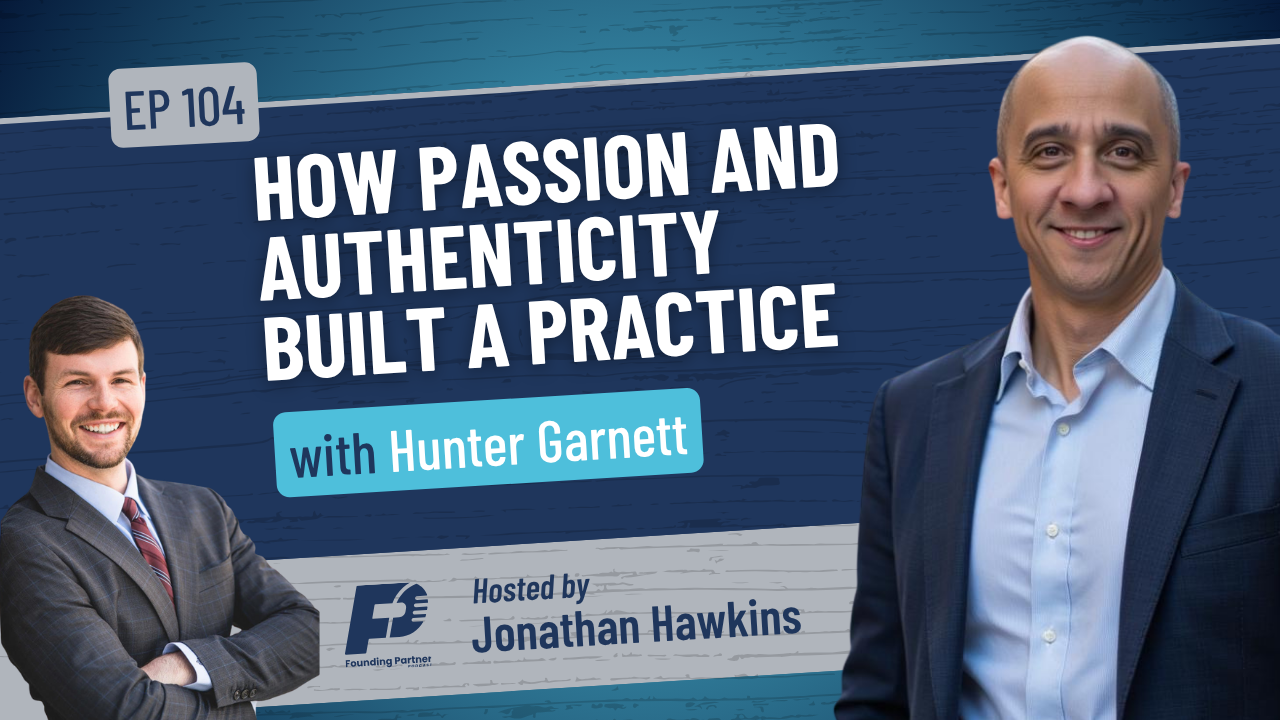
Every time I sit down with a founding attorney on the podcast, I hope for honesty, clarity, and a window into what really drives them. My conversation with Huntsville personal injury lawyer Hunter Garnett delivered all of that and more. What struck me most was how seamlessly he brings together the world he came from — a small Alabama farm town — with the practice he runs today.
At one point I asked him what fuels him. His answer was immediate.
“I love what I do,” he said. “I love waking up every day going to work. I like the people I work with. I love my clients.”
That simplicity sits on top of a rugged, winding, and deeply personal story.
Growing Up in Danville, Alabama
Hunter grew up in Danville, a farm town in North Alabama. He’s the oldest of seven kids — two biological sisters and four sisters adopted through foster care. Because the house was always full and he spent so much time working on his grandfather’s farm anyway, he moved in with his grandparents when he was sixteen or seventeen.
He told me he always wanted to be a farmer. His childhood was made up of corn, soybeans, cows, and chicken houses. His dad is a lawnmower mechanic. His grandfather is a chicken farmer. There were no lawyers in his world then, and he carried that into law school.
“I had a bit of a chip on my shoulder,” he said. “Very middle class, even lower middle class at times. And I didn’t know any lawyers when I went to law school.”
But college set him on a different track.
The Door into Law — and the Job He Didn’t Want
Hunter studied agricultural business at Mississippi State and still thought farming might be his future. Then his department head encouraged him to consider law school. Hunter took the LSAT, did well, prayed about it, and decided he would only go if he got a full scholarship. He did.
Still, he didn’t go in thinking he’d become a trial lawyer. But law school changed that. He fell in love with the courtroom.
The path after graduation wasn’t smooth. He didn’t get the job he wanted with a Birmingham firm. A district attorney position he hoped for fell through when an election loss and an indictment froze hiring. He watched classmates secure positions while he couldn’t find the right fit.
Then a personal injury firm in Huntsville posted a job he didn’t even apply for until the career development office nudged him. He walked in and told them all the reasons he didn’t want to be a plaintiff’s lawyer.
They hired him anyway.
His wife — his “caution light,” as he calls her — told him she felt he was meant to take it.
He made one request: “I want to try cases right away.”
He got what he asked for.
Bar Results Friday. Jury Trial Monday.
The bar results came out on a Friday. On Monday, Hunter stepped into a courtroom in his home county to try his very first case. His aunt was even in the jury panel.
He delivered the first part of the closing argument. He had never asked a jury for money before. He asked for $251,000 and some change. The jury deliberated for three hours and came back with $252,000.
That experience hooked him.
It also helped him recognize something important: his clients were working class people — the type of people he grew up with. The type of people his dad, uncles, and grandfather were.
“I realized I could speak their language,” he told me. “Maybe that chip on my shoulder wasn’t a disadvantage.”
Faith, Trials, and an Unexpected Mission Field
Faith plays a major role in Hunter’s life. He preached occasionally in youth services as a teenager, but he thought he’d eventually be called to the mission field somewhere in the world. That call never came — at least not the way he expected.
Instead, clarity arrived with his very first Hispanic workers’ compensation client.
She had been seriously injured. They got a good outcome, but workers’ comp doesn’t make people whole. As he apologized for the limits of the recovery, she said something that stopped him:
“I’m glad this happened.”
She explained that most friends faded away after the injury. She was on pain medicine, barely able to get out of the house. One older woman visited her every day, witnessed to her, and guided her spiritually. She told Hunter that without the injury, she didn’t think she would have been vulnerable enough to see that she needed God.
That moment recalibrated him.
He often thinks of the story in John 9 — how trials can serve a purpose we don’t understand.
And he told me, with full certainty:
“My desk, my office, my city is my mission field.”
Leaving His Firm and Starting His Own
Hunter never expected to start his own firm. His grandfather worked 37 years at the same plant. His dad stayed with one company a long time. That model was deep in him.
But during COVID, Hunter began seeing ways his firm could innovate — ways to improve profitability, modernize systems, and enhance client experience. His partners were in their fifties, successful, and understandably not eager to overhaul what had worked for decades.
That friction planted a seed.
He had also begun originating significant cases, including a several-million-dollar matter. His bonus from that case became the capital to launch his own firm.
The actual departure was clean and respectful. They agreed on which cases would go with him. He left with 55 clients.
The emotional side was harder — more like a relationship breakup, as he described it. Even when it’s mutual, feelings can linger. He still prays about not letting those thoughts take up space.
But launching the firm was the right move.
The Firm Today — and the Culture Behind It
Hunter’s firm now includes:
- Himself
- Two other attorneys
- A couple of paralegals
- Multiple in-person legal assistants
- A large offshore and nearshore team supporting pre-litigation
He handles high-value cases and litigation. His team handles most of pre-litigation under his oversight.
And he has built a culture around three core values:
- Generosity
With time, attention, and service. - Constant improvement
He sends his team podcasts, gives them access to his Audible library, and pays for YMCA memberships. They often go work out together.
His question is always: “Are you better today than you were yesterday?”
- Empathy and exceptional service
He wants his firm compared not to other lawyers — but to Chick-fil-A.
“We want to be the Chick-fil-A of businesses,” he said.
He told me that only about five people on his team are “technicians” — the lawyers and key paralegals. Everyone else is essentially in customer service.
Blue Jeans, Boots, and Showing Up as Himself
One of the first things Hunter changed when he started his firm was his wardrobe.
At his old firm it was suits and ties, five days a week. That look never felt like him.
When he opened his practice, he kept his beat-up trucks, rented a simpler office, and switched to jeans, boots, and a blazer. He used to keep a suit behind the door just in case, but one rushed morning he didn’t put it on before a client meeting.
And he instantly felt something shift.
“I felt at ease,” he told me. “I realized I had been wearing a costume.”
He wants clients to feel comfortable. He also wants to know quickly if someone isn’t his kind of client — because mismatched expectations always show up later.
“If that’s a deal breaker for them, I’d rather find out in the first ten minutes,” he said.
TikTok, Newsjacking, and Shamelessness as a Superpower
Hunter has a trait that most lawyers would envy: he does not embarrass easily. He joked that the only time he really remembers being embarrassed was in third grade, when a pair of tighty whiteys somehow ended up hanging out of his pant leg at school and two girls pointed and laughed at him.
Since then, nothing seems to faze him.
He walked around law school for two weeks without his front teeth after breaking his veneers playing basketball. In college, he’d pop out his retainer with the fake teeth as a joke.
That shamelessness is a marketing asset.
On TikTok, he records quick, off-the-cuff videos — often in just one or two takes. He leans into “newsjacking,” talking about local incidents involving injuries.
One example: two Huntsville police officers were arrested for DUI in the same weekend, one of them injuring someone in a crash. Hunter made a TikTok about what kind of case the victim might have.
The victim reached out for a consultation — after eight friends sent her the video.
He also uses TikTok to explain topics that don’t get talked about enough: workers’ comp issues, uninsured motorist coverage, municipal caps, dog bite cases, and more.
The Way He Builds Trust With Clients
Before he commits to a case, Hunter wants to establish rapport.
If the referral is already warm — a close friend, a strong introduction — it’s easy. But if not, he brings clients into the office quickly, spends 30–60 minutes with them, and sets expectations clearly.
He introduces his case managers as the primary contacts during business hours. He tells clients his days are packed but he’s always glad to help.
And then he asks a direct question:
“If you don’t hear from me personally for 90 days — if it’s just your case manager — is that going to be a problem?”
If someone says yes, he tells them honestly that he isn’t the right fit.
Catastrophic cases with large coverage are the exception. Those clients get his cell number.
Land, Horses, and a Long-Term Vision
Hunter may be a lawyer, but the farmer in him never left.
During COVID he bought 10 acres outside Huntsville, backing up to a land trust with trails. He bought another 64-acre farm halfway between his hometown and the office, bordering a wildlife refuge, where he and his wife hope to build long term. Recently he closed on a house in Priceville that will serve as a “bridge house” until they build.
He dreams about having a horseback riding facility there one day — maybe with tiny houses, a weekend destination where guests can ride along the Wheeler Wildlife Refuge.
He bought family land simply because he didn’t want anyone else to have it.
And as his son grows older, he can see himself slowing down professionally and spending more time raising cows and horses — giving his family the same kind of foundation he had.
What Drives Him — And What He’s Honest About
Toward the end of our conversation, I asked him again what drives him, now that he runs a growing practice with a young family at home.
His answer mirrored the one he gave at the beginning.
“It’s passion,” he said. “I love what I do.”
He knows money could be “good with half as much effort,” but that’s not what keeps him going. He’s also self-aware enough to admit that passion can turn into obsession, and that he has to watch how it affects his marriage and, eventually, his time with his son.
But he’s certain of one thing:
“I know I’m exactly where the Lord wants me right now,” he said. “Our mission is to help as many good people as possible.”
And until the day the horseback riding dreams take over, that’s exactly what he’s doing.
AND MORE TOPICS COVERED IN THE FULL INTERVIEW!!! You can check that out and subscribe to YouTube.
If you want to know more about Hunter Garnett, you may reach out to him at:
- LinkedIn: https://www.linkedin.com/in/hunter-garnett-56895876/
- Personal Facebook: https://www.facebook.com/hunter.garnett.9
- Company Facebook: https://www.facebook.com/GarnettPattersonLaw/
- Website: https://huntsvilleinjurylawyers.com/
- Instagram: https://www.instagram.com/garnett_patterson_injury_law/
Connect with Jonathan Hawkins:
- Website: https://www.lawfirmgc.com/
- LinkedIn: https://www.linkedin.com/in/jonathan-hawkins-135147/
- Podcast: https://www.lawfirmgc.com/podcast
Jonathan Hawkins: [00:00:00] So the other thing, you know, my experience with myself and with other law firm owners and leaders, you know, you gotta have something that drives you. And you, you went out on your own. You’re trying to grow this thing, you’re growing this thing, you know, what is it for you? What drives you?
Hunter Garnett: It’s passion, to be honest with you. And I was a little worried. When I had my little boy, that I would lose some of that, that he would be a distraction. And I mean, I wasn’t worried actually, I was gonna be welcoming of if my little boy distracted me from work because money’s good. Money could be good with half as much effort to be candid with you.
But I love what I do. I love waking up every day going to work. I like the people I work with. I love my clients. If I don’t like my clients, I fire ’em or sending ’em to somebody else, you know? And so our firm mission is to help as many good people as possible. I don’t know. I kind of, sometimes I wonder if that I’m obsessed and sometimes I wonder if that’ll last forever.
And I have to be [00:01:00] cognizant of that because I put it in front of my wife. I don’t put it in front of my little boy yet, but I will one day. And for no good reason, for no good reason other than because I love it. So I know it’s corny, but I really, I love what I do.
Welcome to the Founding Partner Podcast. Join your host, Jonathan Hawkins, as we explore the fascinating stories of successful law firm founders. We’ll uncover their beginnings, triumph over challenges, and practice growth. Whether you aspire to launch your own firm, have an entrepreneurial spirit, or are just curious about the legal business, you’re in the right place.
Let’s dive in.
Jonathan Hawkins: Welcome to Founding Partner podcast. I’m your host, Jonathan Hawkins’ podcast, where I interview founding attorneys and learn about their journeys and some of the lessons they’ve learned along the way. And today I am excited [00:02:00] to have Hunter Garnett on the show. He is a personal injury lawyer in Huntsville, Alabama.
He’s pretty active on LinkedIn. So if you, if you’re over there, maybe you recognize Hunter. Hunter, welcome to the show. Why don’t you tell us a little bit about yourself, your firm, you know where you are, how big it is when you started it, that sort of thing.
Hunter Garnett: Yeah. Well, thanks for having me. So I grew up in Danville, Alabama, which is a little farm town in North Alabama. I’m the oldest of seven kids. Wanted to be a farmer my whole life. And it just wasn’t in the cards, it wasn’t the Lord’s will for me. Went to college, studied ag business. Did not know what I wanted to do.
Was dating my now wife. I knew I wanted to marry her. I knew I wanted to be close to her. And there was a good law school in Birmingham where she was in college, and I prayed about it a lot, took the LSAT, got a good scholarship and thought this is a, a door that I should walk through. It was the first lawyer in my family.
I did not know any lawyers when I went to law school. Had a bit bit of a chip on my shoulder because my dad’s a [00:03:00] lawnmower mechanic very middle class family growing up, even lower middle class at times, and I did not know what I wanted to do. I had good grades, had good experience in law school, fell in love with the courtroom.
Decided I wanted to be a trial lawyer. And then now I came to Huntsville to work with the plaintiff’s side trial firm. And from there, fell in love with the personal injury part of trial work. Started my own firm about four years ago. We are here in Huntsville. It’s me, two other lawyers, a couple paralegals, handful of in-person legal assistants, and then a pretty extensive offshore nearshore team that supports mostly our pre-lit department.
We’re a general personal injury practice. My practice is more geared towards high value cases. We try to systematize pre-lit as much as we can. And then the smaller litigation cases, the other attorneys in the firm work on those.
Jonathan Hawkins: So how far is Danville from Huntsville?
Hunter Garnett: it’s about, it’s about an hour, 55 minutes. Yeah. It’s not bad.
Jonathan Hawkins: so yeah, so I, so I grew [00:04:00] up in Mobile on the other side of Alabama from U,
Hunter Garnett: didn’t know that.
Jonathan Hawkins: I did, and you know, I hadn’t been to Huntsville forever, but when I was in fifth grade, we went up there to the space camp thing. It’s out a long, long time ago. I hear, I don’t know if it’s true, but somebody told me that Huntsville is now the biggest city in the state of Alabama.
Is that, is that
Hunter Garnett: City limits. Yeah. Metro area. We’re a lot smaller than Birmingham. But yeah, city limits were big.
Jonathan Hawkins: Okay. With all the NASA and defense contract and all that, I hear it’s. Just blown up. Really cool place. You know, it’s on these lists. People say, you know, great place to live or retire to, whatever. What’s it? What’s it like there now?
Hunter Garnett: It’s a good place to live. You know, for me it’s a closest, decent sized city to home, so it was a logical landing place. My wife grew up spending a lot of time here. Her family’s from Hartsville, so we’re we’re, I’ve known her. I met her at my 14th birthday party, actually. Today’s her birthday, so happy birthday,
Jonathan Hawkins: wow.
Hunter Garnett: Yeah,
Jonathan Hawkins: Tell her I said happy
Hunter Garnett: well, she got a good birthday present. Uh [00:05:00] we’ve got a little boy that’s three and a half months old and he is her whole world. But yeah, Huntsville’s a good place. Lots traffic’s picking up, lots of people moving here. It’s a good place for personal injury firm because there’s growth just in general, and it’s mostly middle class, upper middle class people commuting to work.
So a lot of, a lot of car accident cases. As you can imagine,
Jonathan Hawkins: Yeah, three and a half years old.
Hunter Garnett: Three and a half months.
Jonathan Hawkins: three, three and a half months. So, you’re not getting much sleep, I
Hunter Garnett: I am getting more than my, my wife is, that’s for sure.
Jonathan Hawkins: Yeah. Yeah. I remember those days. Yeah. Gets easier. That’s cool, man. Congrats on that as well. So yeah, you remind me, you know, you said you wanted to be a farmer. It’s, you remind me sort of, I’m sure you get this a lot, a little Atticus fich
Hunter Garnett: don’t, I don’t get that a whole lot. I’m more, I still, I love farming, but now I have given myself the title of cowboy, a weekend cowboy. And so, kind of shifting that way a little more than farming. I grew up like growing corn, [00:06:00] soybeans. My grandpa’s a chicken farmer, had some cows, but I really liked, I liked the cows and the horses.
Jonathan Hawkins: So do you own land? Do, are you in the city?
Hunter Garnett: Yeah, so I,
Jonathan Hawkins: are you set up?
Hunter Garnett: I got really lucky during COVID. I bought 10 acres right outside of Huntsville. I mean, like, I got the, I’m an island in the county back up to the land trust. So I’ve got good trails and stuff to ride and enough room for a few horses, and I just, last year I bought a farm. Kind of about halfway between my hometown and the office, about 64 acres, and we’ve got plans to build there long term.
It borders a wildlife refuge, so it’s real private, but it’s right by the interstate too. And then we just we closed Tuesday actually. On a house in price full, that’ll be kind of a bridge house, you know, have for 10 years probably until we can build something. And then I’ve been buying some family land.
Just, I don’t need it. Don’t really want it, just don’t want anybody else to have it. With the goal being, as my kids [00:07:00] get up to teenage years, I would like to slow down a little bit and start having some cows. I think it’s a great way to raise your family around. That type of lifestyle, I attribute the majority of my success to those foundational years.
What I learned working on a farm.
Jonathan Hawkins: So this property you have, you got some, some animals and are you able, are you quote, able to farm or whatever now or is that something you want to do in the future?
Hunter Garnett: If if yes, I’m farming now. If you work for the irs, my answer is emphatically, I’m a farmer. Okay. I’m laying the groundwork for some much bigger farm plans. Right now I rent a large portion of it. I would actually really like to have a horseback riding facility there, like some tiny houses do a weekend destination type place.
That’s kind of a 20 year goal of mine. Like if I really slow down practicing law, you can find me riding horses along the Willer Wildlife Refuge and Prideful.
Jonathan Hawkins: That’s cool. Yeah, that’s sort of where I was [00:08:00] headed with this is, you know, the balance between that and then the, the demands of practicing law. I guess now you’re mainly focused on building your practice and maybe, you know, raising a son and all that kind of stuff or that’s cool. So, takes back. So I think I was doing some research for today.
So you grew up, you’re the oldest of seven kids. And I’m curious how that was for you. You know, I, I know a, a number of folks who had, you know, six, five siblings, that kind of thing. And the older ones tend to be sort of, you know, almost almost like parents to some of the younger. I’m just curious what your relationship is with how your relationship was with your other siblings.
Hunter Garnett: I am not their parent for sure. So I have two biological siblings and we’re relatively close. Two, two sisters. I’m real close with my nieces and nephews. They both have kids, both my sisters and then I have four siblings, sisters that were adopted through foster care and we’re super tight, but I’m. Like, you know, we didn’t, we weren’t raised in the same house like they were.
They, when we [00:09:00] adopted my, I was 15 whenever my oldest two adopted sisters came to live with us. And then the, and so I was outta the house pretty quickly. I actually moved out when I was 16, 17 in with my grandparents. ’cause our house was full and their house was empty. And I was working at my grandpa’s farm all the time.
And the youngest two, we’ve never lived in the same house. And so we have a great relationship because if I get tired of them, I just go to my house, they get tired of me, they go to their bedroom and close the door. So we have the. All the good stuff of a sibling relationship with none of the bad stuff.
They, they’ve been texting me today, they love the fall. All their birthdays are in the fall and we do a trip to Six Flags and we do a trip to a haunted house every fall. And they’re blowing me up like, Hey, fall breaks a week from tomorrow. Like, where are we going? You know?
Jonathan Hawkins: So, okay, so you went to Mississippi State undergrad, grew up in Alabama. Who’s, who’s your team?
Hunter Garnett: So I grew up a big Alabama fan. There’s actually a stu super embarrassing video of my dad, like being an obnoxious, it [00:10:00] went viral. Clay Travis shared it like probably
Jonathan Hawkins: Oh
Hunter Garnett: 12, 13 years ago. It was that play where, the game before the kick six. It wasn’t even Alabama game, it was Georgia and a and Auburn. Where Auburn won on a Hail Mary.
The year that they went to the national championship game, I guess, I guess it was 13.
Jonathan Hawkins: I, I remember that year they had a series of just freak.
Hunter Garnett: Yeah. Just like
Jonathan Hawkins: like just, you
Hunter Garnett: God
Jonathan Hawkins: plays that got that kept,
Hunter Garnett: God is an Auburn fan for sure. Mike.
Jonathan Hawkins: Yeah. That year for
Hunter Garnett: So that’s what led to me going to Mississippi State over Auburn. I knew I wanted to study agriculture, and as the crow flies, Starkville was a little closer, you know, maroon’s a little closer to Clems Crimson. It’s only about an hour from Tuscaloosa.
Starkville, so I was able to pop over and see my friends. And now to be candid with you, I could not care less about football at this point.
Jonathan Hawkins: Yeah. Yeah. It’s, it’s funny how I love co, I mean, in the south, love college football, but you can only get caught up in, you know, a bunch of young [00:11:00] kids playing a sport. You know, it’s just like, why do I want to be super happy or super sad or mad because of some game that doesn’t affect me at all?
Hunter Garnett: It makes no sense. And like I joke around, the good thing about being a Mississippi State fan is I can do whatever I want on Saturday. Like I don’t have to schedule my whole day. Like I don’t even know they play most of the time, like,
Jonathan Hawkins: You know, that’s, I’m a George Tech fan. It’s been the same way. It’s just like, yeah, we lose a couple early, and you’re like, I don’t care. So, so let’s, you mentioned earlier you’re the only lawyer in your family, so tell me, how did you end up in law school?
Hunter Garnett: Well, my mom said I had to go to college, so went to college, was planning on doing something in ag and the head of my department actually pulled me aside and his wife was a judge in Al Tippe, hall County, Mississippi, and he told me I should go to law school. I’d not really considered it. I decided to take the LSAT and I did well. So then I decided to study really hard for the LSAT, and honestly, I was only gonna go if I got a hundred percent [00:12:00] scholarship, was the I, because I just, I didn’t know what I wanted to do. I viewed it more as a tool in the belt. Like I might go do policy work in Montgomery, the state capital, or work for Farm Bureau, something like that.
So that’s kind of what led me gonna law school, to be honest with you, is I wasn’t ready to grow up, had a good scholarship, had a wife at a, on a campus with a good law school, and just walked through that door.
Jonathan Hawkins: So, so tell me after, so you do personal injury now what was your, your first job outta law school? And, and I ask, I ask a question a lot with personal injury lawyers and, and some background. You know, I wanted to be a personal injury lawyer. I went to law school knowing I wanted to be a personal injury lawyer.
I tried and tried and tried to get a job outta law school. And on the plaintiff’s side, and I couldn’t get one. I couldn’t find one, and so I never ended up doing it. But what was your journey
Hunter Garnett: The opposite. So I spent both summers with Wallace, Jordan, Ratliff & Brandt, great firm, all born again Christian attorneys. They had an ag and food division. [00:13:00] I thought it was just perfect. It was kind of big law without the negatives of big law. So that was my plan, was to go work for them. And they didn’t offer me a job after my second summer.
No hard feelings. Then I started to have some trouble finding any job. You know? I thought, okay, I’ll be a district attorney, an assistant district attorney in Jefferson County. They’re deputized. I get a gun. That sounds great. Then their district attorney loses an election. The next incoming district attorney gets indicted.
They have a hiring freeze while they’re trying to sort that out. So there goes my next job opportunity. So I’m kind of scrambling. This is my third year of law school. Everybody at the top of the class on trial team has jobs except for me, and a job gets posted in Huntsville. The personal injury law firm and personal injury was the last thing on my radar.
I did not plan on doing it. And I did not apply for that job. And the career development office called me and was like, Hey, like they’re looking for somebody like you, like apply for this job. So I did and I went into the room and told ’em all the reasons I didn’t wanna be a plaintiff’s lawyer in Huntsville.
And they I guess appreciated my candor. And [00:14:00] maybe there’s a little psychology there of. Like turning somebody down almost in an interview. But they liked me and we kept following up and my wife has always been my caution light. Okay, red, yellow, green. And she, after my third interview, she gave me a green light, said, you need to take this job.
I just, I feel like this is where we’re supposed to be, what you’re supposed to be doing. And so I took it. My only caveat, I just wanted to try cases and they said we will. You will be trying cases within a month of you getting your bar results. Well, turns out we got the bar results on Friday. We tried a case on Monday.
My home county, my aunt was actually on our jury panel and we tried.
Jonathan Hawkins: How, how, how did that go? By the
Hunter Garnett: Well, it’s like you walk into the courtroom and the judge, very first question, does anybody know any of the lawyers or, or actually, it’s, it’s more specific than that. It’s does anybody, has anybody ever been represented by any of the lawyers in the room or related to them by boy or marriage?
And my aunt shoots her hand up first, first row. Like, that’s my nephew right there. I’ve known him since he was,
Jonathan Hawkins: He is the greatest person, the most honest. You gotta believe everything he says.
Hunter Garnett: no, she’s pretty shy. And, and I was too. I mean, [00:15:00] I was just 25, barely turned 25. And so, home county got to give, tried the case. It tried really well. Got to give the first part of the closing argument.
And you got asked for money in Alabama in your first closing. Never asked for money in mock trial in law school. So that was a bit foreign. And we asked for, I asked for $251,000 and some change. I think it was like fif 2 51, 3 78 or something like that. So tried the case. Jury goes out. We only had 200 in coverage. Jury goes out, they’re gone for about three hours. They come back and they round it up to 252,000. And so then I was, I was hooked. About the same time I started to realize that I really liked the clientele. I, most of them are blue collar, working class people. They’re the type of people that I grew up with.
They’re the type of people that I’m related to. They’re the type of people that my dad is, my uncles are, my grandfather is, and so I found that I could speak their [00:16:00] language. I liked them. They liked me. And I realized that this kind of chip on my shoulder of, I don’t know any lawyers, I’m kind of a little country, not all that sophisticated.
Maybe that’s not a disadvantage. Maybe I can spin this into an advantage. And so I started to market myself a little differently, very authentic, very authentically and started to acquire cases. And that’s kind of what led to like the next kind of pivot for me.
Jonathan Hawkins: So I got a question. I, I know church and faith are very important to you. So, have you ever done any preaching in the church realm? And then I imagine that’s gonna help you in the, in a courtroom
Hunter Garnett: Yeah, I did. Whenever I was in, I was very, very active, very serious about my faith when I was 16, 17, 18 years old, and we had a really good band. Youth bands for, for my friends, and we would travel a little bit where we would do like a whole service at other churches. Sometimes at our church, like once a quarter we’d do like a youth service [00:17:00] and I would preach, I didn’t like it, but I did. I tell you what the, I’ve always felt called to the ministry, but really to the mission field. I thought that the Lord would call me to a specific place at some point in my life and I’m ready. I’m still ready to go. And I never felt that calling to like, Hey, go here. It was just, you know, I knew I was called to further the kingdom of heaven and make that something that I do on a daily basis.
And I’ll tell you when I. Close the door formally as it was my first Hispanic client, my first workers’ comp case. Super, super sweet lady, and she had a really bad injury, hard case. We got a good outcome, but workers’ comp does not make you whole in Alabama. And as I’m splitting up the money with her, sliding the check across the table, she told me, she said, I said, I’m sorry that it’s not more, I’m sorry this happened to you, blah, blah, blah. And she said, I’m glad that this happened. I’m glad I got hurt. And I was kind of taken aback. And she explained to me that all her friends had kinda left her since she got hurt. She’s not a pleasant person to be around.
She’s on pain [00:18:00] medicine. She can barely get outta the house. And there was one lady that stuck with her, and it was an older lady, older white lady, and. My client asked the old lady, like, why are you coming to my house every day, spending time with me? And the lady began to witness to her, and my client had grown up a cultural Catholic, and she gave her life to the Lord and took her faith very seriously from that moment forward.
And she told me that she didn’t think that, but for the injury, that she would’ve been vulnerable enough to realize that she was lost and that she needed saving. And so I incorporate that in my practice sometimes with like John nine is a, is a.
A story that I incorporated in my practice a lot and it, the message of the story is like the Lord, uses trials and tribulations to further his will. And we don’t understand them a lot of times in this moment. And we may never understand ’em in this life, but they serve as purpose. And so I try to use my faith to encourage my clients and reassure them. And I’ve realized like I work, I am in the mission field.
Like this desk, [00:19:00] this office. My city is my mission field. I’m in it every day.
Jonathan Hawkins: Yeah, that’s good. So you ended up where you’re supposed to be, sounds like.
Hunter Garnett: Yeah, I have no doubt that I’m exactly where the Lord wants me right now. And if he wants me somewhere else, I’ll go. But for now I’m supposed to grow a, have a good personal injury practice in Huntsville.
Jonathan Hawkins: So let’s go back to your, so you went to the personal injury firm outta law school but obviously eventually you left to start your own firm. So tell me about that. What kicked you? What was the spark that said, all right, I’m gonna go do this by myself, or?
Hunter Garnett: So I was all in my grandfather, my dad, they both worked a long time at one company. My grandfather only had one job 37 years at a plant. I indicator company man. And I kind of thought that way too, like, hey, they invested in me, they bet on me. I’m gonna be a loyal person. But during COVID. I started to see some things that could change in our firm to make us more profitable, allow us to help more people, give clients a better customer experience.
And my partners were both in their fifties, mid to late [00:20:00] fifties, making good money. And guess what, you know, and I don’t blame ’em, but a 27, 28, 20 9-year-old coming in telling you, Hey, here’s a better way to run your practice, even though you’ve been making crazy money for 30 years. They weren’t super receptive to it.
And so that started to plant the kind of seed of like, you know, maybe I could, maybe I could do this and run this like a business and be more successful. I had plenty, a lot of cases coming in, had my own caseload and I had a really big case that we settled for several million dollars that I had originated, and I basically took that bonus and that was my capital to start my law firm.
It’s been right at four years ago.
Jonathan Hawkins: So tell me about about leaving, about the conversation. Was it, was it easy? Was it hard? I mean.
Hunter Garnett: It wasn’t that hard. We left it, we left on good terms, so we left in total agreement over which cases were going where. Everything was cool. Pretty clean breakup, getting out the door. To be candid, there was more, a lot more friction after we’re out [00:21:00] the door than during the. Breakup process. You know, I think it’s kind of like, I think it’s kind of analogous to a romantic breakup where I just, even when it’s mutual, there’s still a little bit of hurt feelings and there’s still, there’s just always, it’s never super clean.
Like there’s always something that’s like, you’re a little jaded about it. And to be candid with you, it’s probably my main topic of prayer. Is like to not think about it as much. Not think about the really big ca I did get a bonus outta that really big case, but it was not life changing money. Like, you know, it would’ve been if it had been my case or even if I had referred it to another law firm.
You know, I,
Jonathan Hawkins: Yeah. Yeah, that’s tough. So when you started your firm, did any case, did any clients come with you or were you, did you start from scratch?
Hunter Garnett: no, I had 55 clients that were my clients brought ’em all with me. I actually just looked, it was about $625,000 in legal fees that, that caseload and net to my firm after referral fees, paying the old firm, that kind of stuff. [00:22:00] And so, had those with me and then cases started coming in pretty quickly as well.
Jonathan Hawkins: Yeah, it sounds like it’s your prior firm. You’re already originating cases, so it probably wasn’t that difficult to just keep doing what you’re doing. I don’t know What, what do you do to get cases?
Hunter Garnett: So, and this was another reason I left the firm, is I got my first good Google case at my old firm and I was in charge of the digital marketing stuff. And so I realized, I knew it was a, it was a SEO case. It was a, from the map pack, basically organic Google business profile lead. And I knew that that’s an asset that I wasn’t gonna be able to take with me, and I was growing it for them.
And all those reviews I was getting, they didn’t, they don’t transfer over. So that was part of the reason I left. And so it took me a little bit of time to get those back going over here. ’cause you just don’t, it’s not a switch. You cut on and off. I had a branded, I had the keyword injury lawyers in my firm name and this was years ago before everybody had it.
And so I got leads pretty quickly [00:23:00] through that. A lot of my cases come from chiropractic referrals. Not just their patients, but sometimes they’re like, I got a case yesterday. That’s a catastrophic injury, but she works at a chiropractic clinic. Attorney referrals were my bread and butter before I started my firm.
But then I started to get real intentional with community involvement, garnering nurturing referral relationships. And so most of our cases now are store referrals.
Jonathan Hawkins: So what’s it like up there in Huntsville? I, I mean, I know, so, you know, I’m here in Atlanta whenever I drive to my parents dental, mobile, everybody knows it’s driven through Alabama. They know the billboards. They’re gonna see shaara everywhere. So, other than maybe that, what, what sort, what sort of advertisers are you competing with or competing with?
May be the wrong word, but you know, who are the 800 pound gorillas that are out there dominating the advertising in the Huntsville
Hunter Garnett: Well, for sure Sheara has got, I, I would assume the biggest market share by far. Winter Mark, Keith’s another big firm with a big presence up here. Morgan. Morgan has come in recently. I don’t know what their [00:24:00] market share looks like. They’ve been in Birmingham for quite a while. They’re in Huntsville this year.
Basically. Morris Bart is up here for the second time. And then we’ve got some local advertisers, a lackey firm Tyler Mann, injury Law, Morris King and Hodge. And then, and then you get into your more traditional law firms that spend a little money on advertising like senior, let’s think I think that Kat Cloud, you know, Kat Coal, I think they spend some money.
So there’s about, I’ll tell you this, mobile’s got a comparable market. I think in terms of the number of car accident cases. Huntsville’s got about 65 to 75% as many advertising lawyers as mobile does despite being in the same market. So there’s opportunities up here, and we’re growing faster than mobile.
But I don’t really view us as having competition. You know, we just have a very different, we counter position ourselves against those firms.
Jonathan Hawkins: Yeah, so tell me about that. You know, a lot of you know, PI is just a competitive, competitive space and as you know. And so you’ve got these big spenders and you know, sort of like when they zig you got a zag. [00:25:00] So, you know, what, what are you doing? Obviously you did some SEO early, you had your name, but other than digital, what sorts of things do you focus on that work for
Hunter Garnett: So I think if you break it down, the strategy versus tactics, my strategy’s real simple. We just are very authentic. We’re very authentic and we have a really good understanding of who our ideal clients are. You know, we don’t try to go into, we just, we don’t try to compete in, obtaining clients that, that don’t fit what our ideal clients are.
Now you get walk-ins, you get referrals from all types of people. But like my client avatar is a blue collar worker growing up in a probably rural community, a suburb of Huntsville. They’re middle class, maybe upper middle class, maybe lower middle class. They’re typically married, they’re typically Christian.
They’re typically politically conservative and my brand resonates with ’em. I’m in blue jeans and a blazer right now. It’s about as dressed up as I get unless I’m going to court wear boots to work every day. Like it. When people come into my [00:26:00] office, I want ’em to fill at ease. It’s like I don’t put my suit on.
I don’t wear a three piece suit. They’re already intimidated. They’ve never met with a lawyer. It’s the last thing they wanna do is be in my office meeting with me. And so whatever I can do to make ’em more comfortable and try to do so, that’s the strategy. The tactics change all the time, right? The tactics are always evolving.
Right now, TikTok is good for us. We get a lot of attention on TikTok. Facebook’s always been good, like mostly through my personal page. It just gets a ton of reach. Those are really LinkedIn sometimes, but that’s a different kind of strategy, right?
Jonathan Hawkins: Yeah, so the other, you know, one of the cool things about starting your in firm is you get clean slate. You get, you get to, like you said, there’s some things you want to do to your last firm and. You weren’t really able to do it, and so you get to do whatever you want. So, you know, one of the things, I read some of your stuff and you know, like the core values, values of your firm are important to you should be I’m curious sort of what, what are the core, I don’t know if you could name ’em, but what are the core values of your firm,
Hunter Garnett: Yes. So ours [00:27:00] is generosity’s first, and that comes from the top down, I think. But I want my team to be generous as well. And I’m not just talking about money, I’m talking about with our time. You know, we don’t, I try to. NI don’t want anybody to be in a rush to get off the phone with a client. And so that’s our, that’s our main core value.
The other thing, and I’m, my team gets on to me, they say I’m, or they feel like I’m trying to turn our firm into a cult. Sometimes constant improvement is like my mo so I’m sending ’em podcast episodes all the time. I’m sending ’em, they’ve got exits in my Audible library. I pay for a gym membership for everybody.
And like, you know, we don’t like, I don’t body shame for sure, but I’m like. Are you better today than you were yesterday? Like that’s, or this week versus last week? To professionally, physical fitness and nutrition. You know, your personal life, your spiritual life. And so, that’s an important core value for us.
And then. you know, empathy, I think that one’s a little kind of corny, but we really try to have real empathy for our clients and we [00:28:00] try to give exceptional customer service. I’ll tell you this, I don’t view us when we talk about competition. I think our competition’s like Chick-fil-A. Alright. When it comes to customer service, like we’re not getting, compared to my competitor across the street, we’re getting compared to the customer experience that people have on an everyday basis.
And so we wanna be, not really even the Chick-fil-A of law firms, we wanna be like the Chick-fil-A of businesses, right? So yeah, that’s our core values.
Jonathan Hawkins: So I like, I like that you, you, you provide a gym membership for all your employees. And so I exercise every day. I need to look at my, my thing. I’m over a thousand days in a row, so it’s, you know, it’s really important to me. I have not sort of made that offer to everybody. ’cause I mean, Atlanta’s a little different too.
They’re spread all over it. So tell me about, but I do wanna dig into the gym members. Is it a specific gym or is it like they get to pick and you’ll pay for it? How does that
Hunter Garnett: Now we have, we have a gym like right around the corner from us, so YMCA, and so we’re all members there, and they let go together. They, there’s a couple folks that go by themselves, but for the most [00:29:00] part, they’re going in groups of like two or three going together. Almost every day.
Jonathan Hawkins: That’s cool. I, I, that’s really, I’m, I’m with you. That’s really important. I just think health, wellness and, you know, the law can be very stressful for everybody top to bottom, not just the lawyers. And then of course, you know, we’re. Taking somebody else’s problem and putting it on our backs. And we sort of, whether it’s right or wrong, we feel like we take responsibility for them.
And, and I imagine your clients too, you know, some have been pretty badly injured, I’m sure. So the pressure’s there and exercises we get sort of shed some of that, you know,
Hunter Garnett: For sure.
Jonathan Hawkins: That’s cool.
Real quick, if you haven’t gotten a copy yet, please check out my book, the Law Firm Lifecycle. It’s written for law firm owners and those who plan to be owners. In the book, I discuss various issues that come up as a law firm progresses through the stages of its growth from just before starting a firm to when it comes to an end.
The law firm lifecycle is available on Amazon. Now, back to the show.
Jonathan Hawkins: So [00:30:00] moving on, so another, another post that I saw that you make on LinkedIn, you were talking about, i’ll just call it, you know, reaching out some of the quote big shot lawyers around town.
And I’m, I’m curious, you know, when did you start that practice and what made you sort of do it?
Hunter Garnett: I am sure I did it either right at law school or in law school. Started just with local Alabama kind of legends, people I’d heard of. Lawyers are pretty generous with their time when it comes to other lawyers and law students, prospective law students. So I started really young, actually, the first lawyer I introduced myself to for that purpose was David Marsh, who’s, he’s the guy in Huntsville, I mean in Alabama.
It’s got all the biggest verdicts and he. His son was a year ahead of me in law school, and his son graduated first in his class. And when I met David, I joked around, I was like, dude, if you were my dad, I would’ve been coasting. I would’ve been a C student. You know, like it’s incredible to me that your, both your boys have a work ethic and you’re [00:31:00] the most successful lawyer probably in Alabama history.
How’d you do it? And for him it was, I wanted to talk to him about how do you, how do you make a lot of money, have wealth and raise your children in a way that they’re not entitled? And then I don’t remember Mark Lanier’s one that I’ve reached out to before, but he’s a bit harder to get into. He’s a little busier than the average big wig, you know, lawyer,
Jonathan Hawkins: So did someone give you that advice or did you just sort of do that on your own? I’m
Hunter Garnett: I don’t know. I don’t remember, to be honest with you. You know, there’s so many, I think all the time, like, you know, I just joined great legal marketing. Looking forward to meeting you in person there in a few weeks. It’s, there’s a decent chance there’s a good ch A lot of my mindset comes from listening to stuff for so long and I know whenever I hear Ben say stuff now and I’m like, I’m doing that, it’s probably ’cause I heard him talk about it five years ago.
Pretty good chance. Somebody 10 years ago said something on the podcast and it stuck with me.
Jonathan Hawkins: Well, I, I, I think that’s just, you know, tremendous thing to do and I, I mean, I tell younger lawyers to do that, but none of ’em will do it. I mean, [00:32:00] I say none few of them will do it. You know, I, I’ve been given CLEs and talks to lawyers for years, and I would very, and I mean, I’ve probably talked to hundreds and hundreds of lawyers.
And I’ll, I’ll usually end with something like. Anybody out there, if you follow up, I will take you, you know, coffee or lunch or whatever. I’ll pay for it. Just, just reach out. And I think, you know, speaking to hundreds and hundreds of lawyers, maybe two have done it over the span of 15 years. Maybe they just. They just don’t want to talk to me. I don’t know. But yeah, it’s, you know, I think a lot of younger lawyers just don’t, maybe they’re so busy. I don’t know. I don’t know the reason, but they don’t really get up from behind their desk and go do these sort of proactive things.
Hunter Garnett: I think it’s ’cause they’re busy, I think, and I think a lot of people don’t. I, I think we overestimate how busy we are a lot of times. I know so many talented, super smart lawyers with a stack of paper on their desks, this tall, plenty of business, plenty of work, and they don’t ever look [00:33:00] up past that stack of paper to see opportunities to better themselves, better their practice, to help more people, whatever it might be.
Jonathan Hawkins: Yeah. All right, so let’s talk about your firm. So we talked, you know, some about some of the things you’re doing, but what other sorts of things are you doing to, to build your firm? You know, you started with just you and now you, you said you got a couple attorneys, you got, you know, some other team members there.
So what sorts of things have you done to, to build it? And has it been conscious building or is it sort of organic or reactive?
Hunter Garnett: It’s been pretty, it’s been pretty conscious. You know, we’re always planning the next event, the next marketing project, whatever it might be. My, the best success we’ve had has been being really intentional with our referral partners. I like to think about. Your referral network as a bullseye, like a dartboard.
Okay? And this is prospective clients or referral partners. You got people off the board that have never heard of you and until you mass market, they’re not gonna hear of you probably. And then you’ve got people kind of on the outside [00:34:00] outer ring that maybe they’ve heard your name, they. Know something about you.
You got a mutual friend with ’em, whatever it might be, and as you get closer to that bullseye, you’ve got your super fans right in the middle. The people that, they’re not just former clients, but they are former clients, or they’re not just friends, but they’re close friends, they’re people who will go outta their way to refer clients to you, not because they wanna help you, but because they know somebody that’s been hurt really badly.
That needs representation and they know that you’re the person to help ’em. And so a lot of my marketing is thinking about how to get closer, move people from the outside rings towards the center. And I have found community involvement, generosity, authenticity, to be the fuel that drives people to the center.
I wanna have a thousand, I call ’em super fans, stole that from the guy that owns the Savannah Bananas, and I want a thousand super fans. And I like for my supervisor to be influential. You know, teachers, principals, ministers, [00:35:00] youth ministers you know, other attorneys, medical providers, that kind of stuff.
Jonathan Hawkins: So, as your firm’s grown how’s your role changed? You know, you start out, you do everything, and then as you add people, you got, you gotta let go. And so number one, how’s it changed and, and what has it been hard to let go?
Hunter Garnett: Now I’m pretty, it’s, I’m pretty good about letting go. I only really micro delegator, micromanage like intake. I’m very particular on our marketing, kind of our message, our voice. I manage pretty closely. I’m getting better about that. But the rest of the stuff I pretty well and pretty. Pretty trusting, hired good people that can do the job sometimes better than me.
I think about, I think Ben talks about this, a lot of my zone of excellence. You know, my constantly trying to get out of this quadrant of like, things I don’t like and I don’t wanna do. And I’ve pretty well done that. So now I handle most of our intake. I’m at least accessible for almost everything.
And then I litigate our big [00:36:00] heavy stuff with the assistance of our senior paralegal and another attorney. And then I manage a lot of our. Pre-lit cases, but my case managers do most of the day to day, or my, my pre-lit responsibilities are settling cases where there’s, you know, a lot of money in, in dispute, and then dealing with clients when they’re having a hard time or get, or getting settlement authority from ’em, and then monitoring the cases.
Jonathan Hawkins: Well, it’s clear that you’re, you’re very thoughtful and you, and you, you’re a learner and you go out there to, you know, and you probably are an experimenter, as aware as well. Are there any sorts of routines that you employ, sort of, you know, that you know you use to be successful, whatever successful means to you?
Hunter Garnett: Yeah look, so a couple things. I try, I like to think in threes. So I try to have three things every week, three things every month, three things every quarter, three things every year. That are my kind of rocks, you know? So that’s one thing I’ve been working on. I hired an executive assistant that’s really [00:37:00] good for accountability where she and I meet almost every day for short conversations to go through stuff.
I’ve had to become kind of a meeting guy. I don’t really like that. But I’ve had to set scheduled meetings, so that’s really how I kind of keep the ball moving and hold myself accountable is by making myself sit down with whoever the project manager is, whoever the decision makers are, whoever I’m getting input from, and let’s solve this problem.
Jonathan Hawkins: So the other thing, you know, my experience with myself and with other law firm owners and leaders, you know, you gotta have something that drives you. And you went out on your own. You’re trying to grow this thing, you’re growing this thing, you know, what is it for you? What drives you?
Hunter Garnett: It’s passion, to be honest with you. And I’m, I was a little worried. When I had my little boy, that I would lose some of that, that he would be a distraction. And I mean, I wasn’t worried actually, I was gonna be welcoming of if my little boy distracted me from work because money’s good. Money could be good with [00:38:00] half as much effort to be candid with you.
But I love what I do. I love waking up every day going to work. I like the people I work with. I love my clients. If I don’t like my clients, I fire ’em or sending ’em to somebody else, you know? And so our firm mission is to help as many good people as possible. I don’t know. I kind of, sometimes I wonder if that I’m obsessed and sometimes I wonder if that’ll last forever.
And I have to be cognizant of that because I put it in front of my wife. I don’t put it in front of my little boy yet, but I will one day. And for no good reason, for no good reason other than because I love it. So I know it’s corny, but I really, I love what I do.
Jonathan Hawkins: Well, that’s good, man. ’cause you’re gonna be doing it for a while, so that’s good. So,
Hunter Garnett: until I get my horse business kicked off, you know.
Jonathan Hawkins: that’s true. Well, you love horses too, so, you know, then you’re gonna have to decide. So another post I saw you make, you said shamelessness is a superpower of yours. I, I, I wanna dig into that a little bit. So tell me [00:39:00] about that.
Hunter Garnett: Well, so I think it starts, I’m very hard to embarrass, and I’ll tell you the, the only time that I can think of that I was ever embarrassed, I was in third grade. And typical boy, I’m playing outside, getting grass stains on my jeans every day. I got my mom, poor mom, had to wash my jeans every single day, and I think I only had one pair of jeans because every morning I’d pull ’em outta the dryer.
You know, stick ’em on, put ’em on, get on the school bus, go to school. And so one day in third grade, we’re standing in line in the gym where all the bus riders meet and there’s these two cute, cute girls over in the line next to me. And they’re giggling, you know, looking at me. And I’m like, okay, this is, that’s good.
Girls are looking at you, smiling and stuff. But then they start pointing and that’s bad if girls point and laugh at you. That is a, that is not a good thing. And I looked down and I had a pair of tidy whiteys hanging out the bottom of my jeans. And like what I’d done is like taken all my clothes off and watered ’em up, and they just got hung up in the legs, you know?
And I was mortified. And to be honest with you, that’s about the only time I can remember really being embarrassed, like in law school. So I’ve got fake front [00:40:00] teeth, knocked ’em out when I was a little boy and I had no shame. Like in college where I had a retainer, I could pop in and out and I’d pop those things out every time.
Like if somebody was getting aggressive, I’d pop my teeth out, be like, do we need to go outside? Like, you know, knocked ’em out in law school, I had like veneers that I busted out playing basketball. It took two weeks to make new ones and so I walked around law school my third year, two weeks, no buck teeth and it didn’t bother me a bit.
And so, which probably makes me some type of, there’s probably a diagnosis for this, like I’m probably a psychopath. But I found that so many lawyers are so worried about embarrassing themselves or, you know, they just have a lot of shame. They don’t wanna put themselves out there that when you put yourself out there.
You stand out and people like lawyers, anybody that stands for something even if it’s silly stuff. And so if I had shame, if I was easy to embarrass, I never would have posted on Facebook, you know, done the things that I did to grow my law practice. And so, yeah, I think being [00:41:00] shameless is a bit of a superpower.
Jonathan Hawkins: Well, I’ll tell you from a marketing standpoint, absolutely. You know, a lot of lawyers are just nervous, man. They’re just risk averse. They don’t wanna do anything. So that’s, that’s, you need it. So maybe you know, I’m not on TikTok but what kind of stuff you posting over there?
Hunter Garnett: Not shameful stuff. Well, I mean, some large might not shameful. I like Newsjacking to be candid with you. Like if I hear a good case I’ll like post something be like, Hey. Well, the last one, this case just came in like two weeks ago, made a TikTok. There were two police officers arrested for DUI in the same weekend in my city, and I made a tick.
One of ’em was in an accident and hurt somebody. And so I made a TikTok about that basically. And here’s what that per the victim of that crime, of that accident here’s what kind of case they have and, the girl scheduled a consultation, reached out to me and told me that eight people had sent her that TikTok, eight of her friends that knew she’d been on the wreck with the drunk police officer.
And so that’s a good one. That’s a easy one. And then just anything, I think anytime that you can [00:42:00] blend in attention with what we do and bring attention to things that matter. I love to take a. You know, if it’s a police chase case and I know there’s gonna be limited coverage, bad injury, stuff like that, it’s a great chance to talk about uninsured motorist coverage.
Most people that run from the cops don’t have insurance. If there’s a accident involving a municipal employee, I like to teach people about the caps on municipal damages in Alabama and just kind of bring awareness to it. One, because people, I think you build authority that way helps your brand.
But two, if those people pull out their deck page and increase their uninsured motorist coverage. Like that’s a, that’s a positive thing. Like, that’s something that, that, that just impacts the whole community, everybody that sees it. And then lastly, the politics side of it, you know, tort reforms right around the corner for everybody that’s, we beat it two years ago in Alabama, but you know, next time around we’ll have an even bigger fight.
And so I wanna educate the public so that when it comes back around, hopefully [00:43:00] I’ve got. A bunch of people that I can ghost write letters for to their state rep and state senator and say, Hey, here’s my understanding of what you’re trying to pass. It’s bad. It’s bad for me. Vote against it.
Jonathan Hawkins: So, so I’m curious about your process. You mentioned on TikTok at least you do some sort of news jacking. So I imagine that’s just sort of like you get inspired and you’re like, alright, I’m jumping on it. But other than sort of the spur of the moment stuff, do you have a process? Is
Hunter Garnett: No, I’ll be honest with you, I see so much bad social media content from lawyers where they have probably a good process. You know, they set aside a day to shoot some content and it’s super boring. It’s way too well done, and they get like 200 views. Their grandma watches it and they. You know, neighbors watch it.
And the best stuff I’ve seen is just off the cuff. Like, if I can’t get it in two takes, I’m, I’m done. You know? And so I keep a little notepad and write some things down and when the lighting’s good and it’s quiet in the office, I just sit my phone down and start yapping and try to get something that’s doable, [00:44:00] that’s people will watch.
Jonathan Hawkins: Well, it’s working. You got that one
Hunter Garnett: I got one case. Yeah, there’s a few. I do work. Workers’ comp people are real interested in workers’ comp. It’s something that affects, you know, you’d be surprised how many people have work comp questions. So you know anything that’s interesting. Dog bite cases. You know, there’s just so many people talking about car accidents, what to do at a car accident So what I found that on TikTok is that things that nobody else is covering, get good attention. Dog bite cases, people like hearing about that kind of stuff. You know, anything newsworthy, workplace accidents. And it’s just a way to build authority, and I think there’s probably gonna be some search engine effects to it too.
I think if you, I think your social media presence is gonna be more of a factor with AI and Google search results as it advances.
Jonathan Hawkins: Well, certainly, you know, brand, I think that term may be overused and misused a lot, but you know, for lawyers, I think. Particularly individual lawyers brand is really something that you can, you know, [00:45:00] affect. And you do that through, you know, lots of different channels. Some people do it through advertising, but you know.
Social media, how you show up in community, all those sorts of things. And that is something that, you know, is valuable. And that the big, the big dogs can’t compete with that really. And especially if you’re different and it’s clear you, you know yourself. You’ve sort of got sort of your thing figured out and it resonates and you’re doing well with it.
So that’s, you know, good to know. And maybe other people out there should maybe follow, follow that kind of approach. So shifting again, so, you know, you’re running your firm, you’ve been doing it four years. So you’re an entrepreneur. You’re an entrepreneur now. So, you know, as you look back or as you’re sitting here today, what, what are the, what do you like about it?
What’s the best part of it?
Hunter Garnett: I think getting to bet on yourself, you know, initially before, like when I first started my firm. I felt a fire immediately because I was going to work, working for myself, and I’d been grinding for four and a half years working really, really hard to build [00:46:00] assets that benefited people other than myself.
And once I started my firm, everything I do for others my own career, it benefits me and my family and the team, the people that I support. So that’s definitely my favorite part. I also like the ability to. Let’s find my zone of excellence, and if I don’t wanna do something, if I’m not good at it, I don’t like it, I can find somebody else to do it.
Jonathan Hawkins: So as you look back and consider the last few years of your own practice you know, if I’m another lawyer out there who’s thinking about opening shop, are there any lessons that you think you’ve learned that might resonate with other lawyers out there that are thinking about starting a firm?
Hunter Garnett: I mean, I think cases are King. I think if you have cases, you can start your own firm and you can do your own thing. If you don’t have cases, it’s gonna be really hard. I think building sustainable assets that benefits you for the rest of your career, which is gonna be referral network first and foremost, is, the most important thing that you can be doing the first 10 years of your practice, other than developing skills as an [00:47:00] attorney. But most people, if you’re competent to run your own firm, you’re gonna be a competent attorney. You’re gonna be competent to handle cases. And then I think look for Blue Oceans is the best advice I can give for somebody.
Maybe that’s a different practice area to compliment your personal injury practice. Maybe it’s I mean, there’s just a lot of things. You know, my Blue Oceans are, we market a lot for Hispanic cases. Every that works for me, speak Spanish. You know, going to the rural community where there aren’t a bunch of lawyers.
Like, you know, if you go to the nice high school here in Huntsville, there’s 10 kids in that school that have parents who are lawyers or who are personal injury lawyers. You know, there’s 50 children of lawyers in the whole school. You go to the school I went to like nobody there even knows a lawyer.
So that’s a blue ocean. I think that’s good.
Jonathan Hawkins: So, so I wanna go back to that. So, you know, you mentioned something earlier about, you know. People are intimidated sometimes by lawyers. And it’s, I think, you know, I forget that, I mean, most of my clients are lawyers, so they’re not intimidated by me. But, you know, for the, for the, [00:48:00] your clientele you know, I wonder if your, your background not being around lawyers growing up on a farm, all those sorts of things you know, you’re able to put yourself in their position.
And I’m curious you know. Sort of the way you grew up, were you intimidated, not necessarily you, but the people you know and the people you were with. Would they have been intimidated by lawyers and does that affect your approach?
Hunter Garnett: Yeah, I think so. When I spent the most time thinking about this was at my old firm, we were suits and ties five days a week. Okay. From the time you walk in and the time you leave and nice vehicles, things like the perception of success looking like a lawyer is supposed to look like. Big, nice, swanky office.
And when I started my firm, I have a much, I have a rinky dink office, not nearly as nice driving beat up trucks. ’cause that’s just kind of, I like beat up trucks. And I just started wearing jeans and polos and button up for comfort. And I would steal for a [00:49:00] little while, throw on a suit for every new client, keep a suit hanging behind the door.
And one day I was in a hurry and I didn’t do it. And I sat down and I just, I felt, I honestly felt at ease. I felt like. Every new client consultation I’d ever done in my life in my full suit had been like a costume, you know, wearing a mask. And when I sit down with folks and I’m in a, a light blazer, a button up jeans, boots, like I’m in my uniform, not in a costume, I’m in, like, this is who I am.
And so. I think it’s important, not just, and it’s not just the cl making the clients feel at ease with walking in and not being intimidated by three lawyers in suits. I think it’s also again, it goes back to authenticity of like, it’s who I am, it’s what I’m comfortable in. And if, I’ll tell you this too, if there’s, I haven’t had this happen, maybe it happened once or twice and I just didn’t realize it, I don’t think I miss out on cases because I’m wearing blue jeans.
And if I do, I’d rather miss out on a case on the front [00:50:00] end. And avoid all the time and energy of dealing with somebody that’s not gonna like me. Like they’re not, they’re not, I’m not their type of lawyer. If they come into my office and me wearing jeans and boots as a deal breaker, like there’s gonna be something that happens later that sours that relationship, I’m gonna disappoint them.
I’m not gonna meet their expectations. And so it’s good to know that the first 10 minutes and then meet me instead of 10 months down the road.
Jonathan Hawkins: I, I would think it probably helps prevent losing cases in the middle of the case too. Clients are less likely to say, Hey, I’m outta here ’cause I don’t like you, or whatever.
Hunter Garnett: Yeah, we spend a lot of time, like I’m still a bit old fashioned in some ways, and one of the ways that I’m old fashioned is if, unless I, I want rapport with somebody before I go all in on their case. All right. Sometimes it’s like that they’re a referral from a family friend or whatever it is, and you know, they know me, they like me, they trust me.
Other times I just figure out real quickly, they’re my kind of people, you know, there’s just something that I say or they say that sends us a [00:51:00] signal of like, we’re from the same tribe. You know? Like we’re, we’re gonna get along. And then. Other times I don’t get that rapport over the phone and I want ’em to come in relatively quickly after they hire us to start to build that rapport.
And I like to spend an hour, roughly 30 to 60 minutes with people building trust with ’em, because I found that an hour on the front end probably saves me, it’s probably a five x return over the life of that case. And then I can hand them off to my case manager, I can introduce them to the case manager and say, Hey, this is Julio.
This is Valentina. They’re your main point of contact from eight to five. Like they’re super responsive. They’re gonna get back to you in probably 10 minutes unless they’re at lunch. And I’m glad to answer your questions, but just so you know, like I hope you call before 8:00 AM or after 6:00 PM because my day’s pretty packed.
And people respect that and they appreciate it. And that expectation set on the front end. And again, sometimes if people are you know, I feel like they may have unreasonable expectations. I just ask ’em if, if, [00:52:00] if we don’t talk again for 90 days and it’s your case manager who deals with you, you know, exclusively, is that gonna be a problem?
Like, do you expect me to call you every week or every month? Personally, and I’ve had clients tell me, candidly, yes, I expect an update every week from the lawyer. Well, you’re not gonna get that here. So I think it’d be best if you just went somewhere else, you know?
Jonathan Hawkins: That’s a great, great, great piece of advice. And I bet you, I bet you, when you tell ’em that they want you even more.
Hunter Garnett: Sometimes,
Jonathan Hawkins: it’s okay. It’s okay. It’s okay. It’s okay. I’ll, I’ll, I’ll, I’ll let you know in 90 days. That’s
Hunter Garnett: sometimes. And then I’m like, well, then I, you know, let, let me think about it. You know, whatever it might be. You know, obviously there’s outliers, right? I keep a handful. Of catastrophic injury cases with, with a lot of coverage, right? High six figure seven, figure eight figure cases. Those are different.
Those are, here’s my cell phone number. You know, like if you need, if you, if whatever you need, like this is, [00:53:00] this is how you get in touch with me. Here’s everybody else, but start with me. And that’s just, but I, but I try to have my team, we wanna have a white glove approach to everything that we do. And so you can’t have 300, I can’t manage 350.
Cases and give the the level of customer service that I would like to have. And so we have 15 people that that’s their job. For the most part, we are really in customer service. There’s really only like five of us that are real technicians, moving cases, paralegals, lawyers, that kind of stuff.
Jonathan Hawkins: That’s really a great approach. So, shifting gears, so, you may, you may have already hinted around at this, but if you weren’t practicing law. What? What do you think you’d be doing?
Hunter Garnett: So this might be my, I mean, in some alternative lives a missionary and probably Guatemala might be running my dad’s lawnmower shop or have a, have a second location for his lawnmower shop. Might have farmed, Those are the, those are the things that, like my path could have diverted at any moment, and that’s where I would’ve ended up.
I [00:54:00] think that if I could do things differently, I think being a physical therapist or a chiropractor would be pretty cool. I think I would enjoy that. you know, fitness is important to me, helping people with that kind of stuff. But being a farmer is still very much on my radar, like my kids. Are real serious about farming.
I would not be surprised if I’m farming like 40 hours a week in practicing law, 20 or 30 hours a week. You know, 20 years from now,
Jonathan Hawkins: Yeah, that’s, that sounds pretty cool. Yeah. Well, I think we’ll leave it with that, with that Hunter. So for anybody out there who, you know, maybe they got a case in the Huntsville area or, or they want to reach out just to ask you about your practice or, or your approach, what’s the best way to find you?
Hunter Garnett: I mean LinkedIn and Facebook. I check. Multiple times a day, you know? I’m glad to have a Zoom call with anybody that’s thinking about starting their own firm has started their own firm, whatever it is, is running a firm. I love this stuff. I love to talk shop. I love being involved in masterminds, one-on-one calls, all that kind of stuff.
That’s an easy way to get in touch with [00:55:00] me though, is Facebook.
Jonathan Hawkins: Well, sweet. Well Hunter, man, I appreciate you coming on and look forward to seeing you in person here in about what, three weeks or so, so thanks.
Hunter Garnett: Thanks thanks for having me.
OutroUpdatedWebsite-1: Thanks for listening to this episode of the founding partner podcast. Be sure to subscribe on Apple podcasts, Spotify, or wherever you get your podcasts to stay up to date on the latest episodes. You can also connect with Jonathan on LinkedIn and check out the show notes. With links to resources mentioned throughout our discussion by visiting www.lawfirmgc.com. We’ll see you next time for more origin stories and insights from successful law firm founders.