From Fighter to Firm Founder with Chris Murphy
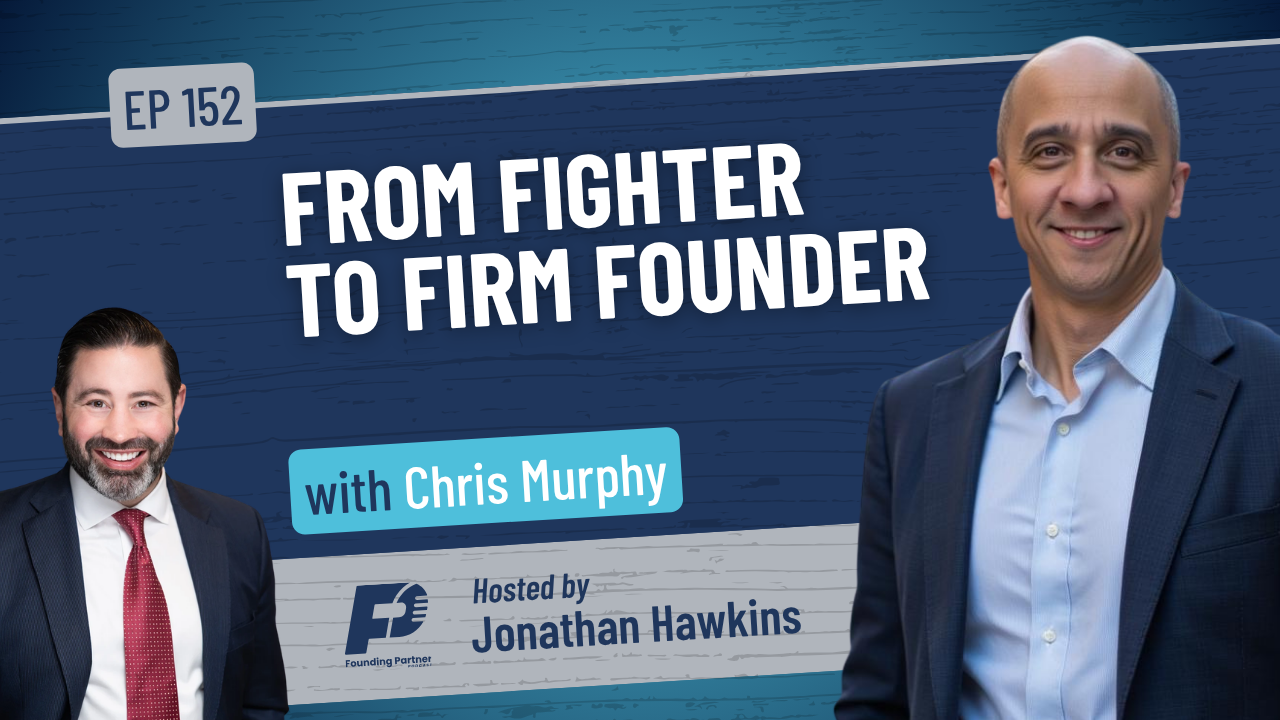
What does professional hockey, boxing, and building a successful law firm have in common? According to Chris Murphy, quite a bit.
On this episode of The Founding Partner Podcast, I sat down with Chris, founding partner of Murphy Schiller & Wilkes LLP (MSW), a commercial real estate and construction law firm based in Newark, New Jersey.
Chris and his brother started the firm in 2017 with two lawyers, a 500-square-foot office, and no clients. Today, MSW has grown to 36 attorneys and approximately 46 people overall, handling commercial real estate transactions across the country.
But what fascinated me most wasn’t just the growth. It was how Chris approaches everything, from hiring attorneys and developing business to building a team that shares his commitment to excellence.
His story is a reminder that growing a law firm isn’t simply about bringing in more clients. It’s about knowing exactly what you want to build and being willing to do the work to get there.
Two Brothers, One Big Vision
Chris didn’t take the traditional route into private practice.
Before starting MSW, he worked in New Jersey’s governor’s administration, developing expertise in tax credits and incentives related to real estate development. His brother, Kellan, was practicing commercial real estate law at Riker Danzig.
Together, they saw an opportunity.
While New Jersey had plenty of large, full-service law firms with real estate departments, Chris and Kellan believed there was room for a firm devoted entirely to commercial real estate and development.
They spent approximately two years planning their launch, budgeting everything down to office supplies and thinking carefully about how the business would operate.
Then, on April 3, 2017, they opened their doors.
Chris described those early days simply:
“Two, two of us, 500 square foot office, no clients, just a vision”
What struck me was how intentional they were from the beginning. They weren’t just opening a law practice and hoping clients would show up. They were building a business with a clear identity and a plan for growth.
Three years later, they joined forces with Matt Schiller and Charlie Wilkes, expanding the firm’s capabilities. The timing was remarkable. Their partnership began in January 2020, just months before the pandemic changed everything.
Despite the uncertainty, MSW continued growing as low interest rates helped fuel commercial real estate transactions.
Chris told me that the firm handled approximately $1.3 billion in transactions across 32 states in the previous year.
That’s quite a journey from two brothers sharing a small office.
Why Specialization Creates Opportunity
One of the things I appreciated most about Chris’s approach is his commitment to staying focused.
MSW handles commercial real estate and development, including transactions, financing, land use, zoning, redevelopment, litigation, and construction law.
And that’s where Chris intends to keep it.
He explained that the firm has had opportunities to expand into unrelated practice areas, but he’s resisted them because he believes that doing so would dilute the brand.
Instead of trying to serve everyone, MSW wants to be known as the firm clients call when they have a significant commercial real estate matter.
Chris put it this way:
“Listen, this is all we do and we do it really well.”
I’ve seen this same principle play out with other successful law firm founders. Sometimes attorneys worry that narrowing their focus means turning away opportunities.
But specialization can actually make a firm more attractive to the right clients and referral partners.
Chris has experienced that firsthand. Even attorneys at larger firms refer work to MSW because of its specialized expertise.
And while he remains open to expanding geographically, potentially growing the firm’s New York presence or exploring South Florida, he has no plans to abandon the firm’s core focus.
For Chris, growth isn’t about doing more things. It’s about becoming exceptional at the things you’ve chosen to do.
From the Boxing Ring to the Boardroom
Now, here’s something you don’t hear from every law firm founder.
Before Chris became an attorney, he played professional minor league hockey and fought professionally as a boxer.
He spent part of his teenage years playing junior hockey in Canada before eventually signing a professional contract. After two years in the minor leagues, he decided to return to school.
But his competitive career wasn’t finished.
Chris had also been boxing since he was young. After more than 40 amateur fights, he turned professional and competed in four professional bouts.
His final fight, against Abe Torres in 2009, ended in a draw and was recognized for its intensity.
An eye injury ultimately contributed to Chris leaving boxing behind, a decision he now considers fortunate.
Naturally, I wanted to know how those experiences shaped the way he practices law.
His answer centered on teamwork.
Chris explained that a hockey team needs different types of players. Some are exceptional scorers, others are grinders, and some fill specialized roles that are essential to the team’s success.
A law firm works the same way.
Not every attorney needs to be the star rainmaker or trial lawyer. Different people bring different strengths, and the firm succeeds when those strengths complement one another.
He also talked about handling pressure, whether that’s stepping into a boxing ring or preparing for an important legal hearing.
His approach is simple:
“Keep pushing.”
That mindset carries into the business side of MSW, too. When revenue falls short or expenses rise, Chris doesn’t see it as a reason to panic. He sees it as a moment to regroup, refocus, and keep moving forward.
Building a Culture of Excellence
As MSW has grown, Chris has become increasingly intentional about the people who join the firm.
He knows that hiring someone isn’t just about finding an attorney with the right credentials.
It’s about finding someone who wants to work in the environment MSW has created.
Chris described the firm as having a demanding, in-office culture built around hard work, professionalism, and attention to detail.
He also believes employers need to be upfront about those expectations during the interview process.
Rather than promising a workplace that doesn’t reflect reality, Chris would prefer a candidate understand exactly what they’re signing up for.
That honesty may mean losing a potential hire, but it can also prevent a costly mismatch later.
One of my favorite examples was how Chris evaluates attention to detail.
He described two kinds of people: those who walk past a rug with a folded corner and those who stop to straighten it.
Chris wants to hire the people who straighten the rug.
It’s a simple example, but it reveals a lot about the culture he’s trying to build.
For Chris, excellence isn’t reserved for major transactions or important client meetings. It shows up in the little things, too.
And when you’re building a firm where every person matters, those details become part of the larger picture.
Relationships Are the Real Growth Strategy
We also spent time talking about business development, an area where Chris has developed a particularly consistent approach.
His philosophy starts with doing exceptional legal work.
After all, attracting a client doesn’t mean much if the quality of the work doesn’t convince that client to return.
But great work alone isn’t his entire strategy.
Chris learned an important lesson from his father, who worked in sales:
“All things being equal, people do business with people they like.”
That idea has shaped the way he builds relationships throughout the commercial real estate industry.
Chris makes it a point to have lunch every day with someone in his professional network, whether that’s a broker, banker, architect, engineer, developer, or property owner.
And these lunches aren’t simply opportunities to pitch legal services.
They’re about getting to know people.
Chris wants to understand their families, interests, and lives beyond their businesses. He believes those personal connections are what create lasting professional relationships.
He also emphasized the importance of following up after networking events.
Collecting business cards isn’t enough. The relationship begins when you make the effort to reconnect.
What I found interesting is how closely this connects to the firm’s specialization.
Because MSW serves a defined industry, Chris knows where his potential clients and referral partners spend their time.
That makes his business development efforts more focused and intentional.
When the real estate market slows, Chris doesn’t believe in retreating. He wants his partners developing more relationships and competing for a larger share of the available work.
It’s a strategy built on consistency, visibility, and trust.
Finding Strength in Partnership
One of the most interesting parts of Chris’s story is his relationship with his brother.
Working with family can create challenges, especially when you’re running a growing business together.
But Chris believes their different personalities have actually been one of MSW’s greatest advantages.
Kellan, the firm’s managing partner, focuses heavily on management, finances, and the operational details of the business.
Chris, meanwhile, describes himself as an optimist who enjoys business development and thinking about the firm’s larger vision.
Instead of competing to do the same things, they’ve found ways to complement each other.
And as the partnership expanded, additional attorneys brought their own strengths to the organization.
It reminded me of Chris’s hockey analogy.
You don’t build a winning team by filling every position with the same type of player. You build it by finding people who are excellent at their individual roles and committed to a shared goal.
That balance has helped MSW grow while maintaining a clear identity.
And Chris is quick to acknowledge that some of it comes down to good fortune.
He recognizes how valuable it has been to build a business alongside people whose abilities complement his own.
The Courage to Build Something Great
Toward the end of our conversation, I asked Chris what advice he’d give attorneys who are thinking about starting their own firms.
His answer wasn’t about marketing tactics, technology, or financial projections.
It was about commitment.
Chris told me about a map of Newark his father gave him when he started the firm. On the back, his father had written a Latin version of the phrase:
“Fortune favors the bold.”
That message has stayed with him.
Chris believes entrepreneurship requires a particular level of dedication. It’s demanding, competitive, and full of uncertainty.
But for someone who genuinely loves the work and wants to build something meaningful, he also believes it can be incredibly rewarding.
What stood out to me was how much Chris still enjoys what he’s doing.
He’s proud of the firm, the people he’s surrounded himself with, and the opportunities they’ve created together.
Even after years of growth, he still approaches the business with the same competitive energy that once took him onto the ice and into the boxing ring.
And maybe that’s the biggest lesson from this conversation.
You don’t have to build the biggest firm or pursue every opportunity that comes your way.
You need a vision worth pursuing, people who believe in it, and the willingness to keep showing up and doing the work.
Closing Reflection
What I took away from my conversation with Chris Murphy is that building a successful law firm requires both ambition and discipline.
Chris has never been afraid of competition. But he’s also understood the importance of preparation, specialization, strong partnerships, and genuine relationships.
From a small Newark office to a nationally active commercial real estate practice, MSW’s growth reflects those commitments.
For anyone thinking about launching a firm or taking an existing practice to the next level, Chris’s story offers an important reminder.
Know what you want to be great at. Surround yourself with people who make you better. Build relationships that last.
And when things get difficult, keep pushing.
AND MORE TOPICS COVERED IN THE FULL INTERVIEW!!! You can check that out and subscribe to YouTube.
If you want to know more about Chris Murphy, you may reach out to him at:
- Website: https://www.murphyllp.com
- Email: cmurphy@murphyllp.com
- LinkedIn: https://www.linkedin.com/in/chris-murphy-203952a5/
Connect with Jonathan Hawkins:
- Website: https://www.lawfirmgc.com/
- LinkedIn: https://www.linkedin.com/in/jonathan-hawkins-135147/
- Podcast: https://www.lawfirmgc.com/podcast
Jonathan Hawkins: [00:00:00] So, as you look back over the last 10 years and the strong growth of your firm is there anything you would attribute that success and the growth of the firm to? Anything that you guys did?
Chris Murphy: I mean, Yeah, I think a very strong partnership. You know, we’re a very, very strong partnership, amongst those that are, that started the firm, the equity partners. We’ve hired very good attorneys that care a lot about doing great work, and they take pride in being here. We’ve invested in our people. Yeah, And I think this is just anybody that’s successful, I don’t care really what industry you’re in, it’s about hard work and kinda outworking everybody else. I mean, we work like animals, and, I mean, that’s, you know, that’s what I think is attributed to our success. You know, it’s been a lot of sacrifice, but I think all of us, you know, have a certain amount of obsession with being the best, and we care deeply about that. So it’s, I think, led to, you know, our success in this practice.
Welcome to the Founding Partner podcast. Join your host, Jonathan Hawkins. As we explore the [00:01:00] fascinating stories of successful law firm founders, we’ll uncover their beginnings, triumph over challenges, and practice growth. Whether you aspire to launch your own firm, have an entrepreneurial spirit, or are just curious about the legal business, you’re in the right place.
Let’s dive in.
Jonathan Hawkins: Welcome to the show, Chris Murphy. He is a founding partner of Murphy, Schiller, & Wilkes, also known or maybe better known as MSW. It’s a law firm out of Newark, New Jersey. Chris, welcome to the show
Chris Murphy: Jonathan good to be here. Good to be here. Appreciate you having me.
Jonathan Hawkins: So tell me about your firm. What, do you guys do?
Chris Murphy: Sure. So we have a, a firm. We’re based in Newark, New Jersey. We have 36 lawyers at this point, about 46 people total. We do all real estate and development. That’s what we’re known for, that’s what we specialize in. We’re very diverse within that industry, so we do transactional work, [00:02:00] acquisition, sales, leasing, finance.
I run our land use, zoning, and redevelopment practice, and our tax credit and incentive practice. We also do litigation and construction law. Anything related to putting up a commercial building, you know, our firm handles. We do work throughout New Jersey on the land development side. Transactional work we actually do nationally.
Last year we closed deals in 32 states, about $1.3 billion in transactions. So we’re growing, we’re active, and, you know, we’ve kind of carved out a little niche in the industry and in our space, and it’s working well
Jonathan Hawkins: So 36 lawyers, that’s a good size firm. And, from the research I did, and I– and we’ll talk about some more stuff. I did some good deep research on you, so . You, you started the firm about 10 years ago, is that right?
Chris Murphy: That’s right, April 3rd, 2017
Jonathan Hawkins: I think you started it with your brother. Is that, is that right?
Chris Murphy: That’s right. So the firm started with me and, my brother. I had come from a role in, in the prior [00:03:00] administration, for the governor’s administration. my brother had come from a firm called Riker Danzig, which is a very well-known New Jersey firm. He was doing commercial real estate and development work.
I was doing tax credit work in the government, and we decided to start this firm. It was the two of us. I left my job on a Friday. We started on a Monday, and we were off to the races. Two, two of us, 500 square foot office, no clients, just a vision
Jonathan Hawkins: That’s awesome. I wanna, I wanna go through all that. But yeah, from two lawyers 10 years ago to 36, that’s pretty good, man. That’s, that’s good solid growth, so congrats on that.
Chris Murphy: Appreciate it.
Jonathan Hawkins: So, before you were in government, had you practiced in a law firm before that?
Chris Murphy: No, I, I did not. So I came right out of… I got my law degree early on in my government career and, you know, kept acting as a lawyer during that time. And then so I never practiced at another firm. Came right out of the government, you know, with a law degree and a, a bar admission in hand, and we started the firm
Jonathan Hawkins: I imagine your government connections help, with your real estate, type practice.
Chris Murphy: [00:04:00] Yeah, no, listen, it, it was helpful. I mean, what I had done when I was down in, in Trenton was I’d kind of made it my mission to become the expert in tax credits and incentives. The state at the time had a different tax credit program, but they had very similar one that we have now. you know, and I understood that there was a niche where there were only a select amount of lawyers doing this tax credit work related to real estate and development.
so I kind of became an expert while I was down there. So when we left, when I left, we started the firm, you know, it was… People would call down to Trenton and say, “Hey, like, can you explain this to me?” And they’d say, “Well, call Chris. He knows it better than anybody.” So it was a really kind of easy transition into, the private sector in that, in that sense.
Jonathan Hawkins: So when you founded the firm way back when, 10 years ago, did you guys have the vision, “Hey, we’re gonna grow this to be a real estate niche firm and nothing else, really focus around that”?
Chris Murphy: Yeah, you know, we saw a, You know, we saw what, what firms had done in New York City. In New Jersey, historically and still to [00:05:00] this day, most of the large real estate practices are housed within, a larger law firm. So, but in New York, you have a lot of firms, multiple firms, they’re very high-powered real estate firms that only do commercial real estate and development.
They have, you know, 20 attorneys, 30 attorneys, 50 attorneys. and we thought that that was missing in New Jersey. You know, you go to a, a full service firm, and yes, they could do everything, but they weren’t necessarily focused on the industry. you know, we’ve always said, as much as we’re a law firm, of course, you know, we are lawyers first, we’re really part of the real estate industry, right?
Brokers, lawyers, architects, engineers, you know, that, those, that’s our world. you know, as much as, you know, as much as we obviously are lawyers and and, lawyers first. But we’re really part of the real estate development industry. There’s a lot of real estate lawyers, there’s not a lot of people that are lawyers that are in that industry, you know, really take pride in being in the industry.
So listen, it’s worked. I mean, we’ve, you know, been able to go out and say, you know, get much larger [00:06:00] clients even when we were smaller than we are now, say- by saying, “Listen, this is all we do and we do it really well.” You know? we’re not trying to do your divorce, we’re not trying to do your, you know, mergers and acquisition work.
we’re not trying to do your employment and labor work. We’re just doing real estate and development.
Jonathan Hawkins: Probably helps, referral relationships as well
Chris Murphy: It does. It does. It does. We get that all the time, even from, you know, big lawyers at big firms, and I know they have, you know, real estate attorneys within their firms. They say, “These are the guys that really specialize in this stuff.” So it’s has been helpful from a referral standpoint
Jonathan Hawkins: So, so you started the firm with your brother. first of all, what, what led to it? What, what, was it, conversations over, Thanksgiving and you’re going, “Hey, let’s, let’s do this,” or, you know, what, what led
Chris Murphy: Yeah.
Jonathan Hawkins: of it?
Chris Murphy: It’s a good question. Yeah, I mean, we grew up always doing things together. We’re 18 months apart. My brother’s older. If you saw my brother, he looks, you know, you know, he got all the Irish side. We’re Irish and, and Italian. My mom’s 100% Sicilian, my dad’s Irish. my brother looks like the map of Ireland.
I’ve got a little bit [00:07:00] more of the Sicilian side. so you wouldn’t really know we’re brothers if you if you met us. but, you know, we’ve always done stuff together. We played sports together. We started little businesses together as we were growing up. you know, and Kellan went and became a lawyer first and, you know, I was involved in some political stuff and, you know, I always thought getting a law degree would be helpful, whether I wanted to be a lawyer, whether I wanted to be in business, whether I wanted to be, you know, a lobbyist, whatever that may be.
and then ultimately, you know, I saw what my brother was doing. He was doing real estate and development work at the firm he was at, and then I had gone to the government and was doing tax credit work. And we said to… You know, we, we very much, you know, early on saw that there was an opportunity to do something ourselves instead of going and working at another firm.
you know, so we, you know, we planned like crazy. I, I lo- you know, I said, you know, I left my job on a Friday. We started on a Monday, but that was after two years of really a year and a half to two years of really intensive planning. You know, not just, you know, “Hey, we’re going out, and let’s just see if we can make it work.”
I mean, everything down to, you know, the pencil and the [00:08:00] paper was budgeted out. we’ve run this thing like a Fortune 500 company since the day we started it. and we’ve maintained that, and I think that’s really been the reason for our ability to grow so quickly. It’s been that, that, you know, really strong feeling about running it th- that way forever.
Jonathan Hawkins: That’s cool. I meet lawyers that, are all on the spectrum in terms of planning or how much planning. Some, I mean, ha- aren’t in a position. They get kicked out on a Friday and they have to open up on a Monday wi- without, you know, not, not by their choice. but you know, that’s cool that you guys took a long time to plan and, and put all the stuff into, you know, put all the, thought into it.
So, I personally know, I know other attorneys, I was actually talking at a conference last week, there were some multiple stories about, you know, you see these firms from the outside and they look super successful, and they are, but you, you don’t hear about all the, you know, three steps forward, five steps back in the middle.
So take me through a little bit about, you know, [00:09:00] from two lawyers to 36. I’m sure there were some twists and turns along the way.
Chris Murphy: Well,
Jonathan Hawkins: me through sort of the growth
Chris Murphy: sure. No, definitely, of course. Nothing is, you know, life is not linear. You know, business success is not linear. you know, we’ve been, You know, we started the firm, it was the two of us, and, you know, immediately added a few attorneys, you know, within that first year, year and a half. and then, three years in, in 2020, we teamed up with Matt Shiller and Charlie Wilkes, who became the next named partners of the firm.
Before that, the firm was called Murphy Partners, not Murphy and Murphy or anything like that, but Murphy Partners. I think we got that from Mad Men or something. We thought that was a cool name, Murphy Partners. So, the firm went from Murphy Partners to Murphy, Shiller, & Wilkes. Matt Shiller was the vice chair of real estate at a firm called Greenbaum Rowe, which is a historic, great New Jersey firm.
Charlie Wilkes was a real estate finance partner within the same firm. and Matt and Charlie joined us on January 1, 2020. we had planned [00:10:00] that for a year, so we had sat down. We had breakfast once a week every Wednesday morning at the Mark Twain Diner on Route 22 in New Jer- Route 22 in New Jersey, and we planned that merger.
that took some time. so the firm became Murphy, Shiller, & Wilkes. and then, you know, from there, really, you know, it really expanded. Ultimately, we u- ended up adding Anthony Capasso and Brad Forrest to run our litigation practice. you know, and that kind of rounded out the firm. But remember the timing, January 2020, you know, only a few months later, those guys joined the firm, the world shut down.
You know, I remember sitting, you know, it was mid-March, and we said, “I guess we gotta send everybody home. Like, we have to work from home. That’s what everyone’s doing.” you know, we didn’t know what was gonna happen to the world. I mean, there was talks about there being, you know, 50% unemployment. Now, what ultimately ended up happening in the commercial real estate industry was that it was the best thing that ever happened because interest rates went down to, like, nothing.
And, you know, there was so much real [00:11:00] estate work to be done, you know, in 2020, ’21, ’22. it really kind of took us to the next level because we were able to get all of that work, especially in the real estate finance side and the transactional side. So yeah, that was a, that was a definitely a scary moment, but it seems like 20 years ago that was happening.
But, you know, that was definitely a moment when it was a, a bit scary. But we were very disciplined. We, you know, committed to the cause, and we understood what we needed to do to, to kind of get through that, and we got through it. Everybody did. And, we were very fortunate. You know, we were very fortunate.
Jonathan Hawkins: It’s interesting, the real estate industry, you know, it goes through… You know this better than anybody. It goes through cycles. I guess two firms ago for me, I was at a firm that was heavy commercial real estate. That was sort of this genesis. and I was there, in the ’08 to 2011 type, you know, crisis.
And, it was r- interesting to see the real estate partners quickly pivoted from, you know, doing a bunch of deals to [00:12:00] fighting the banks on behalf of the owners
Chris Murphy: Yeah, of course. No, listen, I say all the time, I’m the worst gauge of the market. You know, we’re the, we are the worst gauge of the market. You always need a lawyer in what we do. You need a lawyer when you buy it, you sell it, you entitle it, you sue your partner ’cause things go sideways, you hand back the keys.
So we’re not necessarily the best gauge of the, of the health of the commercial real estate market, depending on how busy we are. What, you know, what will, you know, what will kind of, you know, evidence some disruption in the commercial real estate market is whether we’re doing a lot more refis or we’re doing a lot more workouts, and, you know, we do it all.
So, that will, you know, there’s probably been a little bit more of the workout stuff over the last year or two. but real estate people are always doing deals. I mean, we have mortgage rates at, you know, sev- over 7% right now. I meet with clients that say, “Kid, when I was coming up, mortgage rates, you know, were 16%, you know, and we were making money then.”
So, you know, we try to keep our head down. We tell everybody [00:13:00] in our office, “Come in, put your head down, put in a good day’s work, and you’ll get through whatever, whatever struggle you’re going through.”
Jonathan Hawkins: Well, it’s good to have a diversified practice so you can get the ups and downs and the all sides of the cycle. So are– So you’re only in… You, you say you do work nationwide, but you’re located in New Jersey. You’ve, you’ve had a lot of growth. as you look forward, are you looking at other states or
Chris Murphy: Yeah, listen, I mean, in, you know, I think we’re not looking at expanding outside of the real estate and development industry, and that obviously includes construction law, and all the, the type of, real estate adjacent type practice groups. But we are a real estate and development firm. That’s what we do.
we’re not looking to bring on… And we’ve had opportunities, you know, bring on another practice group that doesn’t necessarily align and make a little bit more money at the, you know, beginning. But, I think that a brand, you know, brand dilution is real, and not being good, not being known for being experts in what you do is real.
so we’ve remained committed to that vision. we’ll see, you know, [00:14:00] what this looks like in the next five years, whether there’s some expansion geographically, whether that’s, you know, we have a small presence in New York City now, office in New York City. Do we expand that office in New York City? I love South Florida, so maybe we’re doing something in South Florida, but, you know, we’ll, we’ll see where that takes us.
But we’ll… You know, the idea is not to expand outside of our niche. We might expand geographically, like I said, but not outside of our niche
Jonathan Hawkins: I, I 100% agree with that. I, I really do. You know, there’s different models, different approaches to practice law. I love when you pick a well-defined niche that you can really go out and shout, boom, boom, boom. And I think a lot of lawyers get scared sometimes. They say, “I, I don’t only wanna be this ’cause I might turn away all this other work.”
But the, What I’ve seen personally and from talking to hundreds of others, it actually grows your practice bigger and faster when, when you only have
Chris Murphy: It does. I’m telling you, if we were a full service real- if we were a full service firm in New Jersey starting 10 years [00:15:00] ago, you know, if we were over 36 attorneys, we wouldn’t be that good. You know, we just, you know, we wouldn’t… You’re doing everything for everyone, you know, jack of all trades, kind of, you know, master of none kind of deal.
we know what we do. I tell my people all the time in our office, you know, “I wanna be the New York Yankees of…” Not this year’s New York Yankees, by the way, but the generally the New York Yankees of commercial real estate law. You know, if you’re doing a big deal, you come, you know, come, come work with us.
if you’re a, a high-level commercial real estate attorney that’s looking for a home, you know, we’re open to a conversation. You know, that’s what I wanna be
Jonathan Hawkins: So take me back. what took you to law school? Was it because your brother
Chris Murphy: Okay
Jonathan Hawkins: or, or had you always thought about it was or what?
Chris Murphy: Yeah, my brother was, I mean, to go back a little bit in my history and, you know, I, I know you maybe wanna touch on this, but I grew up playing sports, you know, pretty high level. I was a hockey player and a boxer, or two sports. My poor mother, you know, just can’t buy a break.
and I played hockey very seriously. I went away in my last year of high school to move to [00:16:00] Canada to play my junior hockey. I came to the States, after my, 19-year-old year, so I was turning 20, to go to college up in Boston for hockey. and then I decided when I was up there that college hockey really wasn’t for me.
I was more of a kind of a scrappy type of player. I would’ve done better in either what they call major junior or in the pros. And, you know, I signed a professional contract and played in the minor leagues for two years, which was a fantastic opportunity and a really cool part of my story. And the whole time I was boxing ’cause I boxed from the time I was growing up.
And, and when I decided I ultimately wanted to go back to school, you know, because I had woken up, I had woken up on a bus after a 30-hour road trip, like sleeping on a shoe and looking next to the guy… looking at the guy next to me and saying, “That guy’s old as dirt. He’s like 28 years old. I don’t wanna be doing this when I’m 28 years old,” decided to come back and go back to school.
my father said, “You know, why don’t you go back to the boxing gym and just stay in shape?” And after a significant amount of time doing [00:17:00] that, I had over 40 amateur fights as a, as a boxer, I turned professional as a boxer and I, I had a little, little boxing career, that ended, you know, that ended after, four fights.
I was undefeated. but probably the best thing that ever happened to me ’cause I was able to keep some of my brains and, you know, do what I’m doing now. but you know, I always, you know, and then I was in- doing the political stuff and, you know, l- to me, getting a law degree was always an opport… gave you some, so much more opportunity.
So I was, I, I talked to a lot of different people. I made this list when I came back, I was like 21 years old, the, you know, 10 most successful people I knew, and not just financially, but just in life. And I went and had lunch with every single one of them and just wanted to pick their brain on, you know, what made them successful, what, why were they doing what they were doing.
you know, and one of them said to me, you know, he’s, high up at a, at a very large bank in New York. He said, “Listen, if I’m looking at a resume, I’d much rather see a law degree than an MBA.” You know, I guess his point was that you could do everything you could do with an MBA with a law degree, but not the other way around.
[00:18:00] I mean, I think that all depends, right? If you’re getting your MBA from Harvard, maybe a little bit different. But you know, so I went to law school and, and started law school, and then pretty soon into law school I decided I’m gonna focus on commercial real estate. I’m gonna focus on tax credits and land development, and really made that my mission to become really of as knowledgeable as I could on that, that particular topic, which is not, as you know, what most people do in law school. They just, they go in, they think they wanna be something, you know, they get a job, they, you know- You sit there doing document review for 10 years and then, you know, and then God knows what, right?
So a little bit different
Jonathan Hawkins: So I like that, that you, you made a list of successful people and, and went and took them to lunch. So what gave
what gave you that idea? Did you
Chris Murphy: That was before I read the book. I’m looking at it right now. They, somebody was saying to me the other day, Never Read Alone. That’s a great book by, Keith Ferrazzi. it was before I ever read that book, by the way. So I was doing the stuff that he was saying in there kind of before he was saying to do it.
I don’t know if you’ve read the book, but,
Jonathan Hawkins: it’s a classic.
Chris Murphy: It’s a, it’s a classic. I get… I used to have stacks of them. I’d give them out to people when they come into my office. you know, [00:19:00] I just, I always wanted to understand what made people successful, and again, not just money. I mean, somebody can have money, but, you know, in my view, not necessarily be successful.
you know, successful in life and, you know, I made that list, and in fact, one of the guys that I had lunch with during that, you know, during that little lunch tour, was the person who ultimately plugged me into the, to the governor’s administration, where I ended up working. You know, all of that stuff happened because I had those, those lunches, and I’ll do it all the time.
I mean, younger people will reach out to me on LinkedIn or, or whatever else, and, you know, they’ll say, “What should I be doing?” And I said, I always tell people, “Make the list.” You know, make the list of 10 people that you know that are successful, all different industries, things you know you’re not gonna necessarily wanna do when you grow up, but somebody you just view as successful in life, and go just meet with them and, and learn about them, and learn what made them successful.
you know, I don’t know how I came up with that idea, but you know, I just did it. You know, and it was, it was instrumental, I think, in getting me where I am.
Jonathan Hawkins: Fantastic idea. I mean, I,
Chris Murphy: Yeah.
Jonathan Hawkins: I might do it after I get off this [00:20:00] call. I, I need it my…
Chris Murphy: I think I should do it, like, every year. I should probably do a
Jonathan Hawkins: Yeah. Well, you’re probably on somebody’s list now. People are asking
Chris Murphy: yeah, everybody has– everybody’s on
Jonathan Hawkins: Yeah.
Chris Murphy: list. It’s good.
Jonathan Hawkins: Yeah. So l- let’s go back. So, hockey. you know, I said I did some research on you. so I, I saw that you as, as a rookie, you led all professional rookies in fights a r- in your rookie season
Chris Murphy: That’s true. That is true. I always said anybody could score a goal, but it’s the guy that can fight, you know, that’s the guy they buy beers for at the bar. yeah, look, I was just crazy. You know, I was just, I was one of those guys that I, I really enjoyed that part of it. you know, a lot of people think there’s anger or some sort of, you know, other underlying thing that goes into that.
To me, no, it was just a job. I mean, it was, it was fun. I liked to, you know, I liked to go out there. I liked to play hard. you know, I liked to mix it up. I always… You know, at the time, you know, when I was coming up, really Canadian hockey was known as, like, the tough hockey, you know. And the, and the hockey in the [00:21:00] States was, you know, always considered a little bit softer, which is not the case anymore if you’ve been watching any of the, the rivalries.
but I always, you know, kind of looked up to a lot of those Canadian players and, wanted to be like them. You know, Tie Domi, who was an absolute, you know, beast, and, you know, a couple others, P.J. Stock, a few others. It was something I really enjoyed. So I, you know, I loved playing hockey, and I loved to, I loved to fight, so
Jonathan Hawkins: You know, it reminds– I’m sure you’ve seen this and I, I’ll get the names wrong. I don’t follow hockey, but there’s that, that social media video from the, the guys playing golf a-and one of them is, you know, hockey… He’s, like, one of the hockey maybe enforcers, I don’t know. And then these drunk guys in front of him, and he’s like, “Let us play through.”
And the guy just– He’s like, “Don’t do it. I’m gonna throw you in the lake.” And the guy, the guy comes at him and he throws him in the lake. Did you see, did you see that video?
Chris Murphy: know, I, you know, I haven’t, but I, I can imagine it. I’ve, I think I’ve probably lived that story a few times. you know, for the most part, you know, the guys that do that work in hockey, [00:22:00] you know, they do the, some of the fighting, are usually the nicest, you know, the nicest guys. Outside of that, you know, usually people that do that type of stuff for a living, whether it’s boxing or hockey, you know, it’s really not the guy fighting in the bar.
You know? It’s, you know, those guys are different types of guys. The, the people that do that stuff for a living, do the fighting for a living, they don’t necessarily have to prove how tough they are. They kinda know how tough they are. but it was, No, it was a, it was a great experience. I mean, I wasn’t by any means a heavyweight.
you know, I was more of a, what we call a ship disturber. Go out there and always… One, I remember having a coach when I was like 16, he said, “Chris, if you don’t have a black eye, you’re not doing your job. Somebody should always be punching you. Somebody should always be mad at you.” you know, but I, you know, I had the opportunity to fight a lot of those, big heavyweight guys.
you know, and as I s- always say, I either took first or second place in almost every fight,
Jonathan Hawkins: Yeah, there you go. Well, let’s, let’s switch. So boxing, I did, I, I found, one of, I guess Boxing Scene is some, media outfit. One of their all-time favorite fights was 2009, your [00:23:00] fight with a guy named Abe Torres. I went and watched the fight, man. It was… looked intense
Chris Murphy: Yeah, so that was my fourth professional fight. you know, I was coming up in, in New Jersey and there was this kid, Abe Torres, who fought out of Union City. And, you know, they matched… I got matched with Abe, and, you know, we took the fight and, you know, Abe was a little bit older than me, you know, hadn’t fought in like a year or something.
And, the kid was the toughest kid I ever stepped in a ring with, that’s for sure. I think it was Knockout TV four-round fight of the year. boxing scene ranked it one of the best fights they’d ever seen live. it was quite a fight. Again, You know, the, the, the best thing that ever happened to me was stop- I stopped boxing.
And I, I stopped boxing ’cause I had these eye injuries. I had this really bad cornea injury that I kept having surgeries on. but ultimately it was the best thing that ever happened to me because, you know, boxing is, it’s a great sport. It’s a classic sport. It teaches you a lot about life. but you’re also getting punched in the head, you know, and it’s not something you necessarily want to see too much of.
So, you know, I, I’m glad it ended when it ended. [00:24:00] You know, I’ve kept knock on wood, thank God most of my brains were, you know, were still here. And, but that fight was a classic. It was a four round. It was a draw. It was my last fight as a professional. Abe Torres was a great guy, he was a family guy and he fought his heart out and I fought my heart out and it was, it was a classic fight.
Classic fight
Jonathan Hawkins: You know, I, I’ve never done any boxing.
Chris Murphy: Yeah. You’re too pretty. I always say, you know, “Look at that face. You can’t…”
Jonathan Hawkins: exactly. I’m too scared. But, I mean, I, the, endurance that you have to have to last, I mean, tell, tell me about it. By the end of a fight, I mean, how just wasted are you? I mean, you’re, you’re
Chris Murphy: So it’s interesting, right? I mean, it’s, it’s different. You know, people think about, you know, they see someone with a lot of muscles or a lot of, you know, and boxers have muscles of course, ’cause they stay in shape. But, you know, it’s not about that. It’s really about the stamina. because, you know, you have a lot of muscles and you’re tense and you, you’re grinding your teeth, you’re gonna run outta energy in about 10 seconds.
So half of boxing is about, you know, how to breathe, how to, you know, feed oxygen to your [00:25:00] muscles throughout a fight. you know, how to get hit and still remain, you know, have composure. it’s the best, you know, workout in the world, right? I mean, but it’s, I don’t know, it’s not something I would suggest that your children do
I don’t know. It’s, it’s, it’s a, you know, it’s, a great sport. I still watch it. It’s al- boxing’s one of my favorite sports. It still is. And you know, I watch a lot of it. but it’s, yeah, I mean the most, you know, the most endurance probably out of any sport because just try to, you know, do something else, but then throw in there that you’re also gonna be, gonna be getting punched while you’re doing it
You know, it’s
Real quick, if you haven’t gotten a copy yet, please check out my book, the Law Firm Lifecycle. It’s written for law firm owners and those who plan to be owners. In the book, I discuss various issues that come up as a law firm progresses through the stages of its growth from just before starting a firm to when it comes to an end.
The law firm lifecycle is available on Amazon. Now, back to the show.
Jonathan Hawkins: Well, let’s, let me ask this, segue back to practicing law. [00:26:00] What sort of lessons or things that you can draw from your time boxing or playing hockey that you can implement or use now just practicing law, building a firm, whatever it is?
a firm
Chris Murphy: Yeah, it’s really, funny you say that. I mean, from a firm perspective, from a, as a business owner and, you know, how we’re growing and building our firm, I always talk about us as a team because I look at, the firm as a team, and especially as it relates to hockey. Because in hockey you have, let’s just say you have four lines.
You know, you have the first line, the second line, the third line, the fourth line of, of forwards on a team. The first line might be the most highly skilled people, you know, in the, in the world, right? These, these are the people that can score, they can take a puck, they can do magic with it. The second line’s kind of that, you know, bigger, grittier type line.
The third line’s what we call the grinders. They’re the guys like me. They went out there, they stirred stuff up. And the fourth line historically in hockey was kind of the tough guys. You know, the guys that, you know, the biggest heavyweight guys that [00:27:00] went out only when the things needed to be fixed. You know, they needed to fix something.
you know, when it, when somebody goes down, say in the NHL, somebody, a, a third line player goes down, a grinder goes down, and you gotta call up from the minor leagues, they don’t necessarily call up the best guy in the minor leagues. They kind of, they call up the person who’s gonna fill that role, because every role is super important to the team.
I look at a law firm the exact same way. Not every single person is gonna be the rockstar trial attorney, but there’s gonna be somebody else that has this other component that they bring to the table that’s so critical to the team. So I look at it very much like that, you know, as it relates to, you know, what we’re doing and what boxing and hockey taught me, listen, you know, there’s not much…
You know, you can’t be much more nervous than stepping into a ring, you know, with one other person and fighting in front of thousands of people. you know, although recently I was going into a hearing and for some reason I said to somebody, I said, “This is the first time I’ve ever felt kind of as close to being in a fight,” like going into a fight, those nerves.
And just like a fight, you just gotta get punched once and then you, you know, it all comes [00:28:00] back. You know, you get through that first, you know, opening statement and you’re d- you’re good. You know? So very similar. Very similar.
Jonathan Hawkins: Yeah, and I, I imagine, again, I don’t know what it’s like in a fight, but, you know, in a hockey match, I’m sure that, you know, y- you may be ahead and then you’re down, and you gotta, you gotta rally the troops and, and, you know, just because you’re down, you gotta, you gotta keep morale up. It d- you know, it, it’s you always live for another day type thing, right?
Chris Murphy: I’d say all the time, “Keep pushing.” You know, you just keep pushing. You know, I have a sign that right there on my thing. I mean, I know I’m going off screen, but it’s a sign one of my assistants, they made for me. It’s all the sayings that I say. You know, the first one is, “Don’t be a loser.” It’s one of my favorite things.
You know, don’t be a loser. You know, keep pushing, which is something I say all the time in our firm. you know, it’s very much like a sports team, right? You’re like, there are gonna be ups, there are gonna be downs. There’s gonna be a month where you’re like, you know, “Hey, we didn’t hit what we wanted to hit from a revenue perspective.
You know, our expenses were too high. You know, let’s get refocused. Let’s look at this and, and see how we can, you know, reengage, and get back on [00:29:00] track.” You know, it’s very much like a sports, you know, like a sports team
Jonathan Hawkins: And the other thing I, I saw that, you know, back to your, I guess, former life, are you a, a manager for one or more
Chris Murphy: So yeah. So, yeah, I, do manage a little bit. It’s very much a side gig. It doesn’t take up too much of my time. I was going… One of my sons was going to the boxing gym to stay in shape, and, I ended up running into a guy, a guy named Ryan Singalia, who was a writer for Ring Magazine when I was coming up.
He said, “Oh, my God, Chris Murphy, I haven’t seen you in forever. Are you, are you still involved in boxing?” And I said, “No, you know, I’m not, and my son’s, you know, staying in shape. He’s coming to the gym. But, you know, I’ve always wanted to manage somebody.” He said, “I got the perfect kid for you.” So we followed this kid for about a year as an amateur, and then we were 50/50 partners in this, in co-managing him.
we got him up to 4-0. boxing, like any business, you know, has its hiccups, so we’re currently not managing him anymore, but we got him to a point where [00:30:00] he, you know, was, you know, undefeated as a professional. we have another kid we’re looking at possibly turning pro next year. It’s really just, to me, it’s just something on the side that’s really fun.
I, you know, no interest in, you know, trying to make a ton of money doing that. It’s just the ability to kind of guide somebody through that in boxing. You know, boxing’s kind of a sleazy world. There’s not a lot of people that are gonna take care of these kids, and to feel like, you know, you’re helping somebody get to that next level.
As I said to that kid when we were, you know, first starting conversations, I said, “Listen, if you own three gas stations or three, you know, if you own three car washes at the end of this, I’ve done my job.” You know? It’s not about, you know, all the other flashy stuff. If you… If I can set you up where you now have a career or a life after this, ’cause it goes so quick.
I mean, boxing is, it’s brutal. I mean, it is a brutal sport. One day you’re up here, the next day you’re down here. So I really enjoyed that. I really enjoyed it. It’s really my only hobby outside of, you know, my work and my family are my two really, my two only things, and then this was kind [00:31:00] of my little side thing.
Jonathan Hawkins: Yeah, I did. Speaking of your family, I saw some, some posts. They come to the office.
Chris Murphy: Yeah.
Jonathan Hawkins: and you, you had s-
Chris Murphy: They do. Well, they gotta see me. They gotta see me. My wife’s like, you know… As my wife said the other day, “Chris, you know, lives in Newark, he sleeps in Scotch Plains,” because I’m here so much. But no, I have a, I have a great family and, a very supportive wife. Yvette, she’s, you know, she’s amazing.
So yeah, she’ll bring the kids sometimes into the office and just kind of hang out for an hour or so. it’s really special for me. I love when she does
Jonathan Hawkins: when my kids were younger and they, they came to the office, they loved it because the snack cabinet, you know, is, is
Chris Murphy: Sure. It’s full. Yeah. It’s
Jonathan Hawkins: everywhere. They’re like, “Oh my God.” They’re like, “I wanna come every week.”
Chris Murphy: yeah. Yes. Yeah, no, they, It’s great. You know, it’s good having the kids in here, and, you know, I think I’m due for another visit, so thanks for reminding me
Jonathan Hawkins: Yeah. So, so another thing I wanna talk about is, is just mindset. and growing a firm and, and frankly just being a lawyer, but I’d say more growing a firm. again, you know, like for me this year, you know, we were on a good growth [00:32:00] trajectory and then, you know, boom, like three people left, like boom, boom, boom, real quick.
And then all of a sudden you’re like, “Oh my God, what, what just happened?” And then you gotta,
Chris Murphy: Yeah.
Jonathan Hawkins: you know, sort of… It’s like, it’s, I don’t wanna, again, I haven’t been in boxing, but maybe it’s like getting, getting just clocked and you’re like, “Oh my God, I gotta like-“
Chris Murphy: maybe it’s like, it’s like, no, it’s like, it’s very, it’s, it’s like taking a body shot and like you just, it checks you and you remember like you’re human and, you know, somebody could put you down with a body shot and then you gotta kind of get up and work through that. It’s so true.
We talk about it all the time. I mean, you know, consistency, is so important. You know, having people… Listen, sometimes people have to leave, right? It’s not the right fit. You’ve outgrown each other. You know, there’s different opportunities. They might not wanna be a lawyer in private practice. It’s a very demanding thing, right?
This is not like, you know… We work hard. We have a culture of very, very hard work here. People come in, you’re expected, I talked about being the Yankees before, you’re expected to act a certain way, look, you know, dress a certain way, you [00:33:00] know, present the clients a certain way, work incredibly hard. Those things are all super important and some people may not wanna do that, and that’s fine.
Maybe it’s not the right fit. We try to do our best when we’re hiring people of really vetting that out. Are they the right fit for us? Because again, we’re all, you know, we’re not 800 lawyers where you have, you know, 30 people coming in a month and 30 people leaving. It’s, it’s very critical to us and to our, to our entire structure and to our revenue and to everything to have people here and stay here.
Because every time you replace somebody, as you know, I mean, if you’re lucky, you know, it takes a year to make somebody profitable. If you’re lucky. You know, and we, you know, we’ve tried to shorten that window, but you know, every time there’s a turnover, you know, it is, it is a crunch and then it, you know, more falls on the partners and more falls on the higher level attorneys to kind of have to step in.
So we’ve tried to remain consistent, you know, this consistency. but every, like everybody, you have some turnover from time to time. just part of the, part of the
Jonathan Hawkins: And so you’ve touched on a few things you just touch on where, where I call it [00:34:00] culture things. So as you are out there looking for people to come to your firm, you know, what, what are you looking for? What, what’s your culture like? What– how do you vet the people you’re interviewing and whatnot for culture?
Chris Murphy: Yeah, no, it’s a good– It’s a really good question. I think part of that is, is, is getting to sit down face-to-face with people. I can look at a resume and tell you right away whether somebody has, probably has the skill set associated with what we’re looking for, right? The, the ability to probably do the work.
you know, we do interviews, we do in-person interviews after that. And then, you know, a lot of times we’ll do a lunch, you know, with a few of the partners just to try to get to know people. We’re in the office five days a week. We’ve been since, you know, ten weeks after COVID started . You know, it wasn’t– I, you know, I don’t begrudge any larger company that maybe had to, you know, do things a little bit differently.
But we were at the time a very small firm, you know, in two thousand and twenty. So we were out of the office for about eight weeks and then everybody was back. People would say to me, “How did you get people back?” I said, “Well, I gave them an MSW face mask and a bottle of hand sanitizer and said like, ‘Let’s go.'”
[00:35:00] You know? So obviously we were accommodating if somebody had somebody at home that, you know, needed some more precaution. but, you know, we’ve been at– we’re an in-office firm. We have an in-office culture. you know, we’re all adults, so attorneys gotta, you know, you have an appointment for your kid at ten in the morning, I’m not expecting you to be here at eight before that appointment.
but generally as a firm our, our culture is in office. we expect everybody to act a certain way and to, to work really hard. I’m talking about from the, an assistant to, you know, the highest level partner. There’s nobody really, you know, cutting corners or slacking off here. And that culture has just been, You know, sometimes you only know when you know, but I think we’re pretty honest in interviews. We don’t want– Honesty in an interview from an employer perspective is super important. It’s very easy to paint this picture of work-life balance and the, and, you know, this or that. And then people come in and they see the real you and they’re like, “Well, you bullshitted me.
You, you told me that there was gonna be all of this, you know, you know, these [00:36:00] accommodations for whatever.” And I think if you’re upfront early on and you say in the interview process, “Listen, we just got to be straightforward with you. You know, nobody here bills under a hundred and fifty hours a month.
Everybody works really hard. you know, we’re in the office every day, you know. Albeit if you have something serious or you, you need a day at home, you’re an attorney or an adult, we treat you as such. we expect you to be, you know, be really good at what you do. We expect you to care about the formatting.”
I say there’s two types of people in the world. You see a rug, the corner of a rug kind of folded over. There’s a person that just walks by that, then there’s a person that makes sure it goes down. You know, you put it down, you line up the rug. You know, I want to hire the people that line up the rug, you know?
So listen, there’s always misses and stuff and not everybody’s as psychopathic as me. You know, I’m a named partner at a firm and I’m walking around with a bottle of Windex and a, and a wipe because people put their hands on the win- on the, on the glass doors. Like, who are these psychopaths that I’ve hired that think it’s okay to put their hand on a door?
But everybody knows I’m a little bit of a nut, so
Jonathan Hawkins: Well, I… Great [00:37:00] point you brought up in terms of a law firm in the interview being honest about what it’s like. And, you know, there’s, it’s that old marketing thing. Y- you wanna attract the people that wanna be with you, but you wanna push away the people that aren’t gonna be the good fit. And back to you said, I mean, it, it’s a big investment on the firm side.
You’re gonna spend a lot of time i- investing, training, blah, blah, blah, money too, to get ’em in there. So you wanna make sure that you’re both aligned. So a, a great point
Chris Murphy: Yeah, there’s no… It doesn’t, it doesn’t help me to sell somebody a bag of goods that’s gonna leave in a year because they’re not happy or ’cause they thought it was gonna be something else. It’s really important for me to be super honest because I’d rather miss out on that opportunity if they’re not culturally the right fit for us, and hire somebody else that may, that is, or have nobody for that time period and, you know, put more on a partner or whatever.
you know, honesty is incredibly important in that process and you do weed people out. I mean, listen, I’ve had… You know, we’ve, we’ve missed out on, on hiring certain people because they say, “Listen, I’m not gonna commit to being in the [00:38:00] office all the time, you know? I came from a company that only required me to be in there one day a week.”
Well, that’s good. Tell me that because we shouldn’t be together, you know? Let’s break up
Jonathan Hawkins: Yeah
Chris Murphy: you know? So it’s important. Honesty’s important
Jonathan Hawkins: I’m an, I’m an in-office guy too. well, g- let’s go back. So I know, you know, again, I’m down in Georgia. When COVID hit, of course, everybody thought we were all gonna die, and it was all shut down for a little while. But we pretty quickly here opened up. I know, I think up, up in the Northeast, they kept it closed a little bit longer.
Chris Murphy: were closed down for a long time. We were … I had a table, I had a lunch table, like six wee- eight weeks in when we came back to the office. All the restaurants were closed. I won’t name the restaurant I used to sit at every day because I don’t want to blow up their spot. But I had a table there that I would host lunch every single day.
It was my table, and then it was, like, a bunch of construction mob guys . They had their table. So there’s two tables in the restaurant. They had one, and I had one. [00:39:00] And I remember at one point, the COVID had gotten so bad up here that those guys stopped coming in, and I said, I I better, I better scale back a little bit, ’cause those were some tough guys, and I knew if they weren’t coming in, you know, things were get- you know, things were serious.
And listen, we took it very seriously. I had people I knew that, that, you know, died from COVID. I mean, this was a serious thing. but you know, pretty soon after, you know, my … I remember my brother calling me, it was eight, eight weeks in, and he’s like, “Chris, we gotta get back to the office.” Like, I can’t be working from home, you know?
So we got back in pretty, pretty early. And again, it was different because we’re a small firm. It’s easier to get people in, you know? It’s not, you know, I’m not JP Morgan. I’m not trying to bring back 5,000 people. But what happened was, a lot of these companies and all these law firms, you, you let people stay at home for a year and a half, two years, it is tough to get people back.
You’ve arranged your entire life around being home. And, you know, we just didn’t have that, so we never really had to deal with it
Jonathan Hawkins: Yeah. Yeah. So, as you l- look back over the last 10 [00:40:00] years and, and the, and the strong growth of your firm, are there, is there anything you would attribute that success and the growth of the firm to? Any- any- anything that you guys did
Chris Murphy: I mean yeah, I think a very strong partnership. You know, our, our part– You know, we’re a very, very strong partnership amongst those that, that are, that started the firm, the equity partners. we’ve hired very good attorneys that care a lot about doing great work, and they take pride in being here we’ve invested in our people, and I think we just– Yeah, and I think this is just anybody that’s successful, I don’t care really what industry you’re in, it’s about hard work and kinda outworking everybody else. I mean, we work like animals, and, I mean, that’s, you know, that’s what I think is attributed to our success.
you know, it’s been a lot of sacrifice, but I think all of us, you know, have a certain amount of obsession with being the best, and we care deeply about that. So it’s, I think, led to, you know, our success in this practice
Jonathan Hawkins: So let’s talk a little bit [00:41:00] about business development. And I talked to… I have lawyers on this show of all types of practices. Some are consumer-facing and things they do may be different than what you guys do ’cause you represent, you know, I guess developers and maybe more corporate types. So I’m curious, what sorts of things have you found over the years to be really successful for you in terms of developing, new business and maybe expanding relationships you already have?
Chris Murphy: Sure. Well, of course, at the e- the first part is the work has to be the best because somebody will send you a deal, you know, you know, there’s… I’m not trying to get people off the street that are coming in for one divorce, right? my clients are doing deals everywhere. You know, the key is to be better and the work product to be as good as any of the top firms.
So that’s– Since day one, that’s been our thing. I said I could always… I could bring in a client, buy a steak dinner, bring in a client. If the work’s not great, you’re not gonna get the next deal. So that’s always been the baseline, is the work product has to be the best. Secondly, I think it’s a relationship [00:42:00] business.
Well, I know it’s a relationship business. And, you know, my father– Nobody in my family is a lawyer. My dad’s a salesperson, you know, I always say an Irish salesperson. You know, he did, he, he made a good, really good life for himself and for us. but he had always said to us growing up, you know, “All things being equal, people do business with people they like.”
The caveat to that is all things not being equal, people still do business with people they like . So, you know, building those relationships are key. We’re– Because we’re so focused and niche and we service the commercial real estate and development industry, there’s only a few organizations that we really have to be part of.
We go to these organizations, we’re part of them. We might go to a networking event, you know, where everybody’s sitting around talking. you know, the key for me, and I’ll tell the, my younger attorneys this, is you go to these events, and then you get the business cards, and then the key is the follow-up.
I have lunch every single day, every single day, with somebody in our industry. I have lunch with a broker, a [00:43:00] banker, an architect, an engineer, so- a developer, property owner, somebody in our industry. That’s where the real relationships are built. And it’s not about talking about the deal, it’s not about talking about the legal stuff ’cause they know we’re, we’re there, you know?
We– They know that if they send us a deal, we’re gonna do the best legal work. The key is to build the relationship. What do their kids do? What do you… You know, and that’s where I really enjoy that stuff. Some people have to force it. You know, the business development part is really, you know, you see somebody who’s a in the business development role, and you know they don’t really like it, and it’s really painful to watch them because you’re like, “God, this poor bastard.”
You know, he’s gotta go out there and fake, you know, fake, fake being an extrovert. You know, I am an extrovert, so to me, that part’s not hard. we do a lot, you know, we do a lot in our business. You know, luckily for us, you know, real estate and developments, you know, a lot of golf, a lot of steaks, a lot of cigars, all the great things in life.
Jonathan Hawkins: Yeah, it’s just
Chris Murphy: I always say, “If I can’t sell this, I’m done. If I can’t sell this industry, I’m, I’m… it’s over for me.”
Jonathan Hawkins: Yeah. That– [00:44:00] You’re making it sound so awful to, to business develop in real estate.
Chris Murphy: Horrible.
Jonathan Hawkins: I know. So, okay. So, we’re gonna flip things. So looking back, again, over the last 10 years, what are some of the challenges that you had to overcome in growing the firm?
Chris Murphy: You know, it’s a really good point. I think if you were to talk to my brother, who’s the managing partner, I always say my brother doesn’t have the head of hair I have. I always say, “My brother got the brains, I got the hair.” he’d probably have a little bit of a different perspective. I’m kind of the e- eternal optimist, so for me, I see everything as an opportunity.
you know, we see the market t- turning sideways a little bit, things are slowing down. I say, “Let’s double and triple down on, on business development. Let’s be out. Every partner should be out every night for dinner, you know, finding the next deal, finding the next client.” you know, I think, you know, we’ve had periods of time where we may have thought for a moment that, “Hey, did we over-hire?
Did we bring on too many people?” We always, and I’m just saying this to my partner this morning, we’ve never been in a [00:45:00] situation where somebody’s bo- somebody’s plate does not get filled within a month. You know, we- we’re so fortunate that we, you know, that we’re busy. And, you know, everybody that comes in, even if they’re, they might be a month where it says, “Ah, things are a little bit funky or a little bit slow,” everybody gets filled up.
And, you know, I think that’s just a testament to us doing good work. I, I’ve… When, when the market changed, interest rates started going up, it was 2020, late 2022, early 2023. I remember saying to my partners, and I say this almost every day, it’s on, it’s on that little sign that I was quoting before that says, “Don’t be a loser.”
Market share, market share, market share. It’s about market share. If we were getting every two out of every 10 deals when times were good, now we gotta get two out of every five deals. It’s about market share, and I think we’ve done a good job from a branding perspective and from a marketing perspective, and some of that marketing is just doing really good work on a deal, and then other people coming to you or people coming back, where we’ve been in the situation where we are getting more and [00:46:00] more of the market share, whether it’s here or whether it’s, you know, regionally or nationally.
It’s been… You know, we’ve been very, very fortunate, but I think it’s a testament to the good work that my partners are doing and every attorney at this firm is doing. but yeah. I mean, my brother might have some different, different some, some different moments. I mean, I think he probably stays up la- later at night grinding his teeth because he’s looking at, you know, every, you know, dollar and cent every day.
I look kind of more big picture, but it all works together, and that’s one of the reasons why we’ve been able to work together. People say, “You know, you work with your brother. Isn’t that…” You know, we’re so different. If he, if he was like me, we’d kill each other. If I was like him, we’d, you know… I don’t know where we’d
Jonathan Hawkins: Yeah. What’s, what’s that been like working with your brother? I, I’ve, you know, I’ve, I’ve, I know people, husband and wife, brother, sister, brother, brother, you know, dad, son, whatever, mother, son.
Chris Murphy: Yeah
Jonathan Hawkins: what’s it been like? You know, you guys have been together all your life, so
Chris Murphy: All my life, yeah, I mean, I think, you know, we’ve been very fortunate. Again, I, we’re so different. It- it’s just, you know, again, if we were both [00:47:00] tasked with doing the exact same thing, like I look at some of these attorneys, and God bless them, I say they start a firm, they’re doing all the business development, they’re doing all the management, they’re doing all the books, they’re doing everything.
One person or two people that do the same thing, right? Two people that are really good at the organizational part, but not necessarily the business development part. I think I just got lucky, to be honest with you. Half, half the, half the success in this world is just luck, right? I mean, I had a brother that happened to be really good at one piece of it, and I happened to be really, really good at the other piece of it.
And you put that together, then you add Matt, and you add Charlie, and you add Anthony, and you add Brandon, you add the other attorneys, and everybody fills a role, you know? you know, I’ve been, we, I, I think part of that is just luck. I just got lucky. My brother and I just had these two separate skill sets that kinda came together, and there was a little bit of magic
Jonathan Hawkins: It goes back to that analogy to the hockey team. Everybody’s got their role and you…
Chris Murphy: Everybody’s gonna roll. That’s
Jonathan Hawkins: So for others out there that are young in their journey, at starting their firm or maybe [00:48:00] thinking about it, you know, any advice you’d give them?
Chris Murphy: Yeah, listen, I, I think you gotta, you know… My father, when we first started the firm, he, he gave me a, a big map of the city of Newark, and on the back, he wrote, you know, in Latin. He’s not Latin. He doesn’t speak Latin, but I’m sure he Googled it. You know, “Fortune favors the bold.” And, you know, I mean, I think that that’s, you know, something that we’ve kinda lived by.
I think that this is not for everybody. I think you have to have an obsession when you start a business and if you want it to be successful. And I think, you know, the world is changing and, you know, competition is only getting harder, and there’s downward pressures. if you’re gonna start a business, if you’re not obsessed with it and obsessed with making it great, it’s probably not gonna be for you.
If you’re obsessed with being the best and to building something that lasts, you’ll find it to be the most rewarding and fulfilling job you’ve ever had. You know, I, I wake up every single day and I thank God, and I’m so blessed that I get to do what I’m doing. but if you’re not [00:49:00] obsessed in that way, it’s probably not for you.
And that goes for anything: acting, you know, you know, being a musician, being, you know, you know, being in finance, being whatever. If you’re not obsessed with it, don’t go do it on your own, but if you are obsessed with it and you have a vision, go chase that vision ’cause it’ll be rewarding
Jonathan Hawkins: I love that. I love that. I’m trying to, think if there’s a, a quote. I gotta find this thing. It was a, Bruce Springsteen quote. is, is he a Jersey guy? Where’s he from?
Chris Murphy: Of course he’s a Jersey guy. He’s the Jersey, he’s the
Jonathan Hawkins: It was something like, you know, “I didn’t care– I didn’t wanna be rich, I didn’t wanna be famous, but,” well, you know, “I just wanted to do something great,” or something like this.
Great quote.
Chris Murphy: Do something great. Do something you love. I mean, how blessed are you to be able to do what you love to do? I mean, that’s, that’s truly a
Jonathan Hawkins: Yeah. Well, Chris, man, this has been awesome. I loved watching your fight, by the
Chris Murphy: Great.
Jonathan Hawkins: I would not, not challenge you at all, ever
Chris Murphy: you’re fine. I, I’m, I’m not fighting [00:50:00] unless you
Jonathan Hawkins: Yeah. But, for people out there that wanna, wanna get in touch with you, what’s the best way to find you?
Chris Murphy: Sure, yeah. I mean, you can reach us. the website’s murphyllp, as in partnership.com, murphyllp.com. My email’s cmurphy@murphyllp.com. Reach out to me, find me on LinkedIn, connect with me. you know, I’m a big connector. I love to talk to everybody. So, this was great, Jonathan. And next time I’m in Atlanta, I’m gonna come see you
Jonathan Hawkins: Please do. Please do. I don’t get up to Jersey too much, but, I am planning to get up, at least get up to New York maybe next
Chris Murphy: If you come up to New York, if you come up to New York City, you gotta come to New
Jonathan Hawkins: Yeah. Well, cool. Well, again, man, thanks for coming on. It’s been fun
Chris Murphy: Thanks, Jonathan.
OutroUpdatedWebsite-1: Thanks for listening to this episode of the founding partner podcast. Be sure to subscribe on Apple podcasts, Spotify, or wherever you get your podcasts to stay up to date on the latest episodes. You can also connect with Jonathan on LinkedIn and check out the show notes. With links to resources mentioned throughout our discussion by visiting [00:51:00] www.lawfirmgc.com. We’ll see you next time for more origin stories and insights from successful law firm founders.