Finding That Niche for You With Kevin Cott
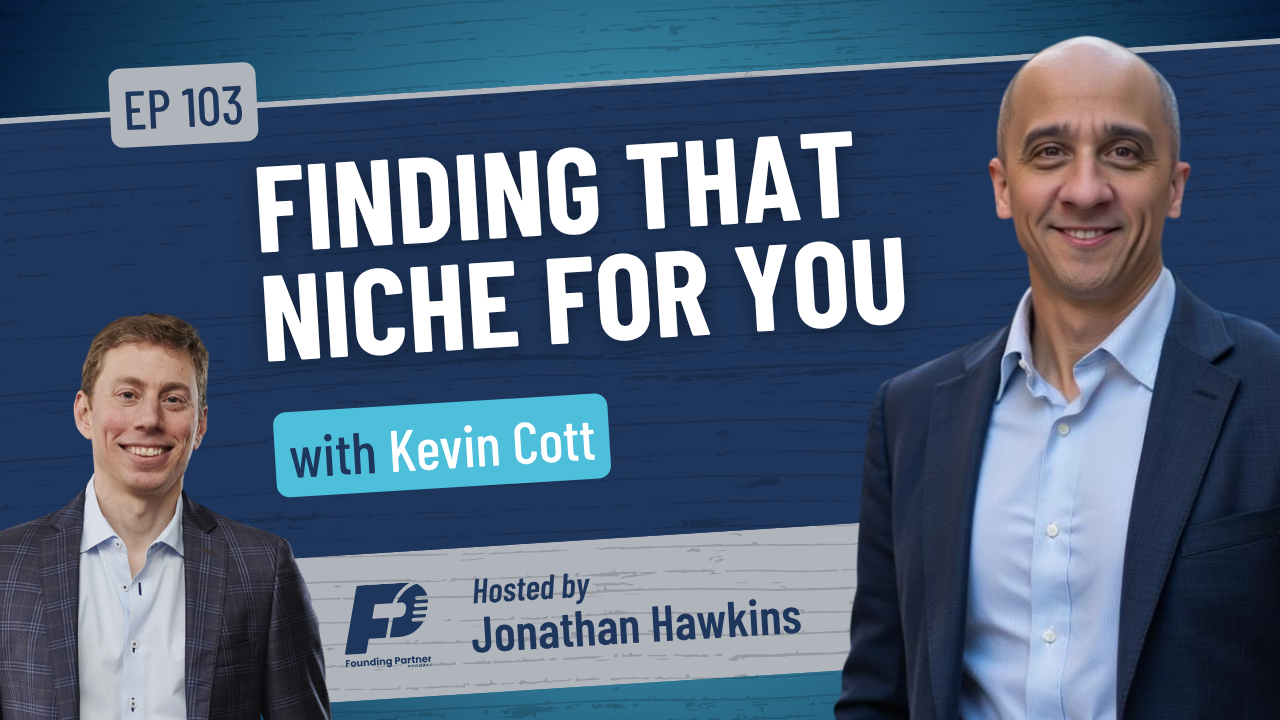
Every so often, I sit down with a guest and realize halfway through that we’re talking about more than building a law firm — we’re talking about how people build themselves.
That’s how it felt sitting across from Kevin Cott, founder and managing partner of COTT Law Group in Atlanta. On the surface, Kevin runs a boutique firm that helps investment funds and advisors launch and grow. But the story behind that firm is a mix of instinct, risk, and the kind of self-honesty that most people only discover after taking a few leaps of faith.
The Dinner That Sparked a Shift
Kevin told me a story that perfectly captures the way his mind works.
He and his wife were celebrating at an omakase dinner when two men sat down beside them — one of them a CEO who clearly wanted the whole restaurant to know it. He spent the night loudly bragging about how he’d built his company from his parents’ basement into a nine-figure success.
Kevin went home that night, looked him up, and found an article about the man’s journey. Instead of rolling his eyes, he found himself inspired. “I just remember thinking, what am I doing?” he said. “Automate your docs.”
That moment — random, loud, and oddly motivating — was what pushed him to finally act on an idea he’d been circling for months. And that’s a thread that runs through Kevin’s story. He doesn’t just talk about ideas. He moves on them.
From No Plan to Perfect Fit
Kevin’s path into law wasn’t mapped out. He was a finance major who went to law school without a plan and landed his first job in commercial litigation. Within a year, he knew it wasn’t for him.
He thought about leaving law altogether until he stumbled onto an opening at an Atlanta firm that specialized in investment funds. “It seemed like a nice marriage of finance and law,” he told me. It was. He found a practice that matched how he thought — strategic, analytical, and tied to real-world markets.
That role gave him a foundation. But it also awakened something else: the urge to build something of his own.
The Reckless Leap That Worked
One day, the thought just hit him — what if I did this on my own? Within weeks, he told his boss he was leaving.
He laughs about it now. “At the time I was single, no kids — probably just being a little reckless,” he said. “But I thought, I can do this. And I did.”
He started with no clients, only a legal assistant and a subleased office at an estate-planning firm. No safety net, just belief. But belief, as it turns out, can go a long way when you’ve earned trust in your network.
The people he’d worked with — fund administrators, brokers, and service providers — respected his work and sent him projects. By the end of the first year, he’d turned a small profit. By the second, he was earning more than he had as an associate. “After that,” he said, “it was off to the races.”
Learning by Doing
Like most founders, Kevin tried just about everything to grow — Google Ads, partnerships with service providers, conferences, all of it. “You just have to try,” he told me. “It’s the cost of doing business.”
Over time, he realized the best growth strategy wasn’t complicated. “The vast majority of our clients come from our existing clients,” he said. “It’s the best referral you can get.”
That’s a lesson every lawyer learns eventually: no amount of marketing replaces excellent work and relationships built on trust.
When Partnerships Don’t Work Out
At one point, Kevin partnered with another law firm. The partnership lasted from 2018 to 2020 — long enough to teach him a few lessons but short enough not to define him.
“It didn’t work out for all kinds of reasons,” he said. “But it didn’t sour me on partnerships. You just have to be smarter.”
Then he added something I think every entrepreneur should hear: “If you push ahead with something just because you want it to work, and ignore the red flags, you have no one to blame but yourself.”
It’s rare to hear a lawyer talk about optimism as both a strength and a liability, but that’s Kevin. He describes himself as a bit of a Pollyanna — someone who believes he can will things into existence. That belief has carried him far, even when it’s tested him.
Building a Boutique Firm the Smart Way
Today, COTT Law Group is nine people strong — six attorneys, two of counsel, and a small support team led by their COO. Most are in Atlanta, working hybrid schedules. The firm focuses on private funds of all types: hedge funds, private equity, venture capital, real estate, and digital asset funds.
Kevin hires for attitude and fit, not just background. “All our attorneys didn’t have experience in this practice when they started,” he said. “If you find the right person, you can train them.”
That philosophy has built a culture of loyalty and learning. It’s also made the firm nimble enough to grow steadily, especially since relaunching in 2020.
Turning Systems into Strength
Kevin’s relationship with technology started the same way his firm did — impulsively. He’d been talking for months about automating documents but hadn’t taken action until that dinner conversation gave him a jolt.
From there, he built what he now calls a three-phase evolution:
- Document automation — creating intelligent templates that generate fund documents from detailed intake forms.
- Workflow automation — connecting tools like Clio, Trello, and Zapier so client onboarding and project tracking happen seamlessly.
- AI integration — using artificial intelligence to review contracts, identify what’s market, and flag issues before an attorney steps in.
“It’s not replacing anyone,” he said. “It’s just a powerful tool that lets us work smarter.”
He’s careful to maintain the human touch, though. “You never want it to feel automated,” he said. “It should make things smoother, not robotic.”
Riding the Crypto Cycles
COTT Law Group also found its footing early in the cryptocurrency world. Kevin’s team handled their first Bitcoin-only fund in 2016, long before most firms understood what crypto even was.
That early curiosity paid off. By the height of the crypto boom, 70 to 80 percent of the funds they launched were digital-asset based. When the market cooled, Kevin kept his footing.
“We made a deliberate choice not to be just a crypto firm,” he said. “You don’t want to be a cheerleader. You want to stay objective.”
Today, the practice remains balanced — crypto funds alongside traditional hedge, venture, private equity, and real-estate work. “It’s a healthier mix,” he said.
Looking Back, Moving Forward
Toward the end of our conversation, I asked Kevin what he wished he’d done differently. His answer was pure self-reflection.
“I just wish the light bulb had gone on sooner,” he said. “I had so much time back then. I wish I’d been as motivated as I am now.”
Now in his mid-forties, he feels like he’s hitting his stride. “I want COTT Law Group to be the best investment funds boutique in the country,” he said. “Great people, great work product, and a tech-forward approach. I don’t care about headcount. I care about efficiency and quality.”
That clarity of vision — focused, but not frantic — is something I’ve heard from a lot of successful founders. It’s not about chasing scale. It’s about building something excellent and sustainable.
For the Lawyers Who Are Thinking About Leaping
Before we wrapped, I asked Kevin what he’d say to someone on the edge of starting their own firm.
“If you’re serious about it, do it,” he said. “But don’t mistake activity for being productive. Figure out what actually works for you and spend your time wisely.”
It’s fitting advice from someone whose career has been one long exercise in thoughtful action. Kevin doesn’t wait for the perfect moment — he acts, learns, and refines.
That dinner years ago might have just been a random night out, but it changed the way he thought about progress.
“Be thoughtful,” he told me. “But when it’s time to act, act.”
AND MORE TOPICS COVERED IN THE FULL INTERVIEW!!! You can check that out and subscribe to YouTube.
If you want to know more about Kevin Cott, you may reach out to him at:
- Website: www.cottlawgroup.com
- Email: kevin@cottlawgroup.com
- LinkedIn: https://www.linkedin.com/in/kevin-cott-42524a33/
Connect with Jonathan Hawkins:
- Website: https://www.lawfirmgc.com/
- LinkedIn: https://www.linkedin.com/in/jonathan-hawkins-135147/
- Podcast: https://www.lawfirmgc.com/podcast
Jonathan Hawkins: [00:00:00] So what would you advise people out there that are thinking about it, where do you start?
I mean, I know every practice theory is different, but how do you get started on that path?
Kevin Cott: So we, we were pretty thoughtful about it. It’s, you know, it’s funny. So I had been thinking about document automation for a while. I was like, I knew it was out there, you know, talk and talk and talk about it. And I wasn’t acting on it. Right. And then I don’t know if this is gonna translate to the podcast, but whatever. I was, at a dinner with my wife, we were celebrating something and we were at like a fancy, like omakase dinner. And there were these two guys next to us having a business dinner and they were talking about this one guy’s company that, you know, he was the CEO of and had grown into like a, you know, nine figure company and very successful.
And this guy was so loud, like his voice just projected and it was like really annoying. Like you just, you were hearing every part of their conversation, the entire dinner and he’s going on and on about their growth and everything. And I was like, who is this guy? And like I got his full name just ’cause he announced it at some point.
[00:01:00] Don’t. Anyway, I come home and I Google him and read, and there’s this really great article on about how he built his company and like this vision he had and how he, you know, started in his parents’ basement and, you know, worked his ass off. It was actually like, pretty inspiring. And I just remember like reading that and being like, what am I doing?
Welcome to the Founding Partner Podcast. Join your host, Jonathan Hawkins, as we explore the fascinating stories of successful law firm founders. We’ll uncover their beginnings, triumph over challenges, and practice growth. Whether you aspire to launch your own firm, have an entrepreneurial spirit, or are just curious about the legal business, you’re in the right place.
Let’s dive in.
Jonathan Hawkins: Welcome to Founding Partner podcast. I’m your host, Jonathan Hawkins. This is a podcast where I get to interview law firm founders and leaders and hear about their journeys and what they’re doing with their firm and, and lessons they learned along the way. Today we’ve [00:02:00] got Kevin Cott joining us. He is the founder of COTT Law Group, which has a cool little niche that I, I guess there are attorneys out there that do this, but I don’t, he’s the only one I know and it’s, it’s, I call it sort of investment fund representation.
So, we’re going to dig into that and also, you know, talk about his journey. He’s, he’s had partners. He’s not had partners, and we will talk about some of that as well. So. Kevin, welcome to the show. Hopefully I described your firm correctly, but why don’t you give a little introduction. Say, you know, tell us a little about your firm, you know, where it is, what you do, how many people on your team, that sort of thing.
Kevin Cott: Yeah, you nailed it. And first of all, thanks for having me on. Really been looking forward to getting called up. So excited to do it. So yeah, my name is Kevin Cott. I’m the managing partner of COTT Law Group, PC. We’re a boutique law firm based in Atlanta. As Jonathan said, you know, we really specialize in working with investment funds and advisors.[00:03:00]
And I can get into what that means, but that’s our practice in a nutshell.
Jonathan Hawkins: So when I hear investment funds, I think institutional money and I think Wall Street. So, I’m curious and you’re based in Atlanta, so how does that come about? Yeah. I would imagine that you, you would be in New York City or somewhere up there. So tell me about that.
Kevin Cott: yeah. Yeah. So there’s, there’s really, you know. A couple different kind of funds. You know, you’ve got public securities offerings, like mutual funds and ETFs and things like that. That’s a whole different animal. We deal exclusively in private funds, so regulation D offerings for alternative asset funds.
And, and what that really means is like traditional hedge funds, commodity pools, you know, private equity, venture capital, real estate. We do a lot in the cryptocurrency and digital asset space. So just kind of that, you know, distinction between the dis different types of funds and what you maybe think of when you think of Wall Street.
The New York part is true, like there’s, you know, [00:04:00] certainly a lot, most of our clients are in New York or California, or Florida or Texas, wherever the investment centers are. But you know, and we can get into my background, but like, even when I started, like early days, there were never like a lot of geographic constraints.
It was always, if you knew your stuff, it didn’t really matter where you were based. A lot of this practice is based on federal law. So it’s not really, you know, if you know your stuff and you’re in Atlanta, there’s, there’s really no friction to working with someone in New York and then, you know, post pandemic.
It’s just like a first thing you talk about on a call and, and you move on.
Jonathan Hawkins: So how did you get into the space? That’s the other thing that’s always sort of struck me. I love, I love these, I don’t wanna call ’em weird, but interesting niche practice areas that you know aren’t mainstream. It’s not like personal injury or criminal or family law. So how do you get into something like this?
Is this, is this something you always wanted to do? You knew it coming outta law school or did you just sort of fall into it?
Kevin Cott: the, yeah. Fell [00:05:00] right into it, so I, I had no plan. You know, they always say like, don’t go to law school because you don’t know what you want to do. And, and I did exactly that. So went to law school, graduated, had no plan. I practiced commercial litigation for a year. I figured out pretty quickly that, that that wasn’t the place for me, just didn’t suit my personality.
But I was a finance major in undergrad. And so after, or when I. When I realized commercial litigation wasn’t for me, I, I was actually kinda like, disillusioned about the practice of law and, and was thinking about going into finance like pretty strongly. And I just happened to cross an open position for an associate.
I had another investment funds boutique based here in Atlanta and thought, you know, that seems like a nice marriage of, of finance and law. I didn’t know anything about it. I applied for it. I got the job I started and just kind of took to it right away. It was like a much more exciting practice for me.
You know, it allowed me to leverage my finance background and, and that was pretty much it.
Jonathan Hawkins: So I imagine, you know, with your [00:06:00] finance background, you, you know how to, you know how to talk spreadsheets so you know how to talk with your clients, right?
Kevin Cott: Yeah. You know, it’s, I’m sure you know this, like with a lot of the subject matter. You, you just, The law, you need to know down cold, the actual like, you know, financial lingo. Like you just have to know enough to be dangerous so that, that you don’t expose yourself on a call. So that, that’s pretty much where I’m at.
Jonathan Hawkins: Yeah, I know the other thing you said, and, and I, I experienced this I know lots of lawyers experiences. I, I just think it’s part of the na natural. Part of being a lawyer, it’s, you come out and you come outta law school and you start doing something and within two to four years, you’re sort of like, I don’t like this.
And a lot of people, they’re not sure. Is it the law or is it the firm or maybe both. And so the first move is you go to another firm to see if, was it the firm or was it the practice area, or is it just the law? And then some people end up leaving the law and some people [00:07:00] sort of settle into their spot.
It sounds like that’s what happened with you.
Kevin Cott: Yeah. I mean, it’s a real common cliche and I, I think that was my exact experience. And I was lucky ’cause you know, the next position I took happened to be a really good fit. I was, you know, I think it was probably a little impulsive to think based on the first job that I didn’t wanna be in the law together.
You know, and we’ll get into it, but I also, I really had like an entrepreneurial instinct and I like running my own firm and I think that is. It’s given me a lot more lasting power. I don’t know if I would’ve liked being an attorney, just an attorney for my whole career. And obviously that’s, you know, a topic we’re gonna dive into, but I think those two things, like finding the right practice and eventually starting my own firm is where I really needed to land.
And I was fortunate that I kind of got there relatively quickly.
Jonathan Hawkins: You know, it’s interesting. There are some people that just are not employable [00:08:00] and then there are others that really should not be starting a business or, or trying to do that. So it sounds like you sort of knew you had that entrepreneurial spirit or whatever, but I’m always curious a about sort of the, the spark.
That pushes somebody to actually say I’m doing it. And so you said you were at a firm you liked the work, but at some point you decided, Hey, I’m gonna, I’m gonna try to do this. What, what led to that?
Kevin Cott: Yeah, I mean, it’s, it’s a pretty common theme, at least early on in my career, of being very impulsive. So, you know, I, I liked the firm, I liked the people I worked for. I like my boss. Like we’re, you know, all in good terms now. So it was a really good experience. It’s not like something pushed me out you know, and, and caused me to start my own firm.
It was. I’ve been there a few years. I learned the ropes. It wasn’t even really something that, at least consciously I was thinking about. And I remember one day, like I didn nowhere. I had an epiphany, like I remember it vividly and just remember thinking like, what if I just did this on my [00:09:00] own? And I got really excited about it and I think I informed my boss I was leaving like less than a month later.
You know, it’s like I didn’t put a lot of like, you know, meticulous planning into it. You know, at the time I was single, no kids. And candidly, probably just being a little reckless and I was like, you know, I can do this. And I just, I did.
Jonathan Hawkins: You know, sometimes I think you need a little bit of that sort of a, being naive a little bit, say, ah, this is easy. Because you not knowing what you don’t know I think helps. So, so you, you within a month, so you didn’t plan much I guess you didn’t have that many obligations, expenses maybe did, but in terms of war, chest or book of clients or anything like that, did you have anything that helped once you started or did you start at zero or maybe even negative?
Kevin Cott: Yeah. And you know, when I say a month, I mean, I, you know, kind of like informed him that what I was doing and then gave some runway and, and wrapped up [00:10:00] stuff. So it took a little while and I did have a little more time to plan. But no, I mean, I was I was lucky, you know, when I, when I left, I didn’t bring any clients with me.
I didn’t try to, I didn’t wanna like, burn those bridges. I just kind of let everyone know what I was doing. And it just, it, it doesn’t really work that way. At least at that point in my career, I brought over a legal assistant and I started subletting space at an estate planning firm. So I had some overhead, actually, and again, this, this probably ties back to the reckless part of it, like, you know.
I was just assuming the work was gonna come and but I did have a really solid network that I built up. So, you know, in practicing it, I had to work really closely with not just a lot of clients, but a lot of other service providers and just people in the industry. And one thing that’s, that’s kind of, that’s interesting about my practice is like.
The lawyers are very valued. You know, we, we can send a lot of work to the fund administrators and the fund auditors and the brokers and, and so there were a lot of people [00:11:00] that I think made a very like, conscious effort to, you know, reach out to me and, you know, I’ve got this project, maybe you can help with it.
And that helped. And so I left in May of 2011, and I remember that first year I, you know, turned a small profit. And then the next year, my first full year. I made more than I had as an associate when I left and it was, you know, off to the races.
Jonathan Hawkins: Addicted at that point. Right.
Kevin Cott: Yeah.
Jonathan Hawkins: It’s nice when that happens. So, so lemme ask sort of the, the mechanics of this practice. How, how, and, you know, share as much or as little as you want, but in terms of how you bill so, and how you charge clients, you know, is it hourly? Is it you, you get a, a retainer up front? Is it at the end of the deal when you, when you.
Close or whatever you get paid. I’m just curious in terms of the runway you needed once you actually signed a client to actually start getting paid.
Kevin Cott: So most of it’s flat fee which I like. And, and you know, I think we’ll probably get into that more later. [00:12:00] But, so if you come to me and say, you know, I’m spinning out of a larger shop. I wanna launch my own hedge fund, you know, it’s gonna be a long short equity strategy, it’s just myself, domestic fund.
You know, you kind of know the beats and you quote a fixed fee for the whole project. And usually we would ask for, you know. Retainer upfront, you know, it’s earned upon delivery. The first draft of the docks, the remainder gets, you know, paid out in stages. And so that’s, that’s kind of the baseline project we work on.
And then obviously there’s all kinds of variations. There’s hourly work, there’s, you know, and you have to be careful if your engagement letters, it includes this. And, but they may want you to negotiate like a really complex, you know, side letter agreement with an institutional investor. And so that is separate and you do it hourly.
And you just kind of have pretty clear delineations. Yeah, so like when I went out on my own, it wasn’t like, you know, day one I was churning and billing and, you know, you had to land a few clients and, and know that the, the funds were gonna come in.
Jonathan Hawkins: So let’s talk about landing the [00:13:00] clients. That’s the other thing, you know, to somebody like me, the uninitiated, it, they seem very sophisticated and seem to be, seemed like they would be very picky about choosing a lawyer. It’s not like you can just. The Google ad up and all of a sudden you got these hedge fund people calling you and say, yeah, we’re going with this guy.
So how, how did you, you know, you did not have any clients when you started. How did you sort of work? Is it, is it contacts referral sources or is it actual clients? How did you sort of get that going and how long did it take?
Kevin Cott: Yeah, it, it, it took a while and, you know. We’ve done it all over the years. So like early on I didn’t know what I was doing. I was using Google Ads, you know, I was partnering with other service providers and they’d be like, you know, we have this whole pipeline we’re gonna send you and you do it for this reduced fee.
And you’re like, that sounds great. And it’s never great. And then, you know, attending lots of conferences and you know, you just kind of figure it out. And, and again, I, I think all of that was just kind of me trying to figure out other [00:14:00] ways. But, but really it was having this. Tight network that, you know, knew I, you know, that I’d worked with closely.
They, you know, knew I did high quality work and, and, you know, wouldn’t make them look bad to their clients. And, and that was really what was driving it. But now it’s like a kitchen sink approach. You know, we do a little bit of everything, but the vast majority of our clients are from our existing clients.
Which is the best referral you can get? You know, it, it’s, it’s obviously someone who’s worked closely with you, they have a network. All these people, you know, a lot of these fund managers know other existing and prospective fund managers. And so when they say, you know, my lawyer did a great job, I want you to talk to him that gets you, you know, over halfway there.
Right away.
Jonathan Hawkins: It is also the, the cheapest acquisition that you can get. Right. You know, it’s funny, I was talking to an attorney yesterday about, you know, as you grow a firm, you’re gonna spend all this money and you have to, you gotta spend money here, you gotta spend money there, and you just gotta know it’s not all gonna work.
So you’re gonna end up. Looking back saying, damn, I [00:15:00] wasted money there. I wasted money here. But some of it is gonna work. So it’s, it’s like you just don’t know, but you sort of have to go through it, I think. So it sounds like you did.
Kevin Cott: Yeah. I mean, you know, and it’s, there’s no, I, I guess certain practices, maybe there is almost like a, a playbook. But I, I think for most of us, it’s like you, you gotta go through that trial and error. Because you know, a lot of it depends on your practice, it depends on your personality, it depends on your particular circumstances, and so you gotta try it and, and it’s, it’s you know, cost of doing business.
Jonathan Hawkins: So the other thing I want to talk to you about, you know, so you started your firm at some point. I think you, you were in a partnership and you’re no longer in a partnership. I’m curious, you know, share what you’re willing to share. But, you know, a lot of folks think about. You know, having partners or going into partnership.
Some think about it more deeply on the front end than others. Even those that do explore it for extended period of time and really dive deep, it doesn’t always work out. And so, I’m just curious what [00:16:00] your experience was, you know, without a partner, with a partner, maybe without any lessons or advice you might have for others out there that might be thinking about going into a
Kevin Cott: Definitely. Yeah, and, and I think that’s a pretty, you know. Common question for, for anyone who starts their own firm and, and something you’re gonna have to navigate, whether you do it or not, just kind of, you know, evaluating what you’re looking to do, what the opportunities are. So for me, you know, I launched the firm, built it up for, for about six and a half years, and then we, we partnered with another law firm the start of 2018.
So, and then did like a full lift out of our team in practice at the start of 2020. So I had a partnership experience that did not work out for all kinds of reasons that, you know, or not worth getting into. But my main takeaway was that it didn’t in any way sour me on partnerships. You know, I, I just think that would be the wrong conclusion to draw.
And I’ve given this a lot of thought. You know, so it’s kind of long-winded answer, but, [00:17:00] you know, we, I would say. A lot of the lawyers are pretty cautious by nature, right? You get people who are very detail oriented identify all the risks, you know, they kind of think through all the possible outcomes and that can make for a great lawyer.
It’s not necessarily, you know, personality traits that, that always make for a great entrepreneur. And so I think you, you, you also have to be willing to go outside your comfort zone and, and take risks. So in my, you know, in my case, I’ve always been I’ve never really been risk averse and that served me well.
But what I realized, you can also go like too far the other way. And as my wife can attest, like I can be a bit of a Pollyanna and like try to talk things into existence. And so I think the lesson for me was like, you know, if you push ahead with something just because you want it to work you know, and ignore what, in hindsight were some like pretty obvious red flags. You kind of have no one to blame but yourself when it doesn’t work out. And so that was the lesson for me. It’s just, you know, be smarter. Not, [00:18:00] you know, let this taint how you look at partnerships, period. That wasn’t the lesson at all.
Jonathan Hawkins: I think that’s a great point. You know, I’ve, ’cause I do a lot of, you know, law firm breakup type work and there are people out there that say I’ll never have a partner ever again. And, you know, maybe that’s the right move for them. Maybe, you know, some people maybe are just not suited for it. But then I know other folks.
That have been partners for 30 years, and it’s like perfect. I mean, it’s, they don’t even have, it’s a handshake. It’s just perfect. It works. I mean, it’s, I guess it’s like a marriage, right? I mean, you know, you may end up getting divorced, but does that mean you’re never gonna date anybody again? Or, or do it again?
Kevin Cott: I was, that was gonna make the exact same point, like exactly like you have people that say I’ll never get married again, and maybe you shouldn’t, I don’t know. But you know, they’re wonderful marriages that last a lifetime and terrible marriages that are doomed from the start. Like it’s, it’s specific.
Jonathan Hawkins: Yeah. So let’s, so let’s talk about your, sort of, your firm setup now. So at some [00:19:00] point, I, you may have said the year, but you sort of went back out and then you’re independent again, I guess no partners. But you’ve been growing. You know, I, I, you may have mentioned it earlier about how many attorneys you have, how many staff, and then maybe are you in office hybrid, virtual.
I’m sort of curious to set up.
Kevin Cott: Yeah, so we’re six attorneys, two of counsels and then we’ve got three other staff. One our COO, Emily. Then two other staff underneath her. So we’re nine people in, in total. We are all, but one of us is based in, at Atlanta, so we have one that’s fully remote and then the rest of us are all here and we’re hybrid.
I am in the office pretty much every day because I selfishly set the office like right by my house that’s like a mile away. Everyone else is like three days a week typically in the office, and, and we’re pretty flexible with that.
Jonathan Hawkins: So take me through your sort of your growth. Evolution, you know, when did you start adding attorneys? When did you, when did you know it was time? [00:20:00] And then how has it, you know, how has it sort of evolved over time in terms of, I mean, you’ve got six people now, so
Kevin Cott: Yeah. So we, you know, it was just. Piecemeal. So I, I think, I think I hired my first associate in 2016, and then the second 1, 20 18. And then we had, you know, we’ve had a couple, you know, come and go, but we’ve, we really haven’t had much turnover. We had another one a couple years ago. And then we’ve got another associate that just started after being an intern for us last month. And. We’ve just kind of grown based on need, and it’s, it’s been it’s really been a lot of growth, honestly, in like the past five years. So we, we relaunched in 2020. We haven’t, you know, we, we’ve increased our capacity a lot. We’ve added more attorneys and, and I think we’ve had a, like a steeper uphill trajectory since then.
Jonathan Hawkins: So we’re getting into this a minute, but yeah, 2020. The, I bet you the crypto crypto work started coming in strong, but we’ll get to that in a second. But
Kevin Cott: [00:21:00] Sure.
Jonathan Hawkins: so. Again, you, you’ve got this very focused niche practice that maybe there are a ton of lawyers out there that do it, but it just sort of strikes me that it would be hard to find people that have the expertise that you need.
So I’m curious, how are you finding the people? Is it the kind of thing where if they’ve got a couple skill sets out, you’ll train ’em on the rest? I’m sort of curious about that part.
Kevin Cott: That, that’s a great question. So, you know, we would certainly welcome a lateral hire that that has experience in it. We, we did that once with someone that had like an adjacent experience, but that it ended up not working out. And it’s because that’s not the only. Variable. Right. And so for me, I found it more helpful to find a, kind of, find the right fit.
Fit, like just, you know, personality wise and, and what I think of them as, you know, in terms of like potential and, and then train them. And so all our attorneys [00:22:00] did, you know, did not have experience in this practice when they started. And, and there certainly is, you know. A period of, of, you know, growing pains and, and kind of giving them up to speed.
But I, I think it’s worth it. I, I think if you find the right person, and I’m a big believer in like, you know, culture and, and personality and you know, that less so than very specific experience. And I, I think the rest can come.
Jonathan Hawkins: Yeah, I ask because like, excuse me, with like my practice area, there really aren’t a whole lot of people out there doing. Exactly what I do. There are people that do sort of pieces of some of what I do, but you know, broad strokes, it’s, I’ve got sort of an advisory practice and then there’s a transactional component and it’s not like, you know, or family lawyers there are tons of them and you can sort of pluck somebody from another firm or whatever.
And it’s, there’s just a bigger pool of candidates. And so like for me. You know, my thought has always [00:23:00] been find you know, sort of what you just said, but also maybe a practice area that has a similar sort of setup. So in my mind I was always like, well, you know, employment lawyers, employer side employment lawyers sort of fit that for me.
So they’ve got an advisory practice, but then they also have the. Pseudo transactional and then some of ’em do some, some litigation too. So I’ve always thought that maybe that’s where I would look. So I guess you have found maybe some adjacent or similar, I guess, structured practice areas that you can pull from.
Kevin Cott: Yeah, so mine is just kind of all circumstance to be honest. I mean, we’re a small firm, so it’s not like we have 30 attorneys and, and you kind of start seeing patterns emerge. And so there, there are practices that I think lend themselves to what we do pretty well. Like a corporate attorney that maybe doesn’t have investment funds experience, but you know, spends a lot of time drafting LLC operating agreements and just kind of understands a lot of the tangential work that we do would be a great starting point.
[00:24:00] It just hasn’t worked out that way. Instead, it’s been a lot of like, you know, fresh attorneys that are right outta law school and, and we’ve trained them and, and you know, I think we’ve done a good job of like. Picking the right people that were able to grow with us and ended up being a good fit. But you know, it could just as easily be someone from an adjacent practice that that actually makes a lot of sense.
Real quick, if you haven’t gotten a copy yet, please check out my book, the Law Firm Lifecycle. It’s written for law firm owners and those who plan to be owners. In the book, I discuss various issues that come up as a law firm progresses through the stages of its growth from just before starting a firm to when it comes to an end.
The law firm lifecycle is available on Amazon. Now, back to the show.
Jonathan Hawkins: So I wanna shift gears a little bit. Another thing that we’ve talked about a little bit, but I wanna really dive a little deeper, is sort of your use of technology in your practice. I know you’ve probably sampled a lot of software and you, you’ve built a lot of automations and you, you’ve, you’ve sort of really invested on the technology side.
And I’m curious, maybe take me [00:25:00] through some of that. You don’t have to give away your secret sauce, but you know, what led you down that path? I mean, I think the fact that you do flat fees, probably like, I’m gonna try to be as efficient as I can on the delivery side, but, you know, how do you, how do you find the software you use and how do you, how do you build it out? Is it you or is it consultants?
Kevin Cott: it’s me. Yeah. And, and the, the flat viewpoint’s a really good one. I mean. It reminds me of something, so I’m just gonna get on my soapbox for like a second. You know, I, I think not. I, I think the law firm, traditional law firm billing model is, is pretty antiquated. You know, the, there’s just a misalignment of incentives.
The idea that, you know, if you’re the client, you want the work to be done as efficiently and cost effectively as possible without losing inequality. Right? And if you’re the attorney, whether it’s intentional or subconscious, or. Whatever, you know, the longer it takes, the more money you make. And so there’s just this natural friction.
And I think, [00:26:00] I mean, look, there’s practice areas where that’s inevitable. I mean, if, if you’re in litigation, like the time is the time, but I think for a lot of transactional practices, I, I just think it’s a, it’s a tough model and you know. Things like AI are just gonna blow it up. And so we were really well positioned in the fact that we were already a flat fee practice.
And so for us, you know, just being able to look at it, you know, less of a, you know, hourly billing model and more of delivering the best possible product allowed us to align incentives. And so anything we can do to, to make, you know, a higher quality product, more efficient, everyone wins. And so, that kind of leads to technology.
And so, you know, things like automation, whether it’s on the document side or our workflows, and, you know, integrating AI is just a value add for everyone. And so, yeah, happy to kind of jump into what we’ve been doing,
Jonathan Hawkins: Yeah, I wanna dive deep, but one thing you mentioned, you know, [00:27:00] it’s interesting, you know, I’m a big proponent of, of just value billing basically. And so it’s, it’s the value to the client and. Even on the litigation, it’s, it’s interesting I, I spoke to somebody maybe last week, so it’ll be, it’ll be a podcast.
It will have been released by now. That is doing family law litigation as a subscription which. I was blown away that anybody would even try it, let alone be able to make it work. You know, I’ve heard of family law in these sort of phased flat fee. Things, but litigation you know, other than time everybody says it cannot be done, it’s just, that’s, that’s the universal truth cannot be done.
But there are people out there that are actually playing with some models. And then you add the AI component in there and it’s gonna be interesting to see how that, that plays out even on the litigation side in the coming, I don’t know, a decade we’ll call it. But so let’s, let’s talk about some of your, [00:28:00] your, you know, how did you.
Get into it. You know, I, I, I know personally I’m like, there’s all these things we can push into technology and, and help make more efficient, but it’s sometimes it, it seems so overwhelming ’cause there’s so much to do. So what would you advise people out there that are thinking about it, where do you start?
I mean, I know every practice theory is different, but how do you get started on that path?
Kevin Cott: So we were pretty thoughtful about it. It’s, you know, it’s funny. So I had been thinking about document automation for a while. I was like, I knew it was out there, you know, talk and talk and talk about it. And wasn’t acting on it. Right. And then I don’t know if this is gonna translate to the podcast, but whatever. I was, at a, a dinner with my wife, we were celebrating something and we were at like a fancy, like omakase dinner. And there were these two guys next to us having a business dinner and they were talking about this one guy’s company that, you know, he was the CEO of and had grown into like a, you know, nine figure [00:29:00] company and very successful.
And this guy was so loud, like his voice just projected and it was like really annoying. Like you just, you were hearing every part of their conversation, the entire dinner and he’s going on and on about their growth and everything. And I was like, who is this guy? And like I got his full name just ’cause he announced it at some point.
Anyway, I come home and I Google him and read, and there’s this really great article on about how he built his company and like this vision he had and how he, you know, started in his parents’ basement and, you know, worked his ass off. It was actually like, pretty inspiring. And I just remember like reading that and being like, what am I doing?
Like, automate your docs. And that was the thing that like pushed me over the finish line. But anyways, and, and then, you know, from there I got really fired up and, you know. Found the right software and like, I wouldn’t stop until I basically automated our hedge fund offering documents template, you know, where you have you know, a list of questions, like an intake questionnaire and that populates the documents and you have to go through it line by line.
[00:30:00] And, and so from there we really designed our approach. And so, you know, I, I viewed it as sort of three phases. The first one is document automation, so that’s primarily Word document. Automation, you know exactly what I just described. You take all your templates, you know, you have like a really, like, well thought out you know, list of questions that, that populates the documents.
And what you’re able to do is, you know, draft documents much more quickly. It reduces errors, you know, it allows us to spend much more time focusing on like, custom bespoke provisions rather than using, you know, control f and looking for past examples. It’s just.
Jonathan Hawkins: and I dunno,
Kevin Cott: It, it, it’s inarguably better. And so that was kind of phase one.
And then once we had a pretty good handle on that and had had, you know, spent some time getting it in place. The next one was automating our workflows. And so, you know, what that means is, you know, potential client reaches out and from there everything is, is automated [00:31:00] from scheduling the consult to sending an intake form.
To, you know, converting them from our CRM to our practice management software, you know, sending form emails and documents depending on the type of project, et cetera. You know, and then if, if you wanna get in the weeds, like we also use Zapier, however you pronounce it to create automations between, you know, our CRM and so project management software and other software services like Trello and MailChimp.
And that’s really neat, you know, for example. If someone talks to me about launching a domestic hedge fund and they’re like, all right, that sounds great, let’s move forward. I convert them. We use Clio, so I convert them from Clio grow to Clio manage. And in that process, it automatically connects to Trello and creates this like pre-populated checklist for the whole team to see of like new domestic fund launch, here’s all the 27 steps.
And it’s just really seamless and, and cool. You know, and all of that’s been a ton of work. I, I, you know, it’s not, you know, I don’t wanna make it sound like it’s something you [00:32:00] can just like do overnight. You know, it required me to learn a whole new skillset, but once it’s set up properly, it’s like you make up the time like that.
You know, and you had mentioned consultants and, and I know that’s out there where you can hire someone to kind of do, it’s not coding, you know? ’cause I wouldn’t be able to do that. It’s just, you know. Really like learning the software and then taking the time to go through your documents line by line or, or, you know, designing an elegant solution.
And like with the workflow stuff, you know, I, I just don’t know how a consultant would do that because you really have to think through it, start to finish. Like, what are my, you know, your processes better than anyone else? Like, how do I want this to look and have like a really like elegant. Streamlined approach.
And it’s gonna change. It’s, you know, you’re gonna have to like, maintain it. So I think if you don’t know how to do all that, you know, I don’t know, just personally, I, I think, I think it’s worth the investment. And then, you know, the other thing I would say about that is you also wanna be careful [00:33:00] about it.
’cause you can, you can get so caught up in the technology that you, you forget that like, this is client facing. You don’t want them to feel like they’re communicating with a bot. Just kind of thinking about how you are on the other side. Never remove the human element. It should never feel, it should never feel automated made.
It just should be. And then the last piece of it is integrating ai. And, and so we’ve, you know, as a team, after we had the kind of first two pieces in place we looked at a slew of different options. We ultimately chose one that just kind of seemed the best suited for our particular practice and like we’re in the process of implementing it right now.
And so it’s early days, but it’s, you know, impressive.
Jonathan Hawkins: A lot to unpack there. But the one thing that it’s funny you mentioned sort of the human element and you don’t want it to feel like a bot, so I’d say maybe, I don’t know. Five, six years ago. There’s a service offering that our firm does that that I think every small firm needs. And it’s really sort of the, I call it the hit by the [00:34:00] bus plan.
And so I spent. Probably five months designing the whole thing, all the documents, all the email communications all the stuff. And then I put it into this automation software and it was, it was just like pristine and perfect. I was like, this is awesome. And then I start, and then I went to some people and said, Hey, I’ll do it for free.
You know, I want you to test this system out. And what I found pretty quickly is it worked perfectly, but no one ever finished it. They, they always like stalled out one thing and then there were these automation like automated reminders and then people are like, man, you gotta turn that shit off. It’s like they keep email and they get it done.
And I learned a, I learned a lot of lessons there. They, and I guess the, the big one was make sure the market wants to buy what you’re selling before you spend all this time. Doing all the stuff ’cause I spent a ton of time and energy in that, but I learned a lot. And the other thing I learned that, that I thought was interesting is you, you sort of alluded to it when you [00:35:00] design these automations because it is a, you know, it’s a basically computer program if this, then that kind of thing.
You gotta make sure that. The steps are perfectly set up. If it’s gonna be automated where a human can jump around, the bot is gonna go. Down the, you know, the, the program. And if, if one piece is off, then the whole thing might fall apart. So, you know, that’s the other lesson I learned is you really gotta sit down.
If you’re gonna do automations, really think through how it’s gonna work before you put it in to the automation software. ’cause then you’re like redoing, undoing, redoing, undoing. What was your experience actually building was, did you experience anything like that?
Kevin Cott: Exactly that. So you have to be very flexible. ’cause what happens is, you know, you start getting really precious about it and like, trying to perfect every detail. Like, you know, you’re designing some, you know, grand thing. [00:36:00] And, and I definitely got caught up in that a couple times and so. You know, I think for like internal stuff, like, you know, when we needed to figure it out so that when we convert a client, it populates Trello.
Like, like that is a process that’s not gonna change. And you need to make sure that everything is working properly so that there’s no errors and nothing gets lost. But I think with the client facing stuff, you have to be a lot more flexible. Like, you know, I, I had this plan of like, you. You start a workflow and, and everything is automated, you never look at it again.
But you’re right, you don’t want clients to be getting reminders that are annoying. You don’t want it to feel robotic, and so you end up using pieces of it, you know, instead of, you know, in the past I would send an engagement letter via DocuSign or attach this PDF, and you know, now it’s, it’s all, you know, we have these pre-populated templates and you put in the specifics and you send it via Clio and. It’s just much smoother. And so that part, you know, is, is one of the big lifts. But it’s okay if it doesn’t also have like a [00:37:00] reminder attached to it. Like you just, you gotta figure it out and kind of use pieces of it. And depending on the situation, maybe you just, you don’t do like a whole automated workflow, you just automate something.
And it’s, you know, everyone’s practice is different.
Jonathan Hawkins: Yeah. So let’s talk a little bit about ai and figure out how you’re using, using it. You know, I’ll tell you like, what, what, I have one idea. That I’ve seen some YouTube videos, not in a law context, in different context, but it, it got me to think it would be so awesome is that, you know, from, from my criteria, we’ve gotta run conflict checks and open matters and all that kinda stuff.
Where I could see somebody designing some sort of AI where you just grab your phone and you just talk into it and you say. This client name, adverse name, and then AI would know to ask you the follow up questions of the information it needs. And then boom, the automation started, it sends out the conflict check, email gathers the responses.
If there’s no conflict and it creates the engagement letter in the matter. All this stuff is like, it’s, that stuff is doable and it’s really cool. And you know, I haven’t done it yet, but [00:38:00] you know, that’s my dream. So I’m curious. What you see some of the uses for your practice and maybe any practice in general with AI and maybe how you’re beginning to implement that.
Kevin Cott: I mean, I think the possibilities are endless for sure. And you know, you start getting like Ag agent ai and you know, we we’re not even experimenting with that stuff yet. Like for us, like I said, it’s like early days and it’s, we’re just using it right now is, is a tool. So, you know, if we’re reviewing a contract for a certain party.
You use it as the first layer, you know, identify what’s market, identify what’s not market. You know, we need a, a different indemnification provision, like help us create this. And so it’s not replacing anyone, it’s just this really powerful tool that you can harness that, you know, we want everyone to be familiar with and, and kind of have processes in place where you can do this first layer of work very quickly, very efficiently.
And then. It’s not the [00:39:00] finished product, you know, the attorney has to review it. The attorney has to think about where they want to use it and where they don’t. And a lot of it for us right now is just like reviewing documents and drafting. But you know, there’s very specific use cases too. Like we do, you know, like due diligence reviews of like other fund offering documents.
And so it just cuts time to have, you know, AI go through and summarize it for you and identify things for you. And then from there you do the second layer and actually verify everything and check it. You know, you can make a million analogies, whether it’s, you know, legal research going to the internet versus, you know, books.
I mean, it’s just, you just see these progressions in technology and, and you have to embrace it ’cause it’s inevitable.
Jonathan Hawkins: So let me ask sort of a logistical question With ai, I’m curious your, what your experience has been. So, if it’s just me or just you using ai, whatever software you use platform is pretty straightforward. But when you have a team and you have a, a giant workflow, do you have these enterprise accounts where everybody has access and you create, you know, you can [00:40:00] create projects that are used across the team that they always use this sort of agent or whatever you’ve set up, or is it everybody’s on their own and you just, they log into their own little chat, GPT account or whatever.
Kevin Cott: so the, the one we chose, it’s I guess an enterprise account. You know, and everyone has it. And, and then you can design it. You can like upload, you know, your own you know, resources and documents for it to kind of use as, as benchmarks. You can, you know, create workflows in terms of like, check this, this, this, and this for this type of contract. Again, like we’re, we’re just now building it out. So I, I don’t know if I have all the answers, but it’s, it’s, it’s something like that where I think just like the automated workflows, just like the document automation, like you really have to like think through, start to finish what you want, come up with an elegant design, come up with an approach that you can teach other attorneys and that we all use, and that’s what we’re playing around with and figuring out now.
Jonathan Hawkins: Yeah, I think it’s really cool. I think. Current state of AI in [00:41:00] some circles is a little overhyped, I think. And then the other thing that more and more I’m hearing people, it’s, it’s the, the AI bubble. And they’re comparing it to the.com bubble, which I think is probably pretty, pretty good analogy.
And
Kevin Cott: probably. But it’s, it’s still an apt analogy, right? Like there was a.com bubble, but the internet changed Exactly, exactly. It’s not going away. There’s, it is gonna crash. I don’t know when It’s just, if you, if you read some of the numbers of the, the dollars and the CapEx and all this, that they’re investing in it, they’re gonna be, they’ll lose their ass. But just like the internet, you know, for the next, you know, 20, 30 years, it is gonna be.
Jonathan Hawkins: A part of everybody’s life. So it’s gonna be interesting to see how that sort of plays out. So I wanna switch again. I wanna talk crypto. So you do crypto funds. How much well we can get to the fund part if you want, but really how much do you, have you been in crypto, like the space do you [00:42:00] just do the funds or are you all in the space as well and you’re really knowledgeable about it?
Kevin Cott: Somewhere in the middle. So we, you know, we’re still predominantly an investment funds practice, so we, we, we have a lot of visibility into like, non, like crypto, but non crypto funds, you know, like startups and things like that. But but that’s not what we do, you know, it’s, it’s more, you know, connecting them to, to other you know, referral source or, law firms we work with that, you know, may maybe specialize in like, standing up a, you know, crypto startup or setting up a foundation or whatever that might be. It’d be nice to do that in-house at some point, but that’s not our focus. So for us it’s more on the fun side. So we, you know, one thing we got, we’ve gotten plenty of things wrong.
One thing we got right was we embraced crypto pretty early. So, you know, it started becoming this kind of like bubbling asset class. Back in like 2015 or 16 I would say. And at the time I had an associate that was kind of in the crypto and talking to me about it and he was like, you know, we should probably look into that.
And he [00:43:00] was right. And so we, we did our first crypto fund back in 2016. It was like a Bitcoin only fund. And then from there it just, you know, we spent a lot of time and resources kind of learning the space. Like, you know, really understanding, you know, the regulatory implications, like what the asset class actually was.
You know, how to draft risk disclosures that matched it.
Jonathan Hawkins: that was a question, so I remember, you know, was it a security or was it a commodity? And different regimes would apply. I mean, you had to, I guess you had to learn all that. Right.
Kevin Cott: All that.
And, and you, you know, and you had to.
Jonathan Hawkins: Have they settled that?
Kevin Cott: Sort of right.
Jonathan Hawkins: 95.
Kevin Cott: It all, you know, all depends, right? Like there’s, you know, all this case law and like, like Ripple and things like that. And what’s a, an investment contract and a lot of it it just depends on the details. Like, you know, if you’re, if it meets like the Howie test, it’s gonna be a security.
If it doesn’t, it’s not. But, but yeah. So we, started to kind of do a lot of crypto funds and then we evolved with it. I mean, we’ve seen everything from, you know, these Bitcoin only funds [00:44:00] to the expansion of other altcoins to defi strategies to the growth of like blockchain venture funds. And you know, it was really interesting.
And then I do think we’ve established ourselves as one of the preeminent firms in the country for, for that kind of work in particular. That said, we made a very deliberate point not to just be a crypto funds practice. You know, I think there are others out there, you know, who will certainly disagree.
And, and there’s certainly firms that like, have become hyper specialized and they’re just all in our crypto, whether it’s funds or startups or, you know, just advising anyone in the digital asset space. But I don’t know, I just think that’s risky and can kind of cause you to lose objectivity. You, you don’t wanna be a cheerleader.
You wanna like really just have it fit within your practice. And so. That’s where we landed. But yeah, during the crypto bull markets, it was like, you know, it really led to a lot of growth at our firm. I mean, it was 78% of the funds we were launching, not by design, just based on demand. ’cause there, there were periods there where I. I mean, if you had established yourself in the [00:45:00] space, you were just getting like, you know, three inquiries a day. And so, but what would happen is, you know, as the price of Bitcoin then fell, it would just disappear and everything would rebalance. And so what’s been interesting is like the, the latest cycle, we’ve been much more balanced, where we’re still doing a lot of crypto, but I think it’s a healthier balance of like traditional hedge and venture.
Private equity and real estate. And so now it’s, it’s kind of matured into a, you know, I wouldn’t say like predictable or, you know, I mean it still fluctuates, but it’s just like a, a big part of our practice, but, but not something that we like ebb and flow with.
Jonathan Hawkins: You know, along with a ton of others, I got sort of into the crypto, you know, some years ago and it was, it was fun. It was wild west, crazy stuff. And, and you know, one of the questions that. Everybody had on Twitter, it’s sort like, what’s the use case? You know, what’s the use case? And so, you know, Bitcoin, it’s sort of store value as you know, it’s not really gonna be used as a medium exchange is sort of where everybody fell and then all the other [00:46:00] stuff.
You know, I’m curious your thoughts, but before I throw that to you, you know, there’s recently, I don’t even know what it’s called, but some. Legislation that went through about stable coins. And have, have you seen anything? Do you have any opinions? Is that changing what you know people are coming to you for?
Kevin Cott: Yeah. So the, the Genius app, I think
is the. The legislation you talk about. So we follow it. You know, it obviously impacts our clients a lot and they, and they’re really invested in it. It, it doesn’t, you know, the use of stable coins doesn’t really affect our practice much. It’s, so I don’t know if I have any profound thoughts on them.
You know, they’re obviously a big part, you know, of many of our crypto fund clients, investment strategies. You know, we follow the regulatory develop developments like the Genius Act. And for, I guess those that don’t know, it’s just the federal legislation that is aimed at regulating stable coins and creating a regulatory f framework around them.
You know, I think stable coins in particular, like the, have ton of use cases, whether it’s, you know, trading on crypto ecosystems or earning [00:47:00] yield or like helping under bank populations. But candidly, like there are other apps out there that can speak much more intelligently about it than I can, like, we just kind of monitor it.
Jonathan Hawkins: Yeah. Well, it’s interesting. I, you know, I like to, I’m no expert by any
Kevin Cott: So are you, are you invested in it? Did you, did you like dabble?
Jonathan Hawkins: Oh, I dabbled. Yeah,
Kevin Cott: Okay.
Jonathan Hawkins: I, I won big on some and lost big on others, so I, yeah, probably a net neutral at the end of the day. But yeah, it was fun. I’ll
Kevin Cott: it’s funny, I, early on, I, I mean, I, it, it’s not changing my lifestyle or anything, but I bought like a little bit of Bitcoin and I remember telling my wife at the time. I was like, I have to, I was like, it’s like r and d for my, my practice. You know, I really need to like, but I just wanted to do it.
Jonathan Hawkins: Yeah, you know, I remember, so back in 2000. It was in the wake of the GFC great financial crisis. I remember, I dunno if it was 20 10, 20 11, I remember reading about Bitcoin and that you could just buy a computer and mine it. And I remember thinking, Hey, I [00:48:00] wanna do this. I was like, I wanna do this. And then I got distracted and I never did it.
And I, I think back, man, if I had just done that,
Kevin Cott: It’s so funny. It’s like I have a, I have a really good friend who swears he thought of Facebook in college before Mark Zuckerberg, but he didn’t act on it.
Jonathan Hawkins: Exactly, exactly what you know. It’s funny, like I’ve had a few of those things in my life where like I didn’t act on it and it has changed my behavior. So like this firm I’m building now, I sort of had an epiphany that I, you know, I was like, I can build this thing. And so I’ve been acting on it like crazy ever since.
I’m never gonna let this pass me again. I miss Bitcoin. I’m not gonna miss this. So.
Kevin Cott: Yeah. It’s a lot of
fomo.
Jonathan Hawkins: as big as Bitcoin, but yeah, I’d be a
Kevin Cott: Nah, you know,
Jonathan Hawkins: I had just mined some.
Kevin Cott: or you’d be one of those people who lost the key
Jonathan Hawkins: Exactly, exactly. I know. it. It’s in, it’d be in a landfill you spared yourself. Yeah, it’d be in a landfill that I’m trying to get, get in there and search for. But anyway. Well, that’s cool. So, [00:49:00] so shifting again. So, you know, you’ve been, you’ve been building this firm for a number of years now. As you look back, I’m curious, any, any lessons learned?
Maybe, you know, the way I like to frame it is things maybe you did that you said maybe I shouldn’t have done that. Or the flip side is things you did but you wish you’d done way earlier.
Kevin Cott: Yeah, I, I guess like on the not done part, I mean, there’s a million things I could say, but like, I don’t regret any, like it’s all part of the process. Right. You know, I think you learn from your mistakes, you get smarter. Like there, there’s nothing that’s like hampering my practice now that I regret. I don’t, that’s kind of a cheesy answer, but it’s true.
As far as like things I wish I had done sooner, if I’m being honest, I just kind of wish the light bulb had gone off sooner, like, or gone on sooner. Like, you know, I look back at what I was doing for like, the first several years and it was fine, but I, I just don’t think I had like the same motor that I have now.
You know, and, and especially like being in my mid forties now and, you know, just [00:50:00] everything that’s going on, getting the kids ready for school and going to all their games and it’s like I had so much time back then. I wish I had been just as motivated then as I feel like I am now.
Jonathan Hawkins: Yeah. You know, people have always said, I’d always heard that sort of the, the, the golden years or the, the best years of a, of a lawyer is like, basically. 45 to 60, that’s when you’re just hitting your prime. And then, you know, and I, I think it’s really, it’s not necessarily that age, but it’s a certain time past law school.
So there’s some people who went to law school a little earlier that maybe that starts a little early. Maybe there’s people that started later, so they pushed a little later. So you’re, you’re, you’re entering into the golden years.
Kevin Cott: Yeah, I, I, I get that. I, I think there’s also just, you know, some people are very type A and like they’re just driven from the day they’re born and that, that wasn’t me. Like I really had to like, learn it. You know, I think I, I had to tend to be a little lazier when I was younger, and then at some point, you know, the light bulb went on and, and I just kind of really.
Realize, like [00:51:00] professionally, like I want to reach my full potential and, you know, and that drives me. But yeah, for whatever reason, it took a little while to, to hit.
Jonathan Hawkins: So let’s talk about that. So you’re, you’re, you’re in it, man. What’s your, what’s your vision? What’s have you thought about that? Where do you wanna take this thing?
Kevin Cott: Yeah. I mean, I, you know, I, I’d like to be the best investment funds boutique in the country. Like, I think, I think we have that capability. I think we’re on that direction, and, and that’s what I want, and you know. What does that mean? Is, is really the question. I think that’s, you know, having great people, great work product, you know, a really innovative tech forward approach and, and just, you know, having a service that you know, I think is, is top of the line.
And you know, what I’ve realized too is, is, you know, you can get caught up in like, in comparing yourself to others and like head counts and things like that. I realize I don’t care about headcount. Like what I want is to have like the best profit margin, you know, and just like really be an efficient machine that does great work.
Jonathan Hawkins: Well, it’s interesting, you know, with the automation, ai, [00:52:00] AI and all that, you know, you’re sort of moving that way. I’ve, I’ve heard a lot of people talk about is there gonna be a first billion dollar one person company because of, because of AI and all this stuff. So there’s all this speculation. Is it gonna happen and who it might be.
Is there anybody we can pick and say that’s gonna be the person? So it’s, it’s interesting. I, I would love to have a one person billion dollar company. That’d be incredible. Yeah.
Kevin Cott: That won’t be us. And you know, I, I will say like, you know, we’re talking about AI and I’m excited about it. And it would be naive to pretend that it’s not gonna affect, like, hiring decisions in the future and things like that. But I can confidently say like, it doesn’t affect our team. Like it’s a tool, you know, and you have to have attorneys to do it, and it’s, it’s never gonna for us replace people.
Jonathan Hawkins: Well, I’ll tell you, you know, the people, business is hard. Every time you add a new person on the team, it’s just, you know, managing people. It’s, it is an art, not a science, and it’s, you know. Some people are better at it than others. And I’ve got a lot to learn on that for sure. But so [00:53:00] one, one last question and then we’ll sort of wrap up.
So, for anybody out there is, you know, thinking about starting a firm or maybe in the early stages, what advice maybe would you have for those people in terms of getting their firm going and making it work?
Kevin Cott: Yeah, I mean, you know, I’m not particularly risk averse, so I would say if you’re thinking about it seriously, you should probably do it. You know, don’t do it if you’re, you know, just kind of dabbling with the idea and having, give it some real thought. But like, you know, similar to kind of the things we were talking about where it was like, you know, we had ideas and we didn’t act on them.
Like, if you’re serious and you, that’s something you’re driven to do, you should just do it. Specifically I think like once you do you know, there’s a lot of great advice out there. One thing I’ve learned is don’t mistake activity for being productive. You know, you, there’s a lot of like playbooks to follow and you have to go to this Conference and FOMO and you know, you’re doing all these things and talking to all these people, but like, don’t do it just to check boxes.
Like figure out what actually works for you. It’s gonna be different for everyone. And spend some time really evaluating that and like, spend your [00:54:00] time wisely.
Same. Yeah.
Yeah, so email’s best I’m easy to find. You can reach me at kevin@cottlawgroup.com. You can also, you know, check out our website at cottlawgroup.com and I’m on LinkedIn and hopefully, you know, we’ve talked about it. I’ll be a little more active on there and, and you’ll see me on there as well.
Jonathan Hawkins: And that’s Cott, COTT. So
Kevin Cott: Yep. So yeah, kevin@cottlawgroup.com and www.cottlawgroup.com.
Jonathan Hawkins: Well, cool, Kevin. Thanks again. Appreciate it and have a good weekend man.
Kevin Cott: Thanks, Jonathan. You too.
OutroUpdatedWebsite-1: Thanks for listening to this episode of the founding partner podcast. Be sure to subscribe on Apple podcasts, Spotify, or wherever you get your podcasts to stay up to date on the latest episodes. You can also connect with Jonathan on LinkedIn and check out the [00:55:00] show notes. With links to resources mentioned throughout our discussion by visiting www.lawfirmgc.com. We’ll see you next time for more origin stories and insights from successful law firm founders.