Building a National Niche Firm with Steven Nassi
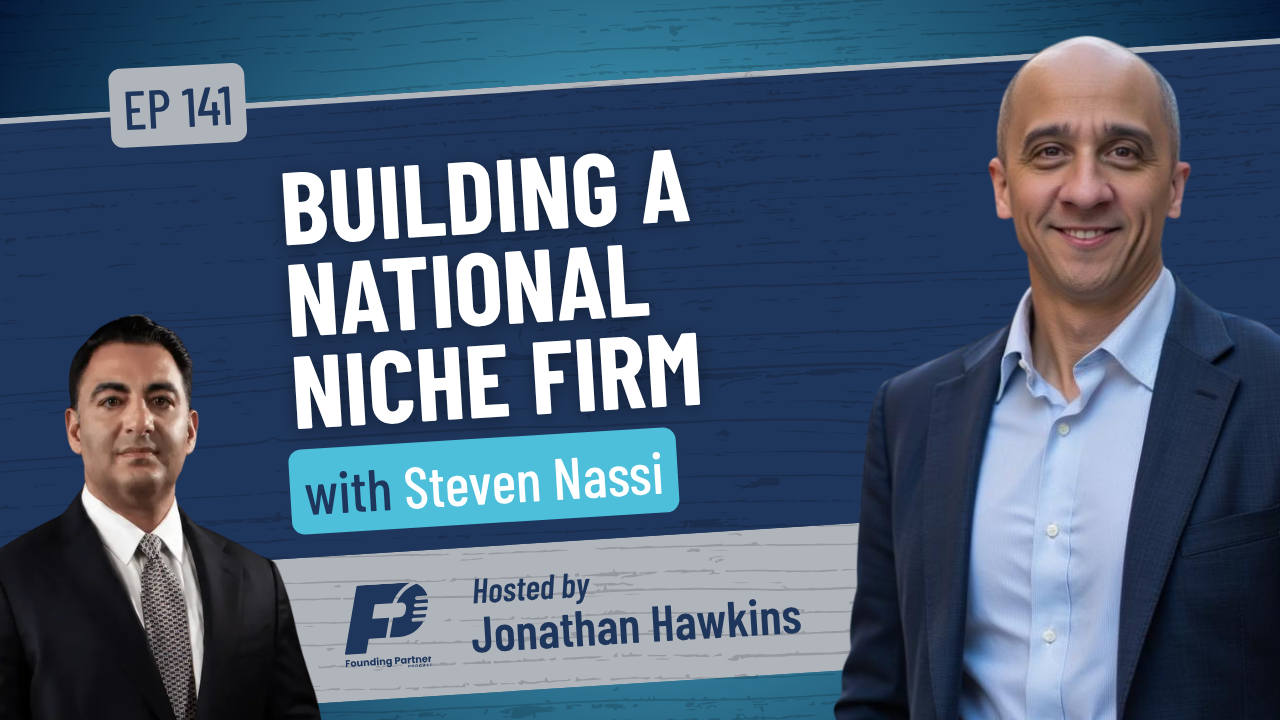
After nearly 24 years of practicing law, Steven Nassi made a significant change.
For most of his career, Steven represented insurance companies, handling coverage matters, litigation, and other complex disputes. He had built experience, developed a client base, and reached the partner level at established firms.
Then he decided to build something of his own.
Today, Steven is the founder of Rock Point Law, a consumer-focused firm representing clients in lemon law matters involving motor vehicles, including cars, trucks, boats, motorcycles, and RVs. The firm began in 2025 and is already building a presence across multiple states.
What makes Steven’s story especially interesting is that he did not simply leave an established firm to recreate the same practice somewhere else. He chose a different side of the legal industry, a different client base, and a business model that requires scale.
And he did it intentionally.
Client Service Is the Foundation
Steven spent much of his career working with sophisticated corporate clients, and one lesson followed him into his new firm: getting the legal answer right is only part of serving a client well.
Clients also need communication, reliability, and trust.
As Steven explained, every small interaction can strengthen or weaken your credibility. If you promise an update, you need to deliver it. If a client is trusting you with an important problem, the experience between engagement and resolution matters alongside the final result.
That philosophy became central to Rock Point Law.
For Steven, good client service is not simply about being responsive. It is about making someone’s life easier during a situation that is already creating financial and personal stress.
That thinking even influenced the firm’s consumer-facing trade name, Easy Lemon.
The promise behind the name is simple. Hiring a lawyer should help remove complications, not create another one.
Why Leave a Successful Legal Career?
From the outside, Steven already had what many attorneys spend their careers pursuing.
He had decades of experience. He had become a partner. He had a book of business and established clients.
But that did not mean the work felt easy.
Steven explained that life inside an established law firm often means operating within someone else’s institution, priorities, and systems. Over the years, he began thinking about what he had learned from both good and bad leadership.
Even difficult leaders, he said, can become valuable mentors when you study what works, what does not, and what incentives are driving their decisions.
Eventually, Steven began asking whether he could take those lessons and create something better.
The timing was not necessarily convenient. He had four children, including daughters approaching or already attending college. Starting over carried real risk.
But Steven came back to a simple question: If not now, when?
He knew he could not go back and start a firm a year or two out of law school. That opportunity was gone. What he could do was decide whether he believed enough in himself, the market, and the team he could build to take the risk now.
He did.
Finding the Right Legal Niche
Steven had never really handled lemon law cases before making the transition.
His decision to enter the space came after examining where his experience could create the most value.
He asked where consumers might be underserved, where his litigation background could translate, and whether he could deliver a better client experience.
Consumer law offered that opportunity.
Many of the firm’s clients may have little previous experience hiring attorneys. Some may have never needed legal help beyond something like a traffic matter or estate planning.
That makes trust especially important.
Steven also entered the space at a time when technology was giving law firms new ways to operate efficiently. Rock Point Law has embraced that opportunity, but Steven is clear that technology is not adopted simply because it is new.
Every system has to answer a more important question: Will this help us provide better service to the client?
If the answer is yes, it deserves consideration.
Scaling Without Losing the Client
Lemon law creates a unique business challenge.
Individual matters may not generate enormous fees, which means scale becomes important. At the same time, increasing volume cannot mean sacrificing the client experience.
Steven and his team have built a layered intake and case-management process around that reality.
Every potential matter is evaluated carefully. Intake professionals can gather information and documents, but an attorney reviews a matter before the firm takes the case.
That matters because accepting a client creates a responsibility.
Steven does not want people receiving a simple “we can’t help you” when the firm can provide more useful guidance. When possible, the team explains why a matter may not qualify and, when they can help, what the client can expect next.
As the firm grew, patterns also emerged.
The team learned which facts frequently appeared in strong cases, which issues often disqualified potential matters, and how those lessons could become repeatable procedures.
That is how experience becomes a system.
The goal is not to remove people from the process. It is to build a process that allows the right people to focus their expertise where it matters most.
Culture Starts With Who You Hire
For Steven, one of the most consequential responsibilities of a founder is hiring.
The earliest employees carry particular weight because the organization will eventually grow around them.
Steven does not define the right hire solely through credentials. A prestigious law school or perfect résumé is not the deciding factor. In fact, he values people who bring different experiences, particularly experience that helps them understand what it means to serve others.
Rock Point Law is, in Steven’s view, part of the service industry. The service happens to be legal, but the underlying responsibility is still serving people well.
That belief shapes the firm’s culture.
When new employees join, Steven encourages them to speak up once they understand their role. If they see a weakness, an inefficient process, or an opportunity to improve something, he wants to hear it.
As he tells his team, keeping a useful improvement to yourself does the organization a disservice.
That invitation creates ownership.
It also means leadership does not need to pretend it has every answer.
Steven describes himself as a believer in intellectual humility. He wants input from people with more experience and people with less. Team members participate in decisions, and even when leadership ultimately chooses another direction, Steven wants people to understand why.
Culture, in that sense, is not a handbook full of rules.
It is a group of people sharing the same values.
Building for Today and Tomorrow
Becoming a founder also changed how Steven thinks about decisions.
As a partner inside an established firm, his perspective was different. As a founder, he now has to consider not only whether a decision solves today’s problem, but whether the organization can stand behind that decision three or five years from now.
That does not mean a decision needs to last forever.
In fact, Steven believes success can sometimes become misleading.
Something can work for years and then stop working. One of leadership’s hardest responsibilities is recognizing when a system that has produced good results needs to change.
Sometimes growth requires fixing what is broken.
Other times, it requires having the confidence to change something that still appears to be working.
Know Yourself Before Your Business
When Jonathan asked what Steven would tell lawyers considering starting their own firms, his advice began somewhere deeper than business plans, technology, or marketing.
Know yourself before you know your business.
Understand what you want to do.
Understand why you want to do it.
And ask why you believe you can do it better than the way you are doing it today.
Those questions can lead to many more questions, but that is the point.
Steven also recommends leaning on mentors, friends, and people with meaningful experience. Some of the most useful guidance will not come from a paid consultant. It may come from someone who knows you well enough to challenge your assumptions.
And when it is finally time to build the team, take those early hiring decisions seriously.
The people surrounding a founder at the beginning can influence everything that comes afterward.
Closing Reflection
Steven’s story is not simply about moving from insurance defense to consumer law.
It is about taking more than two decades of lessons and asking what could happen if you finally had the freedom, and responsibility, to apply them yourself.
Rock Point Law is still a young firm. Steven readily acknowledges that more lessons will come as it grows.
But his approach offers something useful for any founder.
Growth does not have to mean chasing size for its own sake. Technology does not have to mean adopting every new tool. Culture does not have to mean forcing everyone to follow a list of rules.
Instead, you can build with intention.
Know what you value. Hire people who share those values. Listen to them. Serve clients well. Make decisions you believe you can still defend years from now.
Then remain humble enough to change those decisions when the time comes.
AND MORE TOPICS COVERED IN THE FULL INTERVIEW!!! You can check that out and subscribe to YouTube.
If you want to know more about Steven Nassi, you may reach out to him at:
- Website: https://rockpointlaw.com/
- Website: https://easylemon.com/
- LinkedIn: https://www.linkedin.com/in/steven-p-nassi-b76635a/
- Instagram: https://www.instagram.com/rockpointlaw/
Connect with Jonathan Hawkins:
- Website: https://www.lawfirmgc.com/
- LinkedIn: https://www.linkedin.com/in/jonathan-hawkins-135147/
- Podcast: https://www.lawfirmgc.com/podcast
Jonathan Hawkins: [00:00:00] So shifting a little bit, before I started my firm, I was a partner at two firms that had existed, had been there before. You know, I call it sort of existing platforms. And, you know, I guess technically I owned a piece so I was technically an owner. But I gotta tell you, from eight years of founding this firm and actually going through all the stuff you have to go through to actually build it, you wanna build the platform for people to join, it’s way different.
Like, my mentality is way different before and after. I’m curious if you’ve had a similar experience and maybe what have you learned that’s different now that you’re on the other side of building this versus becoming a partner in an existing firm?
Steven Nassi: Yeah, so true. You know, in the more traditional law firm setting, not all partners are created equal. And depending on what jurisdiction you’re in, the title of partner doesn’t always imply that you have [00:01:00] ownership interest in the firm. You may just be a contract partner. And the level of input or control you have over your own practice and the firm can vary greatly.
Welcome to the Founding Partner Podcast. Join your host, Jonathan Hawkins, as we explore the fascinating stories of successful law firm founders. We’ll uncover their beginnings, triumph over challenges, and practice growth. Whether you aspire to launch your own firm, have an entrepreneurial spirit, or are just curious about the legal business, you’re in the right place.
Let’s dive in.
Jonathan Hawkins: Welcome to Founding Partner Podcast. I’m your host, Jonathan Hawkins. This is a podcast where I get to interview law firm founders and hear about all the cool stuff that they’re doing. And today’s guest I’m real excited about. He’s done a lot of things that I like that lawyers do. One, one, he’s got he’s branded with a trade name.
[00:02:00] He’s really niched down, and he’s a high growth kind of firm. So those are the sorts of things I love to talk about. So, today’s guest is Steven Nassi. He is the founder of Rock Point Law. They specialize in lemon law claims. And they are growing fast. They’re in a lot of locations, and we’re gonna talk all about that.
So Steven, thanks for joining me today
Steven Nassi: Jonathan, thank you for having me, and it’s such a pleasure to be with you. I think I mentioned this to you a couple of weeks ago, but I’ve actually been a longtime listener of your podcast for I think a little over, over a year. And it wasn’t until a couple of weeks until after you and I were formally introduced that I connected the dots.
I’m like, “Oh my God, this is that Jonathan Hawkins.” it’s a pleasure to be on the podcast.
Jonathan Hawkins: Well, it’s, it’s, yeah, I’m glad you could be on, man, because, and I’m glad we met. I like what you’re doing. So, before we dive in, well, let’s, let’s start here. So just tell us about your firm, [00:03:00] what you guys do, where you’re located, you know, and how long you’ve been around.
Steven Nassi: Our firm focuses on representing consumers exclusively. And we represent consumers in you know, consumer-litigated warranty claims. Currently we’re focusing on the lemon laws that apply to motor vehicles, and that includes things like boats, motorcycles, RVs, et cetera. But really, the focus is on motor vehicles, just naturally by nature of how many cars are on the road, how many new cars are purchased, how many, you know, cars are sold every year.
And just like every other product, there are often issues. But with a motor vehicle, because it’s such an important part of everyone’s life, whether you’re a business and you rely on your truck to get to work and to do your work and, you know, satisfy your clients, or whether, you know, you’re just a mom and pop and it’s your car, it’s what you use [00:04:00] to take your kids to school and pick up the groceries and bring home the paycheck.
And for most people, for a lot of people, it’s a huge investment. You often have to save money for a long time. Even if you don’t have to save it, it’s a huge expenditure to draw on other resources. And it’s, you know, when something goes wrong following a purchase of a car, it has a really bad impact, a negative impact on people.
Oftentimes professionally, almost always personally, just by virtue of the aggravation, the financial impact that it has. And our firm focuses on representing consumers who are having such issues. The firm was started in 2025, so we’re just shy of our two-year anniversary almost. And yeah, we’ve, we have a presence across the country, numerous offices in various states and growing with a growing head [00:05:00] count of staff and attorneys.
And as I’m sure your listeners can appreciate, this is a type of this is an area of law where each individual matter may not generate a lot of fees, and therefore scaling is critical. And it’s critical In a couple different respects. Obviously, in order to be a successful business, be able to pay the utility bills and your employees and cover overhead, et cetera, it needs to be financially successful. But also, I think having the necessary resources and the breadth of experience and the staff that can service those clients will result in better client service. And, you know, this is one topic I will probably touch on a couple times during our chat ’cause I, I think it drives everything. [00:06:00] It’s, at least what our culture and what our principles are are founded in large part on client service, providing quality service to clients Being trustworthy, having credibility, and trying to, you know, make a client’s life a little bit better.
We still have to work within the confines of the law and the statutes and the remedies they make available to us. And sometimes even a grand slam successful victory in a case doesn’t adequately, you know, compensate clients or make them whole. But nevertheless, our, our job is to do the best that we can for clients, and that’s not just the function of the final result.
Obviously, that’s critical. If you’re not getting good results, you know, nothing else really matters. So that, that’s a given. But after that, I think there’s a lot of, [00:07:00] there’s a lot of different components that go into providing a good client experience, and we can touch, touch on that as we go along.
Jonathan Hawkins: Yeah. I definitely wanna dive into the scaling aspect because and especially, I mean, you’re not even two years old yet as a firm, and it just, growth is hard, and I wanna we’re gonna dig into all that. But before we do that, I wanna g- before you started this firm you were doing something completely different, I think.
Did you do lemon law type work before? And, you know, if not, what were you doing?
Steven Nassi: Yeah. So in some respects, what I was doing before really informs the firm that we have today and how we practice and how we do what we do. But in a lot of respect, it’s very different. I never touched a lemon case really before. Did handle quite a number of product defect cases. For the first 23-odd years of my career, I was a [00:08:00] litigator representing Fortune 500 companies most of them in the insurance industry and, you know, providing advice on coverage matters, on coverage litigation, monitoring underlying claims.
At the very beginning of my career, I, I did some professional liability defense work where I would… You know, when, when an attorney or an accountant engineer is sued for malpractice and if their insurance provides coverage for that claim, they need attorneys to defend them. So, I got my feet wet initially out of law school doing that kind of work, and I started at a firm that really just threw you into it.
I think, and this is gonna sound crazy ’cause it is crazy, but it was a different time, different type of place, different business model. But I think my third week at the firm I had to handle a deposition. It was daunting. It was really daunting. It was very [00:09:00] difficult. My adversary did not make it easy either.
I think I didn’t sleep for a couple of nights before just trying to prepare, trying to just talk to everybody I could, but I was kind of just thrown into the middle of the ocean. And, you know, thankfully with a lot of hard work and grit and some luck, I was able to not drown and swam. And little by little, you know, your, your, your swimming form gets a little bit better, and you can swim a little bit faster and more efficiently.
And that’s how it started. And then over the years, I just, Ended up developing an area of specialty within the insurance industry. For a while it was, you know, some specialty lines handling the insurance claims or the exposures that resulted from hydraulic fracturing. And, you know, fracking was a big thing for a number of years, focused on there.
Then in, in the energy sector and then following some really big catastrophic events in [00:10:00] Sandy and Katrina you know, my focus was more aimed at property claims. And then COVID really… Since 2020, COVID really changed the game, and a lot of the insurance work was focused there. And here’s, here’s where I think the similarities lie.
I learned through that, that experience how important it is to provide good client service. Yes, they want the right answer. That’s a given. You could do– You could provide the best client service, but if you’re not giving the right answer, it doesn’t really matter. But even providing the right service without the client, or providing the right answer without the client service being top-notch along the way is not gonna get you far.
You know, like in the insurance industry, claims folks or the general counsel, they need status updates and status reports, and they need it, you know, in a timely fashion. And if you’re gonna promise to get something [00:11:00] to them, you better get something to them. You know, every little decision either builds your credibility, makes you a little bit more trustworthy or a little bit less.
And there are no shortcuts. And can’t speak for other people, but at least in my career, success never came with one lucky break or one particular decision or one, you know, position. It was really a lot of small decisions over the course of many years that kind of one day you wake up and you’re like, “Hey, all right, I haven’t– I didn’t do so bad.
I, I achieved something, or I did well in this area, or I succeeded, or I made partner,” whatever it is. It’s really a bunch of small decisions along the way. And the discipline, it’s really a matter of discipline to view each decision from that lens and be mindful when you’re [00:12:00] making these decisions that, hey, what you’re doing is gonna have an immediate impact, of course, but it may also have a long-term impact.
And is this a decision that you can live with two years and five years down the road, both on an individual case and now as my role as you know, a founder of a law firm? Every decision at an institutional level Is gonna have ramifications down the road. And it’s, it’s very important to make the decisions that are not detrimental in the short term, but most importantly, are the right decision in the long term.
and obviously the hard part is what do you do when those two things conflict? And that comes down to judgment. And I tend to read a lot, I listen to a lot of podcasts. I’m a big fan of mentors and coaches at the professional area. And all those things are helpful, but, you know, when it comes to judgment, there’s really no [00:13:00] substitute for experience
Jonathan Hawkins: Well said. And it’s, it’s interesting. So you spend 20 plus years, all the decisions, all the steps, you make it to partner. You’ve got a successful career. You’re, you’re, you know, by all outward appearances, you’ve made it. And then I guess two years ago you’ve decided, hey, I’m gonna, I’m gonna push all that away.
I’m gonna do something completely different. So, and by the way, you had four, you had four kids, or you have four kids as well, so it’s not like you’ve got nothing to take care of. So I mean, that’s a huge pivot, huge decision. It’s not like I’m gonna start my own firm and keep doing what I’m doing.
I’m gonna start a firm and do something completely different. So what was the thought process and the decision-making to, to do this? What gave you the idea?
Steven Nassi: Ah, such a good question, and there’s so many ways I can answer it. I would say definitely was not financial. And I’ve listened to a lot of your previous guests [00:14:00] who’ve, who’ve touched on, you know, the same issue. I’ve had both the benefit and the curse of being a partner at a couple of different law firms, some firms that have been around for over a century, other, you know, more newer firms.
And, you know, life at a law firm, at least when you’re an up-and-coming associate or a junior partner, is never perfect. There are always things you love. There are always things you wish you could change. There’s always goals that you’re trying to achieve. And it was at a certain point where you know, you realize that, look, I’m working within the confines of an institution that has certain rules.
It has certain other interests, and those other interests, I don’t mean to imply that in any negative sense, but there’s senior equity partners at a firm who have a particular interest that at some point may not always align with, you know, the interest of the future of the firm or the future leaders of the firm.
[00:15:00] And there’s also a lot of things that I learned. I mentioned, you know, the importance of mentors a couple minutes ago. And mentors come in a lot of different ways. It’s not just the brilliant friend or the guy who took you under his wing and showed you the ropes or, you know, that wise person that always has great guidance and insight to share with you.
Those are wonderful when you can get them, and everybody should always be on the lookout for them. And if you ever find one, don’t let it go. But, you know, even bad leaders can be good mentors in the sense that you can understand what works or what doesn’t work, what you like and what you don’t like.
And to take that one level deeper is trying to understand what incentivizes those policies or those decisions. Obviously, nobody wants to institute rules or limitations that people don’t like or that make, you know, working at a firm you know, difficult. There’s, there’s gotta be a reason for those, for [00:16:00] those decisions or those requirements.
And I think if, if one can understand the incentives behind those decisions and figure out, all right, well, you know, the goal may be admirable and honorable and something I want as well, but maybe there’s a better way to achieve it without causing the hardship or the limitations or more sacrifice than is necessary from everyone who’s put their faith and trust in you to come work with you and for you and help you grow your business.
And after being a partner at a couple of different firms I thought I can, I can do that. And, you know, part of it is also the freedom, and by freedom I don’t mean, you know, the freedom not to work on Fridays. Obviously, that’s lovely every now and again. But it’s the freedom to choose where you spend your time, what you focus on, and what things are priorities.
At [00:17:00] many places, like, unless you’re, you know, top equity partner or along that levels what you’re working on are other people’s priorities and things that are important to them and goals that they’re trying to achieve. Which is not always bad. You know, as an, as an associate, I think I learned a great deal working for partners especially ones that were good about the communication and helping me understand what are we trying to do here and why are we trying to do it here, and what’s the goal?
What are we gonna get out of this, and how is it gonna make us better attorneys and strengthen the client relationship next year and the year after that? And I, I thought that if I could surround myself with the right people, which is another really important thing when starting a business, at least this business, surrounding yourself with the right people.
I thought if I can do that, I think I, I at least know the issues where I can, with, with the right input and [00:18:00] analysis and team b- around me, make a decision that could really create a firm that provides top quality service to clients, get good results, and doing so with excellent client service.
And that’s, that’s really– that’s our brand, top quality legal service with excellent you know, client service. What I mean is, you know, the providing good lawyering on cases and then the client service that comes along from, you know, between the engagement and the conclusion of the case
Jonathan Hawkins: So, so when you, earlier in our conversation, when you described what your firm does, and I’m just gonna call it Limon Law ’cause that’s just eas- easier, easier for me to explain. You said right now this is what we focus on, which le- led me to believe maybe you’re thinking down the line there may be some other areas that you expand to.
It is, you know, when you started the [00:19:00] firm again, sort of why did you start with Limon Law and are you thinking about other areas maybe down the road? Is, is that part of the bigger… Now you don’t have to give, you don’t have to show your cards or your secrets here, but I’m just curious
Steven Nassi: So why did we start In Lemon Law? I really settled on this area of law after a lot of reflection, you know, trying to understand myself, where my strengths lie, where my talents can be valuable, and seeing Which demographic is maybe underrepresented or doesn’t have access to great legal talent when they need it?
Number one. And number two, is there an area of law where I can do that better than most of the people who are, who are out there? And there are some great firms doing this type of work. I don’t at all mean to you know, cast shade on, on my competitors. A lot of them are, are great, wonderful, seasoned attorneys.
But would I be able to do it based on what I’ve learned, what I [00:20:00] know? Can I do it in a way that really provides a better product? And we– I also had the great fortune of doing this at a time where there were new technologies available to the legal industry that weren’t available five years ago, 10 years ago plus.
AI obviously is the first thing that’s gonna come to everybody’s mind. Yes, but even beyond that, we were able to build our foundation as… We, we were a very tech-forward firm and not just for the sake of being tech-forward or having the latest technology. Every decision, every software or systems we, we adopt is, is with intention and for a reason.
And, you know, the main question is whether it’s gonna result in a better quality of service to the clients. And if it helps us move that needle, we do it. And, and by virtue of just the technology that was available and the [00:21:00] great team I had around me that was able to understand and tailor what was available to what we need it really seemed like an area that I could do something here, and I could do it differently and better than what’s available to a lot of people.
And that’s what ultimately drove my decision to focus on lemon law and consumer protection plaintiff-side consumer protection generally. Now, as for the future in other areas of law yeah, I, I do anticipate that at some point we will expand beyond just the consumer protection statutes that apply to automobiles.
I think there are a lot of ancillary claims and issues that both apply in the automotive industry, but also, you know, o-other areas where your regular consumer, not a business, not someone whose, you know, profession just requires them to always [00:22:00] engage with outside counsel, either on litigation or deals, but people who may have never hired an attorney before Really, someone who’s never met a or had to hire an attorney except for perhaps to create a trust or go to traffic court for them.
It’s very daunting. They’re not familiar with the process. They don’t know who to trust, what’s the difference between a good attorney and a bad attorney. And I think that’s the demographic I, I think we’re very good at helping. And I, I think there are other areas that will, that will present themselves to us.
But again, it’s not– I’m really not interested or focused on growing into other areas just for the sake of growing. I’ve always found that, you know, growth for the sake of growth can get you into trouble. If you’re growing with intention and because it, it helps your… helps you achieve your goals and is aligned with your principles, and you find the right [00:23:00] people, you know, then don’t pass that opportunity up
Jonathan Hawkins: Well, well, I like y- you’ve obviously you made a decision you wanted to start a firm, and it, and it sounds like you were very thoughtful in terms of what area to choose. And I like, you know, the old red ocean, blue ocean approach, where if you don’t wanna swim in the red ocean where everybody is you wanna go to a blue ocean where there aren’t as many people and not less competition.
And it sounds like you were very thoughtful in thinking about this and also knowing what you’re good at and what you like to do and all these things. And, and you found sort of the, the Venn diagram of, hey, this is, this is an area we can go. And for people out there that may be thinking, you know, I wanna start a firm, I mean, obviously you can go into a red ocean and, and do, you know, business litigation along with thousands and thousands and thousands of other lawyers, or you can try to do something a little different.
So I like that approach. I thought it was a really, really thoughtful approach. So the name, [00:24:00] so you, you decided, you know, sort of the niche area and you’ve, you’ve built around that and then you… I love trade names. So anybody that talks to me and listens knows that I love a g- a good trade name. So tell me about the thought process behind the name and, and what does it mean?
What, all of that
Steven Nassi: Yeah. the idea behind the name of the law firm, it’s not that I would say interesting, but I’ll touch on it and then I’ll go to our trade name. So Rock Point Law I knew I didn’t want my name on it ’cause I wanted my team, the other attorneys, the staff to understand that this is not about one person.
This is not built on me or around me. What’s gonna drive the success is just as dependent on all the other components that go into it as it is me. and I wanted– I, I thought it would be, it may obfuscate that fact if, you know, the name of the firm w- when people clock in or when they sign off, [00:25:00] it’s Nassi Law Firm or whatever.
So I didn’t want my name on it. And Rock Point kicked it around discussed it with my girls, and we thought it, it presented strong and, and established and liked the name and it stuck, so we went with that. Now, our trade name w- w- when we do our marketing go by Easy Lemon. Now, that name was very intentional.
A lot of thought went into it, but it was very, It was very intentional how we landed on Easy Limit. And the question was, well, well, how are we gonna distinguish ourselves? What are we telling clients we’re gonna do for them, and w- why should they hire us instead of somebody else? And You know, one thing that was very important to me was to convey to clients that we’re here to make your life easier, not to add a layer of complication. You have a problem. You’re hiring somebody to help you. [00:26:00] It’s that person’s job to make your life easier, to make the process easy, not to add to your stress, to allow you to sleep a little bit more comfortably at night knowing, “Hey, I may have a problem, but at least I have a good attorney, trusted counselor who’s watching over this for me, who’s handling this for me.”
And I thought Easy Lemon would drive that home, would be memorable, and that’s how we ultimately landed on that name. Now, the only negative part to that is if you Google Easy Lemon, you’re gonna tend to get a lot of easy lemon pie recipes. But if, if Google cooperates with us, hopefully soon when you Google Easy Lemon, you’ll be you’ll– it’ll just take you to our website and our firm and not lemon pie recipes
Jonathan Hawkins: Well, hey, those are good gift ideas on brand. You can give those out.
Steven Nassi: Yeah
Real quick, if you haven’t gotten a copy yet, please check out my [00:27:00] book, the Law Firm Lifecycle. It’s written for law firm owners and those who plan to be owners. In the book, I discuss various issues that come up as a law firm progresses through the stages of its growth from just before starting a firm to when it comes to an end.
The law firm lifecycle is available on Amazon. Now, back to the show.
Jonathan Hawkins: So going back, so you had this successful career, you’re a partner. Obviously, there’s something that you wanted to try to do your own thing, so you can build it sort of in your image. What, you know, the, all the things that you saw that you wanted to change in some of your past firms, like we can just start fresh.
But still, you know, that’s you had it. So why do this? Why take the risk? Like I mentioned, you had, you have four kids. You know, you could have just stayed on easy street. Why build a firm? ‘Cause building a firm, starting a firm’s easy. You just have a law license, internet, you can start a firm.
But actually growing one, building one, that’s not easy. So why take the risk? Why do it?
Steven Nassi: I’m [00:28:00] gonna disagree with one thing you said, which is that I was on easy street. I don’t think, at least in my career, other areas of law may be a little bit different, or other firms may have been a little bit different, but I never felt like I was on easy street. Even when I had a client base and a book of business and steady work, it was never easy.
It was never easy. It was always the pressure to deliver, to deliver on time, to you know, help the other people I’m working with achieve their goals and satisfy their priorities and then also get to mine. So it never felt like I was you know, on an easy street. And although from a timing perspective and financially may have not been the best time to do this, and that’s putting it very mildly.
At the time we started Rock Point, I had one daughter in college, now I have two. I have another one who’s on her way, and a [00:29:00] fourth that’s not far behind. And, you know, the cost of living and everything else that goes along with it, risk was this was probably not the best time to roll the dice and take such a huge risk. On the other hand, there would probably never be a better time. I can’t, you know, I couldn’t turn back time. I couldn’t say, “Oh, I wish I’d done this when I was a year or two out of law school.” Right? That ship had sailed. Too late for that. I’m not gonna cry over spilled milk, but I knew it was something I wanted to achieve.
You only have one opportunity to do these things. Ultimately, it was like, if not now, when? And do I feel strongly enough? Am I confident enough in my ability, the state of the market, and the team that I can build? Am I confident enough to, to take this risk? It was not an easy decision, but ultimately I feel like it was the right one
Jonathan Hawkins: [00:30:00] The, the other thing, you know, it’s, it’s one thing to start a firm and say, “Yeah, we’re just– we’ll just do New York.” It’s another thing to, to start a firm and say, basically, “We’re gonna do the entire United States.” So, but I love it, man. I love it. I, I love it. And so you’ve, you’ve grown a lot and fast and, and not just in one location, in a lot of locations.
And, you know, it’s, it’s hard enough to manage one office and a growth in one location when you start adding other locations and, and like you said, it’s a consumer-facing firm. There’s the number of inquiries you get, we’ll get to that in a minute, I can’t imagine, and it’s gotta be high. It’s gotta just be the, the amount of people that are calling in or, or emailing in, it’s gotta be high.
So, how have you managed sort of the very quick growth in all facets of the firm?
Steven Nassi: Yeah. Well, we’re not everywhere yet. [00:31:00] We, we, we don’t operate in every state, and we don’t have an office in every state. But I knew when we get into this, as you mentioned, there’s a lot of, a lot of inquiries. There are a lot of clients that need help. So, whether it’s through coordination and working with other law firms, or sometimes we have local counsel or co-counsel that we may partner up with.
But if a client needs help, and it’s in this area of law where I think we could get them a good result and provide top-notch legal service, I try to help people. I try to help people. And again, not any individual case is gonna break the bank one way or the other, just by virtue of the fact that, you know, these cases are rarely in the six figures.
So it’s not about any one individual case. It’s about gaining credibility, gaining trust in this [00:32:00] community. Have a lot of relationships with other firms who do the same work, and there are a lot of times where we work together. Obviously, there’s some degree of competition, but there’s also a lot of cooperation and collaboration.
And you know how we do it, it’s, it’s a lot of tough decision-making along the way. A lot of, you know, if you build it, they will come versus should we wait until they come before we build it? And goes back to, you know, everything coming down to judgment. And as, as a founder or leader in your field, what informs your judgment?
And in that recall– in that regard you know, I, I kind of know where some of my strengths are. For example, I think empathy is one of them. When it comes to judgment, I’m, I’m a really big believer in intellectual humility. I like to be informed by those who have more [00:33:00] experience, right? And even people who have less experience.
I wanna hear everyone’s suggestion and idea And, you know, when we make a decision as an organization, sometimes there are difficult decisions, there may be disagreements, but ultimately at, at the end of that process, when a decision is made, it’s very important to me that my team understands why the decision was made in that fashion and buys into it.
Even if they disagree, they can say, “All right, I think it would would’ve been better to go that route.” But this was discussed, my idea was considered. I understand the reasons why we didn’t do it this way. And to have that buy-in is very important in an organization. It goes to culture, which is, you know, it’s probably one of the most common things themes in, in your podcast, in your interviews is about culture [00:34:00] and how important it is.
And I think, you know, letting your team feel like they have a stake and ownership in these decisions is important. Certainly important for us as a culture. I, you know, one of the things when we do onboarding and when we hire people at whatever level, from senior attorney to like a new intake or document collection person, whatever it may be, at whatever level, during the intake process, there’s one thing that I always make sure I convey personally, and that is, “Hey, once you get in here and you get your hands dirty and you kinda get a feel for what’s going on and you’re comfortable doing what you’re doing, if you see a weakness, I wanna know.
If you see something that can be improved upon, please tell me. That’s why you’re here for. I’m hiring you. You’re now part of this team because I value your judgment, and I think you’re, you can do great things here. And if you have ideas of how we can improve or make ourselves better [00:35:00] and you keep it to yourself, you’re doing a disservice to yourself and to us as an organization.”
And it’s, it’s, I, it’s comes up very often in our team meetings. We always go around if we’re rolling out a new systems, a new procedures, protocols or discussing strategy. I wanna hear different ideas. Ultimately, we’ll need to make a decision but it’s, it’s really important to make sure people participate in that decision-making process
Jonathan Hawkins: So I wanna come back to hiring and, and culture and all that. I think it’s very important, especially in a fast-growing firm. But I wanna go back to the intake piece real quick and, and sort of wrap that up. So you came from really a defense-oriented firm where you may have a lot of clients, but you know, not like you have now probably.
And you switched, you switched to the plaintiff side, [00:36:00] and then you, you’ve switched to practice area where there’s a really high intake volume. How, how did you learn how to deal with that? I guess number one, you gotta learn how to turn on the volume, but then once it starts coming in, how have you made, you know, how, how did you figure that out coming from a very different background in terms of law practice?
Steven Nassi: In the beginning it was really just Us was reviewing every case, every submission, every lead that would come in and figuring out what’s a good case, what’s not a case, and why is it not a case. And, you know, I don’t wanna just tell a client, “Yeah, nope, sorry, can’t help you.” When possible, I like to give them the courtesy and the respect of explaining why it is that we can’t, whether it’s because it’s past the statute of limitations or whatever other thing may be.
And then during that process, you pick up on commonalities you know, common issues. [00:37:00] What’s always present in a good case? What’s always, you know, a common denominator in leads that are not cases? And little by little, you start developing these operating procedures, and you can help train other people that can look for the same things.
Ultimately, on the intake process, you know, and it’s, it’s multi-layered, at least for us. No ca– we don’t ever retain a case before an attorney has put eyes on it. Some of our intake team are very experienced in asking the right questions, obtaining the relevant documents, you know, kind of helping flesh things out.
But ultimately, there’s really no substitute for an attorney eye before we retain a case. ‘Cause retaining a, a client and beginning an engagement is an important decision. Once you take that step, you assume certain responsibilities to that client, and we don’t [00:38:00] take that lightly. Obviously, you know, you gotta figure out how to do it with a large volume coming in the door, and may that be you know, your biggest problem that you have a large volume.
But nevertheless, when it does– When you do get an inquiry from a client of, “Hey, I’m having these problems” or, “I’m having these issues, can you guys help me?” We got a job to do. First is to s-determine whether we can help them, and if we can’t, let them know we can’t and why. And if we can, you know, educate them about, “Hey, yes, I think we can help you, and these are the issues, and this is the law, and I think, you know, the best strategy for handling your case is ABC, and this is how we plan to execute that, and this is what you can expect the next couple months to look like for you.”
Yeah. A lot of it is obviously driven by our attorneys but it certainly doesn’t begin and end there. You have, you know, teams of [00:39:00] paralegals and legal assistants and, you know, client relations specialists and document collection and intake and, you know, everyone is very trained and attuned and an expert in their area There’s obviously at least one or two people, always the attorney.
A lot of times it’s an attorney and a more senior level paralegal or legal assistant or litigation paralegal as the case may be, who are always involved in a particular case. But different activities may call on different folks from our team to, to help address those needs, whether it’s collecting the documents from a dealership, client doesn’t have it, or something’s been lost, but we need it.
Communicating with manufacturers on certain issues, and I don’t wanna bor- bore your audience with everything that goes into like a lemon law claim, but there are a lot of different activities. In some instances a manufacturer is entitled to a final repair attempt to see if they could fix the problem [00:40:00] before the claim goes further.
Coordinating that, and there are a bunch of different parties involved, the manufacturer, the dealership. If the dealership is bringing on somebody, an expert, ’cause of a, a particular issue from a different location, coordinating with everybody, scheduling those things, and doing it in a way that doesn’t make the client’s life hell requires a lot of people
Jonathan Hawkins: Yeah, it sounds very complex. I’m, I’m sure there’s a very complex system on the other side of this, and a- and again, you wanna make it se- as seamless as possible for the clients, which, you know, really makes the thoughtfulness… I mean, I, I can’t imagine what’s gone into designing this thing. And it’s, and of course it never ends.
You’re always tweaking it. But, so I wanna go back to the culture and the people, which 100% agree with. So important in any organization, particularly a growing one, which means hiring is extremely important and hiring for the [00:41:00] culture. But also when you’re growing fast, hiring is important because you just, you need people, you need people to help.
So how do you and, and your firm balance the need to hire people maybe sometimes very quickly with, to make sure we hire the right people that, that fit our culture and that, that we want in our firm?
Steven Nassi: Yeah. It’s, it’s one of the most important facets of my job and the job of, you know, senior leadership at I think any organization, is hiring. It– Especially in the beginning as a founder when you’re starting a company, especially at the beginning, the folks that join you in the beginning and around whom you build the rest of the team and organization, it is so important.
So important. And I, I don’t know if I, I would say I have any particular criteria. So for example, even when it comes to, like, attorneys, [00:42:00] doesn’t disqualify you if you didn’t graduate from a top 14 law school or were, you know, magna cum laude when you graduated. If you took time off between college and law school, if you did something else before, you know, applying to us, didn’t disqualify you.
I, in fact, like those things. I, I look favorably on people who’ve had a diverse range of experience, have been in different facets of the service industry, which I really think ultimately what I do. I’m– I am in a service industry. We– The service we provide is legal in nature, but nevertheless, this is a service industry.
It’s really important, and I– The, you know, the most difficult decisions we had to make early on were those initial hires. Now, thankfully, whether by luck or, or I don’t know what it was, I was immensely fortunate. I wanna say just about [00:43:00] everybody, if not everybody that we hired during the first three to six months of the firm is still with us, and their role and responsibility has only grown.
And I really can’t overestimate how fortunate I am in that regard, that we were able to get the right people with us in the beginning. Especially, you know, if you’re good and, and you have a great resume and ton of other options, and you have a job and your current employer may not wanna lose you, it’s, it’s hard to attract those people.
You know, they’re taking a risk. “Hey, I…” You know, “You didn’t exist two months ago. Now you want me to leave my job and come work for you? You know, I’m, I’m– Why would I do that?” It’s it’s a, it’s a tough sell, but we were able to do it. And as we’ve grown, hiring people has bec- has become a little bit easier, and I’ll explain why.
Even as, [00:44:00] as our need and the number of hires we’ve had to make is, is I think speeding up all the time The good people that we have around us have been the best source of bringing in other good people that fit with the culture, that care about quality, that know why it’s important not to just, you know, do the task and mark it off your to-do list, but to do it well. Nobody else may ever see it, but it matters.
It matters whether you care about quality and executing your job, even if nobody will ever see it and it’s just your eyes. And, you know, it’s a lot of our hires have been through referrals from our other employees. And I have someone really good, you know, a great legal assistant, and I think they have a bright future and they have all the right tools and they really fit into the culture.
And I’m like, “Hey, you know anybody else like you?” And we’ve hired [00:45:00] a lot of people that way, a lot of people. But it’s, it’s very difficult. Every decision is very deliberate, you know, at whatever level. I like to, again, as a as tipping my hat to the intellectual humility and how important that is when we interview someone before making a final decision, I like them to speak with the o- with the other team members, the folks that they’re gonna be working with, sometimes other folks people who may be training them or roles that I may envision this particular hire to ultimately grow into.
And I want feedback from those folks as well. There have been a lot of times where… And I met with somebody, wasn’t particularly moved, and I was like, “Let’s keep looking.” And my team comes back and says, “No this– You’re… You know, this person’s great. They’d, they’d do wonderful in this system, and they’d fit in, and we should hire them.”
And I can’t think of a time where they’ve been wrong And, and those opinions are really [00:46:00] important and when you’re making those decisions. But at that outset, you know, at the nascent stages of creating your organization and bringing in your number two and number three, that’s really difficult. But you should take it very seriously
Jonathan Hawkins: I cannot agree more. I think y- you’ve really hit on something there, which one of the reasons I think, there are lots of reasons, but one of the reasons that it’s hard to really grow a firm is early on, y- you know, you can see the vision, you see it, you see where you’re going. But to people on the outside, they see this brand new organization, no track record, and they see nothing but risk.
And they’re like, “Why would I quit my job and go over here and maybe not have a job in six months?” And whether they vocalize that or even think it in their mind, you know, it may, may be subconsciously too, I don’t know. But it’s, you know, part of what you gotta do is you gotta convince those early people to come.
And, [00:47:00] and like you said, getting the good ones, it, it’s not easy. So good on you, man, for, for finding the right people early on
Steven Nassi: Yeah. And in the beginning it was really, It was, it was very personal, both the decision and what I was selling wasn’t just a paycheck but my-myself. So it was very important for me to meet with, with the new hires individually, being totally honest about what I’m trying to do, what I’m trying to achieve, what my strengths are, what role I think they can play.
And if they’re gonna buy in, they need to buy in ’cause they’re, they’re good with that and they believe in me. If they’re not as great as they are, maybe the best decision is for them not to join the organization, you know? But if, if you’re okay with what I’m telling you and what I’m showing you and what you can see you’re getting with me and you want the opportunity, and it worked. I’m very thankful that it worked
Jonathan Hawkins: Well, good work. So shifting a little bit, [00:48:00] before I started my firm, I was a partner at two firms that had existed, had been there before. You know, I call it sort of existing platforms. And, you know, I guess technically I owned a piece so I was technically an owner. But I gotta tell you, from eight years of founding this firm and actually going through all the stuff you have to go through to actually build it, you wanna build the platform for people to join, it’s way different.
Like, my mentality is way different before and after. I’m curious if you’ve had a similar experience and maybe what have you learned that’s different now that you’re on the other side of building this versus becoming a partner in an existing firm?
Steven Nassi: Yeah, so true. You know, in the more traditional law firm setting, not all partners are created equal. And depending on what jurisdiction you’re in, the title of partner doesn’t always imply that you have [00:49:00] ownership interest in the firm. You may just be a contract partner. And the level of input or control you have over your own practice and the firm can vary greatly.
There are some firms with dozens of partners who are owners, but all the decisions rest with one or two or small, very small number of individuals. my perspective has definitely changed. I did not… You know, right now a lot of the decision-making and the thought process and the considerations and the judgment calls that go into what I deal with every day is trying to peek through you know, trying to forecast what the future looks like, may look like, and whether the decision I’m making today is not only in the best interest of the firm and my team as of this moment, but is it a decision, is it a move, is it a change [00:50:00] that we can stand behind in three or five years down the road?
I don’t try to think a lot past that because, you know, even when you make the right decision that’s correct for both today and five years from now, it may not be the right decision six years from now, and you need to be able to have the confidence and the information necessary to realize when to change.
I think success can office- often be a misleading indicator that you figured it all out. You know When things break down, they– it worked at some point. It was working until it wasn’t working. And, you know, the job of a, of a good leader is to figure out when it is you change something that appears to have been working for years, and it’s a difficult decision to make. And I think a part of success is knowing when to change things that are working. Which is why I try to focus on what’s the [00:51:00] right decision today? Is it something we can stand behind in three to five years? And sometime between now and three to five years from now, we will reevaluate, and if we need to make any adjustments, any adjustments, we’ll have another discussion like this and hopefully make the right decision again.
I think the focus on, on the long term and the big picture view is a lot more front and center for me in my current role than it was in my role as partner at my prior firms
Jonathan Hawkins: It’s interesting you mentioned, you know, at some point something’s gonna break. No matter how good it’s going, something’s gonna break and you’re gonna have to deal with it. But it’s interesting that you said sometimes you have to decide to break something that’s working. And those are some of the kind of decisions you have to make.
But so you’ve been at it for a couple years now. I’m sure you’ve gone through ups and downs and all sorts of things. For others out there that are maybe thinking about taking the leap any advice, any lessons you’ve learned to date? And I know you’re gonna keep learning lessons.
It’s not [00:52:00] like you’re gonna stop. But as we sit here today, what are some things that you would tell others that are thinking about it to think about before they make the jump, or if they’re early on in the process?
Steven Nassi: I’d say know yourself before you know your business. Figure out what you wanna do, why you wanna do it, and why you think you could do it better than how you’ve been doing it. Those are all difficult questions and will lead to an exponentially larger number of important questions, but I think it’s really important to have that conversation with yourself.
And if you’re fortunate enough to have the resources of good mentors and friends and people with experience around you, them as well. A lot of time, the most valuable piece of advice you get won’t be from a consultant, but it’ll be from mentors and friends with good experience and a good track of success and don’t overlook those things, and don’t take them for granted. And Then although I really, I know we’ve [00:53:00] culture has come up numerous times in our talk today and comes up often in your other interviews, but I guess it comes up ’cause it’s so important, and I hope our listeners can appreciate that culture isn’t about just instituting a set of rules that you like and forcing everybody to comply with them and saying, “That’s our culture.”
I think culture is more about having people share your values. Good client service is an important value. If somebody doesn’t believe in that, isn’t focused on that in every activity they do, they’re not gonna fit in our culture. They may be a wonderful person, maybe someone I’d love to have a beer with every day, but culturally, for the firm, for our business, they’re not gonna fit if you don’t believe that that’s a core– that’s at the core of everything we do, is providing great client service.
And, and lastly, I would say if you’re starting out and, and you’re starting out by [00:54:00] yourself, or if it’s you and a- another partner who is starting a firm those initial hires, the initial people you surround yourself with, both at the attorney level, at the executive level, and everybody in between, are super important, are super, super important.
Do not make those decisions lightly. Appreciate how important they are. Try to avoid being penny-wise and pound-foolish when it comes to those types of decisions. You know, think big picture and long term, I don’t know. I can’t think of anything that is– doesn’t sound cliché at this point or our listeners haven’t heard in other instances.
But try to do it with the right mindset and, and with the right values in mind
Jonathan Hawkins: Well, Steven, this has been fun. I think, you know, in a, in about three years we’ll have to get you back ’cause there’s gonna be a whole new set of lessons you’ve learned in between now and then, and we can, we can talk about those. But thanks for coming on and sharing your journey and, and I like what you’re doing, man.
I think it’s really cool. So for [00:55:00] people out there that wanna get in touch with you, what’s the best way for them to find you?
Steven Nassi: You can find us at rockpointlaw.com. Take you to our firm. If you wanna learn more about the lemon law process, or if you have a case, or if you just wanna get a peek at what we’re doing, you could also visit easylemon.com, which is our customer interface website for the lemon law matters
Jonathan Hawkins: Awesome. Well, thanks again
Steven Nassi: Jonathan, thank you. I really enjoy your podcast and wishing you continued success as well
Jonathan Hawkins: Thank you. Greatly appreciate it
OutroUpdatedWebsite-1: Thanks for listening to this episode of the founding partner podcast. Be sure to subscribe on Apple podcasts, Spotify, or wherever you get your podcasts to stay up to date on the latest episodes. You can also connect with Jonathan on LinkedIn and check out the show notes. With links to resources mentioned throughout our discussion by visiting www.lawfirmgc.com. We’ll see you next time for more [00:56:00] origin stories and insights from successful law firm founders.