Building a Firm Through Relationships with Kurt London
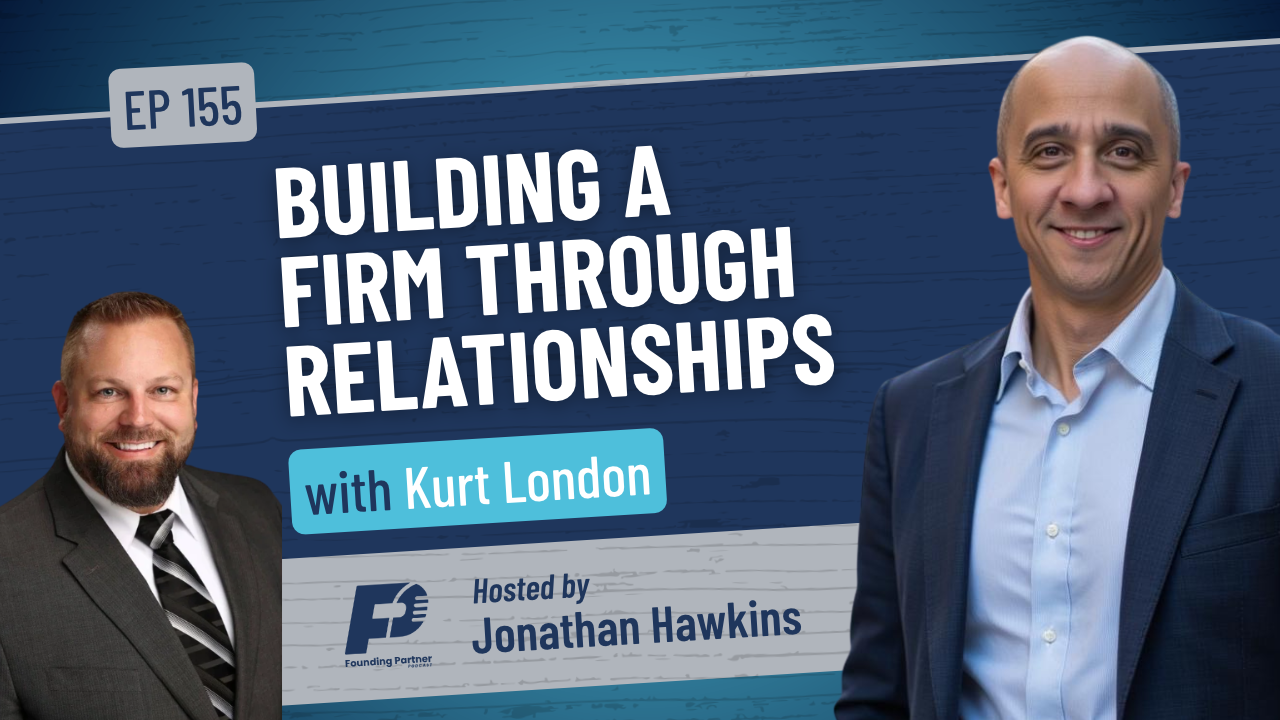
What does it really take to build a personal injury law firm from nothing?
When I sat down with Kurt London, co-founder of London Harker Injury Law, I knew we’d have plenty to talk about. We’d connected on LinkedIn and recently caught up at a legal conference, but I wanted to hear more about how he’d grown his firm so quickly without relying on the massive advertising budgets we typically associate with personal injury practices.
Kurt and his partner, Bronson Harker, opened their doors in September 2023 with zero clients, one paralegal, and a shared vision for practicing law differently. Today, their firm has four attorneys, approximately 13 full-time team members, and a steady stream of referrals.
But what interested me most wasn’t just the growth. It was how Kurt approached the business from the beginning, putting relationships, client service, and a willingness to take on difficult cases at the center of everything.
And, as it turns out, sometimes building a recognizable brand is as simple as drinking your favorite energy drink.
Starting With Nothing but a Vision
Kurt didn’t grow up dreaming about becoming a law firm owner. His father was a judge, and entrepreneurship wasn’t something his family had emphasized.
He spent years working at two of Utah’s largest personal injury firms, Robert J. DeBry & Associates and Craig Swapp & Associates. Those experiences taught him how the business worked, but they also helped him recognize what he wanted to do differently.
He believed clients deserved to come first, even when doing the right thing meant sacrificing potential profits.
Eventually, he realized that building his own firm might be the only way to practice according to those principles.
But starting a personal injury firm comes with a financial challenge that many attorneys underestimate. Unlike practices that bill clients monthly, personal injury firms may wait six, twelve, or eighteen months before receiving payment on a case.
Meanwhile, employees still need salaries, rent still comes due, and expenses continue accumulating.
Kurt’s partnership with Bronson provided a practical solution. Bronson brought the financial resources, while Kurt took responsibility for running the operation.
Even with that arrangement, the financial reality was significant.
“Our first year in the bus- in business, we were in the hole $700,000.”
By the second year, the firm had become profitable, although only slightly. Profits increased in the third year.
That kind of investment requires more than optimism. It requires a clear understanding of how long growth can take and the financial discipline to survive while building something sustainable.
Why Relationships Beat Advertising Budgets
One of my favorite parts of our conversation was hearing how Kurt found his first clients.
When he left his previous firm, he didn’t bring a single case with him. Instead, he started with a legal pad and a list of approximately 80 people he knew, including attorneys, doctors, chiropractors, and other potential referral partners.
Then he started making calls.
He invited people to coffee, scheduled lunches, and let his network know he was opening a new practice.
The results came almost immediately.
During the first month, the firm began signing approximately 10 to 15 cases. That eventually grew to around 25 to 30 cases per month, almost entirely through referrals.
And Kurt didn’t need an enormous advertising budget to make it happen.
His approach is something he jokingly calls “bro marketing.”
Rather than treating networking as a formal business obligation, he builds it around activities he already enjoys. He hosts barbecues, gets together with friends, and invites referral partners to float Utah’s rivers.
The idea is simple.
“My thing is, is if you make friendships, then business follows.”
I think that’s an important lesson for founders who feel intimidated by larger competitors spending heavily on advertising.
You might not have their marketing budget, but you have something valuable that money can’t automatically replicate: your time, your relationships, and your willingness to show up.
Turning LinkedIn Into a Referral Engine
Kurt’s LinkedIn journey started with frustration.
After hiring an SEO company, he wasn’t seeing the search visibility he expected. His website wasn’t ranking the way he wanted, so he began posting on LinkedIn to increase his online presence.
What started as an experiment became a major part of his marketing strategy.
He began sharing personal experiences, interesting legal situations, and stories that revealed who he was beyond his professional credentials.
Over time, those posts helped him become recognizable to attorneys across the country.
But here’s what I found particularly interesting.
A lot of personal injury attorneys dismiss LinkedIn because their potential clients aren’t necessarily looking for legal representation there.
Kurt sees it differently.
“For me, all of my referral partners are on LinkedIn. That’s the key.”
Think about it. An attorney in Pittsburgh might have a client injured while visiting Utah. That attorney may not know a personal injury lawyer in Salt Lake City, but if they’ve consistently seen Kurt’s posts, they already recognize his name.
Kurt estimates that LinkedIn generates approximately one or two referrals per month for his firm. With an average fee of around $18,000, those relationships can have a meaningful financial impact.
He also uses conferences to strengthen the connections that begin online.
It’s one thing to recognize someone’s name from a LinkedIn post. It’s another to sit down together, have a conversation, and develop a genuine professional relationship.
That combination of online visibility and in-person connection has become one of Kurt’s most effective strategies.
The Accidental Power of Personal Branding
Of course, we couldn’t talk about Kurt’s LinkedIn presence without discussing Monster Energy.
If you follow him, you’ve probably noticed that he enjoys his energy drinks.
What started as a funny LinkedIn post turned into something much bigger.
After sharing a Monster-related meme, Kurt received a flood of reactions from healthcare professionals concerned about his energy drink consumption.
Rather than abandon the joke, he leaned into it.
He started posting more Monster content, and eventually people began recognizing him at conferences as the attorney from Utah who always had an energy drink.
Some even started sending him Monster-related gifts.
The funny part is that Kurt never planned for this to become a marketing strategy.
But it worked.
People remembered him. They associated something familiar with his personality, and that recognition helped keep him top of mind.
It’s a reminder that personal branding doesn’t always require an elaborate strategy or a perfectly polished professional image.
Sometimes, the most memorable thing about you is simply something that makes you different.
Kurt’s advice to younger attorneys reflects that philosophy.
“Brand early, brand often, brand always.”
You don’t need decades of experience to start building relationships or sharing your perspective.
You just need to begin.
Finding Opportunity in Unusual Cases
Another thing that separates Kurt’s firm from many larger personal injury practices is its willingness to take cases other attorneys turn down.
That approach actually began during his time at a previous firm.
When unusual cases came through intake and other attorneys weren’t interested, Kurt volunteered to handle them.
Over time, he discovered that some of those difficult or unconventional cases could produce meaningful results.
He told me about a child who suffered second-degree burns when a restaurant employee spilled hot pho on him. The child recovered without scarring, and Kurt ultimately secured a $200,000 settlement.
He also shared the story of a client who suffered salmonella poisoning after eating at a restaurant. Several firms wouldn’t return the man’s calls, but Kurt’s firm took the case and recovered $1 million.
Those experiences helped him build a reputation for taking on cases that don’t fit the typical personal injury formula.
But Kurt’s willingness to help isn’t limited to cases with significant financial potential.
He described representing a 22-year-old motorcycle accident victim who had lost a leg and faced approximately $500,000 in medical bills, despite the other driver’s limited insurance coverage.
Kurt agreed to help without charging an attorney fee.
His reasoning says a lot about the kind of firm he’s trying to build.
“My ethos is I would rather put my heart and soul into this case and help this person in need and be told no by a judge and jury than tell them no upfront without trying to help them.”
That perspective connects directly to why Kurt started his firm in the first place.
He wanted the freedom to make decisions based on what he believed was right for the client, rather than simply whether a case fit a predetermined financial model.
Building a Team That Can Grow With You
Of course, bringing in more cases creates another challenge.
You need people to handle the work.
Kurt has been intentional about building a team that fits both the firm’s workload and its culture.
Their hiring process includes three rounds of interviews, with existing team members participating in the decision.
Kurt wants employees who are capable of doing the job, but he also wants people who genuinely enjoy working together.
The firm emphasizes training, accessibility, and open communication. Team members can eventually move into hybrid arrangements once they’ve developed the experience and independence to work effectively outside the office.
As the firm has grown, Kurt’s responsibilities have changed too.
He still handles approximately 80 cases and enjoys litigation, but he’s increasingly spending his time on operations, networking, and leadership.
That transition isn’t easy.
Like many founders, Kurt has spent years doing whatever needed to be done, whether that meant handling cases, answering phones, or assembling office furniture.
Now he’s thinking about how to move into more of a CEO role.
The firm is preparing to expand into a larger office, add staff, and eventually invest more heavily in SEO, paid advertising, and other marketing channels.
But Kurt has been careful not to grow so quickly that the quality of the firm’s work suffers.
He’s spent years building the foundation. Now he’s preparing for the next stage.
Looking Ahead: Growth With Purpose
What stayed with me after talking with Kurt was how consistently his decisions came back to people.
He started his firm because he wanted to serve clients differently.
He built his referral network by investing time in genuine friendships.
He grew his personal brand by sharing his personality instead of trying to sound like every other attorney.
And he’s building his team with the same emphasis on relationships and trust.
For attorneys thinking about starting their own practices, Kurt offered two important pieces of advice: begin building your brand early, and prepare financially before making the leap.
Both lessons come directly from his experience.
His story is also a reminder that growth doesn’t always begin with a massive marketing budget or an elaborate business plan.
Sometimes, it begins with a legal pad, a list of people you know, and the willingness to pick up the phone.
And if you’re Kurt London, maybe a Monster Energy drink along the way.
There’s plenty more in our full conversation, including Kurt’s personal injury experience, his time living in Russia and Kazakhstan, and what he’s learned from building a firm from the ground up.
Check out the full episode of The Founding Partner Podcast and subscribe for more conversations with attorneys who are building their practices on their own terms.
AND MORE TOPICS COVERED IN THE FULL INTERVIEW!!! You can check that out and subscribe to YouTube.
If you want to know more about Kurt London, you may reach out to him at:
- Website: https://londonharker.com/
- LinkedIn: https://www.linkedin.com/in/kurtlondon/
- Phone: (801) 913-8778
Connect with Jonathan Hawkins:
- Website: https://www.lawfirmgc.com/
- LinkedIn: https://www.linkedin.com/in/jonathan-hawkins-135147/
- Podcast: https://www.lawfirmgc.com/podcast
Jonathan Hawkins: What’s been your experience?
Kurt London: That’s the huge misconception. I don’t think they’re doing LinkedIn properly. Now for you, all of your clients are on LinkedIn, right? But here’s the thing. For me, all of my referral partners are on LinkedIn. That’s the key. So a few things. One, it’s helping boost my SEO, my visibility. ChatGPT and these AI bots are now trolling places like Reddit and LinkedIn, so your posts are gonna be showing up. Two, I do get direct referrals. So Utah is a big tourist state. We have a lot of tourists coming to our national parks. We have a lot of tourists coming to go skiing. But guess what? The guy in Pittsburgh, when his client comes out here to Park City and gets in an accident, he’s not gonna know any PI attorneys in Utah.
I want him to see my posts so that when his client goes back to Pittsburgh, he knows where to send that case. So we’ve gotten, it’s not an overwhelming amount, probably one or two a month from LinkedIn. Three, you have a lot of people in your own network.
Welcome to the Founding Partner podcast. Join your host, Jonathan Hawkins. As we explore [00:01:00] the fascinating stories of successful law firm founders, we’ll uncover their beginnings, triumph over challenges, and practice growth. Whether you aspire to launch your own firm, have an entrepreneurial spirit, or are just curious about the legal business, you’re in the right place.
Let’s dive in.
Jonathan Hawkins: All right. Today on the podcast, we have Kurt London of London Harker Injury Law based out of Salt Lake City, although they practice in other states as well. Kurt and I, we’ve known each other for a while on LinkedIn, but we’ve, we bumped into each other at a conference a few weeks ago. It was good to catch up.
Kurt, welcome to the show. Glad to have you on
Kurt London: Well, thanks, John. Thanks for, thanks for having me
Jonathan Hawkins: So fill in spot the, the blanks on tell me about your firm. So you’re based in Salt Lake, but I know you practice in California, maybe Arizona, some other states. What kind of, what kind of stuff do you do? How many people do you [00:02:00] have?
Kurt London: Yeah, we’re a personal injury firm. Our main office is based in a town called Sandy, which is just south of Salt Lake City. Got about five offices in Utah. We cover Montana, Utah, Arizona, California, and Nevada, and that’s mainly because my partner and I have family or we’re from those states. Also there’s a lot of crossover with the freeways on those states.
We just do personal injury. We started our firm just over three years ago, so a relatively new firm. Opened our doors with zero clients, my partner and I and one paralegal, and now we’re up to four attorneys, and we have about 13 full-time people in the office. And that’s actually what has been slowing down our growth because we wanted to manage it.
But we’ve had a pretty much explosive growth based almost solely on referrals
Jonathan Hawkins: So you practice in a lot of states but you only have one office. You don’t have offices in the states?
Kurt London: We have one in Kalispell Montana. My law partner actually lives in Arizona during winter and lives in Montana during summer. [00:03:00] So he is in all those states. But 90% of our cases, if not slightly more, are all Utah because everything’s referral-based. We’ve got a few carry out or carry over from Arizona, Montana California.
We don’t have any in Nevada, but that’s where we’re licensed
Jonathan Hawkins: But you need to set up all those different Google Business profiles, right? You need
Kurt London: it’s exactly right. I mean, that’s how you get the SEO, right? So we need a few more and we’ll have the entire state of Utah covered, and then we’ll look elsewhere
Jonathan Hawkins: Those are some of the tips and tricks you pick up from going to these conferences, you know?
Kurt London: It’s all proximity. It’s all proximity
Jonathan Hawkins: So you mentioned, so you started your firm in September 2023. So what were you doing before that? Were you at another firm somewhere else? Straight out of law school?
Kurt London: yeah, immediately before that I was at one of the big law firms in Salt Lake. We’ve got four big firms in Utah. We’ve got Siegfried & Jensen, Craig Swapp & Associates, Advocates, and Robert J. DeBry & Associates. So I was at [00:04:00] Craig Swapp for about five years, and before that I was at Robert J. DeBry for about a year.
So I came from the big firms about six years before opening my own law firm
Jonathan Hawkins: So why open your firm? Have you always sort of been an entrepreneur? Is it something you always wanted to do?
Kurt London: I mean, no, not at all. I came from a family that my dad worked for the government as a judge. Starting a business or a law firm was never something I was raised with. It was more of I saw how other firms were operating, handling clients, and handling cases, and I didn’t agree with any of that. I thought, my ethos was you do right by the client no matter if it hurt- hurts your bottom dollar or not. A lot of firms, it was all about their bottom dollar, no matter what happened to the client. And after looking around, I thought the only way I’m gonna be able to practice law the way I think is the ethical and right way is by starting my own law firm. So it just naturally kind of pushed me into it.
Jonathan Hawkins: That’s a good reason to do it. And you started with a partner?
Kurt London: Yeah, my partner Bronson, we met in law [00:05:00] school and he has his own law firm in, California. And we’ve been talking ever since law school and right when I was about to leave my last firm, he started talking more serious about opening up our own law firm
Jonathan Hawkins: So why do it with somebody versus on your own? Take me through your thought process. I’m just curious
Kurt London: So my thought process is actually a practical one. One, I really like Bronson. We have the same ethos. But two I was making decent money in my prior firms, but not enough to float myself financially for a year. The issue with personal injury is when you sign up a case, doesn’t matter how big, you’re not gonna get a single dollar from that case until, you know, six, 12 months, 18 months down the road.
Your smallest cases, you know, the ones with the smallest fees are gonna take anywhere from three to six months before you see a check. I didn’t have enough money financially saved up to float myself, my mortgage, my family, my kids, my student loans for that much time without a paycheck. Bronson, having his other law firm, [00:06:00] came with the finances.
So the arrangement was we have 50/50 owners. I would basically run the entire operation, and he would fund it. So when we were negotiating, I said, “My bottom dollar is I have to have this much money guaranteed to pay my bills. If that works for you, then we can do this.” And it worked. So literally it was a, it was a pragmatical situation
Jonathan Hawkins: Well, you bring up a great point. I mean, anybody that’s going out there to start a firm, any firm you know, you’ve got kids potentially, a wife, mortgage payment, all the stuff, student loans you gotta pay for. So you gotta make sure you can make … If you don’t have a nest egg saved up, you gotta make sure you can make money.
And then, of course, like you said, a personal injury practice, you gotta about– you gotta have an 18-month runway probably. And even then, when you start getting paid, it’s gonna take a little while to backfill all the money that’s going out in the meantime, right?
Kurt London: Well, that’s what people don’t realize too, is personal injury especially is real staff heavy. And guess what? Your staff’s not gonna work for free. They’re not gonna have any equity in the law firm, so they need to get paid. So the more [00:07:00] cases you bring in, the more people you need to add to your firm to work those cases.
Well, now you’re not only getting paid, but then you’re also paying more money every month. So it’s almost a bad problem or difficult problem overcome
Jonathan Hawkins: I’m not sure anybody’s brought that up on this podcast before, but that is a great point. So, you know, you hear a lot about growing and scaling firms and different firms grow and scale in different ways. But you know, you’ve got the issue of in a personal injury that you don’t get paid for 12, 18 months, but you gotta work the cases.
Number one, you gotta go get them somehow. You might have to pay to go get them. And then you gotta work them, which means you gotta hire a bunch of people. So not only are you not getting paid, a buttload of money is going out the door.
Kurt London: Yeah
Jonathan Hawkins: so then, you know, to backfill all of that investment, it’s not for the faint of heart.
So,
Kurt London: No. And paralegals in personal injury make a lot of money. So I’ll just be upfront with you. Our first year in the bus- in business, we were in the hole $700,000. That’s how much we were in the negative [00:08:00] our first year, $700,000. Second year we’re profitable, just barely. Third year, you know, the profits increased.
But that’s the amount of capital you need, especially if you’re pulling in cases and you’re successful, ’cause you need to just keep adding assistants and adding paralegals. And there’s taxes, and health insurance, and rent, and SEO, and everything else that keeps adding up
Jonathan Hawkins: So you gotta believe. You gotta believe in the vision
Kurt London: Yeah, you’re all in at that point, so you can do nothing but succeed
Jonathan Hawkins: so, so you’re married. What did, what does your wife say when you’re like, “All right, I’m doing this, and by the way, we’re, you know, we’re not gonna make much for a while. And, and we may never make much.”
Kurt London: yeah,
Jonathan Hawkins: How’d that go? How’d that conversation go?
Kurt London: Well, and we have, we- now we have three littles. Our oldest is seven, our youngest is eight months, so I mean, she’s the real trooper. But she had no doubt in her mind. I’m a workhorse. I love working. Like, I’m one of those sickos that I get in the office really early, and I just get a lot [00:09:00] of satisfaction from work. So she had no doubt in her mind, but I’m the one stressing ’cause I’m seeing all the checks going out and seeing nothing come in. But sh- yeah, she was there, supportive from day one. Luckily. I don’t… If I had a different spouse, it would be a way different picture.
Jonathan Hawkins: You know, it’s, it, it’s stressful
Kurt London: Yeah.
Jonathan Hawkins: It really is. And I tell people it’s, it’s easy to start a firm. I mean, all, all… You need a law degree, an internet connection, and a computer.
Kurt London: Yep.
Jonathan Hawkins: you just… This, this is the firm name. That’s easy,
Kurt London: Yeah. Yep
Jonathan Hawkins: That’s the easy part. It gets, it gets hard. And then particularly, as you said, you’ve had to hire a lot of people.
Number one, it costs money, but then you’re dealing with all the personalities. How did you sort of learn to manage that part of it?
Kurt London: Oh, Jonathan, there’s no learning to manage that. Those issues always come up. I mean, now we’ve got, you know, a dozen or so people in the office full-time. You’re always gonna have conflicts and stuff. But we try to mitigate that by having a rigorous interview process. We do three rounds of interviews, [00:10:00] and everyone is involved with an interview.
So the first round is m- myself and usually my top paralegal or two. The second round’s with everyone. You come in, big conference room, the whole team’s there except for me. I want my team to be able to talk to them, you know, mano a mano. And the last round is usually my partner, Bronson, who kind of does the last vibe check.
‘Cause what we’re looking for is not just someone that will fit and be able to do the work. We want someone who’s got a good personality fit because going to work sucks, right? Everyone wants a trust fund. No one really wants to work for a paycheck, but it doesn’t mean the workplace needs to suck. And that’s my ethos, is we wanna make it as fun as possible while also being productive. But we still have tiffs come up now and then, but we just try to bite it in the butt and take care of it and have an honest conversation. But it’s something that comes up all the time . All the time
Jonathan Hawkins: So do you ever record those group interviews? I, I, I can see– I can sort of see the scene. You got 10 to 15 people around this [00:11:00] co-conference table. This person’s sitting here and they’re just like, “Ahhh.”
Kurt London: Yeah
Jonathan Hawkins: It could go, it could go either way, right? I, I
imagine
Kurt London: No. I mean, we don’t record them, but our group is a really, really friendly group. We’re all friends. So it’s actually not nearly as nerve-wracking or aggravating as you think it would be. And for me too, it’s like I don’t do a normal job interview. I want to know them as a human being. I’ve seen their resume.
Usually I’ve made phone calls and heard about their work ethic and things like that. I just want to talk to them as a person, because I’m going to be dealing with them in the office all day, every day. I want to know who that person is.
Jonathan Hawkins: So it sounds like you guys are in office. Do you have any remote hybrid type situations?
Kurt London: We have a VA that we’re actually onboarding right now. We do offer a hybrid situation once the team member has earned it, like put enough time and effort. My thing is we’re really big on training. We do lots of training. I want people to be available to ask questions easily. So we have an open door policy.
My door’s always open, everyone [00:12:00] else’s. I want them to be in that environment until they basically don’t have any more questions, and then they can do a hybrid situation. But a lot of them like to come into the office for the social aspect. So even the ones that are hybrid, they come into the office two, three times a week, and not ’cause they have to, just ’cause they wanna say hi to everyone
Jonathan Hawkins: Well, that’s good culture. And I, I’m with you. I like coming in. I like being around people. I like
being in the office. I don’t like sitting around my house for too long.
Kurt London: No, it’s not fun.
Jonathan Hawkins: my dog, you know,
Kurt London: Yeah. exactly. Yeah. It’s good to get out
Jonathan Hawkins: So, so going back, you start– You said you started your firm. You, you took no cases with you when you left.
Kurt London: Mm-hmm.
Jonathan Hawkins: You may have had a, a post about this, but did you try to take cases or did you just say, “I’m
Kurt London: No. No. I blame you for this, Jonathan. My employment contract was written in such a way that it made it nearly impossible to take any cases, even my own personal referrals. So I probably left 20 to 30 of my own personal referrals there. And Utah is kind [00:13:00] of a good old boys state still. It’s a really small market.
There’s probably only 400 personal injury attorneys in the entire state. Everyone knows everyone, and everyone knows everything. Mm. Starting my firm with a big litigation fight or a big fight with my prior employer was not the kind of drama that I wanted surrounding my opening in my firm. So for me, it wasn’t worth it. I just walked away
Jonathan Hawkins: Well, that might not have been enforceable. Probably wasn’t, but
Kurt London: It Probably wasn’t, but doesn’t mean I wanted to litigate over it.
Jonathan Hawkins: Now that’s That’s true.
Kurt London: That’s the problem. Yeah
Jonathan Hawkins: Okay. So, so you, you made the decision, “Hey, I’m not gonna do it.” And, and look, I’ve talked to others that… Do you get referrals from that old firm now?
Kurt London: No
Jonathan Hawkins: Okay. Well, some people do.
You know, they leave and like, “I’m gonna do it this way,” and they end up getting referrals, and so it sort of works out in the end. All right. So you didn’t have any cases. How’d you go, how’d you go get ’em, man? How’d you, how did you
Kurt London: Oh honestly, before I even left, I pulled out one of these, these good old trusty legal notepads, and I wrote a list of [00:14:00] everyone I could think of. You know, doctors, lawyers, chiropractors, referral sources, people I knew of the industry. There was about eighty different names. And when I left, I went on a marketing blitz, and I took everyone to coffee, everyone to lunch, and, you know, just let them know we’re open and for business.
This is our new contact information. Give out my card. Told them I wasn’t with the prior firm, and I just kept networking from that day forward. And the phone started ringing, and we were signing up, you know, ten, fifteen cases a month from the very first day, and now we’re doing about twenty-five, thirty a month just straight on referrals.
That’s with almost zero SEO, no marketing spend, nothing. It’s all referrals
Jonathan Hawkins: Great lesson there. Great lesson there. So,
in that approach, you know, we hear a lot about the, the gorillas that are spending all the money, SEO ads, all the stuff, and everybody’s like, “How do I compete with that?” Well, that’s how you compete with that, right?
Kurt London: You know, the time. [00:15:00] ‘Cause that’s one thing the big gorillas don’t wanna do, is they don’t wanna spend their own time. So that’s something opening your own law firm, you’ve got time, you’ve got connections. My thing is, is if you make friendships, then business follows. So if you like to do something, invite your friends, invite your network.
So I love to barbecue, so I have their friends and family come over for barbecues all the time. That’s, I call it bro marketing. You know, just whatever I like to do, I invite them and let’s have fun and hang out, and then business follows
Jonathan Hawkins: So you still do bro marketing now?
Kurt London: I do, yeah.
Jonathan Hawkins: what, what’s your sort of you know, what’s your approach? Is it once a week, once a day? What, what do you try to do?
Kurt London: it just depends. Like, so I do lunches all the time, every day. You should never eat lunch alone. I do, with smaller groups, I’ll do, like, whiskey or, like, bourbon and cigars at my place. Bigger groups, we do, like, a big barbecue probably once every other week, once a month. I also do, in Utah, I love to float the rivers here.
So you just get, like, an inner tube and you go floating the river down the mountain. I do that once a week and invite, you know, [00:16:00] 10, 15 chiropractors and friends and stuff like that. So I literally just think of everything I like to do, and I just invite my buddies who happen to be referral partners because we’ve made friendships out of it.
Jonathan Hawkins: That’s the way to do it, man. And how long did that take before you started to see
Kurt London: I mean, it was instantaneous. It was literally the first month we were already getting cases, and then it just started steamrolling.
Jonathan Hawkins: That’s awesome
Kurt London: And that’s why we haven’t spent a lot of money on marketing at all. Like, we, we do a little bit of, like, website, I wouldn’t even call it SEO, but that’s basically it.
Because we’re so busy with our referrals we haven’t had the need to. We will probably in the near future start blowing up LSA and PPC and SEO and all that, but we’ve just been so busy right now with our referrals, we haven’t really needed it yet
Jonathan Hawkins: So how many attorneys did you say you have now?
Kurt London: We have four
Jonathan Hawkins: Okay. Do You think you’re gonna be hiring more next year?
Kurt London: Yeah. Oh, yeah. We probably need, I mean, right now we need probably two more paralegals, another assistant. [00:17:00] We’ll probably need another attorney probably about six months or so. And that’s without, again, that’s without us doing any other marketing. If we do do some more marketing and actually turn that faucet on, we’ll probably need them faster
Jonathan Hawkins: What are you seeing in the market? I’m curious. Hiring is, is,
Kurt London: Oh,
Jonathan Hawkins: hard to find talent
Kurt London: it is a really weird, yeah, it is a really weird economy right now, Jonathan. It’s not that hard to find people, it’s hard to find the right person because people’s personality types in the younger generation are very different than, like my own generation. Finding someone that’s motivated to actually do good at work is really difficult. ‘Cause they’re all like, you know, they don’t really care, a lot of people don’t really care to work. They wanna, they want a lifestyle, and that job now has to kind of fit the lifestyle, not the other way around. So finding applicants is easy. Finding someone that’s actually willing to do the work and take the time and effort to learn, that’s been the difficult part
Jonathan Hawkins: [00:18:00] Yeah. Yeah. think that’s right. I’ll, I’ll just,
Kurt London: It’s like, I’m trying to think of, like, a nice way to put it, but we’ve got some young people that are fantastic, and we’ve got some that are just, they couldn’t care less
Jonathan Hawkins: But,
Kurt London: good luck to all of us.
Yeah
Jonathan Hawkins: me, w- why personal injury? Why, why did you do that straight out of law school and that’s all you wanted to do always, or is that something you sort of happened upon and said, “Hey, I like this”?
Kurt London: Yeah. So I was raised in a family with a judge as a dad. I had… My mom calls it a savior complex. I love helping people. So I was always going to go into law, and I wanted to do some kind of public service. I originally thought I wanted to be a prosecutor. But before law school I was working as a paralegal in a disability law firm, which got me clued into, to PI.
And then I was involved in a motorcycle accident right before law school where I needed back surgery, and that really clued me [00:19:00] into personal injury. I was the smart guy, and the adjuster told me that the hiring attorney would take all my funds, so I didn’t hire an attorney, and I ran my own case, and I got a whopping $1,000 in my pocket.
And I ended up having to pay for my own back surgery like five years later. So did personal injury kind of during law school. Right out of law school, I worked as a nonprofit attorney for a couple years ’cause I wanted to do some service with my law degree, and then I immediately went to PI after that, and I’ve been in PI ever since
Jonathan Hawkins: so take me back to the motorcycle accident. Why did you represent yourself or why did you
Kurt London: This is what I tell my clients. I’m a fairly intelligent guy, and I grew up around the law with a dad as a judge, and I fell for the whole spiel that the adjuster said, “If you hire an attorney, there’s not gonna be any money for you. They’re gonna take everything,” ’cause they take a third, right? And I thought, “Well, I’m going into law school. I’m kind of a smart guy. I can negotiate. I can figure this out.” So I went to some [00:20:00] chiropractor that I found online. He built up my case, $15,000 of treatment, zero MRIs. I thought I’d just have to live with this tingling pain down my legs for the rest of my life. Settled my case, got 1,000 bucks. And then I end up getting surgery, like, five or six years later when I just…
anytime I got in a car, I couldn’t feel my legs. Oh, my God. And I’m like, “I need to do something about this.” And then I had to pay for my own back surgery, and I need another back surgery that I have to pay for, which, for anyone who does personal injury, a back surgery is, like, the big case. That is, like, the big injury. So I would’ve had way more than 1,000 bucks in my pocket, and I wouldn’t have to pay for my own back surgeries if I hadn’t listened to that adjuster.
Jonathan Hawkins: I hope you tell that story a lot,
Kurt London: I do. This is why, yeah, you need someone in your corner. You will net more money with an attorney. An attorney knows what they’re doing. And adjusters are just out for their profit margins, right? They’re not out for you. But if I fell for it, then anyone can, you [00:21:00] know?
Jonathan Hawkins: That’s crazy. So you got another crazy story I saw. You’ve drowned twice in your life. Is
Kurt London: like a cockroach. Attorneys are cockroaches. this, is proof. Oh yeah, it’s real.
So
Jonathan Hawkins: tell me about that, man. Twice. So this– So you’ve basically almost died three times so far, so yeah
Kurt London: So far. Yeah, and there’s a bunch of times in Russia, when I lived in Russia too, but we had a big spa, so like a smaller pool in my backyard, and this was the ’80s, where people didn’t believe in any safety issues or precautions. So I grew up in a family with six kids, and when you have six kids, you can’t watch all of them, and I was not being watched. And I was at the bottom of the pool, and my brother happened to look out the window. So I was one, and he was three, so imagine a three-year-old looks out the window, sees me in the pool, and freaks out. My dad saw me. He jumped in the pool. Apparently, I was not moving, eyes wide open. He thought I was dead.
Was able to resuscitate [00:22:00] me. And then it happened again shortly thereafter, almost the exact same situation. So it was after that that they finally put a covering over the pool. After the second time almost losing their, their youngest child
Jonathan Hawkins: That’s scary, man. That’s insane.
Kurt London: Yeah. It’s just, you know, really mind-blowing
Jonathan Hawkins: brother looked out the window
Kurt London: Yeah. I’m not sure if he’s glad for it, but I am.
Jonathan Hawkins: So, y- so tell me about Russia. I didn’t know this. So you lived in Russia for a while?
Kurt London: Yeah, I was raised Mormon. I’m not anymore, but when you’re raised Mormon, you are required as a male to go on a two-year mission, is what they call it, when you turn 19. So I submitted my paperwork to Salt Lake. They sent me to Moscow, Russia, and to Kazakhstan for 26 months, and this was in 2007 to 2009. And you are there alone. My first companion was Ukrainian, didn’t speak any English, and they just ship you to, you know… I went to a [00:23:00] village called Zelenograd, which is outside of Moscow, and you’re on your own. So it’s like, good luck, learn the language, survive. You know, the mafia’s out there. The government’s out there.
We had a phone. The speed dial was our local lawyer, so when you were about to get kidnapped or arrested for no reason, you had to call the lawyer as soon as possible to tell them your location before they took your phone and you disappeared.
Jonathan Hawkins: Did that ever happen to you?
Kurt London: I, I was not arrested. I was held at gunpoint a lot. I did see two murders when I was there, mafia murders. I saw probably 24 to 30 dead bodies just, you know, in Russia, just mafia hits and whatever else. What I tell people is the stuff you see on Netflix and movies about what Russia is like is it is really like that.
Like, it is still like that. So just crazy
Jonathan Hawkins: So let me ask, did you pick Russia or did they just say, “You’re going to Russia”?
Kurt London: No, you… They assign you. Russia was the last [00:24:00] place I wanted to go to. The last place.
Jonathan Hawkins: input. You don’t have any input.
Kurt London: Zero.
Yeah.
Jonathan Hawkins: pissed somebody off, huh?
Kurt London: I did. That was like… And even before I submitted my paperwork, I’m like, “I don’t wanna go Russian speaking ’cause I don’t like Russians, and I’m allergic to the cold. I get hives when I get cold, so I don’t wanna go anywhere cold,” and I get sent to Moscow. I’m like, “Cool, I made someone mad.”
Jonathan Hawkins: So did you learn Russian?
Kurt London: I did? Yeah. You have
to
Jonathan Hawkins: do you still, do you still know it?
Kurt London: I can speak it fairly well. Well enough to listen to the Netflix, you know, subtitles or whatever and whisper to my wife, “That’s not exactly at all what they said,” you know? But
Jonathan Hawkins: Cool, man. That’s awesome. So you gonna get back to visit your, all your friends?
Kurt London: I would love to. I’ve been trying to, but with the political situation, I don’t wanna end up in some gulag prison,
Jonathan Hawkins: Yeah
Kurt London: which is what would happen.
Jonathan Hawkins: It’s five right now, huh?
Kurt London: Yeah. But if anyone has a chance, like going to visit Russia, Moscow or St. Petersburg, it’s a [00:25:00] gorgeous country. It really is pretty
Jonathan Hawkins: Not now, right? Not,
Kurt London: No, no. Yeah, don’t go now. Give it a decade or two.
Jonathan Hawkins: When in summer, spring, better time
Kurt London: Yeah, go in spring. Summer is really hot, hot and humid, 100, 100 degrees, 100% humidity. Winter is the exact opposite. You know, winter’s -40 degrees. Your jaw freezes shut. You have zero sunlight during winter, but in summer you have zero nightfall. It’s like, it’s crazy. One side or the other
Jonathan Hawkins: It was a cool experience either way.
Kurt London: It was a good, It was a life experience, that’s for sure
Jonathan Hawkins: Yeah.
Real quick, if you haven’t gotten a copy yet, please check out my book, the Law Firm Lifecycle. It’s written for law firm owners and those who plan to be owners. In the book, I discuss various issues that come up as a law firm progresses through the stages of its growth from just before starting a firm to when it comes to an end.
The law firm lifecycle is available on Amazon. Now, back to the [00:26:00] show.
Jonathan Hawkins: All right. So let’s switch to marketing. So, you know, we first met online on LinkedIn. So how did you get into LinkedIn and what led you there?
Kurt London: Yeah, good question. We hired an SEO company when we first opened up to do our like website and to help boost our Google rankings. And our Google rankings and stuff weren’t increasing or going up at all, and we were spending a lot of money on this company, a lot. And I was getting really frustrated, and I wanted to do something that would increase our SEO visibility, and the only thing I knew was, like social media, LinkedIn.
I’m like, I see LinkedIn, I’ve been on it. I know how it works. Gonna start posting on there, and I started getting traction. So if you, like Googled me or the law firm, my own website wouldn’t even show up. It would be my LinkedIn articles. So I’m like, “This is working.” So I just kept doing it, and it’s been three years and I’ve got a pretty decent following and people recognize me at conferences and stuff from my LinkedIn, and it’s just a fun platform too.
You get to network a lot and make some really good relationships.
Jonathan Hawkins: So how do you [00:27:00] come up with your content?
Kurt London: I don’t know I literally just walk around or I’ll come across a situation or a case and I’m like, “That’s really interesting. I don’t think most people will think about that.” So then I write it down on my phone, and then I’ll, you know, once a month I’ll spend a few hours and just write things out. Also I’ll be, like, telling stories about my life and people are like, that’s messed up,” or, “That’s really interesting.”
I’m like, “Oh, that kinda is. I’ll write a post about it.” You know, like my stuff growing up with a dad as a judge or being in Russia or drowning. People are like, “That’s kind of a crazy story.” It’s like, okay, there’s a post right there. And once you get into it, you know, you start thinking of more ideas.
Jonathan Hawkins: That’s true. I’ve not seen your Russia posts, so you need to do some more of that. You need to start bringing
Kurt London: You know what?
I did a couple, and I think there was like a PR campaign. I had so many Russian bots and people. Like, it was insane the amount of hate I got from, you know, Russia. So I haven’t done it. I’m actually [00:28:00] writing a book with a lot of my crazy stories. I kept a journal while I was there, and I’m thinking about piecemealing some of that stuff. But it was, it was… The amount of hate that I got from Russians was insane. It was nuts
Jonathan Hawkins: That’s a good point. But, but your impressions will go way up, man.
Kurt London: Yeah, exactly. And so I was talking to Jacob Molino once about it. He’s… I c- I could just see his eyes light up. I’m like, “Jacob, like, I still wanna live. Like, I like this platform, but I also don’t wanna die.”
Jonathan Hawkins: And so, and I told this story, but I got active on LinkedIn, I don’t know, it’s, it’s maybe four years ago now, I don’t know. And, and it was the sort of thing where I was very timid at first, and then you get into this groove,
Kurt London: Yeah
Jonathan Hawkins: I was having ideas all the time. And, and I just gotta admit, man, I got tired.
I got tired early this year, and I just sort of stopped. And, and I’ve, I’ve sort of started back a little, but I’ve not– The, the faucet of ideas is not
Kurt London: Yeah.
Jonathan Hawkins: on yet.[00:29:00]
Kurt London: I get that.
Well, and it’s not like a normal platform man?
Jonathan Hawkins: Give me some advice
Kurt London: Well, LinkedIn’s not like a normal platform. It takes a lot more energy, thought, and commitment ’cause the algorithm requires you to be active on it too. You can’t just post and ghost and get a whole bunch of views. But for you, you have so much content out of there, Jonathan.
Like, it would be really easy for you to just to go back to prior posts and to either recycle them or to tweak them. I heard a stat that each post you do, only 10% of your audience sees it. So you can take something from a year ago and almost no one will have seen it now, especially with your audience growing. It’d be pretty easy just to recycle. Do, you know, one post a day. Just recycle a bunch of those
Jonathan Hawkins: I may I may do a post about you talking about Russia and see what happens.
Kurt London: Yeah, I’ll send you all the details. for for me it was the post about when I was… My first six weeks I saw a mafia hit, and all these Russians are like, “Russia’s [00:30:00] so much safer than America. That’s such, like such BS. Those are all lies.” I’m like, “I saw it. I was there.” Like, you, you telling me I didn’t see what I saw on the street?
You know, but it was, it was insane
Jonathan Hawkins: All right. So tell me about the, any success you’ve had in terms of marketing from all your posts on LinkedIn. So for me, I’ve had a lot of success. I mean, and I know other sort of business B2B type people have had good success. I’ve talked to some PI attorneys and consumer facing attorneys that say, “Oh, I don’t really get anything out of that.”
Kurt London: Yeah.
Jonathan Hawkins: What’s been your experience?
Kurt London: So that’s the huge misconception. I don’t think they’re doing LinkedIn properly. Now for you, all of your clients are on LinkedIn, right? But here’s the thing. For me, all of my referral partners are on LinkedIn. That’s the key. So a few things. One, it’s helping boost my SEO, my visibility. ChatGPT and these AI bots are now trolling places like Reddit and LinkedIn, so your posts are gonna be showing up. Two, I do get direct referrals. So [00:31:00] Utah is a big tourist state. We have a lot of tourists coming to our national parks. We have a lot of tourists coming to go skiing. But guess what? The guy in Pittsburgh, when his client comes out here to Park City and gets in an accident, he’s not gonna know any PI attorneys in Utah.
I want him to see my posts so that when his client goes back to Pittsburgh, he knows where to send that case. So we’ve gotten, it’s not an overwhelming amount, probably one or two a month from LinkedIn. Three, you have a lot of people in your own network, friends, family, colleagues, prior classmates that are on LinkedIn that you’re connected with that you’re not thinking about.
But when you’re posting, you are reminding them every day that you do PI. I’ve gotten a few clients. One of my clients was from a guy that I took a class with at my undergraduate degree 20 years ago, and he was like, “Hey, my wife got in an accident. I’m seeing your posts. I would love for you to help out.”
I’m like, “Perfect.” The last thing, conferences. So this is why I go to conferences, not [00:32:00] just to learn, because you do learn a lot, but because you can network and increase your brand visibility. So when I’m active on LinkedIn, going to conferences and meeting people in person is what solidifies in their brain my brand.
So that’s how we met, right? We met at a conference last Lunch Hour Legal Marketing last year. Saw you on, on LinkedIn a lot. Chris Earley, Jimmy Lai Damon Hudgens, just a bunch of people, and it just kinda solidifies that marketing loop and kinda takes your brand outside of your actual state.
And that’s what people don’t realize is there’s a lot of referrals going around. You just gotta find them
Jonathan Hawkins: I think that’s a great summary. And one to two referrals a month off LinkedIn, man, that’s a lot. That’s a lot
Kurt London: Well, my average fee is 18 grand. I mean, that adds up
Jonathan Hawkins: So the other thing that, that sort of happened on LinkedIn your– for those who are, are not watching, you just took a sip out of your Monster energy drink. So, so tell me [00:33:00] about that. So y- your brand, like you are becoming known for those that, that follow you as sort of the Monster Energy guy, and, and it’s on brand.
I mean, when we were at the conference a few weeks ago, you had that… I mean, you had one the entire time. So it’s, I mean, and you have one now. I mean, you obviously you like it. So
Kurt London: I love it
Jonathan Hawkins: about some of that experience and, and s- some of the things that have come from that.
Kurt London: Yeah. Good question. So I posted about Monster. I just love energy drinks in general. Monster’s my favorite. And I posted some funny meme on LinkedIn. I’m like, I’m… This is too funny, I cannot share it. But without me realizing that I have a lot of LNCs, so legal nurse consultants, and doctors and chiropractors that follow me, so when I posted it, they all freaked out.
They went absolutely crazy about my heart health and palpitations, and me being me with my personality, I’m like, “That’s kind of funny. I’m gonna keep doing it.” So now I post once a week with Monster memes just ’cause it’s funny. But it literally, by accident, turned into a big brand. [00:34:00] So I realized when I went to conferences, I’d get stopped by 20, 30 people, “Hey, you’re the Monster guy out of Utah, right?”
I’m like, “What the heck?” Or I’ll be hearing a podcast, some attorney I’ve never talked to or met before, they’re like, “I was on vacation to this place around the world, and I saw Monster energy drinks and I thought about Kurt in Utah.” I’m like, like this accidental branding’s actually working. So I started leaning into it.
You know, I have the Monster lawyer on my little tag on LinkedIn. Starting January, I’m gonna have Monster Mondays for my LinkedIn. I know people want me to include it on my profile pic. But just a quick, easy, fun thing that’s every day. People see energy drinks everywhere, but it makes them think of me. And people send me cases and stuff for it. It’s crazy
Jonathan Hawkins: Accidentally brilliant, man.
Kurt London: Yeah.
I just stumbled onto it. It’s
weird
Jonathan Hawkins: didn’t they send you a free case too? I mean
Kurt London: Yeah, they’ve sent me stuff. I get gifts from people from LinkedIn and stuff, monster related. I wanted to brand it like [00:35:00] Monster Settlements, but I, I don’t wanna get sued too, so I haven’t like… Someone’s like, “You should reach out to their marketing department.
I think they might like that.” But I don’t know. It’s a different demographic they’re used to
Jonathan Hawkins: Keep building your brand, they– you got a sponsorship.
Kurt London: Yeah.
Jonathan Hawkins: If
Kurt London: some point they have, at s- at some point they have to deal with it one way or the other.
Jonathan Hawkins: If nothing else, free cases for life, man.
Kurt London: Nah. Yeah, I’ll do all your free marketing, just give me some free cases. I’m cheap.
Jonathan Hawkins: So, all right, tough question. What if a client comes to you and says, “I need to sue Monster. Monster injured me.”
Kurt London: Yeah. So, yeah. No, sorry, you gotta go to a different lawyer down the street. I’d be like, “Or did you injure yourself?” Monster’s never at fault. Monster’s perfect. Yeah
Jonathan Hawkins: So let’s talk about some of the cases you guys do. Like when we were talking a few weeks ago, you, guys take cases that a lot of firms turn down, [00:36:00] sort of the I’m not gonna call them weird, but sort of unusual,
not in the mainstream type cases that, know, other firms say, “Hey, w- there’s no case,” or, “We don’t want it.”
And you guys take them and you do really well in those, those types of cases. So how did you get into that niche of taking the unusual cases, I’ll call them?
Kurt London: I actually fell into it in my last firm. So I made friends with the intake department. I just made friends with everyone at the firm. They got bonus by how many cases they signed. You know, so if they signed a motor vehicle accident, they got a bonus. Well, they noticed that on certain cases, they couldn’t get any attorneys to take it.
Me being nice, I’m like, you know this weird one… I remember one was a Carl’s Jr. burger case where they got a burn on their mouth. No other attorney on the firm wanted it. I’m like, “You know what? I like you guys. I’ll help your bonus. I’ll take it.” And I started doing that, but I also started getting really good results on these cases.
So anything weird that came in the door of my last firm, they just send to me, I take it and I make money out of it. And I just realized that most [00:37:00] personal injury attorneys like the quick, easy motor vehicle accident, rear-end accident just because it’s easy. But these other cases, I mean, it takes a little bit more work, but there’s a lot of money.
Like for instance, one of this was a pho case where a client and their son went to a Vietnamese restaurant to have pho, which is a Vietnamese soup. The waiter accidentally spilled the pho on the child, and it was warm enough to give second-degree burns. The mom happened to be a nurse in the burn unit at the local hospital, so she was able to treat him.
Went to the ER, that was it. He was completely healed. Zero scarring, zero anything in a week and a half. I’m like, “I’ve never dealt with a pho case. I don’t know what this is worth.” So I set a demand. Their first offer was $175,000 for one ER visit, and I said, “That’s unacceptable. My client will accept nothing less than $200,000.”
And we got it . Or like, we just got a [00:38:00] salmonella case last year. This guy called around and he got salmonella poisoning from a Thai food restaurant. Five, six other firms wouldn’t even return his call, wouldn’t give him the time of day. We got a million dollars out of it. So just today we signed up a case, a mold case.
Guy called 16 law firms. No one would even return his calls. We signed him up. We’ll get him a settlement. Just takes a little bit more work, but there’s a lot of… to be had in those cases. A lot
Jonathan Hawkins: So are you getting– Are these, It sounds like some of them are direct calls ’cause no one else will take it. But do these firms, some of the firms send them to you as
Kurt London: Yep. Yep. Yeah, we’re now getting the reputation where these other firms, like one of them is one of these big box firms in Utah anything out of the ordinary, they’ll automatically send to us, and we’ll give them a fee split. I’m like, “Yeah, sure, we’ll take that.” Like, but it’s just, it takes just a little bit of different thinking and a little bit more work, and they’re just not willing to do it.
“Sure, I’ll do that for you.”
Jonathan Hawkins: So is it just the work or is there– do you ever turn any of those cases down? Or is it you’re just like, “Okay, here’s a, a novel [00:39:00] approach,” or is it just, “I just gotta push it harder,” and you’re just willing to do that and no one else is?
Kurt London: My ethos is I would rather put my heart and soul into this case and help this person in need and be told no by a judge and jury than tell them no upfront without trying to help them. So there’s cases I know I’m not gonna get paid on one way or the other, but the person needs help and no one else is gonna help them, and I would rather try to help them than just tell them no upfront It doesn’t like… Some cases we sign up, like I said, we had a client who lost a leg from a motorcycle accident. Well, he had no insurance and the other person had minimal insurance. He had $500,000 in medical bills with 30,000 policy. I signed him up. I said, “We’re not taking a fee. It’s gonna take us a while to negotiate all these, but we will get you a settlement.”
‘Cause no other firm would touch it. They said, “You, you can go get that settlement yourself.” And then be stuck with $500,000 of medical bills for a 22-year-old kid to negotiate? No, [00:40:00] we’ll take it. We’ll help you
Jonathan Hawkins: Well, the world needs more people like you. That’s, that’s noble,
Kurt London: I’m not driving a Ferrari, you know, so
Jonathan Hawkins: Yet.
Kurt London: yeah, yet
Jonathan Hawkins: But you should see the monster truck with the monster logo that you got at the back, right?
Kurt London: Yeah, exactly. exactly.
Big case
loads. Yep
Jonathan Hawkins: monster truck. So earlier you mentioned legal conferences. Again, we saw each other a few weeks ago.
Tell me about legal conferences. You know, what, what… When did you start going? What do you get out of them? That sort of thing
Kurt London: I’m actually relatively new legal conference scene. I went a year and a half ago… No, two years ago. Pimcon was my first one in Arizona. And I just loved it. I loved the networking and the connections. Now, egotistically, it was nice to show up to a room and people knew me, and they wanted to take photos with me, and you know.
So it was nice to be recognized. But then I realized in my mind that it helps me solidify and lock into my branding and also kind of bring my LinkedIn full circle. But also [00:41:00] being in Utah in this good old boy state, we are really behind technology-wise than most of the country. I’ll go to conferences, and I’ll hear about this MRI imaging that everyone’s been doing for a decade, and I’m like, “I’ve never even heard of that.
There’s not even one of those machines in Utah.” You know? Or different techniques or different AI programs. So I go to a conference, and my main goal is to find one or two of these nuggets, vendors, information that I can apply to my firm or my practice, and the networking is a big bonus and a big plus. But it really helps me stay grounded ’cause I’m in the trenches like most litigators, just fighting State Farm on my own with my team.
It’s really nice being in a room full of other people doing the exact same thing every day, and it’s really cool. It’s a really cool feeling. So my goal is to do, like, six to eight a year. I’ve got a list of about 20 that I’m kind of working through to find the ones that I love the most and just kind of keep up a regular, you know, once a month I’ll go to a conference kind of thing
Jonathan Hawkins: All right. Offline. Well, let’s go through the list. I’m putting my list together for [00:42:00] next year too.
Kurt London: Let’s do it
Jonathan Hawkins: I do– I mean, I… Same thing. I, I went to my first, you know, you got the traditional boring CLE
Kurt London: Yes. Yes
Jonathan Hawkins: what we’re talking about here. We’re talking about sort of the entrepreneurial you know, national sort of conference scene.
And and there’s a variety of flavors and different, you know, sort of, things you can go out there, different sizes, all that stuff. And I went to my first one maybe four, four years ago or so, and it’s just amazing. I mean, it really is. I mean, it’s it’s good to get out of where you are every day.
So g- just get out of your office, get out of your city and be in a place where you’re around a lot of other people, like you said, and, and the networking, that’s really sort of the fun part. And, and I’m the same thing. You know, I’ve– there’s all these people that I sort of know. I, I mean, I, I know them o- interact with them on social media or whatnot, and then you get to actually see them in person, go to dinner, hang out with them, and really get to know them better.
And I’m with you. Like, I’m trying to work more [00:43:00] in, not, not fewer. But some are better than others. You know, you gotta… But you gotta go to a bunch to figure out which ones are
Kurt London: Yeah. But not to like toot your own horn, Jonathan, but now you’re on the stage. I’ve seen you on stage several times. I mean, my first Lunch Hour Legal Marketing, you did a whole book signing. Now I bought this one online ’cause I wanted to support you, but you were giving them out for free. Now this book is fantastic.
Like, you’re getting a lot of traction, and I’m on the West Coast and you’re all the way on the East Coast. The fact that some guy in Utah knows you, that says everything. It’s working.
Jonathan Hawkins: Thanks for the plug, man. That’s awesome.
Kurt London: Yeah, your book’s fantastic. They need to have this law telling you that. Really, ev- every person in law school or law needs to read this book because I wish I had known this even leaving my last firm, this would’ve helped me out so much
Jonathan Hawkins: Well, well, I appreciate That, that,
Kurt London: I was not paid for that endorsement.
Jonathan Hawkins: that was not planned but I greatly
Kurt London: It wasn’t. No, I have it on my bookshelf ’cause it’s so good, and I’m so picky with my books. It’s a really good read
Jonathan Hawkins: Appreciate it. So, all right, [00:44:00] flipping back to your firm. So what, what’s your role now? Obviously, you do cases you got a partner, you’ve got other attorneys. What’s your role now and maybe how has it changed over the last two, three years?
Kurt London: And that’s a really good question. So with the onboarding of other attorneys, I have decreased my own caseload. I still keep cases. I’ve got about 80 that I’m working on. We do pre-lit and lit. If we can’t get the right offer pre-lit, we litigate it. So I’m keeping my own, like, friends, family, personal connections I will litigate because I just hate insurance companies.
I love litigating, so I will never give that up. It just… It’s one of my favorites. But I’ve turned more into operations when running the law firm. From day one, if you haven’t picked up on that, I’m the one who networks and brings in all the cases. That takes a lot of time. I’m in the office by 4:30 every morning.
I would like to start prioritizing a little bit more sleep and kind of take a step back to more CEO role rather than doing everything for everyone all the time. So I’m kind of in a transition pa- space. We probably need another [00:45:00] attorney or two before I can finally take, take a step back completely from the legal. Yeah, we’ve come a long way from day one where I was sitting on the floor for four hours a day putting together desks and furniture while answering the phones and litigating and doing everything else
Jonathan Hawkins: You know, that, that is the thing. I, I tell this story a lot too. When you start your firm, you know, if you were at a firm before, just magically happened.
Kurt London: Yeah. Oh my gosh, everything
Jonathan Hawkins: showed up, you know, there was supplies when you need ’em, and
Kurt London: Yep
Jonathan Hawkins: you know, all the stuff happened. But when you do your own firm, it’s like, you’re like, “All right, I have to go figure this out and do it.”
Kurt London: Yeah
Jonathan Hawkins: time, and it’s sort of a pain. Now, it’s not like it’s necessarily hard, but you gotta do it, and then, you know, slowly you get somebody else and they can help and all these things. But then as you grow, you, you know, you do everything but especially you do the legal work, and then you get to a point where you’re like, “All right, am I gonna step away from that or not?
And then what does that look like?” And it sounds like you’re sort of in that space.
Kurt London: Yeah
Jonathan Hawkins: And for [00:46:00] founders, you know, part of the reason our firms, you know, are, are somewhat successful is because we know how to go get business. You’re good at it. You, you probably enjoy it. So, you know, I, I suspect that’ll be a harder thing for you to give up
Kurt London: Yeah.
Jonathan Hawkins: that time comes.
Kurt London: For sure.
Jonathan Hawkins: I mean, I think about myself ’cause I, I talk to some lawyers you know, our friend Marco, you know, is a good example. He, he teaches all his lawyers sales and all these things. But if you really wanna grow, and you may not want to, but if you really wanna go grow, you need other people that are gonna do sales, do consults, and you’re gonna have to let that sorta go, and nobody’s ever gonna be as good as you, right?
Kurt London: Yep. That’s what we think anyways.
Yeah
Jonathan Hawkins: somebody that’s twice as good and you’re like, “Damn, I’m not, just wasn’t that good.”
Kurt London: Yeah, exactly
Jonathan Hawkins: So for others out there that are thinking about starting a firm or [00:47:00] maybe they’re early in their journey, do you have any advice for them, you know, to help them push it along?
Kurt London: Yeah, two things. First off, brand. Brand, brand, brand. Brand early, brand often, brand always. Even if you’re at a firm, you can still brand yourself, and it’s really easy. LinkedIn is a really easy way to do that. You know what? And LinkedIn is a good way to try to do that, to figure out your brand.
Each person has a particular story, a particular niche, a particular background that’s different than everyone else. Lean into that. And you can start that early because if you try to start your law firm without a brand, it is infinitely more difficult than had you start years earlier branding yourself, and then you can rely on it when you need to.
The second thing is your finances. I wish I had planned earlier, saved up more when I left. I was not in a financial spot to do that because of my personal situation. But taking off the financial burden of starting a law firm makes it so [00:48:00] much more easier and less stressful to do than
otherwise
Jonathan Hawkins: All right, let’s talk, look, great advice. Let me dig on that brand piece a little bit. I’ve only been practicing five years. Nobody wants to hear me. You know, I can’t build a brand. What do you tell that person?
Kurt London: I tell that person to look at Jacob Peterson and, Spencer May on LinkedIn. These guys are law school students, zero legal experience. But guess what? You still have insights. You still have a personality. You still have background. And on LinkedIn, professionals love to reminisce on where we came from. We love to hear the perspectives of a brand new attorney because we were there at one point.
It’s fun for us to think about that. You can brand no matter where you are in life or what your situation is. But people have that as a roadblock, so you never see law school students trying to reach out. You never see early or younger attorneys doing it, and it’s a really big missed opportunity. Guess what?
LinkedIn is free. Totally free. Go brand on there. Post. [00:49:00] Try it out. See how it goes. You literally cannot go wrong. So just do it.
Jonathan Hawkins: Great advice. So as you’re sitting here now thinking about how far your firm’s come in the last three years, what, what are you, what are you looking at in the future? Any, any, any vision that you’re like, “All right, we’re gonna go try to do this,” or you’re just sort of taking it as it comes?
Kurt London: We are expanding into a new office space. We’ve outgrown our office. That will allow us the physical room to grow. With that, we now have the infrastructure to start growing and adding more people. So my thing before was I wanted to temper our growth so that our growth wouldn’t impede our quality of cases and casework.
Now our firm’s big enough where I can start adding paralegals, I can start adding associates, and it’s not gonna overwhelm the team, it’s not gonna overwhelm the clients. So right now we’re at a juncture once we get the new office space where we can start pouring gasoline to the fire. We’ve got our branding nailed down.
We’ve got the recognition, the reputation, reputation. Now we can start locking [00:50:00] in SEO, PPC, LSA events, social media. Those are things we haven’t even really done that are a l- a bit easier to leverage your own time. So we’re about to explode in a lot of different ways and we’ve spent painstaking three years building the foundation to do that.
So we don’t have any goals on how big we’re gonna get, but if we’ve had this m- much success without all of those things, it’s only gonna go up from here
Jonathan Hawkins: That’s awesome. And, and I agree with you. It’s, it’s sort of like a it’s like a seed, right? And it’s, it’s growing underneath the surface and you don’t really know all the stuff it’s doing, then all of a sudden, boom. It’s, you know, it’s up there. So yeah,
that’s
Kurt London: right.
Jonathan Hawkins: Be fun to watch.
Kurt London: Yeah
Jonathan Hawkins: right, Kurt, this has been fun. Thanks for coming on. For people out there that have a case in Utah or just wanna get in touch with you or maybe wanna send you some gear, what’s the best way for them to, to find you?
Kurt London: Yeah, hurt? Call Kurt. So you can find me on LinkedIn Kurt London. You can go to our website londonharker.com. Or my cellphone number if you have any questions [00:51:00] about anything, business, personal injury, law, whatever, my cellphone’s 801-913-8778. Feel free to call, text, reach out any way. Love to help out.
Jonathan Hawkins: Awesome. Thanks again, Ed. Thanks for coming on
Kurt London: Thanks,
OutroUpdatedWebsite-1: Thanks for listening to this episode of the founding partner podcast. Be sure to subscribe on Apple podcasts, Spotify, or wherever you get your podcasts to stay up to date on the latest episodes. You can also connect with Jonathan on LinkedIn and check out the show notes. With links to resources mentioned throughout our discussion by visiting www.lawfirmgc.com. We’ll see you next time for more origin stories and insights from successful law firm founders.