No Risk, No Growth with Chris Earley
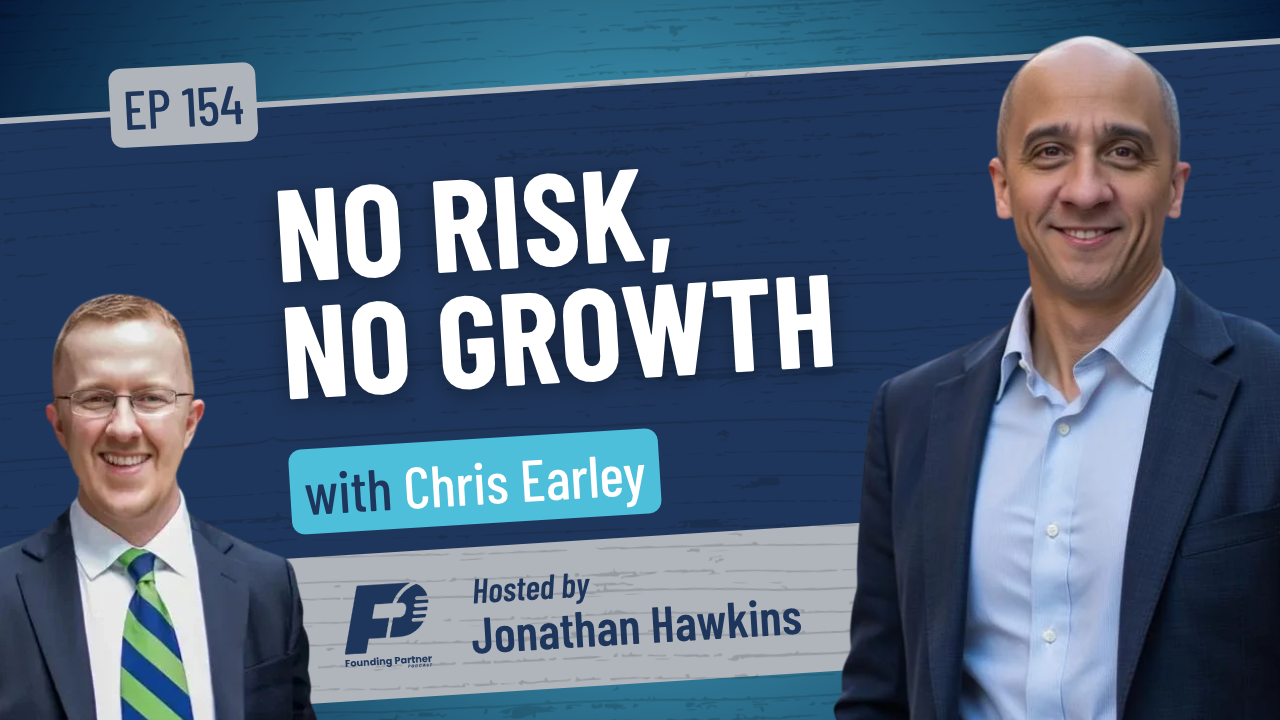
When you look at a successful law firm owner from the outside, it’s easy to assume everything has gone according to plan. You see the growth, the recognition, the marketing, and the opportunities. What you don’t see are the moments when the credit cards get declined, payroll becomes a concern, and the person running the business starts wondering whether any of it is worth it.
That’s exactly why I wanted to bring my friend Chris Earley back to The Founding Partner Podcast.
Chris is the founder and CEO of Earley Law Group Injury Lawyers in Boston, the host of The Earley Show Podcast, and the author of Scaling the Wall: One Man’s Journey of Healing Childhood Trauma to Find Fulfillment and Success. He was also one of my earliest podcast guests, appearing back in episode 10.
A lot has changed since that first conversation. Chris has grown his firm, built his visibility in the legal industry, and developed an entirely different perspective on what success means.
But what I appreciated most about this conversation was his willingness to talk about the difficult parts. Because behind the growth, there have been some pretty serious valleys.
Finding the Right People Changes Everything
One of the first things Chris and I talked about was the impact of finding people who challenge the way you think.
For Chris, that person was Ben Glass.
Chris attended his first Great Legal Marketing conference in 2019, and he credits that experience with changing the direction of his life. At the time, he was making decent money practicing law, but he wasn’t happy.
He had a lot of anger, felt dissatisfied with his career, and knew there had to be a different way to approach both business and life.
Meeting Ben introduced him to ideas that went well beyond traditional law firm marketing. He started journaling, meditating, writing books, and taking his personal development seriously.
Those changes eventually helped inspire his memoir, Scaling the Wall.
What stood out to me was Chris’s perspective on continuing to find new mentors and communities as you grow.
He started with Ben Glass, later learned from Ken Hardison, and has continued seeking out other coaches and masterminds. His point wasn’t that you should constantly chase the next opportunity. It was that the people who help you reach one level might not be the same people who help you reach the next.
Sometimes growth requires finding a different room.
And that takes curiosity, investment, and a willingness to be uncomfortable.
The Financial Reality Behind Rapid Growth
This was probably one of the most revealing parts of our conversation.
Chris has become increasingly visible in the legal industry. He’s active on LinkedIn, speaks to attorneys, publishes content, and continues expanding his firm.
But behind that success was a period when things were going badly.
Chris admitted that he grew too quickly and didn’t understand his financial numbers well enough. He wasn’t paying close attention to spreadsheets, cash flow, or the financial realities of scaling a personal injury practice.
And it caught up with him.
Personal and business credit cards were declined. Letters arrived from the IRS. Payroll was sometimes at risk, and vendor payments created serious financial pressure.
There were moments when Chris wondered whether he should give up.
His wife kept encouraging him to continue.
Eventually, one substantial referral fee check arrived and allowed him to pay off the debt that had accumulated. Another check followed a few months later.
That experience changed how he approached the business.
Today, Chris pays much closer attention to the numbers, including average case value and how long cases take to resolve. He understands that growth requires more than ambition. It requires knowing whether the business can financially support the decisions you’re making.
We also talked about the importance of taking calculated risks.
Chris shared a saying from football coach Bruce Arians that has stuck with him:
“No risk it, no biscuit.”
I agreed with the principle, but added my own perspective. The risks you take should leave flesh wounds if they go wrong, not mortal wounds.
There’s a difference between betting on yourself and putting everything you’ve built in danger.
For Chris, the lesson wasn’t to stop taking chances. It was to become more intentional about them.
When the People You Depend On Leave
Money isn’t the only difficult part of growing a law firm.
People can be even harder.
Chris shared how he made mistakes early in his leadership journey by promoting employees too quickly. Someone might be excellent in one position, but that doesn’t automatically mean they’re ready for a completely different role.
He also learned how vulnerable a firm can become when key employees leave unexpectedly.
At one particularly difficult point, two lawyers on his leadership team resigned within weeks of each other.
For a growing firm already dealing with financial challenges, those departures were another serious blow.
I could relate.
I shared that my own firm had experienced three departures within roughly six weeks earlier in the year. Even when you want to grow, experiences like that can make you question whether you really want the responsibility that comes with it.
Chris understood that feeling.
Over time, he’s become more intentional about hiring, evaluating candidates, and building around core values. He’s also learned that a stronger organization can absorb employee departures without everything falling apart.
That doesn’t make losing good people easy.
But it changes the way you respond.
Instead of treating every departure as a disaster, Chris now sees these moments as opportunities to strengthen the organization and make better decisions moving forward.
Stop Waiting for Permission
One thing I’ve always admired about Chris is his willingness to try things.
He doesn’t spend forever analyzing whether an idea is perfect. He gets started, learns what works, and adjusts.
Early in his career, that meant putting flyers on cars and doors around Boston with the help of his then-girlfriend, now his wife. Not every attempt went well, and he remembers receiving an especially angry response from one homeowner.
But he kept going.
Over the years, he’s experimented with different marketing approaches, built a podcast, written books, developed email newsletters, and established himself as a recognizable voice among law firm owners.
His advice for other attorneys is simple: take action consistently.
Write the LinkedIn post. Reach out to another lawyer. Attend the conference. Start the podcast. Find ways to become more visible.
You don’t have to wait until someone invites you.
Chris is even putting that philosophy into practice with a new project, a proposed one-day legal marketing conference in Boston called Get More Cases.
At the time of our conversation, he was targeting June 4, 2027, and working on securing a venue and bringing together speakers.
He openly admitted that he doesn’t know everything involved in organizing a conference.
But he knows he can find people who do.
I think that’s an important distinction. You don’t need to know how to do everything before taking the first step.
You need enough confidence to begin and enough humility to ask for help.
Consistency Creates Opportunities
Chris and I also spent time discussing something that doesn’t always get enough attention in law firm marketing: consistency.
Chris produces two different email newsletters. One shares updates about his firm and community involvement, while the other provides weekly practice tips to attorneys.
He admitted that creating fresh content every week can be difficult.
I know that feeling. Producing a weekly podcast isn’t exactly easy either.
But Chris has learned that every piece of content doesn’t have to start from scratch.
A video that performs well on LinkedIn can become an email. A useful post from a previous year can be shared again. An idea from a conference can turn into several different conversations.
We talked about how social media algorithms mean most people never see everything you publish anyway.
That means attorneys shouldn’t be so concerned about repeating a useful message.
The bigger risk is staying invisible because you’re overthinking every post.
Chris believes that consistent action over five, six, or seven years can completely change someone’s professional trajectory.
His own experience supports that belief. He went from feeling relatively unknown in the legal industry to building relationships with attorneys across the country.
And it didn’t happen because someone handed him an opportunity.
It happened because he kept showing up.
Becoming a Better Person and Leader
Toward the end of our conversation, I asked Chris how he’s changed personally as his firm has grown.
His answer brought everything together.
Chris believes the business reflects the person leading it.
When he was angry, negative, and unhappy, those feelings affected how he approached his work. As he started investing in his own development, his leadership began to change.
He became more compassionate, more intentional, and more aware of what actually matters to him.
Journaling, meditation, gratitude, and affirmations have become part of his routine. He’s also learned to recognize that difficult seasons don’t have to define the future.
But perhaps the biggest change has been his perspective on family.
Chris told me about recently turning down a networking opportunity during a legal conference in Boston because his child had an important volleyball game.
Earlier in his career, he might have prioritized the business event.
Today, he knows why he’s building the business in the first place.
His wife and two children are central to that purpose.
That doesn’t mean he’s stopped being ambitious. If anything, he’s more excited than ever about what comes next.
But he’s no longer measuring success only by the size or visibility of his firm.
He’s thinking about the kind of husband, father, and leader he wants to be.
And that’s a much bigger conversation than law firm growth.
Looking Ahead
Chris and I both turned 50 this year, and that milestone has a way of changing your perspective.
There’s only so much time to build the things you want to build, pursue the opportunities that matter, and spend time with the people you love.
What I took away from this conversation is that success doesn’t require avoiding failure.
It requires learning how to move through it.
Chris has experienced financial pressure, employee departures, uncertainty, and plenty of decisions he would make differently today. But those experiences have helped him become a stronger business owner and a more thoughtful leader.
He’s still experimenting, still learning, and still willing to take chances.
And perhaps that’s the real lesson for anyone building a law firm.
You don’t have to have everything figured out.
You do have to keep learning, keep taking action, and remember why you started.
I’m looking forward to seeing what Chris builds next, and hopefully we’ll sit down again in another couple of years to compare notes.
Because if this conversation reminded me of anything, it’s that growth rarely happens in a straight line.
Sometimes the valleys are where you learn the most.
AND MORE TOPICS COVERED IN THE FULL INTERVIEW!!! You can check that out and subscribe to YouTube.
If you want to know more about Chris Earley, you may reach out to him at:
- Website: https://www.chrisearley.com/
- Podcast: The Earley Show
Connect with Jonathan Hawkins:
- Website: https://www.lawfirmgc.com/
- LinkedIn: https://www.linkedin.com/in/jonathan-hawkins-135147/
- Podcast: https://www.lawfirmgc.com/podcast
Chris Earley: [00:00:00] He had a quote, “No risk it, no biscuit.” And I think about that a lot. You gotta freaking take a chance. Like, you’re gonna whiff and strike out and fall on your face, but like, if you have one win. So I had one win with that referral fee check.
That was, like, that was the win that we were waiting on. Paid off all the debt, like, in one day. It was like getting rid of all that shit. Now we’re playing a different game. ‘Cause Jonathan, you have all this momentum, right, like, happening. Then once you can take some of the pressure off of that, it can just kinda go up and help you.
And so no risk it, no biscuit, baby.
Jonathan Hawkins: I’m with you. I have a corollary to that though. It’s the risks you take should be, if you get hurt, should be flesh wounds, not mortal wounds.
Chris Earley: Oh, yes.
Jonathan Hawkins: Don’t bet it all. Don’t bet it all.
Welcome to the Founding Partner podcast. Join your host, Jonathan Hawkins. As we explore the fascinating stories of successful law firm [00:01:00] founders, we’ll uncover their beginnings, triumph over challenges, and practice growth. Whether you aspire to launch your own firm, have an entrepreneurial spirit, or are just curious about the legal business, you’re in the right place.
Let’s dive in.
Jonathan Hawkins: Chris Early, welcome back to the podcast, man.
Chris Earley: Jonathan, my friend, how are you today?
Jonathan Hawkins: I’m good. So for those who wanna go back and find it, Chris was way back when, episode 10 was the first time on. So one of the first guests on the show. So glad to finally get you back. I know lots, lots going on, and we got lots to talk about
Chris Earley: Well, what number are we on now? ‘Cause you’ve come, you’ve done so many since then
Jonathan Hawkins: We’re above 150.
Chris Earley: Oh
Jonathan Hawkins: I’m not sure
Chris Earley: That’s a lot of content. Good for you. That’s big
Jonathan Hawkins: About to finish the third year.
Chris Earley: Good for- wow, you’re pumping these bad boys out. I love it.
Jonathan Hawkins: Every week. It’s hard, man. [00:02:00] It’s, it’s, it’s a hamster wheel,
Chris Earley: Yeah. But you’re doing it, man
Jonathan Hawkins: Yeah. So I wanted to get you back on. We bumped into each other last week. I’ve been wanting to get you back on anyway for some of your … There was a couple LinkedIn posts I wanted to dive in about.
But we bumped into each other last week at the last ever Great Legal Marketing Summit
Chris Earley: What the hell? I’m bummed out
Jonathan Hawkins: So I, I saw, I think one of your posts, you said the first legal conference you ever went to that other than a CLE probably was GLM back in 2019. And it’s funny ’cause that was the first legal conference I went to, but not that year.
I w- I was maybe 2022 maybe. So I was a few years behind you, but tell me about that. So what what caused you to go to GLM back in 2019? What was it?
Chris Earley: Really good question. For those who, those who understand, GLM, they understand, right? It’s like a, it’s like this, it’s this sort of cult, you know? Like, [00:03:00] once you’re in it, you stay in. And like I just drank the Kool-Aid instantly. I found Ben Glass online and I was like, “Who’s this guy in Virginia?
He seems to be kind of different and kind of weird, but I like it. Like, it kind of resonated with me.” And so it was a big deal for me to leave my family and like go to DC for a conference. My wife was like, “Ooh, like this is kind of fun.” And and that’s how I ended up there. I talk about this probably daily how much he changed my life, Ben Glass.
Like, he just really talk- spoke to me. And like John- Jonathan, my life has changed dramatically. Like, I can’t even express it. But I hope the listeners are as lucky as we are to have found him or to have found someone who speaks to you. That’s kind of how I found Ben Glass, and I literally was off to the races, man. He’s, he’s that good.
Jonathan Hawkins: Yeah. You know, h- his, you know, you see a lot of the same speakers at these legal conferences, but his is a different message. It’s really philosophy of life,
Chris Earley: 100%. Yep, that’s [00:04:00] Ben
Jonathan Hawkins: So let’s talk about, you said it’s changed. There’s before Ben and after, before GLM and after. So tell me maybe what things were like before and maybe how things have changed since
Chris Earley: So behind me is my memoir, Scaling the Wall. And so I had, I had a lot of anger. I was a very unhappy lawyer, you know, miserable guy making decent money, but like, I was a very unhappy dude. And, and I knew there was a better way to practice law. I was just sort of like an idiot. I mean, I’m still an idiot, but like I’ve learned a little bit since, since that time of, of meeting Ben.
But like I can– you can be a happy lawyer. You can do things differently and be super successful. Like you don’t have to copy other lawyers or do what other everyone else is doing. So I decided to just do crazy stuff, like started journaling, started meditating, started working on myself, started writing legal guides, writ- you know, writing books, becoming an author.
And then, you know, this is really my, my life work is my memoir. And that book is never written if I didn’t [00:05:00] meet Ben Glass. And I had to do the work. It’s like you find these people in your life, right? But like you gotta do the work. And so Ben c- the philosophy of life only gets you so far. You have to put that work in, and I call it shoveling shit, you know?
And I know you’re, you’re good at that. Like you’re a grinder putting out 150 podcasts. Like how many people are doing that? Not many, I know that. So I could talk with you for 24 hours straight about how he changed my life, and this is all real shit. Like it’s legit. But I think the key for a lawyer seeking happiness is find inspiration that speaks to you.
Like he spoke to me. He, he’s not trying to, or nor is he intentionally trying to appeal to every lawyer. He’s not… That’s why, you know, GLM is a small room of, of real, you know, believers ride or die. It’s like a, it’s a cult, you know? And so I found my cult, and he just catapulted me. But life is funny.
Like you get lucky. I got lucky finding him. Now you and I are friends. If I didn’t meet Ben, you and I wouldn’t be doing a second podcast, right? We wouldn’t be friends, I [00:06:00] don’t think, unless we just saw each other somewhere else, but I doubt that. So it’s amazing the impact he’s had on, on, on, on me with so many others, right?
How about you? Like how has it been for you when you found him?
Jonathan Hawkins: So I remember finding him maybe 15 years ago. I was an associate back at a firm, and I was always interested in marketing, and I would just go on the internet and search for lawyer marketing and sort of off the beaten path mar- And, and he was somebody who kept coming up. And at the time I didn’t own my own firm, I was just an associate, so I knew who he was and sort of was on the back burner.
I, I was somewhat of a fan of some of the direct marketing type stuff, and so he was that in legal. And then about, I don’t know, four or five years ago is when I decided, hey, I’ve got my own firm. I’m gonna try to grow it. I wanna go find other like-minded people, and the first place I went was to go find Ben, and I went to that conference. So did you do his mastermind at any point?
Chris Earley: Yeah. Yeah. I graduate. There’s levels. There’s, like, an [00:07:00] ascension, right? You st- you go to the conference, you do a boot camp, you join the mastermind. And his mastermind was great, but, like, brutal honesty, like any mastermind, you shouldn’t be there forever, right? So I got to a point where I was like, “Ben has gotten me to this point,” and then you go to a different mastermind, and then hopefully you grow, you grow to that mastermind, right?
I don’t know. I was super lucky I found him. But yeah, I, I think that my personal opinion, we shouldn’t stay in the same room too long. You kind of know when you’ve heard things already. You’re taking less notes in a mastermind or the coach. It’s like, “All right. I think I’ve seen that play on the field before.”
I, I already know that, that scheme on the, on the offense or whatever, the defense, the idea being talked about in the room. So then I think it’s important to change rooms when that time is right, and I’ve done that numerous times since then, right? So again, like, kind of an activation happened, and then we graduate to these different levels.
That’s been my journey. Maybe the attorney listening has found a room where he or she is in for 20 years. That’s all good. Like, you gotta find your [00:08:00] room. But when it’s time to go, I feel like it’s time to go and keep, keep leveling up. That’s how I kinda I rock.
Jonathan Hawkins: So how do you find your rooms? we talked before we went on, you’re, you’re in a new room, maybe more than one. How do you, how do you personally go to find rooms? And if I’m a listener out there, what advice would you give as they’re looking for rooms?
Chris Earley: There’s, well, there’s no shortage of options. Like when you found Bang Glass 15 years ago, there weren’t nearly as many options, right? So he probably really stood out even more, but I think because he was just like very few people were doing that. Now it’s a proliferating industry.
There’s coaches, masterminds, you know, around every corner. So I just go with my gut, Jonathan. Like I’m like, you know, Ken Hardison, I found him. I was like, “You know what? Like I like him.” And I stuck, and I was with him for years. You know, now I just found Chad Dudley, Mickey Love. Okay, like that’s where I am today.
But like I just kind of go with my gut. So that’s my best advice for the attorney. Like, but I think the key is like be curious and [00:09:00] like go to that conference, go to that event, go to the mastermind. I was scared shitless when I paid for my first mastermind. I’m like, “This is a lot of money.” And the next one was double that price.
It’s like, wait, I gotta travel to San Diego? This is a hardcore commitment, like three… I gotta go to the Bahamas. I mean, obviously first world problems, but like that’s a lot of travel when you have kids, right? You know, you know how it is, very busy. And so it’s a commitment. But I think there’s a small group of lawyers that are truly like, like me and you, and they’re just, they’re willing to do those things, be in those rooms, write that big check you’re comfortable writing because you know that’s not a cost, it’s investment in your future, your family’s future. Those are some things I did and just try to keep finding that next room of growth
Jonathan Hawkins: I know you, you go to a good number of other legal conferences throughout the year. How do you… Well, I guess two-part question. You know, how do you decide which ones to go to? ‘Cause those are different than masterminds. And then what’s, what are some of [00:10:00] the benefits you’ve received from those over the years?
Chris Earley: Well, I’ll be the first to admit, sometimes I go to the same ones every year. I think it’s good to, like, branch out. Like, I’m usually kind of on the East Coast. But a coach of mine was like, “You should go to West Coast stuff. There’s a whole… There’s hundreds of thousands of lawyers on the West Coast. Like, go, go to those things,” right?
So trying to branch out more. I try to go where there’ll be a lot of people together, a lot of people assembled preferably, you know, PI. But you and I spoke before. I think there’s great value in looking outside of law for business ideas, marketing ideas, operations ideas. So I’ve been guilty of kind of going to the same events which I think is a, is something to avoid ’cause you wanna mix it up, right?
I mean, you could probably go to, like, an H- a HVAC conference and learn a ton more than sometimes you do at legal conferences that you’ve already heard, like, speakers, like you said, repeat speakers. So that’s what I learned from Ben, back to him, looking outside of legal ’cause there’s a ton of things we could learn, right?
You were talking about AI, AI conference, looking at that kind of stuff. I mean, there’s no, [00:11:00] no shortage of education out there outside of what we’re doing as lawyers
Jonathan Hawkins: So the other question that I really wanted to ask you as I was getting ready for today, I came across one of your posts. It did not end up in my feed, so I, I found it on there that you’ve teased that, are you gonna do a conference?
Chris Earley: Yeah.
Jonathan Hawkins: All right. Tell me about that.
Chris Earley: Yeah, so
Jonathan Hawkins: tell me as much as you’re willing to share
Chris Earley: no, yeah. I mean, I don’t know what I’m doing here, Jonathan, but I’m like, “I wanna put together an event,” ’cause Boston doesn’t have a lot of… Boston has a Clio. Clio Con is in Boston this week in October here end of October. But I’m like, “There’s no conferences in Boston.” So I reached out to about 10, you know, pretty what I consider high-level people in the industry, and they all said they’d like to speak.
So now we’re trying to line up a hotel. But, like, this is kind of what, how I roll, is like, I don’t know really what I’m doing, but I feel like I’m gonna give value. We’re gonna put people together. We’re give each other value. Not looking at profit. I’m definitely not looking to lose money, but I’m not looking to profit.
I’m looking [00:12:00] to put… It’s mostly PI. It’s called Get More Cases. Early June. We’re looking at June 4th of ’27, and trying to get people in a room, one-day conference, and kind of a, a fire hose of marketing, only marketing, right? ‘Cause that’s, I think, the biggest struggle for lawyers, is getting more cases. So this conference is Get More Cases.
But, like, I know nothing about food, you know, AV. Like, I don’t know, man, but, like, it’s gonna… I’m gonna find smart people who know how to do that, and I’m gonna leverage my relationships and try to, you know, bring in some great speakers who are good people, who I have used, who I trust, and try to just, like, let it rip and see what happens.
What the hell?
Jonathan Hawkins: man. Sign me
Chris Earley: I appreciate it. Appreciate you, man
Jonathan Hawkins: Well, that’s awesome. So y- the other thing that you and I have in common is well, you do a lot of stuff and you’re willing to experiment and do, you know, you know, you got a podcast. Why don’t you do a plug real quick for your podcast?
Chris Earley: it. Yeah, it’s called The Earley [00:13:00] Show. I usually have on PI lawyers who are scaling. We’re at about 70-ish episodes, so I’m, you know, well behind you. I gotta get more on the, on, on the horse and bang out some more episodes. But we just try to help PI lawyers scale. You know, we’ve had some
We started it with John Morgan, he was our first guest. He came on again. We had Top Dog, James Helm, he’s coming on in a week or two. And just kind of trying to have good conversations with PI lawyers who have been there, done that, and gotten their, you know, gotten punched in the face, but they’ve learned to get up.
And so, it’s … But it’s really for any kind. I have a criminal defense lawyer, Jonathan. A Boston guy sent me a message on LinkedIn, “Hey, I love the podcast.” I’m like, “That’s awesome.” You know? The criminal guy can get value from a PI podcast, like that’s awesome. So Early Show, check it out. If you’re a PI lawyer, you wanna have a conversation, you wanna be on the show, let’s have a conversation about that. I’d love to
Jonathan Hawkins: The other thing you do is I think you have two email lists. One is for lawyers, one is for, I guess, everybody else.
Chris Earley: [00:14:00] yes, yes
Jonathan Hawkins: tell me about that. And, and I have a weekly email too, and it, it’s… I started one, I don’t know, 12, 13 years ago, and I’m convinced it was on my legal practice, you know, representing lawyers.
I’m convinced that’s what helped me build my practice, just that email list, sending it out once a week. So tell me what, what your experience has been.
Chris Earley: Wait, so sorry. You’ve been doing it all those years once a week?
Jonathan Hawkins: Well, I did it for about four years, and then I stopped, and then I started it back maybe five years ago.
Chris Earley: Good for you. See, that’s like, that’s way ahead of the curve, man. Like that’s just, that’s a lot of shoveling shit, but it pays off. So anyway, I, yeah, we do, we do two emails. Wednesday is like, like you said, kind of a, a general like, “Hey, Jonathan, here’s what we’re doing in the community,” or, “Here’s a new hire.”
Just kind of like a miscellaneous. But Friday, that’s the tough email ’cause I’m sharing with lawyers across the country, like a… It’s called the practice tip of the week. And so I can be honest, it’s really hard to come [00:15:00] up with fresh stuff every week. I’m like I’ve talked about so many things,” you know?
It’s like, I don’t wanna… I gotta bring it. I don’t wanna waste attorney’s time on opening up my emails a- and flounder. I don’t wanna have bad emails that are floundering, so I try to bring it. But I’m gonna loop back to Ben Glass, right? I put up a video in my car. For those who aren’t listening, I just had my phone in front of my face.
You know, cut a video of when I scale, how much, how much defeat I experience, how much financial devastation I experience, and that kind of resonated. So I’m like, “Shit, this week I don’t really have a lot of content. Oh, I’ll just use that video as my content for this Friday’s email.” So again, repurposing assets, you know very well, right?
Probably better than me. You don’t need to reinvent the wheel. If you have a good email that performed good in like 2024, there’s no rule that says you can’t use it in ’26. Because frankly, no one’s probably remembers it, like my stuff. So it’s fine. I think I learned that from you, ironically enough, is like when you put something on [00:16:00] LinkedIn like a year ago, everyone probably forgot about it.
So if it did well, like you could run it back and it’s not like you’re breaking rules here. It’s like you’re providing content once again, you know, doubling down on good content. So I see lawyers, Jonathan, always scared like, “Oh, should I post this?” Like no one’s gonna remember it anyway. Just post it, get your name out there, brand yourself, and hit post, and stop overthinking.
Jonathan Hawkins: Well, that’s the thing. I follow you. I, I actively look at your post, and the algorithm does not feed me all of your posts. it just doesn’t.
Chris Earley: Oh yeah. No, you
Jonathan Hawkins: see one out of 10 of your posts come up in my feed
Chris Earley: 100%. So, and I th- and I think about that. I think you and I had that conversation in Florida at a conference. I think Jay Berkowitz’s event. And you changed my whole mindset on LinkedIn with what you just said, and you said that previously to me. Yeah, not everyone’s seeing all of Jonathan’s posts or all of Early’s posts.
So just, like, hit post and you’ll be surprised at the reception, you know?
Jonathan Hawkins: So you mentioned that post you just mentioned [00:17:00] about, I’ll call it the desert or the crap or the almost you know, the whatever it is you wanna call it. Which that, This year’s been a crazy year for me and my firm, and I’ve talked to others. I was talking to others had similar experiences where, you know, on the outside it looks, you know, up, up, up, up, up.
But in between, there’s just all sorts of ups and downs and close calls and near misses and all this stuff. And you did a pretty vulnerable post on that, and it resonated with me, and I bet it resonated with a lot of people. So I wanna dig into that a little bit about your growth trajectory and maybe, you know, goes back to the 2019 GLM, and you really have been on a tear doing all sorts of cool stuff and growing your firm.
I mean, it’s really fun to watch. You’ve got your new tagline, you got all the stuff, and you’re really growing. But as we all know, behind the scenes and under the water, man, there’s a lot going on there. So maybe take me through some of the trials and tribulations that you’ve gone through just growing your firm.
Chris Earley: I mean, I grew too [00:18:00] fast, you know? We were at the Great Legal Marketing Conference this past week. I was on the airplane coming back, and sometimes, like you get inspiration out of nowhere. So I was sitting on the plane, I thought, “I’m gonna write on LinkedIn about how shitty I was doing and how dark that was when I was really scaling up and things weren’t breaking in my favor or cutting in my favor. I feel like I couldn’t get a break. I’ll write a post about that.”
That really resonated with me. I’m glad it spoke to you, ’cause I was writing to you and everyone else who speaks this language of entrepreneurial challenge and adversity. And then that did well on LinkedIn, so I made a video. And then that got good reaction. So anyway, I just wanna share lessons that I learned. I grew too fast. I didn’t know my numbers. I never liked a spreadsheet. Like, this is all real talk right here. I’m just not a data guy, and I just was like it’s fine,” like, kinda arrogant, like, “It’s gonna work. It’s gonna work.”
So many times credit cards were declined, you know, personally. Business cards were declined. IRS letters. Like, legit, and I’m probably sugarcoating it. My wife [00:19:00] was always like, “Keep going.” I was like, “It’s not working. It’s not gonna hit. This is…” I was almost like poor me, like, “No, it’s not gonna work. It’s not gonna work. Let’s just, let’s pull the plug.” She’s like, “You gotta keep going.”
And then Jonathan, I got, I got one referral fee check, and that was, like, enough to change the course. And then another check came a few months later. What I started doing, I wanna highlight this, I started saying affirmations and writing affirmations.
Do you do that or no?
Jonathan Hawkins: I have on and off over
Chris Earley: Yeah.
Jonathan Hawkins: But I, I’ll tell you this, this may be a Ben Glass style thing, but I, I do believe that the universe listens. You put it out there, it will answer. It may not be exactly when you need it or when you want it, but For me, that’s been my experience over the years.
The universe answers. God, whatever you wanna call it
Chris Earley: hell yeah. You’re spot on. It may not be when… It’s probably not when you, like you said, when you expect it or when you need it, but you’ll get it when you actually do really need it. So I was [00:20:00] driving to baseball. My son was umpiring a baseball game last year, two years, I forget. I think it was last, about a year and a half ago.
And I just paid a massive bill to a vendor. It was like 10 grand. I’m like, “That’s gonna like really hurt my… Like, I’m gonna bounce payroll again.” And I was sitting in my car, Jonathan, like saying out loud, “Everything is working out.” Everything is… I can’t believe I’m even admitting this, but I did. Like, everything is working out.
Like talking out loud. And then, like I, now I, I learned this, I… Ben, you gotta listen to our pod- This, you gotta listen to the show because we’re really shouting you out a lot here. I learned from Ben Glass the power of journaling. Well, now I journal, but I also write three things that I’m grateful for the day before and like four or five things I’m trying to manifest today.
I carry around in my wallet a check for a massive amount that I’m trying to manifest, right? Like just I believe, like you s- you know, like you said, a manifestation. But when you’re, you really understand who you are, Jonathan. As a man, as a woman, whoever is listening, like you understand who [00:21:00] you are when you get hit hard.
You know what you’re made of, and you discover a lot about yourself, right? Like you under- you, you really, you get to know yourself. And I got to know, hey, man, I can take a hit or two. ‘Cause as you know, you, you work with, you know, law firms buying, selling, right? You’re, you’re, you’re in the know. You’re in the business.
You see under the hood of so many businesses, and I think it’s, it’s the resilient business owners that have such an unfair advantage ’cause they get hit and hit and hit, but they, they get to that next level, and they’ve just eclipsed like 25% of the popu- of lawyers, and they’re in this different category, and they keep notching up, notching up.
But the more you get through those, I call them valleys, the stronger you are and the higher your success will go ’cause you’re gonna like keep going up. Does that make sense?
Jonathan Hawkins: Absolutely.
Real quick, if you haven’t gotten a copy yet, please check out my book, the Law Firm Lifecycle. It’s written for law firm owners and those who plan to be owners. In the book, I discuss various issues that come up as a [00:22:00] law firm progresses through the stages of its growth from just before starting a firm to when it comes to an end.
The law firm lifecycle is available on Amazon. Now, back to the show.
Jonathan Hawkins: And the other thing is you are a man of action. You can’t just sit around and hope that something good happens. You got, you gotta actually do stuff, and, and you’re, you’re really good at that, just all the things we’ve talked about, some of the things you do. And so, but again, I, you know, anybody who’s built it knows it’s…
You know, I, I tell people before I started my firm, I, I was at two other firms, and they had already gotten through all this by the
Chris Earley: Yeah. Yeah
Jonathan Hawkins: And so it just seemed, I was like, “Hey, anybody can do this.”
Chris Earley: Yeah
Jonathan Hawkins: But now that I’ve gone through it myself, I’m like, “Damn, no, this is hard. This is hard.”
Chris Earley: It’s harder than I thought it was gonna be, actually. I didn’t know it’d be that hard. And some of us are lucky. Maybe, like, you know, some of us get a quick break or, like, things cut in our favor quicker than quicker for some than others, but, like, I had to wait. I was, like, [00:23:00] 42 when I founded Ben Glass. I consider myself, like, a late bloomer, right?
I’m- I just turned 50. So it’s like I took, took time. You know, some people, they hit it when they’re 30. Wonderful. That wasn’t me. That wasn’t my fate, right? But I think, y- you know, the, the element of gratitude and just meditation is… I think we talked about that on our first call together, first podcast.
Like, little things like that, ’cause it’s all a head game. Like, entrepreneurship isn’t about, like, hustle as much as it is about, like, what are your thoughts? And you’re gonna attract… If you’re… I was such a negative person. I was attracted negativity, negativity, notwithstanding crazy ambition. Like, I wanna grow and I wanna be a successful person.
I was still negative. Then I started talking about, “It’s gonna work out. Everything’s working out. It’s all working in your favor.” I’m not the biggest Tony Robbins fan. I heard this one video, this one clip on social media. I was like, “Yes.” He was just talking about, like, assume everything is working out in your favor.
Everything. And now it, like… I’ve sort of, like, reworked my brain so you can really rethink how [00:24:00] you approach things. And some of how you see things. Like, you’re successful because you choose to see the positive things, right? And, and you’re- you choose that. You’re not, like, poor me. Like, “Okay. Well, I’m getting hit in the face, but I’m stronger now.
I’m more resilient to the next knockout,” right? That’s how I kinda look at this stuff. It’s all up between the ears
Jonathan Hawkins: Yeah. So, so another very difficult part of growing and scaling is the people, all the
Chris Earley: yeah,
Jonathan Hawkins: And so finding the personalities, make sure it fits the leadership. They’re gonna come and go. They’re– they are your responsibility. You mentioned payroll. I mean, all these things. Tell, tell me about those lessons and, and, and valleys that you’ve gone through in terms of like trying to figure out the people part of it
Chris Earley: I think that’s like after your thoughts and how you think, and if, whether or not you take action on those thoughts in a positive direction to people. That’s the second part of this puzzle. so, like, a couple things to avoid that early is massively messed up [00:25:00] on, promoting people too quickly. You know this Peter’s principle, you promote people to the level of incompetence, right?
And so I was vic- I learned that from Charlie Mann. So I would just, was like, “Oh, like Betty is awesome on the phone.” It’s like, “She can be a paralegal.” What? No, no, no. Stop, stop, no. So it’s like I didn’t know what I was doing, man. But, like, they don’t teach you this. I never knew anything about this stuff. Now I’m just like, I’m just a student trying to get better like all of us.
And so I learned not to promote people too quickly. I learned that people will leave you the drop of a hat, okay? ‘Cause, like, their name’s not on the door. You’re the only one. I tell people, like, to f- I talk to, like you, I talk with law firm owners all the time, say, “You’re the only guy or gal that’s sticking around this place.
Everyone else is gonna leave at some point.” Everyone will leave, and you’re the only one sticking around. So, like, I, I had two lawyers, like, kind of on my leadership team. They quit a few weeks back to back, and I was like, “Oh, shit.” That was the peak, or I should say the acme, the, the lowest… Is acme high or low?
I [00:26:00] forget. the nadir, if that’s the word. The lowest point of that valley was when those guys left, and I was like, “Oh, man, this is getting interesting now.” But if you… You know, now we’re getting better with hiring, right? We do testing, and we, we’re cult- we’re s- talking about, you know, cults.
We’re, like, cultish with our core values. And so we’ve gotten a little bit better with that. But then once you have a, a strong team, you can withstand someone exiting the bus without notice. Like, “Oh, okay, we just lost them, but we’re gonna be okay ’cause we have this.” But when you’re like two or three or five people in a firm, you lose one person, God forbid two, you’re, you’re kind of screwed for a hot minute.
But as you grow, you get stronger. And with the growth, Jonathan, comes, like, a more congealed, tighter team. So if I lost two or three people today, I’d be okay. Like, for real, ’cause it, it’s just, it’s like that now, you know? Does that make sense?
Jonathan Hawkins: Absolutely. That’s been my year this year, back in the spring.
Chris Earley: Okay, so you know
Jonathan Hawkins: Three gone [00:27:00] within, you know, six weeks, and it’s, it’s been rough. We’ve, we’ve backfilled and I think stronger. But yeah, it’s, it is just, you know… And I don’t know if you had these thoughts, but
Chris Earley: Probably.
Jonathan Hawkins: want, I wanna grow my firm. I wanna grow my firm.
I’ve always wanted to. When they left, I was like, “Do I really wanna do this? I don’t do I really wanna do this?”
Chris Earley: Yeah, 100%. You’re not alone, man. We’re all, all of us deal with the same shit, right? It, but like you a- like you’re talking about people, people… ‘Cause you know what you’re gonna do. You know you’re gonna bang it ’cause you’re a guy of action too, like me. You know what you’re gonna put out there. But you need people to ride with you, and it, it’s hard when they, they don’t work out.
But like those two people who left, it wasn’t supposed… Or whoever, three, three people. W- whoever. It wasn’t supposed to be. And so it’s better n- that they left then than six years from now, right? Because it would’ve been more painful of a divorce or breakup. So sometimes you have to take a step back. One step back, two steps forward, right?
Sometimes it’s two steps back, one step forward. But [00:28:00] however it looks, you’re advancing every time you have changes ’cause you’re like tightening your ship, right? Tightening the boat. That’s how I kind of look at this. It’s all about how we perceive it
Jonathan Hawkins: So, so another thing about growth any business, but especially personal injury firm where case signed today may not pay for 12, 18 months you’ve gotta spend the money now to grow, and that’s both hiring people, spending money on marketing, you know, advancing costs on, on cases, all the stuff with, you know, the, the growth to come down the line.
So that’s another element I’m wondering how you have maneuvered or navigated those things. The sort of the, the investment you have to make today with the belief that, hey, it’s gonna pay off 12, 18 months from now.
Chris Earley: I screwed everything else. I screwed everything possible under the sun in that regard. I mean, but like, ’cause I didn’t, I was just, like, not good with the cash and not making good intelligent decisions. Now I have really good data. So now [00:29:00] you gotta… You know, you know this, but not everyone knows. You gotta know your numbers.
You gotta know your average case value, you know, churn average life of a case. And when you know that, you can do okay. But I’m, I’m glad though, I, I don’t mean to be like, “Poor me, it was such a tough time.” It was a, it was a shitty time. But, like, you know, football coach Bruce Arians?
He coached the Bucs, he coached, you know, a number of teams in the NFL. He had a quote, “No risk it, no biscuit.” And I think about that a lot. You gotta freaking take a chance. Like, you’re gonna whiff and strike out and fall on your face, but like, if you have one win. So I had one win with that referral fee check.
That was, like, that was the win that we were waiting on. Paid off all the debt, like, in one day. It was like getting rid of all that shit. Now we’re playing a different game. ‘Cause Jonathan, you have all this momentum, right, like, happening. Then once you can take some of the pressure off of that, it can just kinda go up and help you.
And so [00:30:00] no risk it, no biscuit, baby.
Jonathan Hawkins: I’m with you. I have a corollary to that though. It’s the risks you take should be, if you get hurt, should be flesh wounds, not mortal wounds.
Chris Earley: Oh, yes.
Jonathan Hawkins: Don’t bet it all. Don’t bet it all.
Chris Earley: no. I don’t mean like… No, obviously you gotta like be, you gotta be pretty shrewd, I think, and calculated. Like, and no, I would never do anything that would truly, you know, screw up my family’s, you know, stability. And looking back, I wasn’t even taking crazy shots, but for me at the time it was like, “Oh my God, that’s so much.”
Like, that’s a lot, right? But it’s like my wife was like, “Dude, you’re not the only person going through this. Like all business owners are dealing with this.” So then I was like, “I don’t know about you, but I’m s- so stuck in my own way.” Like, “No, I’m just the only one dealing with this. It’s only me. I’m…” No, there’s like billions of people around the world running businesses, getting letters from the IRS like me, payroll can’t be met.
Like nothing new there, right? And so, but I study like you, I [00:31:00] study suc- high-level successful people, read about them, and they have just got, they’ve been, they’re super resilient, right? Crazy resilient. I think that’s, that’s something that I have ’cause I don’t really… I’m not the best lawyer, trial lawyer, but I will out resilience, if that’s the term, out resilience many.
And that’s where the good stuff I think is, is waiting for us, through resilience
Jonathan Hawkins: so I wanna shift a little bit. We’ve talked a little bit about all the sort of the things you do and you’ve done, man of action. The other thing that I, that I perceive that you do is you experiment a lot. You’ve, you’ve tried a lot of different things. I mean, even from the, the flyers on the cars in the old days to that story you tell to you got the billboards.
I think you maybe– Have you gone on radio? I mean, you’ve, you’ve done, tried a
Chris Earley: raynaud. Yeah
Jonathan Hawkins: So tell, tell me about sort of what you’ve done what, what your thought process is, and then maybe turn it into sort of advice for others out there as they are trying to say, “Hey, I wanna get out there.” How should they think [00:32:00] about doing things and, and maybe where should they start in your view?
Chris Earley: you know Jason Hennessey? he said, he talks all the time about taking action every day, and that really speaks to me, taking action. So I don’t care what it is you’re doing, but like write a LinkedIn post, do a speech, do a podcast. Do a podcast twice like you and I are doing, right? Just take action and, like, you gotta focus on business development.
You, you gotta go to conference, you gotta go to events, CLEs, just like action. Have a plan. You know, one year I was like, “I’m gonna meet 100 lawyers for coffee or 50,” whatever. “I’m gonna send my book out to 300 people this year.” Just shit like that. Every day doing things, that’s all it is, just you stack these wins over time.
This is all, as you know, right, a long game of action. So that’s what I recommend. So yeah, my w- my wife was my girlfriend at the time, we would hustle by putting flyers on cars. I was putting flyers on doors in some of those affluent neighborhoods of Boston. Like, [00:33:00] what was I thinking? I got… One guy said to– crumpled it up or whatever.
He sent it back to me saying, “You are a piece of crap to put this on my door. Who do you think you are?” And I was like, I remember that was like tw- 18, 17 years ago, a long time ago. So again, like I barely got into law school. Like, there was nothing s- really special about me. But I will shovel shit like I talk about constantly.
I will take action. The bar is, is l- is low, right, to find success as an entrepreneur in law, but you have to like sustain certain activity for a long enough period of time. You, for example, doing this podcast, going to all these conferences, writing books, right? Like, stuff like that, you know, I’m doing a lot myself, but you’re doing a shit ton yourself, right?
Like, we’re both doing this stuff. That’s why we drive, we jive well, ’cause like we understand what it takes and we relate on that topic. But like a lot of people just, they’re sitting there listening to this podcast like, “Oh, I should do that.” But like, are they gonna do it? You and I just went to GLM. There were a lot of ideas thrown out, [00:34:00] right?
I know you’re taking action on them. I know I am. But I think a lot of lawyers think about it, “Yeah, I’m gonna do that,” but then it doesn’t get done. It’s like, what was the point of going to that conference, leaving your family, spending the money if you’re not gonna take action? So to answer your question the long-winded way, taking action, letting it rip, and just doing shit every day has been crazy helpful for me
Jonathan Hawkins: And this may have been in the same post, maybe it was a different post, but I think you said, you know, back in 2019 or whatever it was, nobody knew who you were. You’re like, “Nobody knew me.” Today, lots of people know who you are. And it’s the sort of thing where I, I think I know what you’re gonna say, but it’s don’t ask for permission.
Just, just go do it. You know, a lot… I think a lot of people just sit back and say, “Well, I need to be invited to be a speaker,”
Chris Earley: Hell no
Jonathan Hawkins: need to be invited to write this article,” or whatever it is. What, what’s your advice on that kind of attitude?
Chris Earley: Well, I’ll give my advice and my perspective is you get so far in [00:35:00] like five, six, seven years, it’s, it’s absurd. that’s all it takes, right? You can get so far. And yeah, nobody knew my name and, and I guess things have changed a bit since then, but I was like, I said early 40s, man. Like, I was already married with two kids, like kind of established, and I decided to go for it.
That was me. Like, maybe not everyone wants to like, you know, bet the farm, and that’s cool. But if you’re not happy, like change some shit up and do something different ’cause life is too short. Again, having turned 50 two weeks ago, I’m like, “Damn, this is a short run we have.” I said to my wife, “I’m gonna take even more risks now,” ’cause what the hell?
We’re all gonna freaking die. It’s like, what the hell am I waiting for, dude, right? It’s like, let that shit rip. So that’s, that’s a lesson I learned. In like five, six, seven years, you could really get out there, right? And that’s been a blessing and like I’m, I’m grateful for that, but like nothing was handed like you, right?
Like, you gotta get after it and grind for it. So that’s been super [00:36:00] helpful is just kind of like just nose down and just head down doing the work, man. Simple as that really.
Jonathan Hawkins: so I turned 50 this year too, and I, you know, it started a few years ago where you know, between the, you know, around 46 men our age just dropped dead out of nowhere.
Chris Earley: Yeah, man.
Jonathan Hawkins: it’s just, it’s scary and it’s sort of like, so you’re right. We have limited amount of time. You got, you gotta go make the most of it
Chris Earley: Yeah. But this business will, will erode you. I, I use that word a lot. It’ll erode you as a person if you’re not careful. That’s why I gotta work on my … now I stretch. Do you stretch or no? I just started. It’s freaking awesome.
Jonathan Hawkins: Well, I work out every day
Chris Earley: You … I know you … Yeah, you do work out quite a bit. That’s all. I gotta get back to that
Jonathan Hawkins: So I do that, and that really de-stresses me
Chris Earley: Oh, that’s wonderful. Yeah, you’re in great shape. I gotta get back on that, but I did start stretching, and that’s so important ’cause we sit all day. Like little stuff, meditation, the journaling, right? Mental health. But just to go back a couple minutes, you said, you know, [00:37:00] permission, like, you know, don’t… What, what are we waiting for here?
Like, why… Don’t wait for anything. Take your seat. You know, I don’t have any clue, I said, how to run a conference. I have no business doing this, but I know it’s gonna be good, so I’m following my heart and my mind. It’s like I don’t need to ask for permission. It’s gonna be wonderful, right? I’m projecting success with that
Jonathan Hawkins: You could get a lot of people there.
Chris Earley: I’m trying, man.
It’s been a good it’s been a good… But, but like, when it’s just it’s helpful to know that it’s gonna work out. The old me would’ve been like, “Oh, I don’t know, like, is people gonna show up?” Like, it’s gonna be wonderful. Everything’s gonna be fantastic. But that was the pessimist in me, you know?
So now trying to be a little more glass half full, kinda happier that way.
Jonathan Hawkins: So the last topic I wanna talk about is we’ve talked about your firm growth and the ups and downs and all the things you learn and these sorts of things. But how have you as a person changed in both your own sort of mental game, but also as how you’re a leader, how you run the firm, how you’ve [00:38:00] transitioned out of being on the front lines and becoming more of a leader?
What sort of changes have you undergone over the last few years?
Chris Earley: Well, that’s a really great question because, like, that’s where it starts. Like, I think that business is a reflection of the owner’s thoughts, behaviors, perspective. So I’ve had to work on myself a lot. Like, for real, I’ve had to just do so much work. I have a better marriage now, a better business owner, a better leader.
I’m more compassionate. You know, two kids have really softened me. And so I have really tried to play a bigger game, right? Like I post about this on LinkedIn this week. I was ClioCon was in Boston, like I just mentioned earlier. I got an invite to a great networking event. I’d be all over this thing, right?
But I got a kid and who’s had a big volleyball game. So I keep perspective. So that’s my why is, like, making sure my kids see Dad at the sports games, right? I know this, you know, you resonates with you, right? ‘Cause, you know, what that’s like showing up for sports, right? It’s why we do what we do.
So I think what I figured out, Jonathan, is like, I guess going back [00:39:00] to Ben Glass one more time is, like, what’s your why? My why is my family. So I had to, like, grow as a man, mature, get my shit together. And when I did that, the business followed suit. Like, my personal development reflected or somehow got into the business and developed the business, right?
‘Cause I’m the owner, everything starts and stops with me. So if I’m all screwed up, the business is screwed up. It’s a byproduct of the owner. Once I started to kind of figure some stuff out, finally at 50, right, late 40s, 50, then the business followed suit. But you can’t have it both ways. You can’t be a miserable lawyer and then walk in your office and act like you’re a happy guy or gal.
Like, people can see it, that you can’t silo who you are as a person, as a business owner. It’s all integrated. So to answer your question, I think I understood, like, how you do something is how you do everything here. Getting happier as a person, the business followed suit. But I’m such a work in progress, man.
It’s so hard, right? I mean,
Jonathan Hawkins: We all
Chris Earley: [00:40:00] oof, it’s so challenging. But you and I are playing a bigger game, right? This is hard. So it sounds like you’ve had a couple, you know, to the face, you know, recently. Like, it’s gonna happen again to you and to me. You know, talking about a valley, like I’m gonna have a valley at some point.
We’ll both have another valley, but, like, we’re gonna get through that stuff. Look how much has changed since you and I last spoke, what, 140 episodes ago? Like, look how much you’ve changed. Look how much I have changed. Let’s do this podcast in two or three more years. Imagine where we’ll be then. We keep…
We’re gonna keep this up, right? Taking care of ourselves, growing as leaders, as men. Shit, man, sky’s the limit here.
Jonathan Hawkins: Well, both of our podcasts will be up there with Joe Rogan, man. We’ll be,
Chris Earley: Oh, he better watch himself, ’cause we’re coming up, man, real quick. Real quick. I know you are. Geez, man. Very impressive
Jonathan Hawkins: I tell you, it’s a hamster wheel.
Chris Earley: Ahhz
Jonathan Hawkins: Well, Chris, so I wanna be respectful of your time, but any lawyer out there that doesn’t know who you are, that’s not following you, go follow Chris on LinkedIn. That’s the first thing you gotta do. The second thing you gotta do is [00:41:00] sign up for his weekly email to lawyers.
The third thing you gotta do is buy his book, or maybe he’ll send it to you, but
Chris Earley: I’ll send it to you. Send it to you. Thank
Jonathan Hawkins: the fourth thing is go subscribe to his podcast. And the fifth thing, you gotta go to Boston next June to go to his conference.
Chris Earley: Yes, sir.
Jonathan Hawkins: did I miss,
Chris Earley: Nothing, man. You’re awesome. I just, I, I love your energy. You’re a good dude. You’re smart. I’m grateful to be on your podcast again. Keep recording these things, okay? Don’t stop, ’cause it’s a damn good podcast. I listened to a bunch of your episodes. Keep going, man. It’s hard, right? But
Jonathan Hawkins: It’s hard, but that’s what we’re, that’s what we’re doing, man.
Chris Earley: yeah. Crushing it,
Jonathan Hawkins: I’m one of your biggest cheerleaders, Chris, and, and I, I love seeing what you’re doing, and I am gonna be there in June, and hopefully I’ll see you before then.
Chris Earley: Yes, sir.
Jonathan Hawkins: thanks again for coming on, man. This has been fun
Chris Earley: thank you, bud. I appreciate it, bud. Thank you so much, bud
OutroUpdatedWebsite-1: Thanks for listening to this episode of the founding partner podcast. Be sure to [00:42:00] subscribe on Apple podcasts, Spotify, or wherever you get your podcasts to stay up to date on the latest episodes. You can also connect with Jonathan on LinkedIn and check out the show notes. With links to resources mentioned throughout our discussion by visiting www.lawfirmgc.com. We’ll see you next time for more origin stories and insights from successful law firm founders.